Air Quality in Poland: GIOŚ Index, Smog Levels and Advice
Short answer: Check powietrze.gios.gov.pl. GIOŚ sets PM10 information level at 100 µg/m³ and alarm level at 150 µg/m³, with advice to limit time outdoors, especially for children and the elderly.
In autumn and winter, air quality in many Polish towns can get worse, mostly because of fine dust (PM10 and PM2.5). The Chief Inspectorate for Environmental Protection (GIOŚ) runs a free national portal that shows measurements and a colour-coded index. This guide explains how to read it, what the official warning levels are and what GIOŚ advises. Facts are as of 15 October 2026, based on the GIOŚ portal pages cited below.
Where to check
The GIOŚ air quality portal (powietrze.gios.gov.pl) shows a map of current measurements from automatic stations. Hourly results are published as the Polish Air Quality Index, along with sub-indices for individual pollutants: SO2, NO2, PM10, PM2.5 and ozone. Benzene and carbon monoxide are shown as concentrations. The portal also carries forecasts and a warnings page. GIOŚ notes that the data are subject to verification and may change.
The map shows local time. The separate measurement data bank shows results in CET all year.
The six index categories
The Polish index has six categories, plus a "no index" status:
- Very good (Bardzo dobry)
- Good (Dobry)
- Moderate (Umiarkowany)
- Sufficient (Dostateczny)
- Bad (Zły)
- Very bad (Bardzo zły)
The overall index for a station takes the worst of the individual pollutant indices, or the dominant pollutant for the voivodeship. "No index" (grey marker) means the station does not currently measure the pollutant that determines air quality in the region. In autumn and winter that is usually particulate matter, in spring and summer ozone. The station is still visible and its other results can still be read.

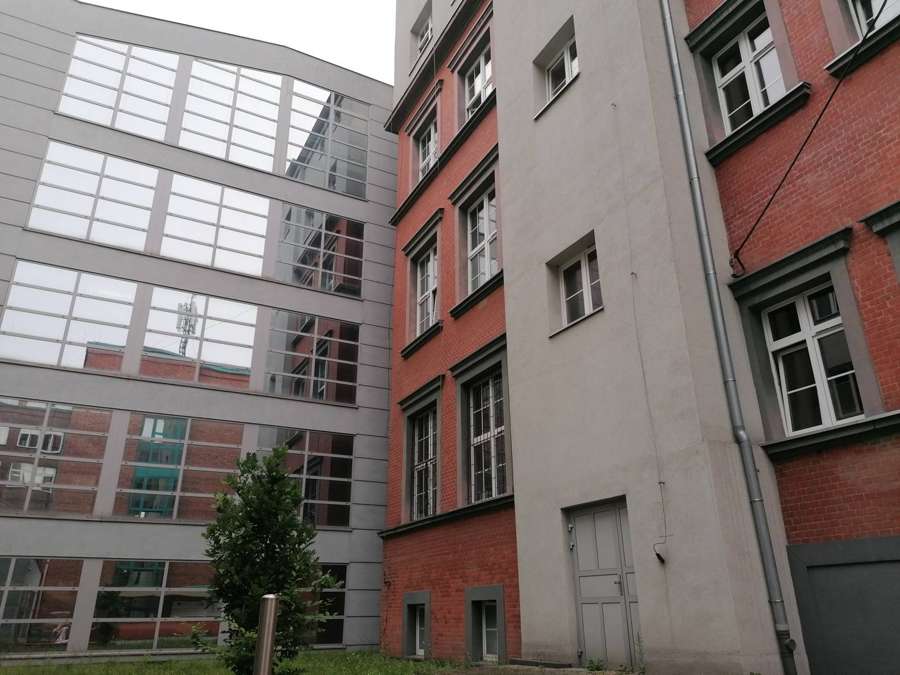
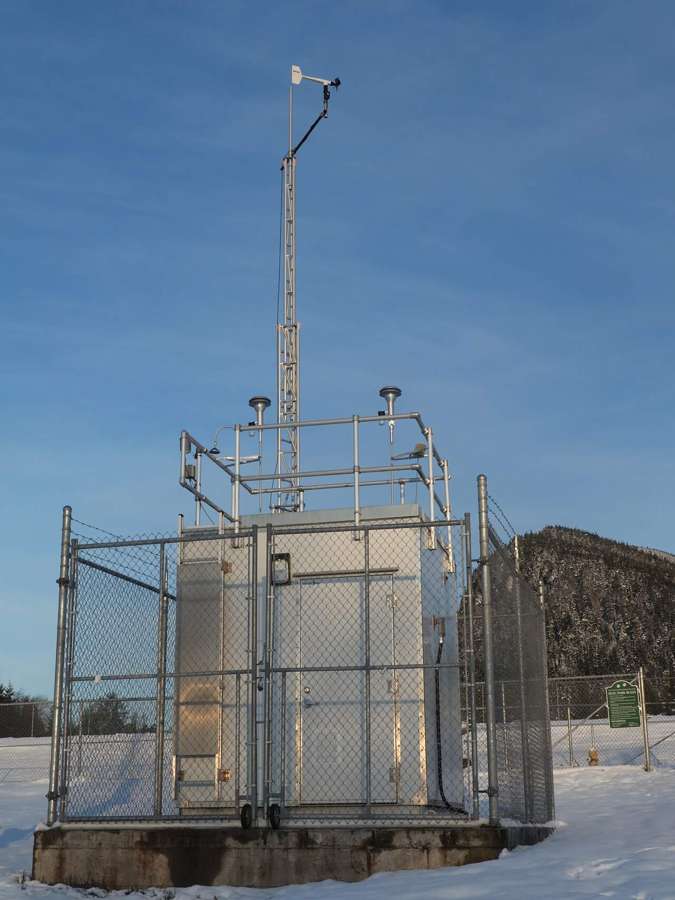
* Photos: "Sunset Drive Air monitoring station" and "Skyline city cities fog morning", Wikimedia Commons, CC0 and public domain.
GIOŚ also explains how thresholds work. Ranges are open on the left and closed on the right, so a PM10 value of 50.0 µg/m³ is still "Good" while 50.1 µg/m³ is "Moderate", and no rounding is applied.
What each category means for you
GIOŚ's health information page says, in short:
- Very good and good: no restrictions on outdoor activity.
- Moderate: acceptable. In specific cases it can be a risk for people who are ill, elderly, pregnant women and small children.
- Sufficient: air pollution is a health risk, especially for those groups, and can have negative health effects. Consider shortening or spreading out outdoor activity, especially long exertion.
- Bad: people who are ill, elderly, pregnant women and small children should avoid being outdoors. Everyone else should minimise physical activity outdoors, especially long or intense effort.
- Very bad: the same groups should absolutely avoid going outdoors. Everyone else should limit time outside to the necessary minimum, and outdoor physical activity is discouraged.
Information and alarm levels for PM10
Separate from the index, the law sets two warning levels for PM10. GIOŚ explains the advice that goes with each:
- Information level, 100 µg/m³ of PM10: small children, pregnant women, older people and people with heart or respiratory disease should limit time outdoors. Healthy adults are advised to refrain from outdoor physical activity.
- Alarm level, 150 µg/m³ of PM10: everyone is advised to limit time outdoors to the necessary minimum.
The values and the other substances covered come from the Minister of the Environment regulation of 24 August 2012 on levels of certain substances in the air, as amended in 2019 according to GIOŚ. The portal's warnings page shows where and when an information or alarm level has been exceeded in the past 24 hours. If no point is shown on the map, there was no such exceedance in that period. Exceedances are determined from automatic measurements.
A simple routine
1. Look at the nearest station on the GIOŚ map before outdoor exercise or a long walk with a small child. 2. If the category is "Sufficient" or worse, follow the advice above, especially for children, older relatives and pregnant women. 3. Check the warnings page on days with heavy smog. 4. Remember that the index is hourly. It can change during the day.
This article does not replace medical advice. If you or a family member has a heart or lung condition, ask your doctor what to do on high pollution days. For how Poland funds home heating upgrades, see our guide to the Clean Air programme.
Frequently asked questions
Where can I see the air quality in my town in Poland?
On the GIOŚ portal, powietrze.gios.gov.pl. It has a map of current measurements, forecasts and a warnings page.
What PM10 level triggers a smog warning?
The information level is 100 µg/m³ and the alarm level is 150 µg/m³ of PM10, according to GIOŚ.
What does a grey marker mean?
"No index" means the station does not measure the pollutant that currently decides air quality in the region. Other results from that station can still be viewed.
Is the data final?
GIOŚ says the data are subject to verification and may change.