Central Museum of Textiles Łódź: Choose Your First Visit
The essentials: The Central Museum of Textiles is at Piotrkowska 282. Wednesday 12:00-17:00, Thursday-Friday 12:00-19:00, Saturday 11:00-18:00, Sunday 11:00-17:00; Monday-Tuesday closed. Permanent exhibitions 22/15 zł each; all exhibitions 55/39 zł. Wednesday permanent entry free with ticket. Open 11 November 2026, 12:00-17:00.
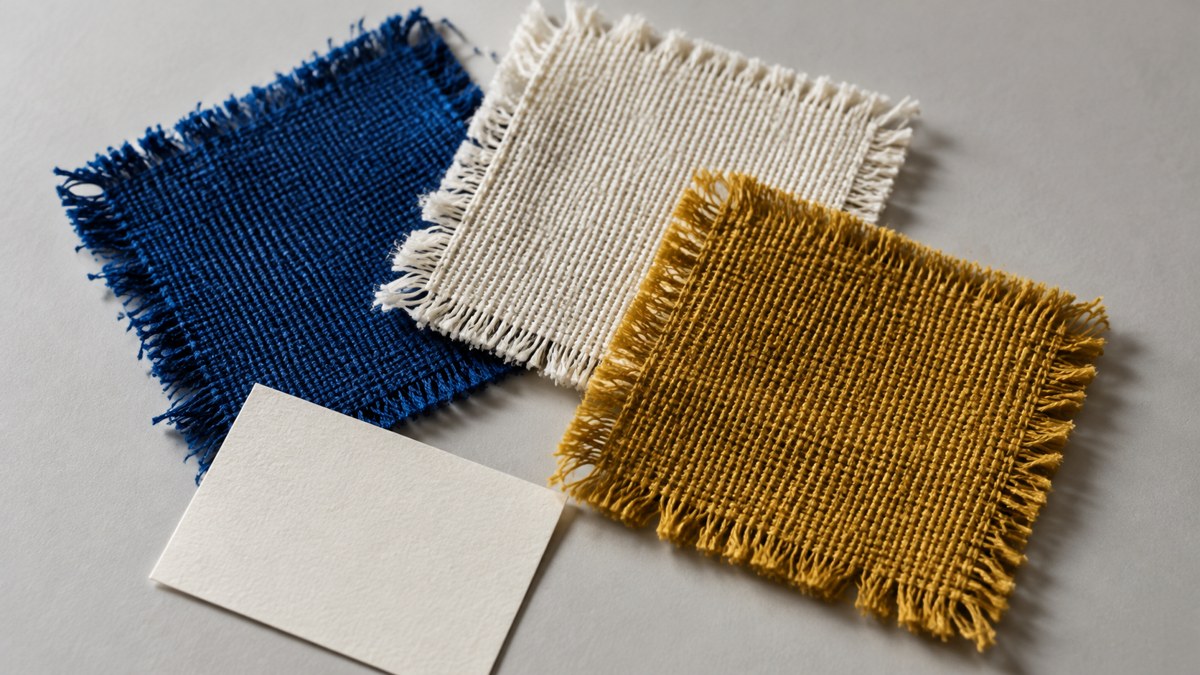
Generated editorial still life of modern thread-cone props, not historic textile equipment, museum objects or a view of the museum.
The Central Museum of Textiles in Łódź is more than a room of old looms. At Piotrkowska 282, the former White Factory complex brings together textile production, fashion, urban history and domestic interiors. You can focus on one permanent exhibition or make a longer visit across several buildings and the Łódź City Culture Park. The most useful preparation is deciding which parts you want before choosing a ticket.
Do not confuse this museum with the separate Museum of the Factory at Manufaktura. Both concern the city's textile past, but their locations, tickets and demonstrations are different. This guide concerns Centralne Muzeum Włókiennictwa at the southern end of Piotrkowska. Check that address in your map or booking page rather than relying on the generic phrase textile museum, especially if you are arranging to meet someone.
Start with a question, not every building
For an introduction to how production shaped Łódź, City-Fashion-Machine is the natural starting point. The Polish title is Miasto-Moda-Maszyna. Its route occupies three levels and moves between machinery, the city and clothing. It is not a simple chronological row in which every case belongs to the next decade. The museum describes connected thematic areas, allowing industrial work and everyday life to be seen alongside design and consumption.
On the ground floor, machines explain the processing of wool, cotton and flax. The laboratory area adds fabric samples, print designs and a microscope station. These can make an unfamiliar manufacturing subject more concrete: start by looking for a material you recognise, then follow the label explaining what changed it. The point is not to memorise every machine name before you can enjoy the exhibition, but to connect a process with something people wore or used.
The next level concerns the growing and changing city, including relationships between work and rest, management and workers, and work and strikes. The fashion level includes clothing brands, shop signs and home-made or altered clothes. That makes the exhibition useful even for someone who is more interested in ordinary shopping and personal style than industrial engineering. It links the finished garment back to the city and the people who produced it.
Household stories in the wooden houses
Łódź Microhistories. Human Microhistories takes a different approach. Across five wooden houses in the City Culture Park, reconstructed domestic and craft interiors tell stories of residents in the nineteenth and twentieth centuries. The operator says the exhibition draws on family memories, diaries and oral-history interviews. The route begins in 1895 and ends in 1985, with context rooms connecting individual lives to wider changes in the city.
These interiors are museum interpretations, not untouched homes with every object left exactly where a former occupant put it. Looking at the setting alongside the source of a story is part of the interest. Compare the work space, household possessions and use of a room, then read how the museum explains the period. The human scale can be a useful counterpoint to a factory exhibition, where the size of machinery may otherwise dominate your impression.
The park is also a practical part of the visit, not simply an indoor corridor between galleries. You cross outside and encounter cobbled surfaces, thresholds and smaller rooms. Take the weather and your party's pace into account. A short trip devoted to the main exhibition can be sensible; choosing several sites within the complex means allowing time for the movement between them as well as for reading and looking.
Last Summer is a different kind of interior
Ostatnie lato, or Last Summer, is a permanent exhibition in a wooden holiday villa moved from Ruda Pabianicka. It concerns leisure in the 1930s through a fictional Łódź family spending the summer of 1939 in a rented villa. The operator is clear about the invented characters and the research behind the setting. Do not present it as the preserved holiday home of that particular family, or as proof that every room reproduces a surviving photograph.
The unusual feature is permission to use many objects with care. The museum describes reading, playing games and other period leisure activities, with original objects and replicas. Follow the instructions on the day, put things back and distinguish this exhibition's approach from the usual rules elsewhere in the museum. Permission to touch within this route is not permission to handle textile displays or machinery in another building. You can also visit conventionally by reading the history and looking at the rooms.
Choose the ticket that matches the route
The current operator tariff lists each of the three permanent exhibitions at 22 zł regular or 15 zł reduced. The all-exhibition ticket is 55 zł regular or 39 zł reduced. That difference matters: a ticket to one permanent exhibition is not a pass to every display. If you mainly want City-Fashion-Machine, choose on that basis rather than assuming that the largest ticket is necessary for any meaningful visit.
Every exhibition ticket also admits you to the Boiler House and the Machines in Motion room according to the published tariff. Ask staff how that fits around your chosen route and what demonstrations are actually running. Older visitor reports describe scheduled working-machine demonstrations, but their timing is not a current operating guarantee. An admission entitlement and the availability of a live presentation are different facts. This guide does not promise a demonstration at a particular minute.
Wednesday admission to permanent exhibitions is free, but you must collect a free entry ticket at the desk. Temporary exhibitions and separate events should not be assumed free. The tariff also lists a combined product with the Museum of the City of Łódź, but that is a separate choice with its own scope. Read the actual ticket terms before buying it rather than treating every museum in the city as included.
Concession categories require the relevant documents. The access pre-guide and the main tariff do not describe the special disability ticket in the same way: one refers to all exhibitions, while the current tariff says one exhibition. If that ticket matters to your visit, ask the desk to confirm its present coverage before purchase. Do not build a multi-exhibition plan around the broader older wording. This guide uses the main tariff for ordinary ticket prices and flags the unresolved special-product scope.
Hours, holiday opening and enough time
The current opening-hours page lists Wednesday 12:00-17:00, Thursday and Friday 12:00-19:00, Saturday 11:00-18:00 and Sunday 11:00-17:00. Monday and Tuesday are closed for ordinary visits. Tickets are sold until thirty minutes before closing. Some older access and editorial pages have different weekend hours, so use the dedicated current hours page rather than copying a timetable from a general description.
For 11 November 2026, the museum explicitly announces opening from 12:00 to 17:00. The ordinary Wednesday permanent-exhibition free-entry arrangement is also stated on that page, with a free ticket required. Recheck new notices before leaving, particularly during a holiday or an exceptional period. An announced open day does not guarantee every activity, screen or temporary display, and it is not a reason to assume the same holiday arrangements at a different Łódź museum.
A July 2026 independent account suggests roughly two to three hours for a wider complex visit. It was a tourism-board press trip, and its older approximate admission price is not used here. Treat the duration as a planning allowance rather than a fixed museum requirement. You can spend less by making a deliberate selection or more by reading closely, adding temporary exhibitions or taking a slower route through several buildings.
English, sound and sensory planning
That independent account reports Polish and English permanent-exhibition panels, with live machine explanations primarily in Polish. It supports an English-speaking independent visit without proving that every activity or temporary caption is translated. Ask about interpretation for a specific tour or demonstration if English is essential. The existence of an audio-description device for access purposes does not by itself establish a general English audio tour of the whole museum.
The museum offers quiet hours on the last Thursday of each month, 16:00-19:00. Its detailed pre-guide says most sound-emitting multimedia and large distracting screens are turned off and visiting is individual. Machines in Motion remains an exception and can still be noisy. Ear defenders are available from the desk, not only during quiet hours. Check that arrangement for your date rather than assuming that quiet hours mean silence throughout the entire complex.
The City-Fashion-Machine page also carries a specific warning that low ventilation and display conditions, especially on the second floor, may affect people with respiratory conditions. Read the operator's warning and ask about your essential access needs before planning a long route. This is a venue notice, not a personal medical assessment. Do not assume that an indoor museum is automatically suitable for every visitor simply because it has lifts and seating in some areas.
Accessibility needs a route-level check
The operator describes lifts and adapted toilets, but also cobbled courtyards, high thresholds and tight spaces in some wooden houses. Ramps serve the houses, while staff can advise on the easiest Boiler House entrance. The holiday villa has a ground-level rear route to a lift. The church is not wheelchair accessible and has no exhibition inside. These distinctions are more useful than calling the entire complex uniformly step-free.
If you need assistance, contact the education team before visiting and explain which exhibitions you want. The museum's pre-guide gives detailed routes and recommends staff help in parts of the complex. Start with a manageable selection, keep ticket coverage clear and ask about the actual demonstration programme on arrival. The result can be a visit about how a city worked and lived, rather than an attempt to tick every building off a list.
Frequently asked questions
Is everything free on Wednesday?
No. Permanent exhibitions are free with a desk entry ticket. Do not assume temporary exhibitions or separate events are included.
Are quiet hours silent everywhere?
No. The museum says Machines in Motion remains noisy; ear defenders can be requested at the desk.
Sources
- Current ticket products and prices (checked 8 November 2026)
- Current hours and explicit 11 November opening (checked 8 November 2026)
- Detailed access, quiet hours and building routes; stale practical conflicts not adopted (checked 8 November 2026)
- City-Fashion-Machine and respiratory-condition warning (checked 8 November 2026)
- Microhistories sources and interpretation (checked 8 November 2026)
- Last Summer: fictional family and object-use rules (checked 8 November 2026)
- City tourism introduction (checked 8 November 2026)
- Independent July 2026 press-trip account, older price excluded (checked 8 November 2026)
- Visitor experience, no current demo timetable guarantee (checked 8 November 2026)