Changing Your Surname in Poland: 3-Month Divorce Deadline, Fees
Short answer: After a divorce you can return to your pre-marriage surname by declaration at a USC within 3 months of the final judgment (11 zl). Later, only a 37 zl administrative change applies.
Changing a surname in Poland works in two different ways, and the difference matters a lot if you are divorcing. One is a quick declaration to return to the name you used before the wedding. It has a hard three-month deadline. The other is a full administrative name change, which needs an application and a good reason. This guide is based on two official gov.pl service pages, "Wróć do nazwiska noszonego przed ślubem" (last updated 21 November 2023) and "Złóż wniosek o zmianę imienia lub nazwiska" (undated), both read on 16 October 2026. Fees can change, so confirm the amounts with your civil registry office (urząd stanu cywilnego, USC) before you pay.
Route 1: go back to your pre-marriage surname after a divorce
Anyone who changed their surname after the wedding, then divorced and wants the name they carried before marriage, can make a declaration. The page says this applies to everyone in that situation.
- Where: at any civil registry office, before the head of the USC. If you are abroad, at a Polish consulate, before the consul.
- Deadline: 3 months from the date the divorce judgment became final (uprawomocnienie się orzeczenia). The page calls this a deadline that cannot be extended. If you miss it, you cannot make the declaration later, and only the administrative name change in route 2 remains.
- Fee: 11 zł of stamp duty before a USC head, or 50 EUR consular fee before a consul. The consul gives the exact amount and currency.
- Wait: none. The USC head or consul accepts the declaration right away.
What to bring to a USC:
- an identity document (ID card or passport) to show;
- proof that you paid the stamp duty, either at the office cash desk or by transfer;
- the place where your marriage certificate was drawn up and the date the divorce judgment became final, given orally to the official.
At a consulate you also need a copy of the final divorce judgment, or a full copy of the marriage certificate with the divorce noted on it. The USC head or consul tells you if other documents are needed, for example when the divorce was granted by a court abroad.
What happens after you sign
The official prepares a record that you and the official sign. It goes to the USC that drew up your marriage certificate, which adds a note about the name. Once that note is entered, a short copy of the certificate shows your current surname, and from the moment of the entry you can use your previous name. To change your ID and other documents, you then need that updated copy.
Route 2: administrative change of first name or surname
This route is for cases the declaration does not cover. The gov.pl page sets out who can apply: a person who lives in Poland, wants to change a first name or surname (including a maiden name), and has a valid reason. It lists these examples:
- the name is ridiculing;
- the person does not use the name they were given;
- the name was changed unlawfully;
- the person wants a name that matches the law of another country of which they are a citizen.
The page describes the applicant as a citizen. It adds that a foreigner who has obtained refugee status in Poland can apply only when life, health, freedom or personal safety is under threat. If you are a foreigner in another situation, ask the USC whether you can apply before you pay anything.
Where, how much, how long
- Where: the USC where your birth certificate and/or marriage certificate was drawn up.
- Fee: 37 zł for the decision. If you use a representative, a power of attorney costs 17 zł of stamp duty, unless it is given to a spouse, a parent or grandparent, a child or grandchild, or a sibling.
- Time: up to 1 month from a complete application, and up to 2 months in particularly complicated cases.
- Pay the fee no later than the day you file.
What to prepare
- the application data: place, first names, surname, maiden name and mailing address;
- proof that you paid the fee;
- your ID card, or in justified cases another identity document, to show;
- any documents you think support your reasons;
- the power of attorney, if you use one.
If a parent's change of surname is to extend to minor children, you also need the other parent's consent, given in person before the USC head or in writing with a notarised signature. Alternatives are a final court decision allowing the change when the parents disagree, or a final judgment depriving a parent of parental authority with a court certificate. A child who is 13 or older must also consent, in person or in writing with a notarised signature.
Which route to pick
If you are divorcing and want your earlier name back, treat the three months after the judgment becomes final as the key date. Mark it on your calendar when you receive the ruling, and ask your USC for an appointment early. If you miss it, you must prove a valid reason in route 2.
This is general information, not legal advice.

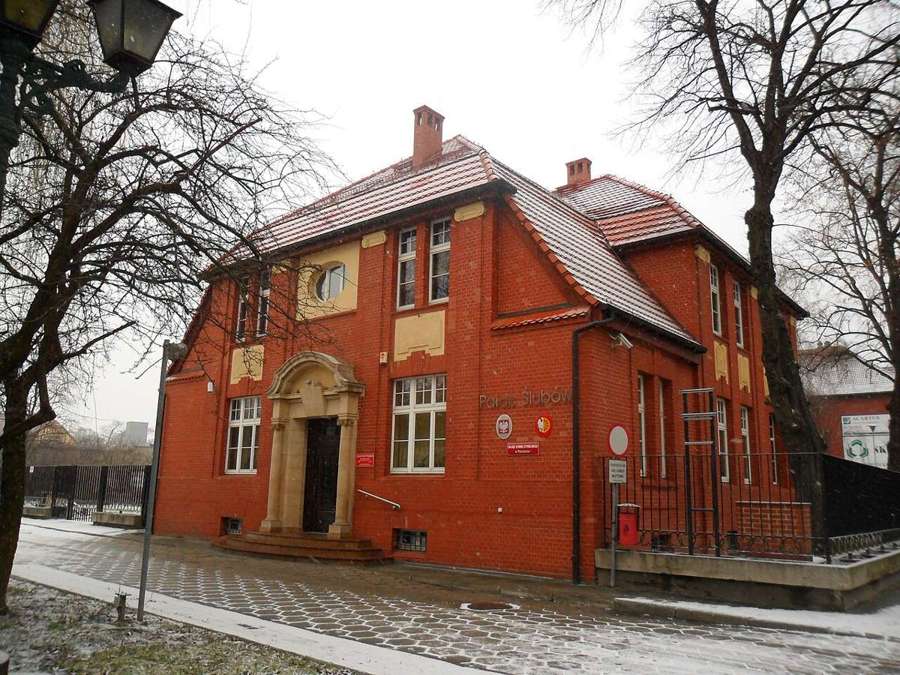
* Photos: Civil registry office in Racibórz (public domain) and two golden wedding rings (CC0), both Wikimedia Commons; illustrative.
Frequently asked questions
How long do I have to go back to my maiden name after a divorce in Poland?
Three months from the day the divorce judgment became final. After that you cannot use the simple declaration and need an administrative name change.
How much does it cost to return to my previous surname?
11 zł of stamp duty before a USC head, or 50 EUR consular fee before a consul, according to the gov.pl page.
How much is an administrative name change in Poland?
The decision costs 37 zł. Using a representative adds 17 zł stamp duty for the power of attorney, with exemptions for close family.
Can a foreigner change their name in Poland?
The gov.pl page describes citizens, and only refugees in Poland under threat to life, health, freedom or personal safety among foreigners. Ask the USC about your own case.