Kalisz Weekend Guide: Poland's Oldest Town and the Zawodzie Ringwork
The essentials: Kalisz, backed by Ptolemy's second-century record of Calisia, makes an easy weekend two hours from Poznań: the District Museum (20 PLN, free Tuesdays), the Zawodzie ringwork, and the 1798 city park. Prices checked 22 October 2026.
Ask a Pole which city is the oldest in the country and the argument starts immediately, but Kalisz has the strongest paperwork: in the second century AD the Alexandrian geographer Ptolemy recorded a settlement called Calisia on the amber route from the Baltic to Rome, and Kalisz has claimed the name ever since. The modern city, capital of its own corner of Greater Poland, keeps that history close to the surface, from an early medieval ringwork you can walk around to a park laid out in 1798. It is an easy, uncrowded weekend, roughly two hours from Poznan, Lodz or Wroclaw. This guide covers the highlights with current ticket prices, checked on 22 October 2026.
Getting there and where to stay
Kalisz sits about 110 km southeast of Poznan and about 100 km west of Lodz, with straightforward road links from both. Direct trains connect the city with Poznan, Lodz and Wroclaw, and the station is a short walk or bus ride from the centre. Drivers from Warsaw should plan on about three hours. Most accommodation is in and around the centre, at city rather than resort prices, and the compact layout means you can leave the car parked for the whole weekend. Kalisz also sits comfortably inside a wider Wielkopolska loop, so it combines well with a night in Poznan or Lodz if you are crossing the region rather than targeting it.
Data source: route and rail planners, checked 22 October 2026.
Old town, basilica and the museum
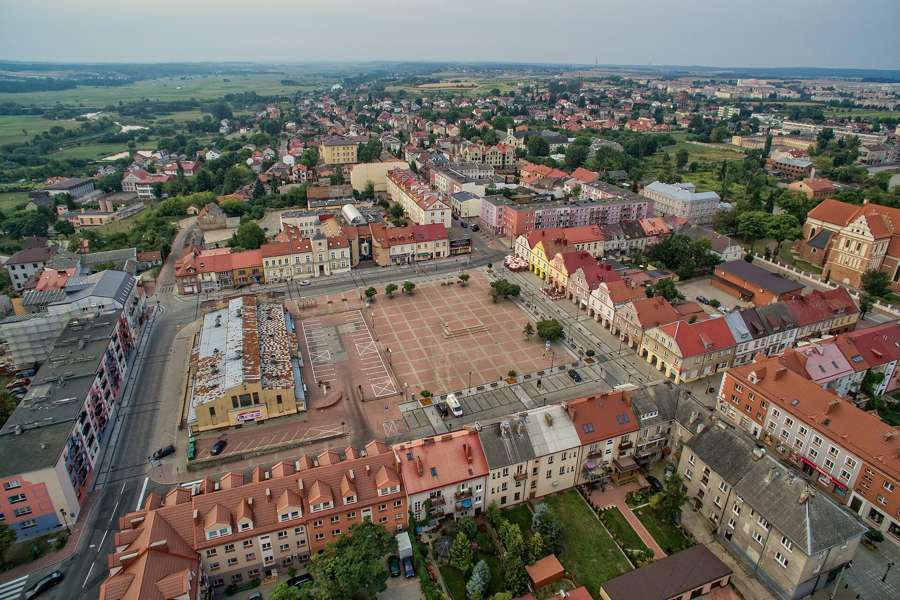
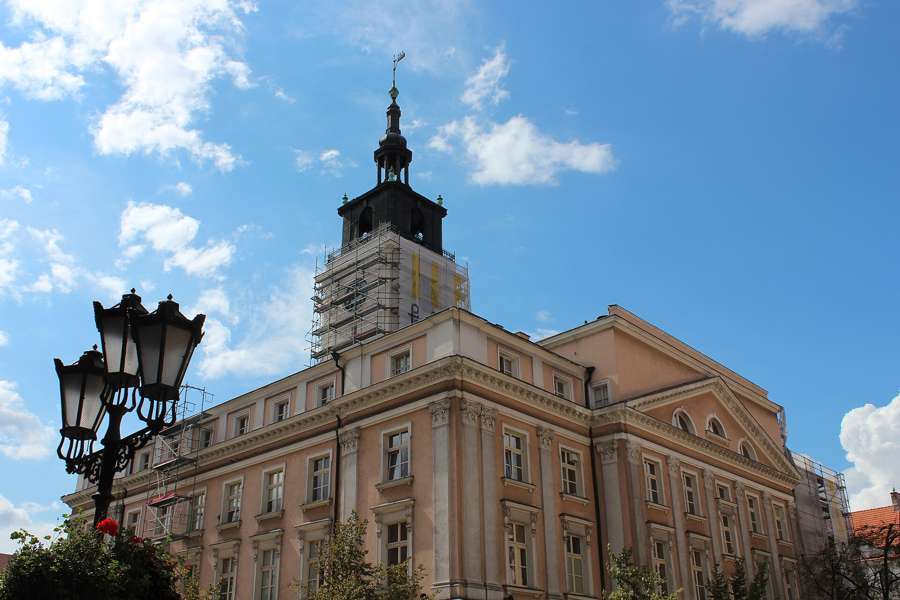
The centre rewards a slow walk: the neoclassical town hall on the main square, the Gothic Collegiate Basilica of the Assumption with its richly decorated interior, and the former Jesuit college complex that once made Kalisz a centre of learning. A short walk further stands the national sanctuary of Saint Joseph, one of Poland's major pilgrimage churches, which tells you how much this city has always mattered to the country's religious map.
There is a reason the centre looks so coherent. In August 1914, in the opening days of the First World War, Kalisz was shelled and largely burned, the first city in Europe destroyed in that war. The town was rebuilt through the 1920s and 1930s to a unified plan, which is why the streets around the square share such a consistent interwar character, and why the Gothic basilica rising above it all carries extra weight: it survived what the rest of the centre did not. The city wears its age lightly; the oldest town in Poland feels lived in rather than preserved.
The District Museum of the Kalisz Land is the essential indoor stop, with archaeology from the Calisia period, crafts and regional history in the main building and several smaller branches. As of the current price list, a normal ticket costs 20 PLN, a reduced ticket 12 PLN and a family ticket 30 PLN, with an excursion rate of 10 PLN per person for organized groups. The archaeology rooms are the core: amber-route finds, early medieval material from Zawodzie, and the story of Calisia told with the actual objects. Upstairs, the historical and craft collections cover the city's guilds, its nineteenth-century prosperity and the 1914 destruction, which gives the rebuilt streets outside a second meaning once you have seen the photographs. Guided tours cost 30 PLN for one exhibition or 70 PLN for all exhibitions, and 150 PLN in English. The museum opens Tuesday to Sunday, from 10:00 to 18:00 on Tuesdays and 11:00 to 18:00 on Sundays, and Tuesday is the free-entry day, which makes it the smart choice if your weekend includes one.
Data source: District Museum of the Kalisz Land, visiting information and price list (muzeumwkaliszu.pl), checked 22 October 2026.
Zawodzie: the ringwork settlement
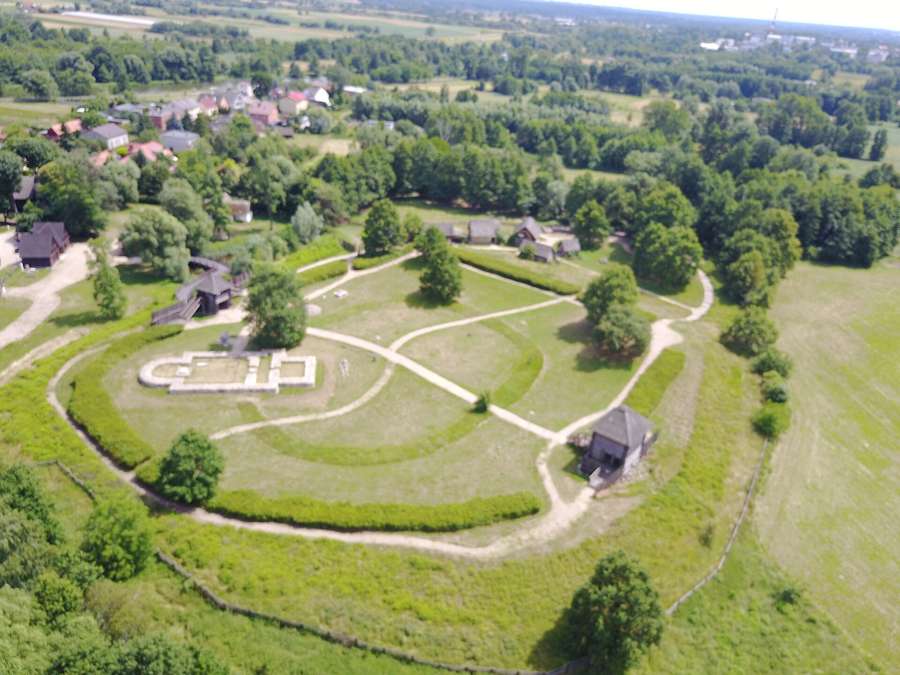
On the city's southern edge, the Zawodzie archaeological reserve preserves the site of an early medieval stronghold on the Prosna river, with the ramparts laid out in the grass and reconstructed timber buildings showing how the settlement looked a thousand years ago. Excavations here underpin the Calisia story: this is where the oldest layers of Kalisz's history come out of the ground. The reserve is open-air, free to walk around, and pairs naturally with a riverside stroll; children treat the ramparts as a ready-made fort, which is exactly what they were. Allow an hour, more if the weather invites a picnic. Bring the museum map or a phone picture of the site plan, because the earthworks read better once you can match ridge to rampart, and the riverside setting explains why the stronghold stood here: water on the approaches, open ground for the fields, and a crossing point on the old route along the Prosna.
Data source: District Museum of the Kalisz Land, branch information (muzeumwkaliszu.pl), checked 22 October 2026.
Park Miejski and green Kalisz
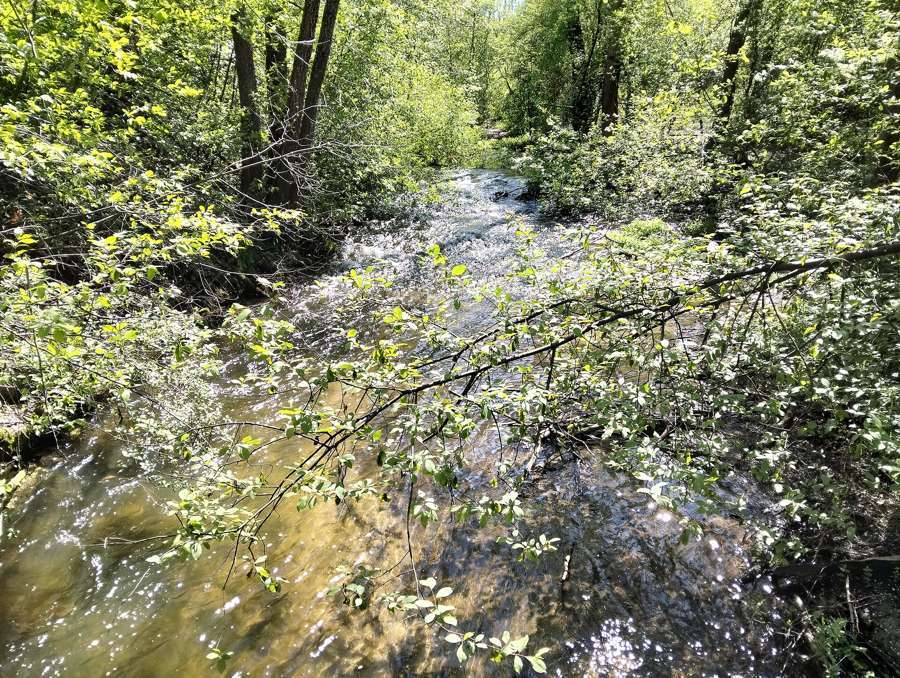
Kalisz's city park, founded in 1798, is among the oldest public parks in Poland, and it still anchors the city's weekends: long alleys, old trees, bridges over the Prosna's channels and enough lawn for every family in town. In spring the magnolias and chestnuts do the work; in autumn the colour does. The park connects naturally to a longer walk along the river, and in season the area fills with the kind of low-key attractions, ice cream stands and rental bikes, that make an afternoon disappear. It is free, central and open all day. In summer the park hosts open-air concerts and the city comes here for its evening walk, the same passeggiata instinct you see in bigger Polish cities, just at a friendlier scale. Bring a blanket and treat it as the city's outdoor living room, because that is how the locals use it.
Data source: City of Kalisz visitor information, checked 22 October 2026.
Visiting with children
Kalisz works well for families precisely because nothing is a marathon. The park handles the running-around requirement, Zawodzie supplies the fort and the imagination, and the museum covers a rainy hour or two, free if you land on a Tuesday. Distances are short and pavements are pushchair-friendly. The rhythm that works is simple: one sight, one green break, repeat. Kalisz does not demand the stamina of Krakow or Warsaw, which is precisely its charm with a tired five-year-old in tow, and the flat centre means even small legs can manage the main loop without complaint. For food, the centre has the usual spread of milk-bar holdovers, pizzerias and modern cafes, and portions in this part of Poland do not believe in restraint.
Data source: District Museum of the Kalisz Land visiting information, checked 22 October 2026.
A two-day plan
Saturday: arrive by midday, walk the square, the basilica and the Jesuit quarter, then the museum, ideally timed for the afternoon when the light in the archaeology rooms is kindest to the amber. Evening in the centre, and do not skip the walk back across the square after dinner, when the rebuilt interwar facades glow under the street lamps. Sunday: Zawodzie in the morning while the light is good for the ramparts, then back to the city park for a long lazy lunch-and-stroll finish before the drive home. If you have a third day, the Wielkopolska countryside around Kalisz, palace towns and small wooden churches included, fills it without effort. Goluchow, about twenty kilometres north, pairs its castle museum with a huge landscape park where fallow deer graze, and makes the easiest add-on in the region.
Frequently asked questions
Is Kalisz really the oldest city in Poland?
Kalisz bases the claim on Ptolemy's second-century record of Calisia on the amber route, and on the early medieval stronghold excavated at Zawodzie. Other cities contest the title, but Kalisz's case is the one with a Roman-era source behind it, and the Zawodzie excavations give the claim physical form rather than leaving it as a line in an ancient book.
How much is the museum in Kalisz?
A normal ticket costs 20 PLN, reduced 12 PLN and a family ticket 30 PLN, as of the price list checked on 22 October 2026. Entry is free on Tuesdays.
What is there to do in Kalisz with children?
The Zawodzie ringwork for climbing and imagination, the 1798 city park for lawns and river walks, and the District Museum for a rainy stretch, with short distances between all of them.
When is the best time to visit?
Late spring for the park in bloom and early autumn for colour, though the city's sights work year-round and crowds are rarely an issue in any season. * Photos: Cover - Azymut (Rafał M. Socha), CC BY-SA 4.0, via Wikimedia Commons (Kalisz town hall). Body - Fallaner, CC BY-SA 4.0, via Wikimedia Commons (Zawodzie archaeological reserve from the air).