Łęczyca Castle Museum: Boruta, Tower Tickets and Winter Access
The essentials: Zamkowa 1. Winter Tue-Fri 10:00–16:00, weekends 10:00–15:00; Mon closed. Ticket office closes 30 minutes earlier. Museum 35/29 zł including tower; tower-only 12 zł. Wednesday permanent exhibitions free. Both Dom Nowy entrances have stairs.
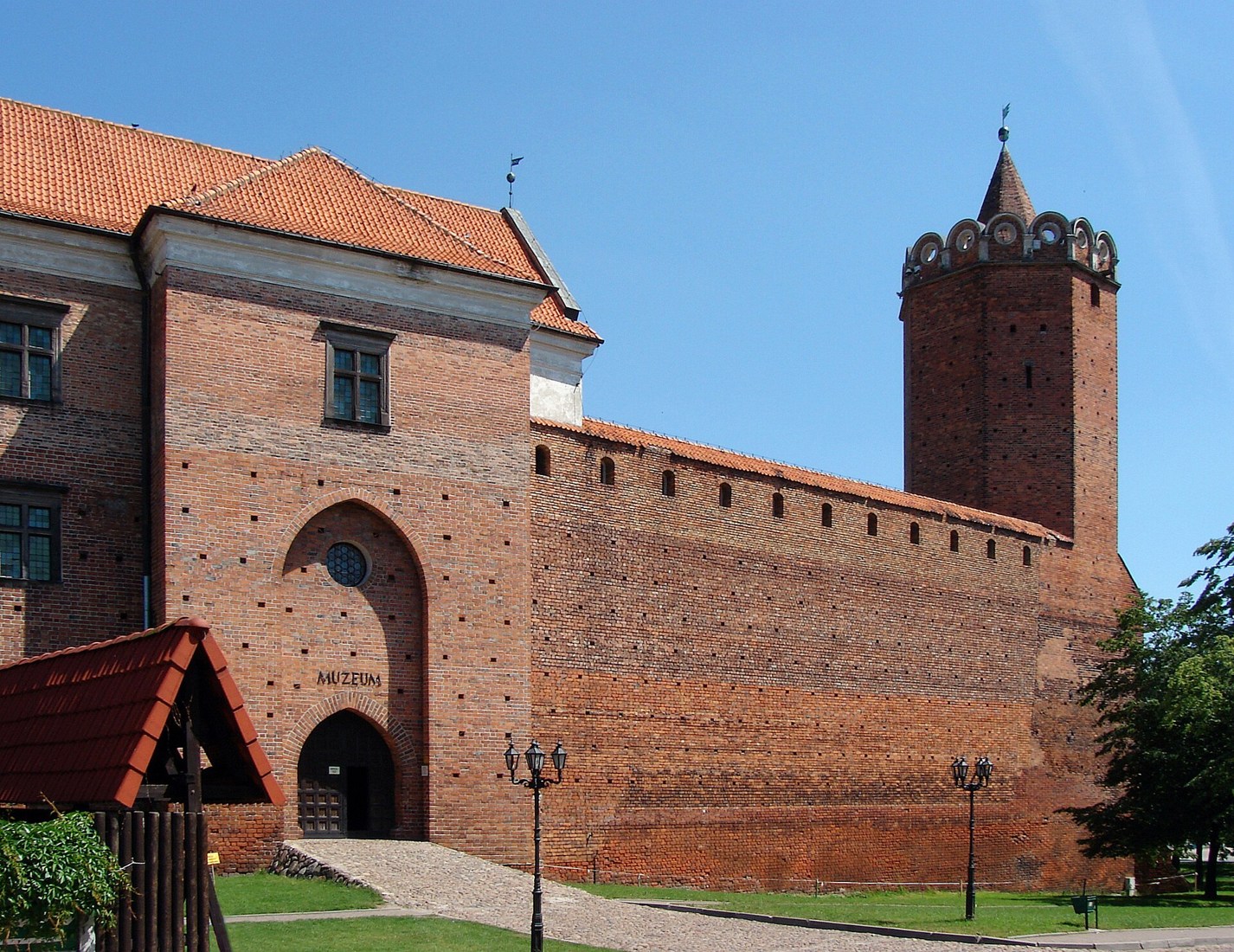
Cover: Łęczyca castle entrance and tower, photographed 7 June 2007. Historic exterior, not a current access survey. Photo: Chrumps / Wikimedia Commons, CC BY-SA 3.0. Resized and recompressed.
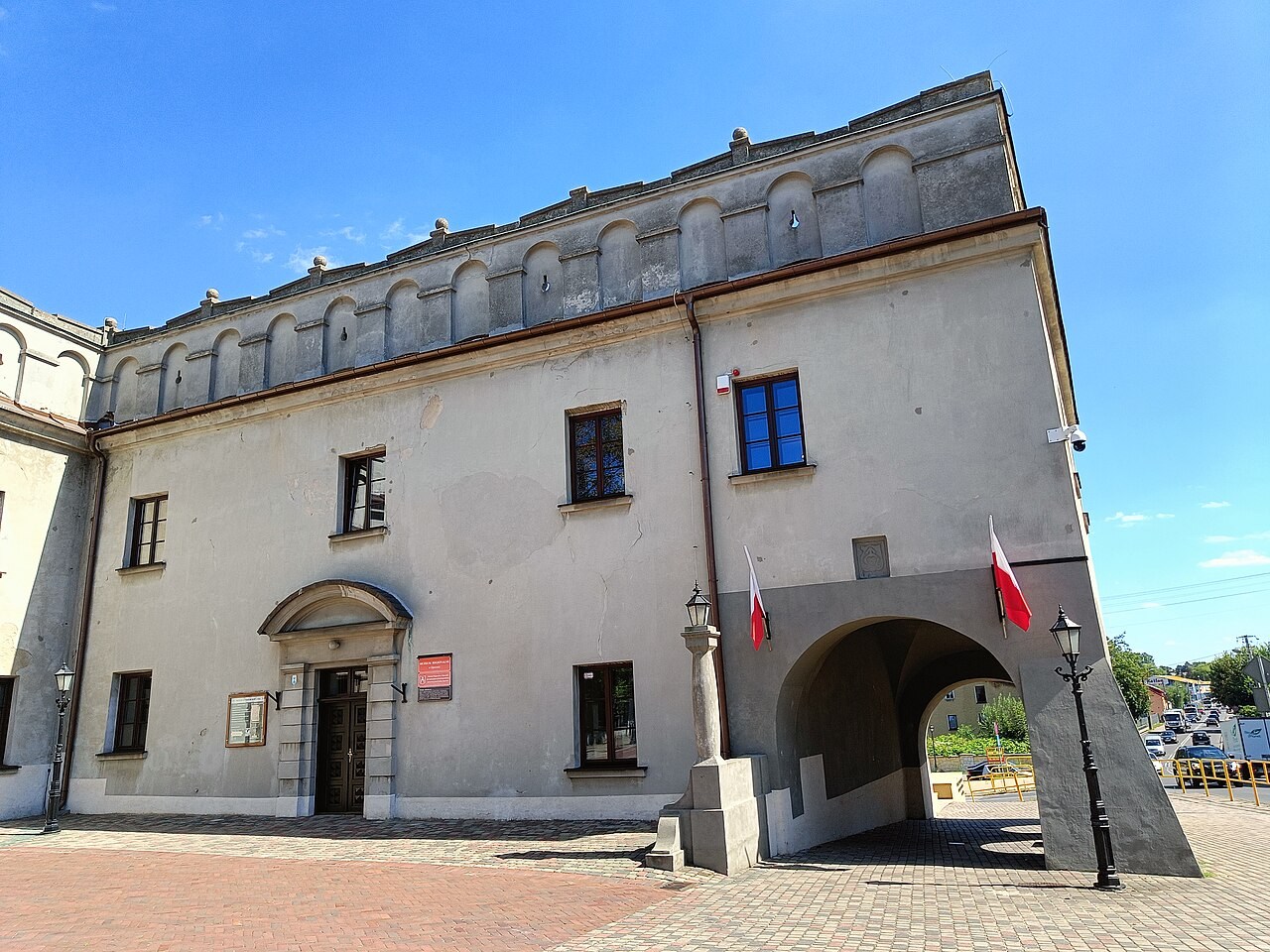
Łęczyca's castle museum combines a royal residence, regional archaeology and a collection of folk devils that is unlike a conventional room-by-room castle tour. The best-known character is Boruta, a shape-shifting figure from local legends. But the museum also has village interiors, historic paintings, craft objects and finds connected with nearby Tum. It is worth choosing the visit for those collections, not only for a tower photograph.
For a winter visit, the important details are the earlier weekend closing time and the difference between the normal ticket, the tower-only ticket and free Wednesday exhibitions. The published access declaration also makes clear that this is not a reliably step-free museum. Plan those points before adding other places to the day.
Winter hours: weekends finish earlier
The museum is at ul. Zamkowa 1, 99-100 Łęczyca. From 1 November to 31 March it opens Tuesday to Friday, 10:00-16:00, and Saturdays, Sundays and holidays, 10:00-15:00. It is closed on Mondays. The ticket office stops selling tickets 30 minutes before closing, which means 15:30 on normal winter weekdays and 14:30 on normal winter weekends.
From 1 April to 31 October the normal timetable is Tuesday to Sunday and holidays, 10:00-17:00. Some parts of the website still show a generic 10:00-17:00 table, and the header includes office hours. Neither should replace the seasonal visitor timetable on the dedicated opening-hours page and in the visiting regulations. In late November, use the winter hours.
The published closure list includes New Year's Day, Epiphany, Holy Saturday, both Easter days, Corpus Christi, 1 November, 11 November and 24-26 December. Check a current notice before a holiday journey. Buying a ticket just before the office closes does not create extra visiting time, so arrive earlier if you want both the exhibitions and the tower.
Tickets: exhibitions with the tower, or the tower alone
The normal museum ticket is 35 zł and the reduced ticket is 29 zł. The museum's tariff page states that both already include tower entry. The separate 12 zł ticket is for visitors who want only the tower, without the permanent exhibitions. Do not add 12 zł to a normal or reduced ticket as if it were an automatic supplement.
Wednesday admission to the permanent exhibitions is free. That wording matters: the free-day statement does not clearly promise free access to every service or to the tower on its own. If the tower is your main reason for coming on a Wednesday, ask the ticket office what applies before assuming that the separate 12 zł charge disappears. Temporary events, workshops and guiding should likewise not be treated as included merely because the day is free.
The director's tariff order dated 29 April 2026, effective from 1 May, lists reduced admission for children who have turned six, school pupils, students, pensioners, disabled visitors and their carers. Children under six, qualifying organised school groups from the town of Łęczyca and honorary blood donors are listed for free entry. Appropriate documents are required. The signed order includes the disability-and-carer concession even though the short webpage summary omits it.
There is no published family-ticket definition in that tariff. Two adults buying normal tickets would pay 70 zł; an adult and a visitor eligible for the reduced ticket would pay 64 zł. These examples are ordinary admission calculations, not named packages or a promise about every family's eligibility.
Boruta: folklore expressed through sculpture
The Boruta exhibition is the museum's most distinctive reason to visit. According to local legend, the devil lives in Łęczyca castle, but the displays are about the stories people told and the forms artists gave them. The museum describes a collection built since the mid-1950s, with more than 400 demon-themed sculptures overall and close to 200 sculptures shown in the exhibition. Do not confuse the total collection with the number on display.
Boruta does not have just one appearance. The museum describes him as a nobleman, an owl guarding treasure, a water-dwelling figure associated with the Bzura, a creature of marshy meadows and other characters. The sculptures are arranged around familiar stories and their settings. Looking for these changes is a useful way to engage children without needing to translate every long description.
The wider display includes other figures from regional beliefs, including witches, nightmares and will-o'-the-wisp-like lights. This is folk art with demonic subjects, not an amusement-park horror attraction. Families can decide how much of that imagery suits their children. Treat Boruta's supposed home and supernatural exploits as legends rather than historical events that the castle proves.
The cottage and the history rooms
The ethnographic exhibition also tells the story of a rural blacksmith's family through a stylised early-twentieth-century home. Kitchen, storage room and living room contain original furniture, household equipment and tools used in the home, farmyard and fields. A reconstructed part of a smithy connects domestic life with a skilled trade.
Look at pottery, basketry, woven objects and decorations as working parts of the rooms, rather than isolated souvenirs. Clothing on the exhibition figures represents regional dress whose use changed over time. The museum notes that men's traditional clothing disappeared towards the end of the nineteenth century, while women's dress continued to be worn until 1914. That gives the display a specific local time and place.
The history exhibition moves from the early medieval region and the collegiate church at Tum through the town and castle, the Battle of Grunwald, the Swedish wars, the partitions and craft guilds. It includes objects excavated at the castle, material connected with the church and a substantial silver-coin find known as the Ozorków treasure. It is a good choice if you want to connect the building with the political and everyday history around it.
Archaeology and art give a different route through the museum
The archaeology rooms start much earlier than the castle. The museum describes Ice Age animal remains, flint tools, pottery, burial material and objects from successive communities in the region. Finds from the early medieval stronghold now located in Tum include weapons, tools, bone and antler objects, ornaments and amulets. The range is useful for visitors more interested in how people lived than in royal biographies.
The art rooms bring together portraits, landscapes, furniture, weapons and decorative objects. Some portraits are linked to people associated with the region, while the furniture and tableware help show how more affluent interiors were arranged. There is no need to cover every department at equal speed. Choosing Boruta plus either archaeology or history can produce a more satisfying visit than racing through all the labels.
Tum appears repeatedly in the museum's story, but the displays in Łęczyca do not mean that a castle ticket includes entry to a church, stronghold or open-air site elsewhere. Check those places separately if you want to continue the trip. Do not transfer the castle's winter hours or free-day policy to them.
Castle history and the optional tower
The museum dates the castle's construction under Casimir the Great most probably to 1357-1365. It later hosted rulers including Władysław Jagiełło and underwent fires, wartime damage, rebuilding and periods of neglect. The surviving complex should not be read as an untouched medieval residence. Its history includes administrative uses and major changes to its buildings and walls.
The tower is included in normal and reduced museum admission, but inclusion in the price does not establish a step-free route or guarantee conditions suitable for every visitor. Ask staff about the climb and any current restrictions, particularly if stairs, balance, weather or a child's confidence could affect the visit. The museum's published architectural declaration does not supply a detailed tower-access specification.
Keep the tower optional when planning a family visit. The indoor collections provide their own reason to come, especially in winter. If a view is the only thing you want, the 12 zł tower-only option is the relevant ticket to ask about rather than paying for exhibition access you do not intend to use.
Access, phones and photography
The museum's accessibility declaration identifies two entrances to the Dom Nowy building, one from the gate and one from the courtyard, and says both are reached by stairs. It warns that visiting the exhibitions may be difficult for wheelchair users. Visitor toilets are on level -1. It also reports no sound-navigation speakers above the entrance for blind or partially sighted visitors.
Those details do not support a promise of independent step-free access, an accessible toilet route or a lift. Before making a special journey, call +48 602 583 435 and explain the route and assistance you need. Ask about actual rooms, steps and toilet access rather than relying on a general description of the castle grounds.
The published visiting regulations prohibit phone use and require written director's permission for photographing or filming exhibits and exhibition rooms, including photography without flash. Do not plan to photograph labels or use a translation app throughout the galleries without asking staff. Children under 13 must visit with a responsible adult, and the rules state that there is no cloakroom. Travel with a manageable bag and follow the route indicated by staff.
Guides, school visits and language
Museum guiding costs 150 zł for a group of up to 25. Reservations are required at least a week ahead, by phone, email or in person; tourist-service booking hours are Monday to Friday, 8:30-15:30. Groups larger than 25 are divided. The regulations also restrict outside guiding to guides who have completed the museum's course, so do not assume any independent guide can lead a group inside.
A museum lesson of about 45 minutes is listed at 150 zł for up to 25 participants. The 2026 order says admission charges also apply to lesson participants. Workshops using supplied materials cost 150 zł per group of up to 25 plus 12 zł per participant for materials. Medieval games are charged per person per station in the tariff; agree the selected activities and full quote rather than confusing that unit price with a complete programme.
The website has English visitor information, but that alone does not confirm an English guide, audio guide or complete English gallery labels. Ask about language when arranging a visit. For independent visitors, a weekday or early winter-weekend arrival, a chosen pair of departments and an optional tower climb make a practical starting plan. Free Wednesday is useful for the permanent rooms, provided you keep its limits in mind.
Frequently asked questions
Does a normal ticket include the tower?
Yes. The tariff says normal 35 zł and reduced 29 zł museum tickets include the tower. 12 zł is for the tower alone.
Is everything free on Wednesday?
The published free-day statement covers permanent exhibitions. It does not clearly establish free tower-only admission or free guiding.
Is the museum step-free?
The declaration says both entrances to Dom Nowy have stairs and toilets are on level -1. Confirm any assistance and route before visiting.