Morsowanie: A Beginner's Guide to Winter Swimming in Poland (2026)
The essentials: Morsowanie is the Polish habit of short dips in water below 15°C, autumn to early spring. Cold shock can incapacitate within seconds and claimed benefits rest on limited evidence. Heart disease, epilepsy, past stroke, hypothyroidism, kidney disease, pregnancy and infections rule it out. Join a club; never go alone.
Every November, on beaches from Świnoujście to Hel, small crowds of people in woolly hats walk past the dog walkers and straight into the Baltic. They come out ninety seconds later red as lobsters, laughing, and wrap themselves in towels like nothing happened. This is morsowanie, Poland's national cold-water habit, and it is one of the easiest local traditions for an expat to join - provided you respect what cold water actually does to a body.
What morsowanie actually is
The word comes from mors, the walrus, and the people who do it call themselves morsy. The activity itself is simple: enter water that counts as cold, stay a short time, get out, warm up. Medical reviewers put the boundary of "cold" at 15°C - below that, water is officially cold-water bathing territory, and the World Aquatics federation will not even sanction open-water competition below 16°C. Morsowanie is not distance swimming. A typical dip is seconds to a couple of minutes, done for the shock and the glow afterwards, not for exercise in the water itself.
In Poland the season runs roughly from October to April. Regulars insist autumn is the correct starting point, because you acclimatise as the water cools week by week.
* Data source: ALAB laboratoria medical review of cold-water bathing, and the Baltic club list at BaltykTeraz, both checked 23 October 2026.
The honest health evidence
Start with the caveat: the health claims around morsowanie run ahead of the research. Medical reviewers, including ALAB laboratoria's literature review, describe the study results as limited and inconsistent. Some analyses show dippers reporting fewer colds and milder infections; others show that frequent swimming in water below 5°C may actually raise infection risk, because repeated extreme cold can act as chronic stress and disrupt the daily cortisol cycle. Nothing in this section is a settled medical benefit.
With that said, here is what supporters and Poland's sanitary inspection claim. The inspection describes immersion in cold water as a controlled shock: blood vessels constrict, and in people who dip regularly the immune response is reported as stronger, with respiratory infections reported less often. The same guidance credits cold dips with better circulation, higher energy, lower stress and an endorphin release behind the famous post-dip euphoria, and some chronic-pain patients use cold bathing for relief. Treat all of this as claims from that guidance, plausible but unproven - a bracing habit for healthy people, not a therapy. Anyone selling it as a cure is ahead of the evidence.
* Data source: WSSE Wroclaw guidance on morsowanie (published 9 February 2026) and the ALAB laboratoria review, checked 23 October 2026.
Who should not try it
The sanitary inspection is blunt about contraindications. Do not take up morsowanie, or stop and ask a doctor first, if any of these apply:
- heart or circulatory disease, including uncontrolled high blood pressure
- epilepsy
- a past heart attack or stroke
- hypothyroidism
- kidney disease
- pregnancy
- any current infectious or viral illness
The list is not ceremonial: cold immersion raises heart rate and blood pressure within seconds. The inspection adds that anyone with any health problem should consult a doctor first.
* Data source: WSSE Wroclaw guidance on morsowanie contraindications, published 9 February 2026, checked 23 October 2026.
Cold shock and cold incapacitation: the parts that actually hurt people
Two different dangers matter, and neither has a safe window. The first is cold shock. The RNLI, the UK's lifeboat charity, is blunt: water at 15°C or below seriously affects breathing and movement, and the shock "can be the precursor to drowning". Entry triggers an involuntary gasp and breathing that can speed up as much as tenfold, with panic raising the chance of inhaling water - it takes as little as half a pint of sea water in the lungs to start drowning. The same spike in heart rate and blood pressure can cause heart attacks even in the relatively young and healthy. The initial effects pass in under a minute or two if you stay calm, keep your airway clear and do not try to swim until your breathing is back under control.
The second danger arrives later and ends fewer conversations. As the body cools, blood shunts to the core and the arms and legs weaken: muscles stiffen, nerves numb, dexterity goes. The Outdoor Swimming Society calls this cold incapacitation and names it a key cause of swim failure - the point where you can no longer move effectively regardless of fitness or swimming ability. Its onset varies widely between people, from a few minutes to half an hour, which is why no fixed "safe time" exists. A jetty or ladder that looked easy on the way in can become unclimbable on the way out.
The practical rules follow from that. Get out at the first sign of trouble - persistent shivering, numb or clumsy hands (if you cannot touch your little finger to your thumb, that is incapacitation), slurred speech, dizziness or confusion - without waiting for a timer, a leader or anyone else's schedule. Mild hypothermia, body temperature below 35°C, announces itself through exactly those symptoms, and leaving the water does not end the cooling: "afterdrop" means you can feel colder ten minutes after exiting, so dry, dress and warm up promptly. And remember the RNLI's closing line: cold water can leave you helpless in seconds, so treat it with respect.
* Data source: RNLI cold-water-shock guidance and Outdoor Swimming Society cold-incapacitation guidance, checked 23 October 2026.
How to start without being stupid about it
First-aid trainers at Centrum Ratownictwa lay out the standard preparation, and every club will tell you the same:
- Start in autumn, while the water is merely cold rather than near freezing, and let your body adapt across weeks
- Take cold showers for a few days before your first dip
- Choose an organised spot with easy access and a stable, known bottom
- Do a light warm-up beforehand - enough to get blood moving, never enough to sweat, because dilated vessels dump heat faster
- No alcohol before or after
- Walk in steadily; never run, jump or dive into cold water
- Go with other people, always - a dip without company is the one rule with no exceptions
- Wear as little as practical in the water, because wet fabric pressed to skin accelerates cooling
Kit is deliberately minimal: water shoes against whatever is on the bottom, a large towel, warm loose clothes and a hat for after, and a hot (not scalding) drink. Organised groups typically add a first-aid kit with emergency NRC foil for hypothermia, and trainers suggest knowing where the nearest AED is - not because clubs are dangerous, but because undiagnosed heart conditions are the main way things go wrong.
* Data source: Centrum Ratownictwa safe morsowanie guidance, checked 23 October 2026.
Where to join a walrus club
The Baltic coast is the heartland, and the club scene is welcoming and free. The Gdańsk Klub Morsów has been meeting since 1975 - fifty years of Sundays at 11:00 at Jelitkowo beach, entrance 72/73, including holidays. Gdynia's club gathers on Sundays at 12:00 from October to April. Sopot has groups at beach entrances 23 and 45. Further west, Kołobrzeg's club dips at the central beach by the pier on Wednesdays and Fridays, and Ustka, Mielno, Władysławowo, Puck, Jastarnia, Hel and Świnoujście all have named clubs with regular slots, most listed with current times on their Facebook pages.
Inland, the habit lives on lakes and rivers: Warsaw's morsy use the Vistula and city lakes, and Wrocław and Kraków have active groups on local water. Search "morsy" plus your city and show up on a Sunday morning; clubs expect beginners and keep first dips gentle.
* Data source: BaltykTeraz Baltic walrus-club directory with locations and meeting times, checked 23 October 2026.
Your first dip: what actually happens
You arrive dressed for standing around in the cold. There is a short warm-up on the sand - jumping jacks, arm swings, nothing heroic. The group walks in together, usually singing or counting. You wade to waist or chest depth, get your shoulders under on the count, gasp (everyone gasps the first time), and climb out. Someone hands you your towel. Expect the "afterdrop": you may feel colder ten minutes after getting out than you did in the water, so dress fast, keep moving gently and have a hot drink. The glow afterwards is the entire point.
Two pieces of etiquette matter: never splash or dunk anyone else, and never press anyone - including yourself - to stay in longer. The veterans spent months getting used to the cold.
* Data source: Centrum Ratownictwa preparation guidance and BaltykTeraz club listings, checked 23 October 2026.
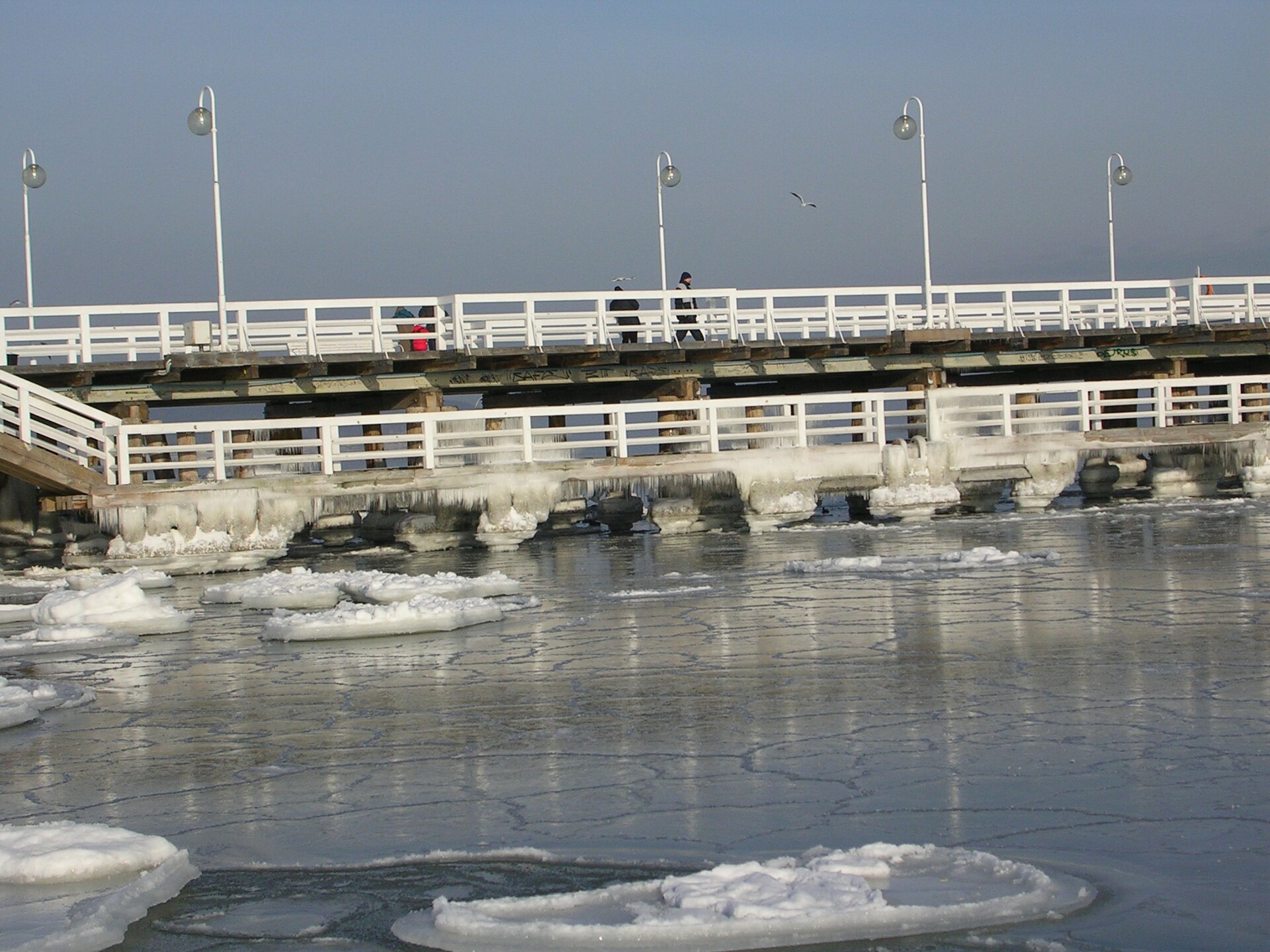
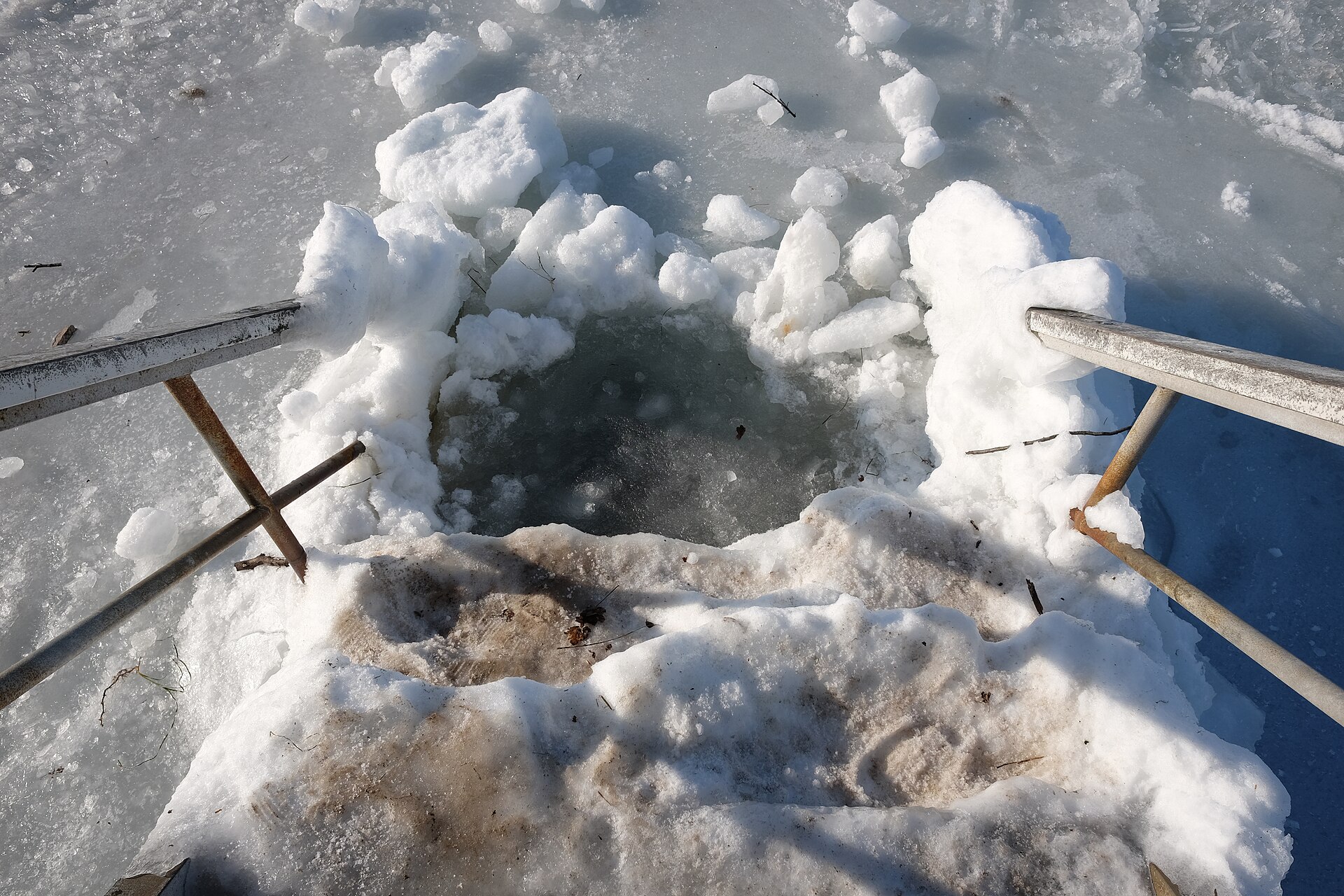
* Photos: CC BY 3.0 Tomasz Przechlewski via Wikimedia Commons (Sopot pier surrounded by ice floes, cover); CC BY-SA 4.0 Johan Jönsson (Julle) via Wikimedia Commons (ladder and ice hole at a winter bathing jetty, body).
Frequently asked questions
What exactly is morsowanie?
Morsowanie (from mors, the Baltic walrus) is recreational bathing in cold water, defined as water below 15°C. In practice it means short, controlled dips from autumn to early spring rather than distance swimming - a few seconds to a couple of minutes, then out and dressed.
Is morsowanie actually good for you?
Poland's sanitary inspection credits regular cold dips with a stronger immune response, better circulation, lower stress and an endorphin lift. Medical reviewers add a caveat: study results are inconsistent, and frequent swimming in water below 5°C may actually raise infection risk. Treat it as bracing exercise, not medicine.
Who should not try winter swimming?
The sanitary inspection lists heart and circulation disease (including uncontrolled high blood pressure), epilepsy, a past heart attack or stroke, hypothyroidism, kidney disease, pregnancy and any current infection as reasons to skip it. Anyone with a health condition should ask a doctor first.
How long should a first dip last?
Short and unplanned in advance - there is no safe fixed duration, because cold incapacitation can begin within minutes and varies widely between people. Beginners wade in to the waist or chest, dunk to the shoulders, and climb out. Leave immediately if you notice persistent shivering, numb or clumsy hands, slurred speech or dizziness, whatever the clock says. Even experienced winter swimmers are often in for only a few minutes or a few dozen strokes.
Do I need special equipment?
No wetsuit - experienced dippers wear as little as possible because wet fabric against skin speeds up cooling. Bring water shoes against sharp objects on the bottom, a big towel, warm loose layers and a hat for afterwards, and a hot drink. Clubs often bring a first-aid kit with emergency foil.
Where can a beginner try morsowanie in Poland?
With an established club. On the Baltic, the Gdansk walrus club has met since 1975 at Jelitkowo beach (entrance 72/73, Sundays 11:00), Gdynia's club meets Sundays at 12:00 from October to April, and Sopot, Kolobrzeg, Ustka, Puck, Jastarnia and Hel all have active groups. Inland, search for 'morsy' plus your city - Warsaw, Wroclaw and Krakow all have lake or river groups.
When is the morsowanie season?
Most Baltic clubs run from October to April, and regulars say autumn is the right time to start because the water is still relatively mild. By January the Baltic can sit near freezing, and dips get shorter rather than longer.
Sources
- WSSE Wroclaw (sanitary inspection) on morsowanie benefits and contraindications
- ALAB laboratoria medical review of cold-water bathing
- Centrum Ratownictwa first-aid trainers: safe morsowanie rules
- BaltykTeraz list of Baltic walrus clubs
- RNLI cold water shock guidance
- Outdoor Swimming Society: cold incapacitation and exposure