Poznań Musical Instruments Museum: English Guide and a First Visit
The essentials: Stary Rynek 45. Tickets 15/10 zł; Tuesday free. Included multimedia route has Polish and English versions. Tue-Wed 10-16, Thu 10-18, Fri 10-20, weekends 10-17; Monday closed. 11 November: Sunday hours. No lift or accessible toilet; ground floor only partly accessible.

Generated editorial still life of modern tuning-fork and paper props, not a historic instrument, museum object or gallery view.
The Museum of Musical Instruments in Poznań is a good choice if you want to connect objects with sound, rather than simply walk past another set of glass cases. Its permanent exhibition follows European musical history and introduces instrument traditions from other parts of the world. You do not need to play an instrument or read music to find a way into it. The most useful preparation is practical: know how the included multimedia guide works and understand that the old-town building has no lift. This guide was checked on 8 November 2026.
Find the branch on the Old Market Square
The museum, Muzeum Instrumentów Muzycznych, is at Stary Rynek 45, with the detailed access declaration using 45/47. It is a branch of the National Museum in Poznań, but it is not the painting gallery on Aleje Marcinkowskiego or the applied arts museum in the Royal Castle. Give the musical-instruments name and Old Market Square address when arranging to meet someone. The shared institution does not mean that a ticket, offer or access route at another branch automatically applies here.
Current tickets and opening hours
The current branch tariff lists normal admission at 15 zł and reduced admission at 10 zł. A 1 zł ticket is listed for children and young people aged 8-26, subject to the applicable eligibility rules. Tuesday is the published free day. Bring the documents needed for your category and ask the desk if your circumstances do not clearly match the listed rules. Do not assume that an age line removes every documentation requirement, or that the cost of a private lesson or booked tour is included in ordinary admission.
Hours are Tuesday and Wednesday 10:00-16:00, Thursday 10:00-18:00, Friday 10:00-20:00, and Saturday and Sunday 10:00-17:00. Monday is closed. The ticket office closes thirty minutes before the museum. Arriving at that final cutoff leaves little time to collect a guide, work out the layout and listen to examples. If the guide is central to your visit, give it room in the day rather than treating the last ticket-sale time as a recommended arrival time.
The branch's holiday rules say it opens on 11 November as on Sunday. For 11 November 2026, that means the published holiday pattern is 10:00-17:00 rather than the ordinary Wednesday timetable. Check for a fresh branch notice before setting off, since a general holiday rule does not guarantee that no operational change will occur. The page also lists quiet hours on selected dates, but a recurring quiet-hour entry should never override a separately stated museum closure. Confirm the actual day if a quieter visit is important.
The included English multimedia route is the useful starting point
The museum's education page describes a multimedia guide for individual visitors, included in the admission price. Its stated programme lasts sixty minutes and covers selected topics across the permanent exhibition. The museum explicitly says the material is available in Polish and English. It includes information about objects, historical context, performance practice, sound examples and close-up details. This is stronger evidence than merely finding an English webpage: there is a named English interpretation service connected with the visit.
At the desk, ask how to collect and use the guide and which equipment is available that day. A published service description is not a reservation of a device for your group, and the sixty-minute programme is not a compulsory duration for every visitor. Build time for looking between listening stops, a break or a shorter route. The city tourism page describes a tablet guide, while the current tariff refers to obtaining the multimedia guide. Follow the desk's actual arrangements rather than arriving committed to a specific device format.
The English guide does not prove that every temporary event, lesson or staff-led tour is delivered in English. Booked education products have their own terms and audience. The museum describes opportunities for younger lesson participants to try selected instruments, but that belongs to the educational activity, not a general permission to play historic display objects. If hands-on music is your main goal, enquire about the relevant programme first. Ordinary self-guided admission should be understood as looking and listening through the museum's designated interpretation.
Follow changes in musical use, not only famous names
The official collection account describes a route beginning with late-medieval and Renaissance music, then moving through Baroque and eighteenth-century sacred and secular settings. A helpful first question is where music was used: in worship, at court, in a household or in a public performance. Look at the size, decoration and arrangement of an instrument before listening to its example. The sound can change what you noticed in the case, while the object can change how you imagine the people making that sound.
The museum describes themes including Renaissance consorts and the relationship between sacred and secular eighteenth-century music. You do not have to remember specialised terms to make comparisons. Ask whether instruments appear intended to blend with others, carry a melody or support singers. Then let the guide supply the specific explanation. This is an editorial way to approach the displays, not a claim that every case contains an interactive demonstration or that visitors will hear a live performance during ordinary opening hours.
Later sections address court music, symphonic and chamber music, piano traditions and twentieth-century developments. Choose one contrast that interests you rather than treating the chronology as a race. A piano-related section might be a natural anchor for one visitor, while another wants to understand strings or wind instruments. The museum's own account includes both instruments and material connected with musical life, such as documents and accessories. That makes the route about the circumstances of music-making as well as the construction of the instruments themselves.
Look closely at making and preservation
The museum's institutional history links its beginnings to collector Zdzisław Szulc and a founding group of seventy-four instruments. The permanent display opened at the Old Market Square location in 1952. Current official pages give different total-holdings figures, so a precise collection total is not a useful promise for a visitor. The important distinction is that the museum owns more than it exhibits. A historical collection description is not a guarantee that a particular violin, keyboard or other named instrument is currently on display.
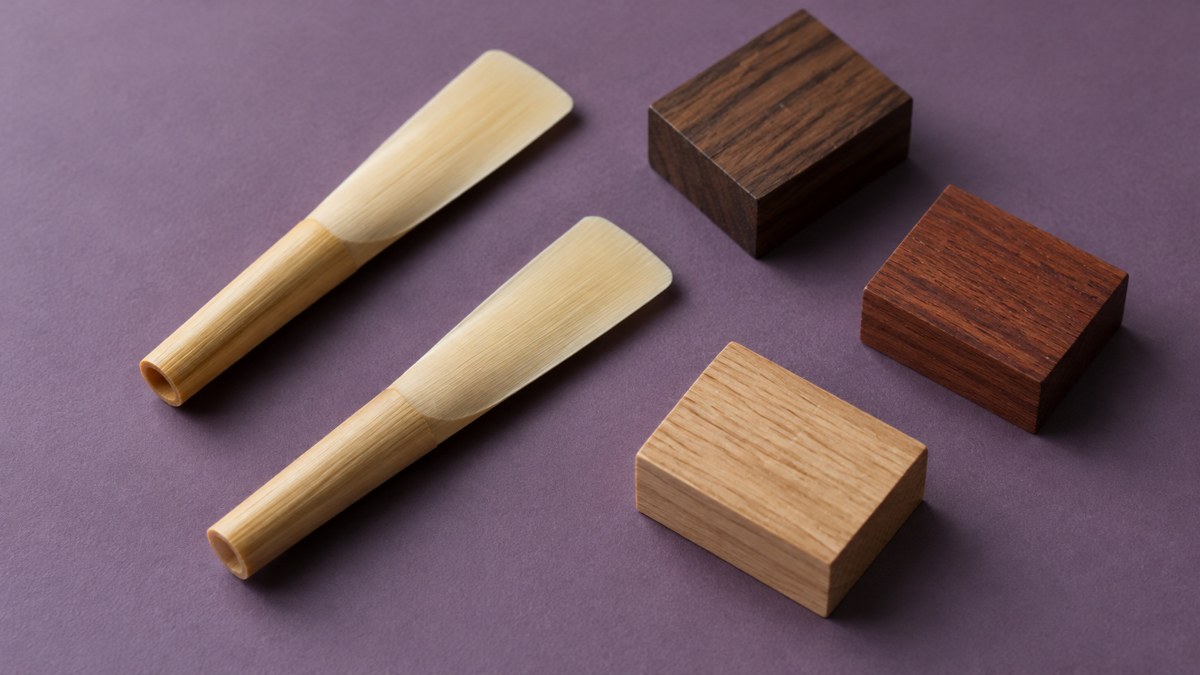
Instrument-making is a useful thread because it links appearance with function. Follow the museum's explanations of how materials, shapes and working parts produce sound, rather than assuming the most ornate object is the most significant. The museum also describes a specialist conservation workshop and work on copies and reconstructions. That is a reminder to read object labels carefully: a reconstruction used to explain a historical design is not the same thing as an original surviving instrument, and a display object is not automatically a playable demonstration.
World traditions need their own context
The official exhibition account includes Polish folk instruments and material from the Black Sea region, Asia, South America and Africa. Treat those sections as introductions to particular instruments and practices, not as a complete survey of entire continents. Read where an object comes from and what the museum says about its use. Resist judging an unfamiliar instrument only by resemblance to a European concert instrument. Its sound, social role and performance setting may be the point of the display rather than an apparent technical similarity.
The guide's recordings can help here, but a short example is still a selected interpretation. It cannot stand for every performer or context in a musical tradition. Compare carefully and use the names provided by the museum. If you are moving between European chronology and region-based sections, take a moment to reset your expectations: the arrangement is not a single ladder from simple instruments to advanced ones. The museum's theme is the variety of musical forms and functions, not a competition between cultures.
The building has real access limits
The current visit page says there is no lift, the ground floor is only partly accessible and there is no accessible toilet. The detailed declaration is more specific: the entrance threshold is approximately 3.5 centimetres, and the last room on the ground floor has an approximately eighteen-centimetre threshold. The upper floors cannot be reached by wheelchair. These are important limits even if a listing elsewhere gives the museum a broad accessibility label. Do not plan a step-free full-building visit on that basis.
The declaration says it is possible to buy a ticket only for the ground-floor exhibition. Ask the desk about the current product and the rooms you can use; no separate price is established here. It also lists assistance-dog access, a navigation marker on the façade and hearing loops at the ticket desk and shop. Those features do not cancel the physical thresholds, lack of lift or lack of accessible toilet. Contact the branch on 61 85 20 857 if you need a route checked before travel.
Leave the visit flexible if stairs, sound or fatigue are a concern. Ask which interpretation stops fit the route you can actually take, rather than assuming the full sixty-minute programme is equally usable from the ground floor alone. Confirm any quieter period and the equipment arrangement for the day. Finish by returning to an instrument whose recording changed your first impression, or by comparing two different ways of producing a similar effect. That gives the museum a clear ending without making every room, sound clip or optional activity a requirement.
Frequently asked questions
Is an English guide included?
The museum describes a sixty-minute multimedia programme in Polish and English, included in admission. Ask the desk about equipment and availability.
Can wheelchair users see the whole museum?
No. There is no lift, the ground floor has thresholds and there is no accessible toilet. Ask about a ground-floor-only ticket and the route you can use.
Sources
- Current tickets, timetable and access summary (checked 8 November 2026)
- Official included Polish-English multimedia service (checked 8 November 2026)
- Collection themes and museum history (checked 8 November 2026)
- Detailed exhibition route and conservation workshop (checked 8 November 2026)
- Detailed thresholds, ground-floor ticket and no lift/toilet (checked 8 November 2026)
- City tourism guide overview (checked 8 November 2026)
- Independent visitor overview (checked 8 November 2026)
- Visitor experiences, not ticket or access policy (checked 8 November 2026)