How to Check NFZ Specialist Waiting Times Online in Poland
Short answer: Check first free dates on the NFZ Terminy leczenia search or nfz.gov.pl, then book first specialist visits and screenings through central e-registration on IKP or mojeIKP. If no slot fits within 40 days, the poczekalnia waiting room books one for you automatically.
Poland's public health system has a queue problem everyone knows about, but few expats know that the queue is largely visible online. Two official tools - the NFZ treatment-dates search and central e-registration on your Internet Patient Account (IKP) - show real waiting times and, in a growing number of cases, let you book the visit yourself. Here is how to use them, as of October 2026.
The NFZ search engines: see the first free date before you call anyone
The Narodowy Fundusz Zdrowia publishes the first available appointment dates reported by every clinic and hospital it contracts. You can see them in two places:
- Terminy leczenia (terminyleczenia.nfz.gov.pl) - NFZ's "where to get treated" search. Pick a benefit (for example a dermatology consultation or a hip replacement), enter your location, and you get a list of providers with their first free dates, addresses and phone numbers. It covers both outpatient specialist care and hospital procedures.
- The central waiting-list search on nfz.gov.pl - a simpler first-free-date view organised by benefit, split into adults and children (cataract surgery, hip and knee endoprosthesis, endocrinology, dermatology, cardiology and more).
Both tools are fed by the same data: providers report their queues to the NFZ open API (api.nfz.gov.pl), which we confirmed is live and serving current data. The dates are only as fresh as each provider's last report, so treat them as a strong indicator, not a guarantee - always confirm by phone or through e-registration before travelling.
The practical payoff is real. Waiting times for the same speciality vary enormously between neighbouring towns, and the search makes that visible. A benefit that shows a months-long wait in central Warsaw can have a date within weeks at a clinic 30 kilometres away.
Central e-registration: book the visit yourself on IKP
The second tool goes further than showing dates - it books the appointment. Central e-registration runs through your Internet Patient Account (Internetowe Konto Pacjenta, pacjent.gov.pl) or the mojeIKP mobile app. You choose the place, the specialist, preferred days of the week and hours, and the system searches a nationwide database of slots. Alternatively, the clinic can book through the same central system for you, by phone or in person.
As of October 2026, you can book online:
- two preventive screenings: mammography and the HPV HR test (which has replaced classic cytology)
- first visits to nine types of specialist: every cardiologist in the system, plus - as clinics roll them out from 1 August - angiology and vascular surgery, infectious diseases, endocrinology, liver diseases, immune-system diseases, nephrology, neonatology and lung diseases.
The government schedule expands this steadily: by the end of 2027, e-registration is planned to cover first visits across 40 referral specialisations.
Two conditions apply. You need a referral (skierowanie) for a consultation - services that never required one are outside the system for now - and you need valid NFZ insurance. E-registration also covers first visits only under that referral; follow-up appointments in the same treatment are booked directly with the clinic. If you finish a hospital stay and receive a referral tied to your treatment plan, that booking also happens at the clinic, not online.
The waiting room: let the system hunt a slot for you
The cleverest part of e-registration is the poczekalnia - literally the waiting room. If no appointment matching your chosen place, days and hours is available within 40 days, you can join it instead of giving up.
Once you join, you see exactly how many people are ahead of you. The number shrinks as others get matched and can grow when patients with urgent referrals or queue-skipping rights (combatants, meritorious blood donors) join. When you reach the front, the system automatically books a visit that matches your preferences - you do not need to refresh anything.
Notifications come by SMS, email or in the mojeIKP app: when you join the queue, when you are booked, on any change or cancellation, and twice before the visit (seven days ahead and the day before). The final reminder SMS doubles as a cancellation tool - reply with the two characters it asks for and the slot is released for someone else. You can also cancel at any time through IKP, mojeIKP or the clinic itself. As of October 2026 the waiting room operates for first cardiology visits; the idea is built into central e-registration and is expected to spread with it.
Urgent vs stable: your referral category decides the route
Every referral to a specialist carries a category set by the doctor. Stable (stabilny) is the default for non-urgent cases and is the category e-registration is built around. Urgent (pilny) means the doctor considers your case time-sensitive, and urgent cases are handled directly at the facility - the official guidance tells patients with an urgent category, combatants or blood donors with queue-skipping rights to book in person rather than through the online flow.
This matters in both directions. If your condition worsens while you sit in a queue, go back to your doctor: the category can be reassessed, and an urgent referral moves you through a different, faster door. And if you are entitled to priority - as a combatant or a zasłużony dawca krwi (honorary blood donor) - say so at registration; the online system will not apply it for you.
Making the tools work for you
A few habits get the most out of the system:
- Check the NFZ search first, even before you have a referral, so you know which facilities near you are realistic.
- Be flexible on location and hours. The waiting room matches your preferences exactly; widening them widens the pool of slots the system can offer you.
- Set up IKP early. It works with a trusted profile (profil zaufany), a bank login or an e-ID, and it holds your referrals, prescriptions, vaccination history and e-registration in one place.
- Cancel what you cannot use. Every abandoned slot is a week of someone else's wait; cancellation takes seconds and is built into the reminder SMS.
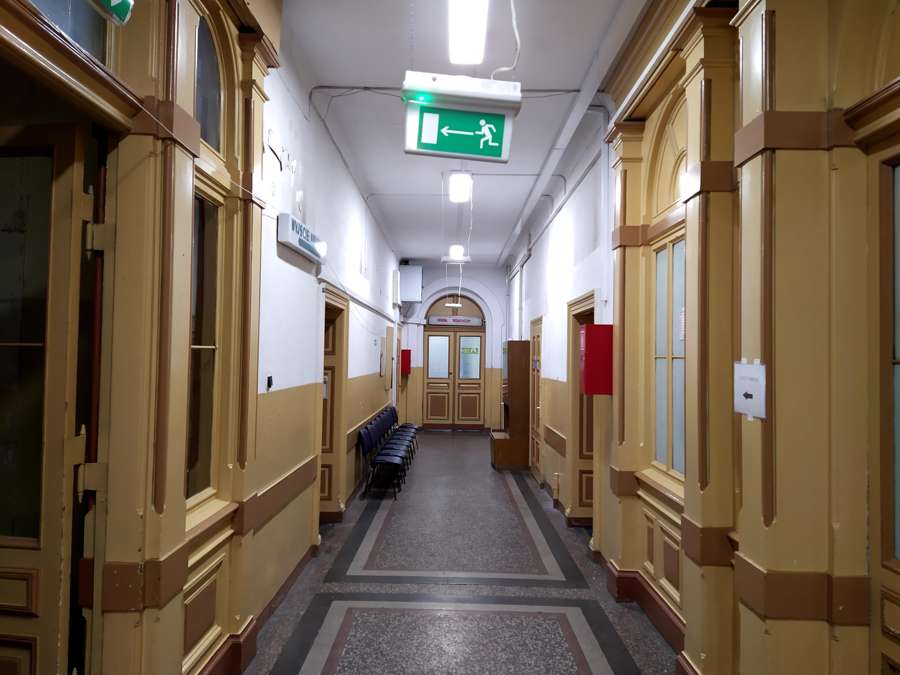
* Photos: Botev (Wikimedia Commons, CC BY-SA 4.0) and Albert Jankowski (public domain).
Frequently asked questions
Do I need a referral to use the NFZ waiting-time search?
No. Both NFZ search tools (terminyleczenia.nfz.gov.pl and the central waiting-list search on nfz.gov.pl) are open to everyone and show first free dates without logging in. A referral is only needed to actually book a specialist visit, including through central e-registration.
Can I book follow-up specialist visits online?
Not through central e-registration, which as of October 2026 covers first visits under a new referral (plus mammography and the HPV HR test). Continuation visits in ongoing treatment are booked directly with the clinic that treats you.
Is the waiting room (poczekalnia) available for every specialist?
Not yet. It operates for first cardiology visits, where no matching slot exists within 40 days of your preferred place, days and hours. The government plans to expand central e-registration - and with it features like the waiting room - to 40 specialisations by the end of 2027.
Do urgent referrals skip the online queue?
Urgent (pilny) referrals are handled directly at the facility, not through the standard online flow - book in person or by phone. The same applies to patients with queue-skipping rights such as combatants and honorary blood donors.