Poland Alcohol Tax 2027: Final Rates and the NFZ Funding Link
The essentials: New alcohol excise rates start on 1 January 2027 under the law published 23 November 2026. The final lower-strength cider/perry rate is PLN 116.40 per hectolitre, not the earlier proposed 122.71. Exact shop prices remain separate.
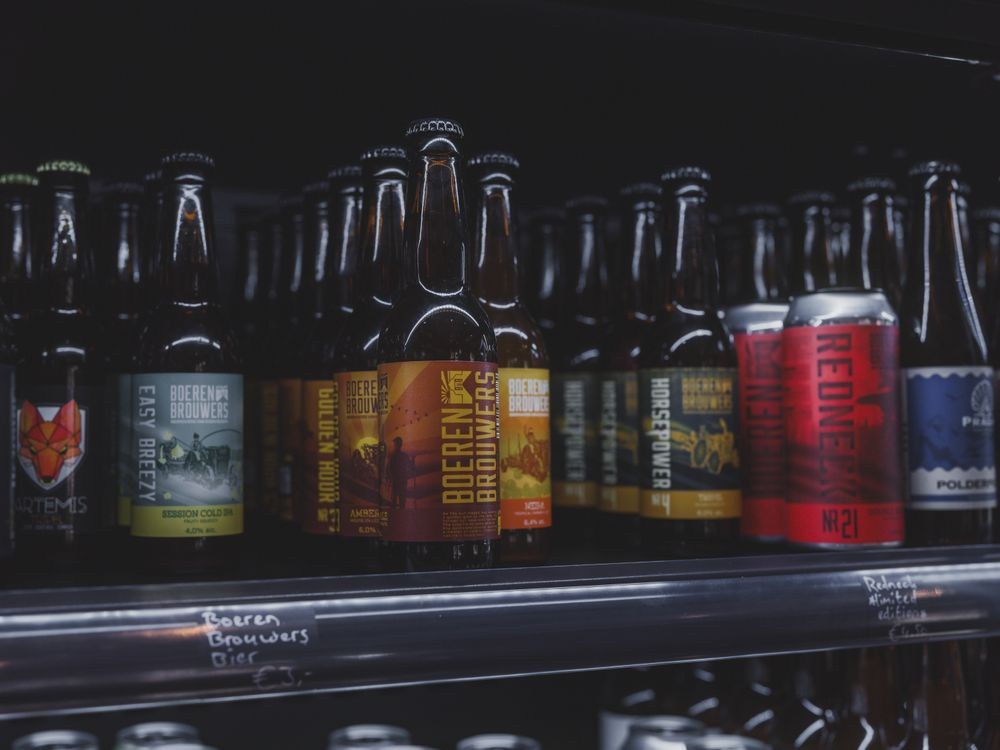
Illustrative beer display in Almere, Netherlands, not a Polish shop or a record of Polish prices. Photo: Haberdoedas Photography / Pexels.
Poland has published the law setting higher alcohol excise rates from 1 January 2027. The amendment appeared in the Journal of Laws on 23 November 2026 as item 1540. It changes duties on spirits, beer, wine, other fermented drinks and intermediate products, while linking additional alcohol-tax revenue to funding for the National Health Fund, or NFZ.
For residents planning a household budget, the important distinction is between an excise rate and a shop price. The law sets the tax charged on a defined quantity of a product. It does not set the price of your usual bottle, require every retailer to raise prices by the same percentage or publish a national price list. Treat claims about exactly what a drink will cost in January as separate forecasts.
Published law, January start
This is no longer only the government's September proposal. The official published act is dated 22 October 2026, was published on 23 November and expressly enters into force on 1 January 2027. Those dates describe different steps. The publication date does not move the new rates into November, and an earlier announcement of the proposal is not the best source for the final wording.
That distinction matters for cider and perry in particular. The government's September account quoted a proposed rate of PLN 122.71 per hectolitre for the specified lower-strength products. The published law instead sets PLN 116.40. If you have saved an old summary, update that figure rather than assuming every number survived the legislative process unchanged.
The figures below come from Article 1 of the published amendment. A hectolitre is 100 litres. Rates for spirits use pure alcohol content, while beer uses both volume and degrees Plato. Wine and the other categories shown use finished-product volume. Comparing the bare numbers across those categories without their units would be misleading.
The final rates from 1 January 2027
- Ethyl alcohol: PLN 10,109 per hectolitre of 100% alcohol contained in the finished product.
- Beer: PLN 13.82 per hectolitre for each degree Plato of the finished product.
- Wine: PLN 280.83 per hectolitre of finished product.
- Specified cider and perry up to 5% alcohol: PLN 116.40 per hectolitre of finished product, subject to the product codes in the law.
- Other fermented drinks: PLN 280.83 per hectolitre of finished product.
- Intermediate products: PLN 562.93 per hectolitre of finished product.
The lower cider-and-perry rate is not a blanket rate for every product with an apple or pear on the label. The act identifies CN codes 2206 00 31, 2206 00 51 and 2206 00 81 and an actual alcohol strength not exceeding 5% by volume. Product classification still matters. A stronger drink or a differently classified product should not be assigned that rate from its marketing name alone.
The September government material listed reference rates of PLN 8,811 for ethyl alcohol, PLN 12.04 for beer, PLN 245 for wine and other fermented drinks, and PLN 490 for intermediate products. Those figures help explain the announced increase. The final act is the source for the new rates, especially where the earlier proposal differs.
What the units mean on an ordinary bottle
For a 750 ml bottle classified as wine, the new statutory excise component is about PLN 2.11: PLN 280.83 multiplied by 0.0075 hectolitres. This is an arithmetic illustration of the excise rate, not the bottle's shelf price or the total tax included in it. It excludes the other parts of pricing and does not predict what a specific retailer will charge.
For a 500 ml bottle of spirits at 40% alcohol by volume, the bottle contains 0.2 litres of pure alcohol. At the new ethyl-alcohol rate, the illustrative excise component is about PLN 20.22. Again, that is not a claim that the bottle will cost PLN 20.22 or that its retail price will rise by that amount. It is the component calculated using the new rate.
Beer needs an extra input. A hypothetical 500 ml beer at 12 degrees Plato gives an excise calculation of PLN 13.82 multiplied by 0.005 hectolitres and by 12, or about PLN 0.83. The 12 here is degrees Plato, not 12% alcohol. Do not substitute the alcohol percentage printed prominently on a beer label for a different measurement.
These examples are rounded to the nearest grosz to make the units understandable. They are not a tax return calculation for a producer, a ruling on classification or an invoice for imported goods. A business needs to apply the relevant excise rules to its actual product and transaction.
Why a tax rise is not a price forecast
The final price of a drink is a different number from the excise component. A headline about an increase in one duty does not mean every shelf label must increase by the same percentage. Without an actual retailer's price, the product's classification and a like-for-like comparison, a precise January shopping bill would be speculation.
That also makes large percentage claims worth checking. Ask whether a comparison concerns the excise rate, the change in that tax component or the total price paid by a customer. Those are three different quantities. A quoted change per bottle should identify its size, strength where relevant, classification and assumptions before it is useful for a budget.
There is no need to turn the change into a deadline for buying alcohol. Decide what you actually need, compare real prices and avoid treating an unverified future price as a guaranteed saving today. The government's stated purpose includes reducing the affordability of alcohol and its negative health and social effects, not encouraging households to build a stockpile.
Where the extra NFZ money goes
The amendment also changes the health-services financing law. It links an increase in the NFZ subsidy to the amount by which total revenue from excise on the listed alcohol categories exceeds the corresponding revenue in 2026. The mechanism concerns the aggregate revenue, not a personal payment assigned to the buyer of a particular bottle.
The timing is easy to miss. Under the permanent mechanism, the subsidy increases in the second year after the year in which the excess revenue was obtained. Article 3 says this mechanism applies for the first time to the subsidy transferred in 2029. It is therefore inaccurate to describe every extra zloty collected in January 2027 as an immediate January transfer under that formula.
For 2027 and 2028, the law provides a separate bridge: the relevant subsidy is increased by PLN 1.4 billion in each year. That means PLN 1.4 billion for 2027 and PLN 1.4 billion for 2028, not a single PLN 1.4 billion pot split between them. The act also specifies the treatment of these increases in relation to the statutory health-spending framework.
For an individual patient, none of this is a new application process, an insurance premium discount or an automatic appointment entitlement. The legislation changes public financing. It does not, by itself, establish that you are insured or that a particular treatment will be available on a particular date. Keep ordinary healthcare eligibility and referral questions separate from this revenue measure.
How to compare prices sensibly
Compare the same volume and product, rather than two different bottle sizes or a single bottle against an unclear multipack offer. UOKiK's consumer guidance recommends using the unit price, such as the price per litre, when pack sizes differ. A larger pack is not automatically better value just because the headline price looks attractive.
If a seller announces a price reduction, UOKiK explains the role of the lowest price from the previous 30 days. Read that reference alongside the promotional price instead of relying only on a large percentage sign or a crossed-out reference figure. The excise amendment does not replace the ordinary consumer-pricing framework.
Keep the receipt if a checkout price differs from the shelf label. UOKiK's guidance says that where the receipt shows a higher price than the label, the customer can buy at the labelled price or receive the difference back. A general explanation about higher taxes is not the same as showing the correct price for the product being sold.
If you run a shop, bar or importing business
Use the published act for the final rate and ask your accountant or excise adviser which rules apply to the products and transactions you handle. Do not use the retail examples above as a substitute for checking classification, the relevant taxable event, stock arrangements or the business's reporting duties. This article does not settle those case-specific questions.
In particular, remove the superseded PLN 122.71 cider figure from any internal summary based only on the September proposal. Check that software and supplier communications use the final category and unit, rather than simply changing a percentage across every line. A bottle-volume rate and a pure-alcohol rate are not interchangeable.
The useful household takeaway is narrower: new statutory rates begin on 1 January 2027, the final cider provision differs from the original proposal, and exact retail-price claims still need actual evidence. For healthcare, the act adds funding through a two-year bridge and then a lagged revenue mechanism. It is not a new fee to pay personally or a benefit to claim.
Frequently asked questions
Do the new alcohol excise rates start in November?
No. The law was published on 23 November 2026 and expressly takes effect on 1 January 2027.
Is the final cider rate PLN 122.71?
No. That was the September proposal. The final published rate for the specified cider and perry not exceeding 5% alcohol is PLN 116.40 per hectolitre.
Does the tax rate predict a bottle price?
No. Excise components and retail prices are different numbers. The illustrated calculations are not forecasts of shelf prices.