Religion and Ethics in Polish Schools: Opt-In Rules for Parents
Short answer: Religion and ethics in Polish public schools are voluntary and organised on a written declaration from parents (or pupils in secondary school). The declaration need not be renewed yearly.

In Polish public schools, religion classes and ethics classes are optional and organised at the parents' request. Parents who move to Poland often ask what the school will expect, whether a child who does not attend is treated differently, and what happens to the child during the lesson. This guide is based on the Ministry of Education regulation on the conditions and manner of organising religion lessons in public kindergartens and schools. We read the consolidated text published in the Journal of Laws 2020 item 983, and the amending regulation of 17 January 2025 (Journal of Laws 2025 item 66, in force from 1 September 2025), which the Ministry announced on gov.pl on 17 January 2025. We did not check whether any later amendment changed these provisions, so ask the school for its current rules. The rules on grades for religion and ethics were disputed after a Constitutional Tribunal ruling in June 2025, so this guide does not cover them.
It is voluntary and based on a written declaration
According to the regulation, public kindergartens and primary schools organise religion at the parents' request. Ethics is organised in schools in the same way. In secondary schools, the request can come from the parents or from the students themselves, and once a student is an adult, the student decides.
The request is a written declaration. The regulation says the declaration does not have to be repeated in the next school year, but it may be changed. It also states that attending or not attending religion or ethics lessons cannot be a reason for discrimination by anyone in any form.
Group sizes
A school has to organise a religion lesson for a group of at least seven pupils from a class or class section. If fewer pupils from a class sign up, the lessons should be held in a mixed group. For fewer than seven pupils of a given denomination at a school, the local authority running the school arranges, with the relevant church or religious association, lessons in an inter-school group or an out-of-school catechetical point.
The 2025 amendment, in force since 1 September 2025, says:
- In primary school, a mixed group of different classes may cover classes I-III, IV-VI or VII-VIII.
- The same rules on joining pupils apply when religion is taught in an inter-school group or an out-of-school point.
- The same rules apply to ethics.
The Ministry's announcement adds that mixing classes I-III in religion or ethics is limited to cases where fewer than seven pupils of the class sign up.
How many hours and when
Since the 2025 change, religion in schools is one lesson hour a week, and ethics is also one lesson hour a week. In kindergartens, religion is two sessions a week. The lessons must be scheduled directly before the compulsory lessons of the day or directly after them. In primary school the school may depart from this rule if, on 15 September of the school year, all pupils of the class take part in religion or ethics.
Practical points for expat parents
1. Look for the declaration form in the enrolment pack, or ask the secretary. It is a written statement from the parent. 2. If you do not want either subject, you simply do not submit the declaration. The regulation prohibits discrimination on this basis. 3. If your child is in a small class where few families choose ethics, expect a mixed group. 4. You can change your decision later. The declaration does not need to be renewed each year, and it can be changed. 5. Ask the school what supervised care it offers for pupils who have a gap between lessons, as the sources we read do not describe it.
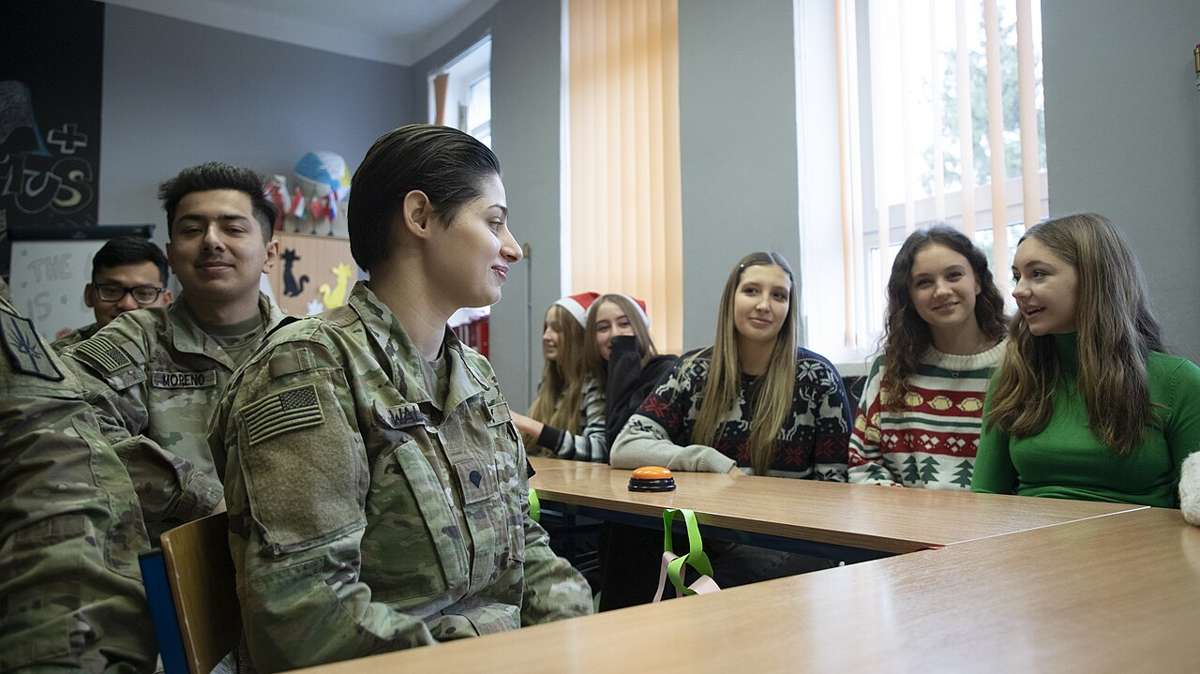
* Photos: Polish pupils and a Polish school visit (public domain, U.S. Army), Wikimedia Commons. Illustrative.
Frequently asked questions
Do I have to sign my child up for religion or ethics in Poland?
No. In public schools both are organised at the parents' request, by written declaration. Attending or not attending cannot be a reason for discrimination, according to the Ministry of Education regulation.
How often is the declaration renewed?
It does not need to be repeated for the next school year, but it can be changed, according to the regulation text.