How to report a crime in Poland: police, prosecutor and written notice
Short answer: Anyone can report a crime for free at any Polish police unit or prosecutor's office, in person or in writing. Bring photo ID and evidence, and sign the record.

If your phone is stolen, your bike disappears from the stairwell or someone scams you out of money, you can report it to the Polish police or prosecutor's office. This guide explains the official routes as described on gov.pl (page last updated 10 April 2026), a gov.pl guide on internet crime, a prosecutor's office page and a police page for foreigners, as checked on 17 October 2026.
Who can report
According to gov.pl, anyone can report a crime: a victim, or anyone who knows about an offence or witnessed it. You do not need to be sure that a crime took place. The official internet-crime guide says a suspicion or a sense of threat is enough. The service is free, according to gov.pl.
Option 1: report in person
You can go to any police unit. If it is not the unit for the place where the offence happened, gov.pl says your report is passed on to the right one, where the case will be handled. Any prosecutor's office will also take reports, in working hours, which gov.pl says are usually 8:00 to 16:00.
What to bring, according to gov.pl:
- A document with a photo that shows your details, for example a driving licence, ID card or passport.
- Notes on what happened, when and where, and who was involved. The internet-crime guide also suggests bringing evidence such as screenshots of conversations, profile names and addresses, and payment details.
At the unit, you tell the officer or prosecutor what you know. They write a record (protokół) of your statement. Read it carefully and sign it if it is correct. The prosecutor's office page notes that every police officer in every station must accept an oral report and make this record. The internet-crime guide stresses that only a record of the statement signed by the person reporting is a legal basis to open proceedings.
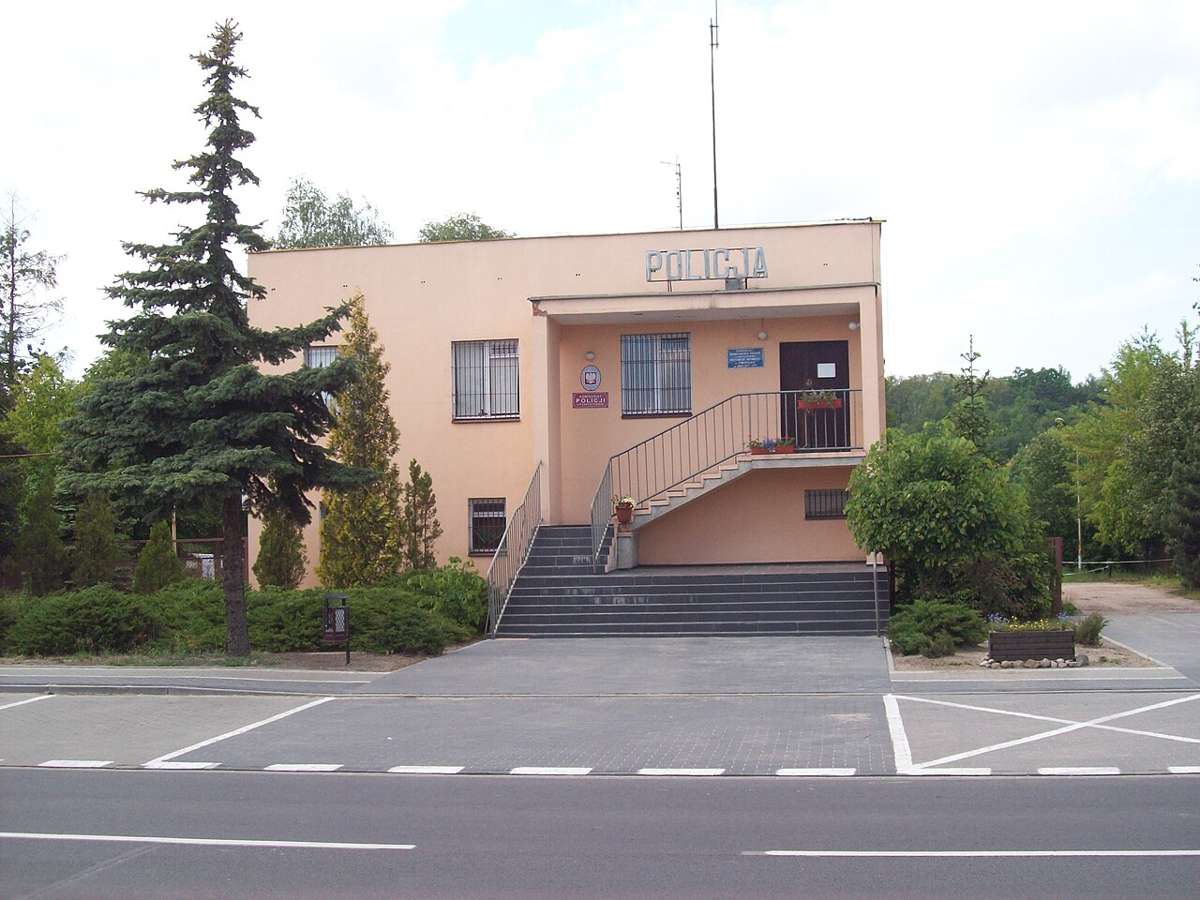
* Photos: police stations in Nowa Ruda and Puszczykowo, Wikimedia Commons, CC0 / public domain.
Option 2: report in writing
You can write a notice of crime (zawiadomienie o przestępstwie) and send it by email, fax or post to the police or the prosecutor's office for the place of the event. gov.pl offers a sample form. Include, as gov.pl lists:
- A precise description of what happened, how, when and where.
- Who did it, if you know.
- The name and address of the police unit or prosecutor's office you are writing to.
- Your contact details: name, surname, phone and address.
- Your signature.
The prosecutor's office page adds that a written notice should meet the requirements of a procedural letter under article 119 of the Code of Criminal Procedure and advises keeping proof that you sent it, for instance registered post with a return receipt, or a stamped receipt if you deliver it by hand.
After a written report, gov.pl says you will receive a written summons to supplement it orally. Then you wait for a letter with the decision to open or discontinue the case.
If you cannot send the notice yourself, for example because you are in hospital, gov.pl says someone else can send it for you.
Anonymous reports
gov.pl says you can report anonymously, by phone or in writing, if you fear revenge. Every report is treated seriously, but this may make police work less effective, because officers have to spend time confirming facts they could have got from you. The internet-crime guide adds that an anonymous report starts police action, but no information about the progress of the case is given.
What happens next
After you report, gov.pl says to wait for a letter about opening or discontinuing the proceedings. The police page for foreigners in Lublin says you will be informed by post at the address you gave, so you should tell the police each time that address changes. If you leave Poland or move, update your contact address with the unit handling your case.
Emergencies and what this guide does not cover
If someone is in danger or the offence is happening now, call 112 instead of filing a notice. A notice of crime is for reporting after the event.
The sources we checked do not set out interpreter rules or a time limit for the decision, and they do not cover reporting from abroad, so ask the police unit about those directly. This guide does not give legal advice; for a serious case you may want a lawyer or a victim support organisation.
Frequently asked questions
Do I have to pay to report a crime in Poland?
No. gov.pl says the service is free.
Can I report at any police station?
Yes. gov.pl says you can report at any police unit. If it is not the right one for where the offence happened, your report is passed on to the competent unit.
Can I report something without giving my name?
Yes. Anonymous reports are possible by phone or in writing, but gov.pl notes they can make the police's work less effective, and you will not receive updates on the case.