Sewing Classes in Poland: Choose Your First Course
The essentials: Choose by the programme, not just the beginner label. Confirm teaching-hour length, machine access, project materials, language, the full calendar and cancellation conditions before paying.
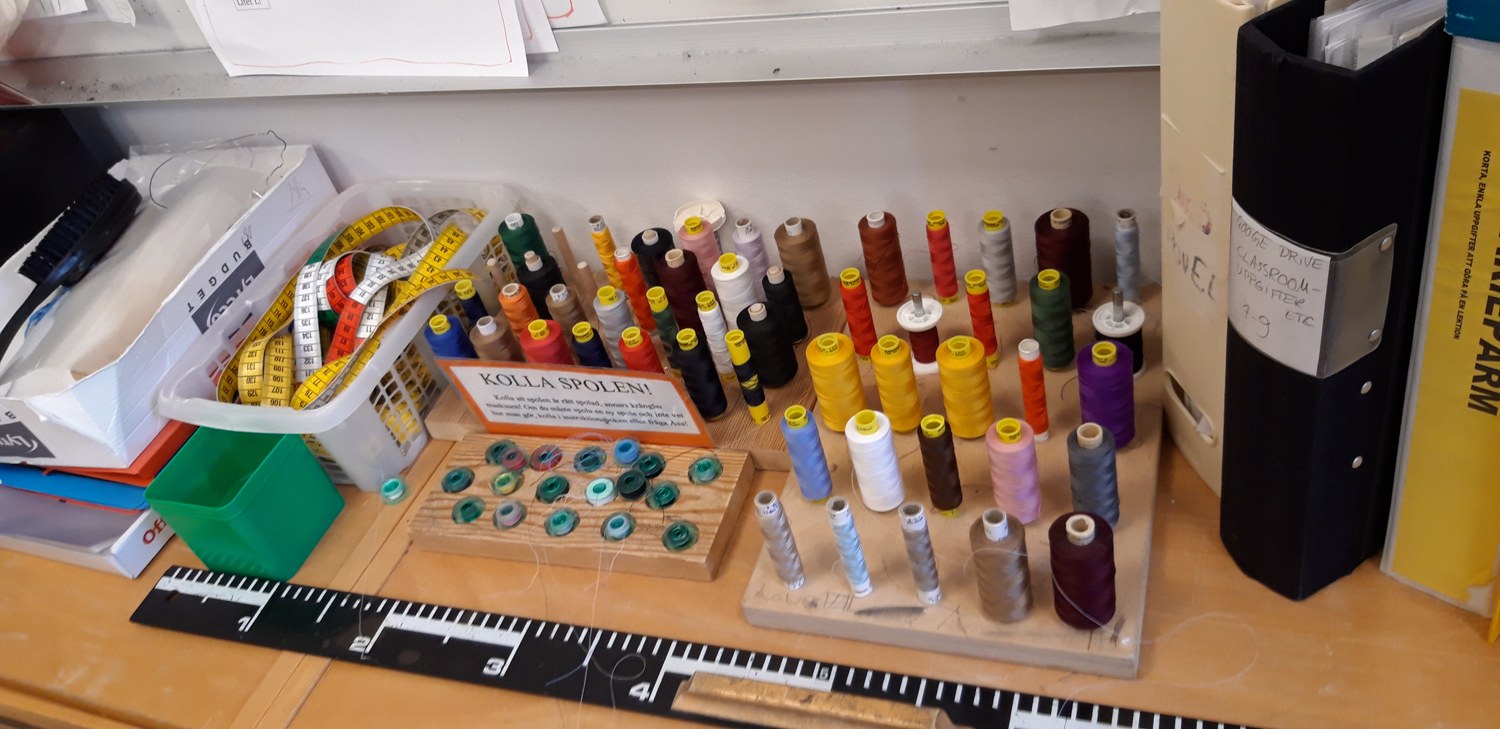
Ängskolan handicrafts classroom, Sundbyberg, Sweden, 26 March 2019. Historical contextual illustration, not a Polish studio or adult-course venue. Viascos / Wikimedia Commons, CC BY-SA 4.0. Resized and re-encoded; adaptation under the same licence.
A sewing course can be a practical way to settle into life in Poland: time away from a screen, a local routine and a skill you can keep using. But two courses labelled "beginner" may offer very different things. One starts with switching on a machine; another expects you to follow a garment pattern or bring fabric for several projects.
Before booking, compare the actual programme, teaching time, materials and conditions for missed sessions. This guide draws on six Polish providers' published pages checked on 28 October 2026. The examples explain what to ask, not which studio has a place available now. Some pages contain older dates, so a visible timetable is not a confirmed future course.
Start with the result you want
Decide whether your immediate aim is to understand a machine, make simple accessories, sew clothes from patterns or learn alterations. Those are related goals, but they are not interchangeable. A course that produces a shopper bag and a blouse need not teach shortening trousers or replacing the zip in an existing coat.
Useful search terms include kurs szycia od podstaw for sewing from the basics, kurs kroju i szycia for cutting and sewing, and dla początkujących for beginners. Read past the title. Ask what someone who has never threaded a machine is expected to know on arrival.
Ultramaszyna's reviewed beginner course explicitly says no experience is required and starts with domestic-machine use. Its programme then moves through patterns, an introduction to the overlocker and three projects. Szycia Przeszycia describes a 40-hour course that also starts with machine operation, before progressing to clothing construction and sewing. Neither description is a promise that every student will work at the same pace.
A longer course can repeat what you already know
If you have taken a short introductory class, send the next studio its programme before paying for a longer beginner course. Szycia Przeszycia specifically warns that the first 16 hours of its 40-hour cutting-and-sewing course overlap with its shorter beginner course. More hours do not necessarily mean entirely new material.
Explain your experience in concrete terms: whether you can prepare a machine, sew a simple seam, read a commercial pattern or finish a project without help. Saying "I am intermediate" leaves the teacher to guess. Ask which parts would be new and whether a different course or individual lesson would fit better.
For a first course, a defined project list is useful because it makes the scope easier to compare. It is still a teaching plan, not a guarantee that an unfamiliar fabric, an ambitious redesign or any garment you bring from home will fit within the class.
Compare clock hours, not just headline numbers
Check what the provider means by an hour. Superszycie labels its beginner programme as 32 periods of 45 minutes. Ultramaszyna describes 36 teaching hours. Warszawa Szyje's September 2025 course page explicitly calls its 52 hours clock hours. These numbers should not be ranked as though they all measure the same thing.
Ask for the start and finish time of each meeting, the break arrangement and the full calendar. If a programme uses teaching hours without defining their length, ask rather than doing your own conversion. Also check whether demonstrations and independent work are included in the advertised total.
Compare group size separately. The reviewed Szycia Przeszycia course advertises four to six participants, while Ultramaszyna advertises a maximum of eight. These are programme descriptions, not a count of people currently booked. Ask whether each participant has a machine and how help is shared when several people reach a difficult step.
Do not buy a machine just to qualify for class
Several reviewed providers supply machines. Szycia Przeszycia says its price includes an individual workstation with a machine and sewing accessories. Ultramaszyna says machines, overlockers, tools and project materials are supplied. Zszywalnia's published course rules also list machines and other equipment.
If learning your own model matters, ask whether you may bring it and what to carry with it. Ultramaszyna explicitly allows a personal machine, while Zszywalnia's rules say using your own machine does not reduce the course price. Do not assume a class fee includes servicing a faulty machine or finding missing parts.
Before transporting equipment, agree the model and condition with the instructor. Ask for the packing list and whether there is a suitable work position. Avoid buying specialist tools from a generic online checklist until the teacher confirms what the selected course actually uses.
Separate practice materials from garment materials
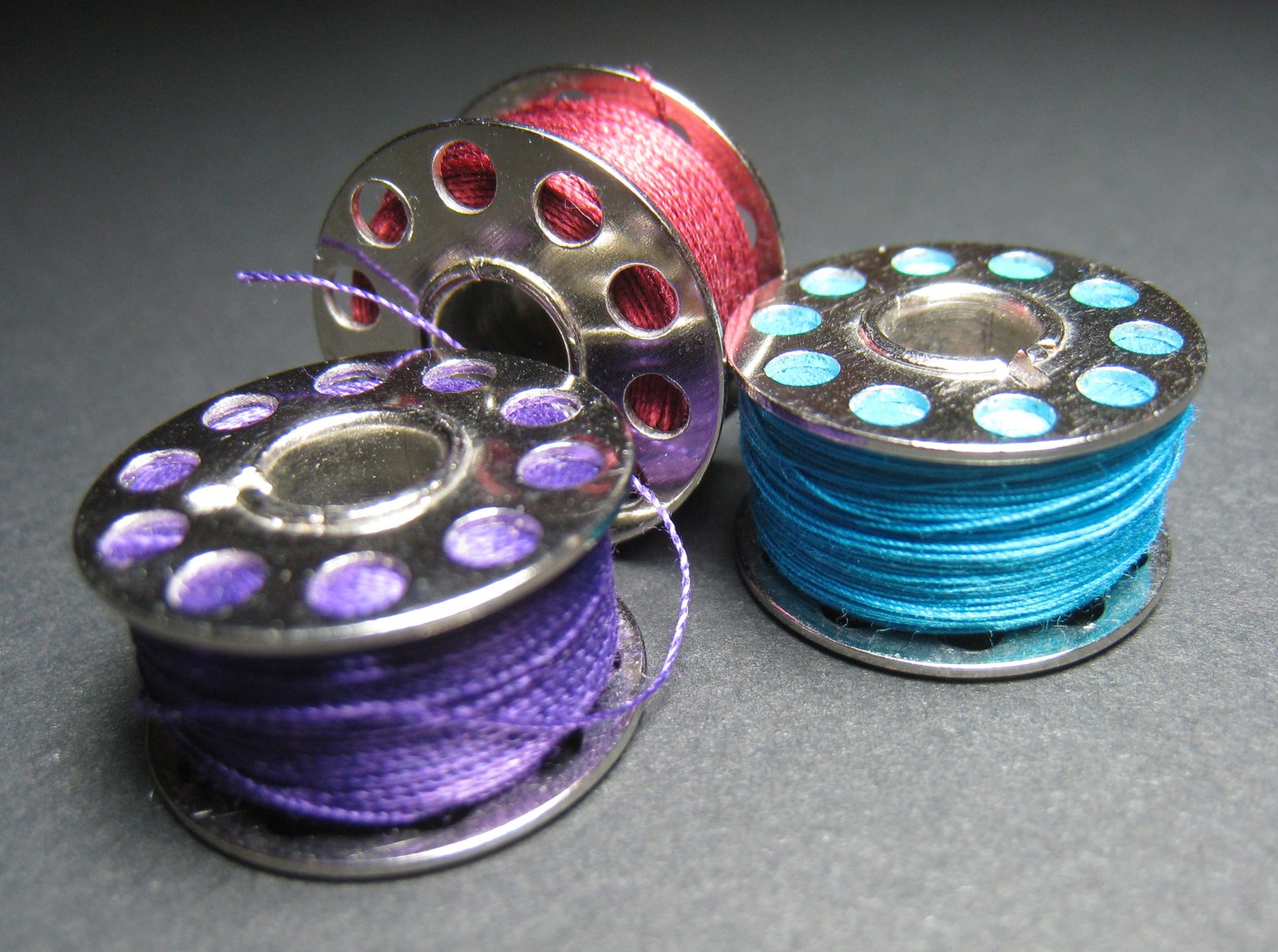
"Materials included" deserves a follow-up question. Ask whether that covers practice scraps, every planned garment, patterns, fasteners and other notions. Also ask whether there is a fabric choice or a fixed teaching kit, and whether substitutions need approval.
The reviewed Ultramaszyna page lists fabrics, patterns, threads, zips and other accessories for its projects. Szycia Przeszycia similarly describes fabrics needed for its course tasks. By contrast, Warszawa Szyje's September 2025 page distinguishes supplied exercise materials from fabric for clothing projects, which it says can be bought at the studio with a limited colour choice.
That older page is useful as an example of why the distinction matters, not as a current shopping list or available course offer. Obtain the requirements for the course you are actually joining. Fabric type, quantity and preparation should come from that instructor; buying something attractive first can leave you with material unsuitable for the lesson.
For a realistic budget, request the full course fee plus required fabric, patterns, tools and any optional extras you want. Do not compare one all-in price with another studio's tuition-only figure. This guide deliberately gives no guaranteed current ticket price.
Confirm the language and the practical setup
A Polish course page does not establish that the instructor can teach the whole session in English. Ask whether explanations, machine-safety instructions and feedback can be given in a language you understand. Occasional translation from another student is not the same as an agreed teaching arrangement.
Ask about written instructions and pattern terminology too. You may be comfortable with a demonstration but need more time to understand a task sheet. If you want an English-only class, confirm that exact format before paying rather than assuming an international group will provide it.
Access questions are equally specific: steps to the room, lift access, toilets, adjustable seating, pedal use and room to move around a cutting table. An address and a photograph do not settle those points. Tell the studio which practical arrangement you need and ask what it can provide.
A signup form may be an enquiry, not a reserved seat
Szycia Przeszycia tells applicants to submit its form, after which it confirms availability and explains how to finalise the reservation. Fundacja Kraina's rules effective 2 January 2026 likewise describe confirmation of places, an agreement and payment steps. Sending your contact details is not necessarily the point at which your place is secured.
Ultramaszyna's page describes selecting a date and a deposit or full-payment option, followed by an email confirming the reservation. Read the current selected product and payment conditions. A deposit button, a waiting-list form and a fully paid confirmed place are different states.
Minimum group numbers can also affect whether a course runs. Both Zszywalnia's rules and Fundacja Kraina's rules allow a course to be cancelled or rescheduled if the minimum group is not reached. Ask when the start will be confirmed and what happens to your money if the organiser changes it.
Missed lessons and leaving a course are different questions
Before committing to a multiweek course, check your travel and work calendar against every meeting. Ask separately about missing one lesson, cancelling before the start and leaving after the course begins. Do not assume an instalment arrangement makes each meeting independently optional.
Fundacja Kraina's 2026 rules describe a written cancellation process, a pre-start deadline involving three working days and the first payment part, and restrictions on refunds after a course begins. They also say make-up arrangements depend on places and organisational possibilities. Those are the provider's published conditions, not a legal finding about every possible cancellation.
Zszywalnia's undated rules contain a different cancellation schedule and restrictive make-up conditions, as well as an older reference to a Covid questionnaire. Treat that as a reason to request the current applicable version before payment. Ultramaszyna's FAQ says to contact it promptly about a missed lesson and that it will try to find a solution; that wording is not a guaranteed replacement session.
Keep the commitment small enough to enjoy
Check what a completion document actually records. A studio certificate or confirmation of attendance should not be assumed to confer a professional qualification, employment right or funding eligibility. If one of those outcomes matters, verify it independently before enrolling.
Ask how photographs are handled if you do not want your face or work used in promotion. Follow the instructor's equipment and safety briefing rather than treating an online article as operating instructions. This guide is for choosing and arranging a course, not for teaching machine technique.
A useful first enquiry is: "I am a complete beginner. Can I follow the course in English, do I have my own machine at each lesson, which project materials cost extra, and what happens if I miss one date?" With those answers and a confirmed calendar, you can choose a class for the learning you want rather than the most impressive headline.
Frequently asked questions
Do I need my own sewing machine?
Not necessarily. Several reviewed courses supply machines. Confirm an individual workstation and ask separately if you want to bring your own model.
Are fabrics included in the fee?
Check the exact project list. Practice materials and garment materials may be treated differently; ask about patterns, zips, threads and any additional purchases.
Does beginner mean no experience?
Read the programme. Some explicitly start with machine operation, while longer beginner courses may repeat a shorter introduction you have already completed.
Will the course be taught in English?
Do not assume so. Confirm explanations, equipment-safety instructions and feedback in a language you understand before paying.
Can I make up a missed lesson?
Only under the selected provider’s conditions. A promise to try to help is not a guaranteed replacement session or refund.
Sources
- Zszywalnia course rules, undated; older Covid wording noted; checked 28 October 2026
- Szycia Przeszycia cutting and sewing course; checked 28 October 2026
- Ultramaszyna comprehensive beginner course; checked 28 October 2026
- Warszawa Szyje course page, 12 September 2025; historical example; checked 28 October 2026
- Fundacja Kraina course rules, effective 2 January 2026; checked 28 October 2026
- Superszycie beginner course; displayed dates include past 2026 sessions; checked 28 October 2026