Stacja Muzeum Warsaw: Winter Hours, Trains and a Family Visit
The essentials: Stacja Muzeum at Towarowa 3 opens 09:00-17:00 in the current winter period, except Tuesdays. Regular admission is 25 zł, reduced 16 zł; Monday entry is free. Bad weather can close the locomotive yard.
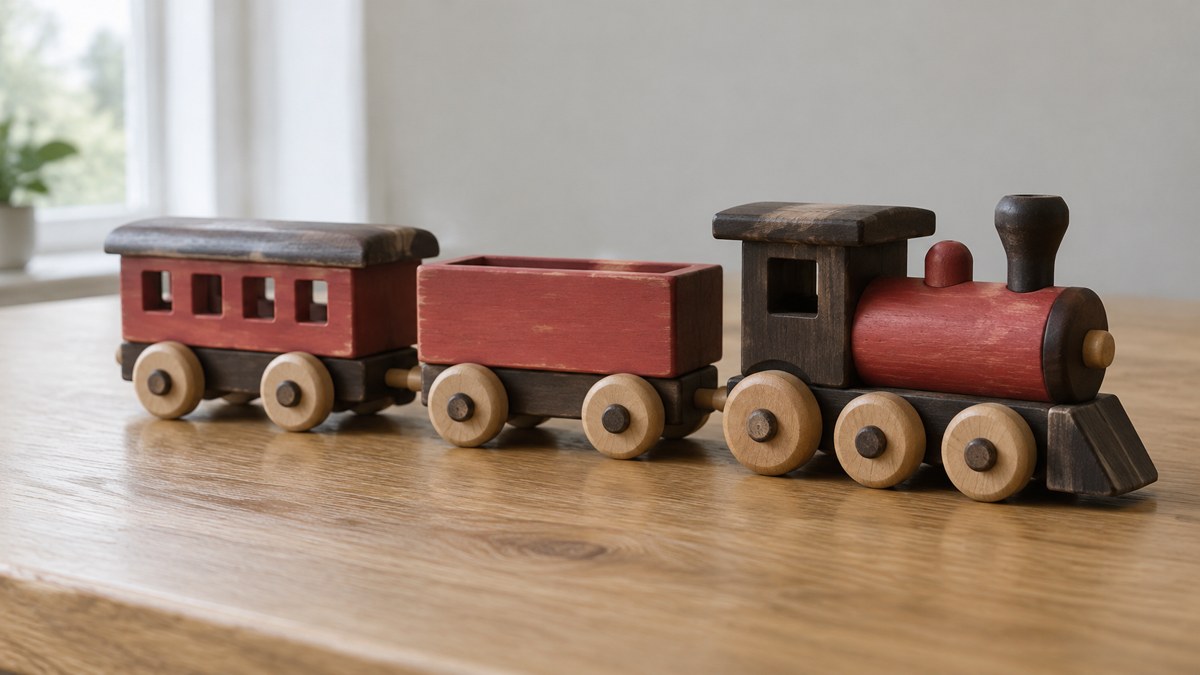
Generated editorial illustration of a wooden toy train, not a Stacja Muzeum model or actual locomotive.
Stacja Muzeum is a railway museum at Towarowa 3, with indoor displays and a yard of full-size locomotives and carriages. It makes a different Warsaw outing from a painting gallery or a chronological city-history museum: the machines outside give the visit its scale, while the models, documents and railway equipment indoors explain the system around them.
For a November visit, the important distinction is between the museum being open and the outdoor collection being accessible. The operator can close the locomotive yard in unsafe weather. This guide uses the museum's Polish visitor pages and its dated winter-hours announcement checked on 7 November 2026, rather than treating older English opening times as current.
Use the winter timetable, not the summer English banner
The museum's announcement of 30 October says that from 2 November until 31 March it opens from 09:00 to 17:00. Its current Polish visitor page also shows 09:00-17:00, with Tuesday closed. Monday admission is free. Last admission is half an hour before closing, so 16:30 is an entry cutoff, not a sensible starting time for an unhurried visit.
The English visitor page still has a prominent 10:00-18:00 timetable and older seasonal information. Use the dated Polish announcement for the present winter period. Save that page with your plan if someone else in your group is reading the English version. Recheck exceptional closures near your date, particularly around Christmas, rather than assuming every normally open weekday operates as usual.
The Polish page lists 24-26 December among the museum's 2026 closure dates. It also warns that adverse conditions can close the open-air exhibition for safety. If the locomotives are your main reason for going, check any current notice before leaving. An indoor fallback can still be worthwhile, but it is a different visit from walking alongside the rolling stock.
Find Towarowa 3 without confusing the museum with a departure station
The museum is in the historic former Warszawa Główna station building. Warsaw tourism describes that setting as an important part of the attraction, rather than merely a convenient container for the collection. Use the museum's address, Towarowa 3, as your destination. A railway-station name alone can send a visitor looking for passenger platforms rather than the museum entrance.
The operator lists Plac Zawiszy as the nearby tram and bus stop, Warszawa Ochota and Warszawa Główna among rail approaches, and Rondo Daszyńskiego as a metro option. Those are useful orientation points, not a guarantee that a particular service is running unchanged. Check a current journey planner for your actual departure time, especially when visiting at a weekend or during roadworks.
For the approach from Plac Zawiszy, the museum describes using the signal-controlled crossing of Towarowa, continuing along the pavement past the passenger stop and museum building, then turning towards the entrance. Follow the current signed pedestrian route. Visitors who need the ramp should read the access section below before arrival; the museum does not describe it as an entirely independent step-free journey.
Compare the ticket with the people actually coming
The Polish ticket page lists a regular single ticket at 25 zł and a reduced ticket at 16 zł. Its family ticket costs 75 zł for two adults and up to three children. Children under seven and Monday visitors have free admission. Tickets are available online and at the museum, and the ticket office accepts card payment and closes thirty minutes before the museum.
A family-labelled product is not automatically the cheapest choice for every family. Two adults with a child who qualifies for free admission should compare the ordinary tickets with the family ticket. The number and ages of children matter. Check the museum's current categories before paying, and bring documents for any reduced entitlement rather than expecting a verbal explanation to replace them.
The museum lists reductions for pupils, teachers, students up to age 26, doctoral students, pensioners and other specified groups. It also describes partner benefits, including reduced-price admission with a qualifying Warsaw resident card or a Koleje Mazowieckie ticket or purchase receipt. These are particular schemes with particular evidence requirements, not a general discount for anyone who arrived by train.
The page links a separate 1 zł disability programme as well as listing disability-related reduced admission. Do not assume the lower price applies without conditions. Open that scheme's current rules or ask the ticket office which documents are needed. This guide does not turn a linked programme badge into a universal entitlement, especially for visitors whose documents were issued abroad.
Start indoors with the railway as a working system
The official exhibition description follows railway development internationally and in Poland. It includes the beginnings of the network under the partitions, the Warsaw-Vienna Railway opened in 1845, the independent state, wartime destruction, reconstruction and electrification. That sequence helps explain why tracks and stations are part of political and social history as well as engineering.
Give the smaller objects some attention before heading straight to the locomotives. The museum describes uniforms, railway workers' badges, clocks, documents, timetables, signals, lamps, telephones and telegraphs. They show how people coordinated departures, communicated warnings and organised freight. A timetable or signalling lamp can make the wider collection more understandable even if you cannot name an engine class.
The indoor halls also contain a substantial collection of detailed locomotive, carriage and station models. The museum describes about two hundred models, but treat that as collection context rather than a promise that every model is visible on your date. Pick a small comparison: passenger versus freight, steam versus electric, or a model alongside the type of vehicle you later see outdoors.
A smaller room recreates the governmental reception parlour associated with the former main station. It is another way to read the station as a public building used by different kinds of traveller. There is no need to know every historical name before entering. Ask what each room suggests about the people using the railway and the work needed to keep it running.
The outdoor collection is a viewing route, not an open playground
The museum's rolling-stock overview describes around fifty vehicles from different periods, including steam, diesel and electric locomotives and passenger and freight vehicles. Its exhibition page draws attention to a saloon carriage, an armoured train, a postal wagon and a snowplough among the collection. These are useful things to look for, not a guarantee that individual interiors will be open.
Do not interpret a vehicle on display as permission to climb into it. Follow barriers, signs and staff instructions for any carriage access. For children, agree that tracks, steps and ladders are parts of a museum setting, not play equipment. Looking at differences in wheels, body shapes and working parts can keep the visit interesting without touching or entering restricted spaces.
In winter, choose clothing for standing outdoors as well as travelling there. If the yard is open, see the vehicles while your group still has energy, then return to the indoor material if the route and staff guidance allow. A weather-related closure is a reason to change the plan, not to seek another way onto the tracks.
Accessibility and pushchairs need separate plans
The museum says wheelchair users can visit the exhibition rooms and outdoor collection, but it also acknowledges remaining barriers. In particular, the ramp's length means independent use is not possible for everyone. It asks visitors to come with a companion or call its education department so staff can help with entry. That qualification matters more than a simple accessible icon.
The visitor page describes an adapted toilet, seats or benches in rooms, a low ticket counter and a wheelchair that can be borrowed at the entrance during the visit. Confirm any equipment or assistance you rely on in advance. For tailored visits, the published education contact is [email protected]; the telephone is 22 620 04 80, extension 106.
Pushchair arrangements are different. The museum asks families to leave pushchairs in a designated area for the indoor rooms, while permitting them in the outdoor collection. Think through how a young child will move through the halls before arriving. Assistance and guide dogs are permitted; that specific permission should not be treated as a general pet policy.
For visitors with sight or hearing needs, the operator describes adapted educational activities, tactile railway models and Polish Sign Language guiding by arrangement. The sign-language visit requires at least ten days' notice. These services are not interchangeable with an English-language tour, so name both the language and access format when asking about a visit.
Build a short visit around one shared interest
For a mixed group, agree on one indoor theme and one outdoor priority rather than trying to learn the whole railway catalogue. Models plus a look at the locomotives can suit a first visit; documents and signalling may interest someone who already understands the machines. Leave enough time before the final entry cutoff to make both parts possible.
English web pages help with preparation, but they are not evidence that every label, temporary exhibition or guided session is available in English. Ask about language support if it will determine the visit. A family that mainly wants to look at vehicles can make a different choice from a visitor seeking a detailed technical explanation.
Finally, keep the seasonal-hours announcement, admission page and any access reply together. Check whether the yard is open, bring the right discount documents, and use the museum entrance rather than a passenger-platform search. Those small decisions make this a more dependable outing than relying on an old summer timetable and hoping every carriage is open.
Frequently asked questions
Is the whole museum indoors?
No. The full-size rolling stock is outdoors, and unsafe weather can close that part.
Is Tuesday free?
No. Tuesday is closed; Monday is the regular free-entry day.
Sources
- Current Polish visit information (checked 7 November 2026)
- Tickets and concessions (checked 7 November 2026)
- Dated winter-hours announcement, 30 October 2026 (checked 7 November 2026)
- Permanent exhibitions (checked 7 November 2026)
- English visit page, older hours (checked 7 November 2026)
- Warsaw tourism overview (checked 7 November 2026)