Tczew Maritime Museums: Tickets, Free Saturday and English
The essentials: Both Tczew branches open Tue–Sun 10:00–16:00 through 31 December 2026, last entry 15:30. Combined pass 20/14 zł. Saturday: CKWS free; Vistula permanent exhibition free, temporary 5/4 zł. CKWS has Polish/English captions; Vistula labels are Polish. Both list lifts and accessible toilets.
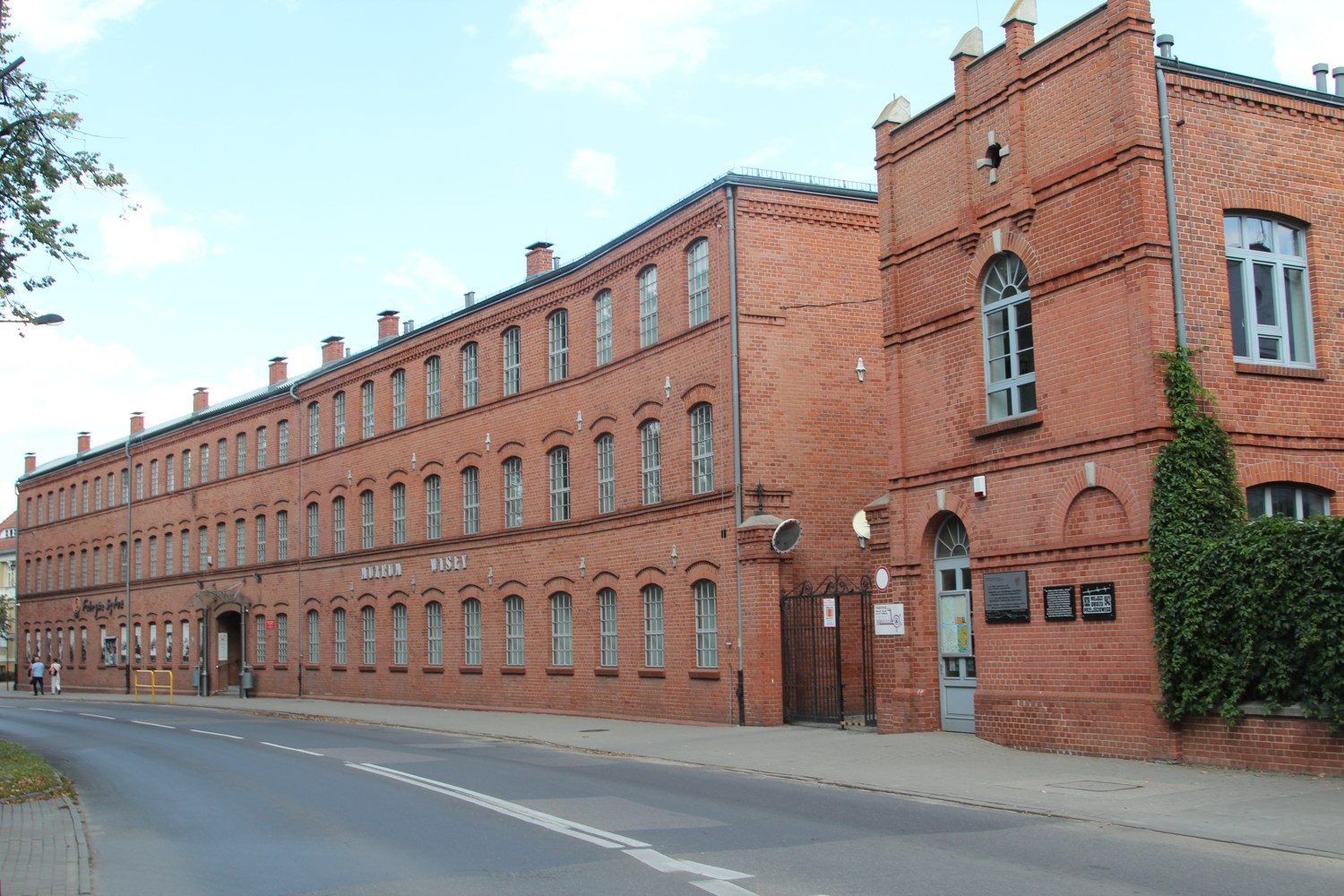
Cover: Vistula River Museum building in Tczew, photographed 11 August 2019. Historic exterior, not a current access survey. Photo: Fallaner / Wikimedia Commons, CC BY-SA 4.0. Resized and recompressed.
Two neighbouring museums, two different ways into maritime history
Tczew's maritime museums make a useful indoor outing, but choosing between them depends on what you want to see and how comfortably you read Polish. The Vistula River Museum, Muzeum Wisły, explains the river as a route for trade, boatbuilding, settlement and everyday work. The Shipwreck Conservation Centre, Centrum Konserwacji Wraków Statków or CKWS, puts large boats, recovered ship fragments and conservation into a more visual setting. They are neighbouring branches of the National Maritime Museum in Gdańsk, not two names for the same exhibition.
That distinction matters for English-speaking visitors. The operator lists Polish captions at the Vistula River Museum, but Polish and English captions at CKWS. If you have time for only one and cannot comfortably follow Polish interpretation, CKWS is the more straightforward starting point. If you want to understand why the Vistula mattered to Poland's economy and towns, the river museum adds the historical framework. Visiting both is a sensible half-day plan, rather than a hurried extra between trains.
Late-2026 hours and the last-entry limit
Both branches publish Tuesday to Sunday opening from 10:00 to 16:00 for the current period, ending 31 December 2026. Their full-year schedules place 7 September through 31 December in this pattern. Ordinary Mondays are therefore not part of the late-autumn timetable. Do not carry the longer summer hours or the winter-holiday Monday opening period into a November visit.
Ticket offices close and the last entry is 30 minutes before the museums close. With a 16:00 finish, that means 15:30 last entry, not a full hour of guaranteed visiting after a late arrival. The operator estimates about 90 minutes for Muzeum Wisły and one hour for CKWS. Those estimates already total two and a half hours before buying tickets, changing buildings or taking a break. Arriving around 12:30 or earlier is a more comfortable plan for both than arriving near the final admission cutoff.
Check the official opening-hours page again before travelling. Read notices by branch: a closure affecting Gdańsk branches is not automatically a Tczew closure. Equally, the published 2026 timetable does not establish opening hours or prices for 2027. Christmas and other exceptional closure dates need checking separately from the weekly pattern.
The combined ticket and what the published tariff does not settle
The current operator tariff lists a combined pass for Muzeum Wisły and CKWS at 20 zł regular or 14 zł reduced. Holders of a qualifying Karta Dużej Rodziny have listed combined-pass rates of 14 zł regular and 10 zł reduced. These are distinct categories, not a general family ticket that every household can claim.
The combined pass is the clearest published price for planning a paid visit to both buildings. The current main tariff does not clearly give ordinary standalone admission prices in the Tczew ticket sections. That is not evidence that entry on every other day is free, nor a reason to reuse an older ticket price found elsewhere. If you want only one branch, ask the museum for the current single-branch option and what it includes before paying.
Likewise, do not assume that a combined pass is an annual pass, allows repeat visits or can be split over different dates. The displayed price listing alone does not explain those conditions. Check validity when buying. For a household with mixed eligibility, price each person against the correct category instead of multiplying the reduced rate by everyone in the group. The official ticket page is the starting point for current rates.
Saturday free entry has an important exception
Saturday is the published free-admission day for CKWS. At Muzeum Wisły, the tariff is more specific: free entry applies to the permanent exhibition. A temporary exhibition on Saturday has separately listed prices of 5 zł regular or 4 zł reduced. A Saturday visit can therefore make the permanent collections inexpensive without making every exhibition, workshop or booked service free.
This is especially useful if you are testing whether maritime museums suit your children. You can plan around the permanent displays, then decide whether a separately charged temporary exhibition is relevant. Check what is actually running, whether entry needs collecting at the desk and whether any special event changes access. A free day does not remove closing times or the need to leave enough time for both buildings.
Discounts for international residents
The museum links a detailed regulation for reduced and free admission. It includes school and higher-education categories, specified older visitors, pensioners, disabled visitors and carers, teachers and other groups. Some categories depend on nationality or on the education system involved. For example, the listed older-person, pensioner and disability category includes EU, Swiss and qualifying EFTA/EEA citizenship conditions. Being over 65 or holding a foreign student card should not be treated as an automatic entitlement without checking the rule that applies.
Children under seven are included in the free-admission list. Karta Polaka holders and certain professional or honorary categories also appear there. Bring the relevant proof, not just a photograph of a ticket you bought at another Polish museum. A family living in Poland may have members with different entitlements, so the practical question is which document each person can show. Consult the museum's discount and free-entry regulation before relying on a concession.
What Muzeum Wisły adds
The river museum occupies part of Tczew's nineteenth-century industrial architecture at ul. 30 Stycznia 4. Its permanent story follows the Vistula through settlement, navigation, trade, boatbuilding and industrial change. Archaeological objects, working tools, boats, ship models and models of river infrastructure give different ways to understand the subject. It is a museum about how a river shaped activity on land as well as movement on water.
For newcomers to Poland, this is a useful alternative to treating the Vistula simply as a scenic backdrop. River transport connects questions about why towns grew, how goods moved and how ports and shipyards worked. The museum's description also covers wartime activity, reconstruction after both world wars and later economic and recreational uses of the river. Choose a few themes to follow rather than trying to absorb every label.
The exhibition spans three levels, and the operator's approximate 90-minute visit is worth respecting. With younger children, boats and models can provide the main route through it. Adults interested in economic or industrial history may want longer. Polish captions are the published language provision, so an English-language website should not be mistaken for a promise of English interpretation throughout the exhibition.
Why CKWS is more than a room of shipwrecks
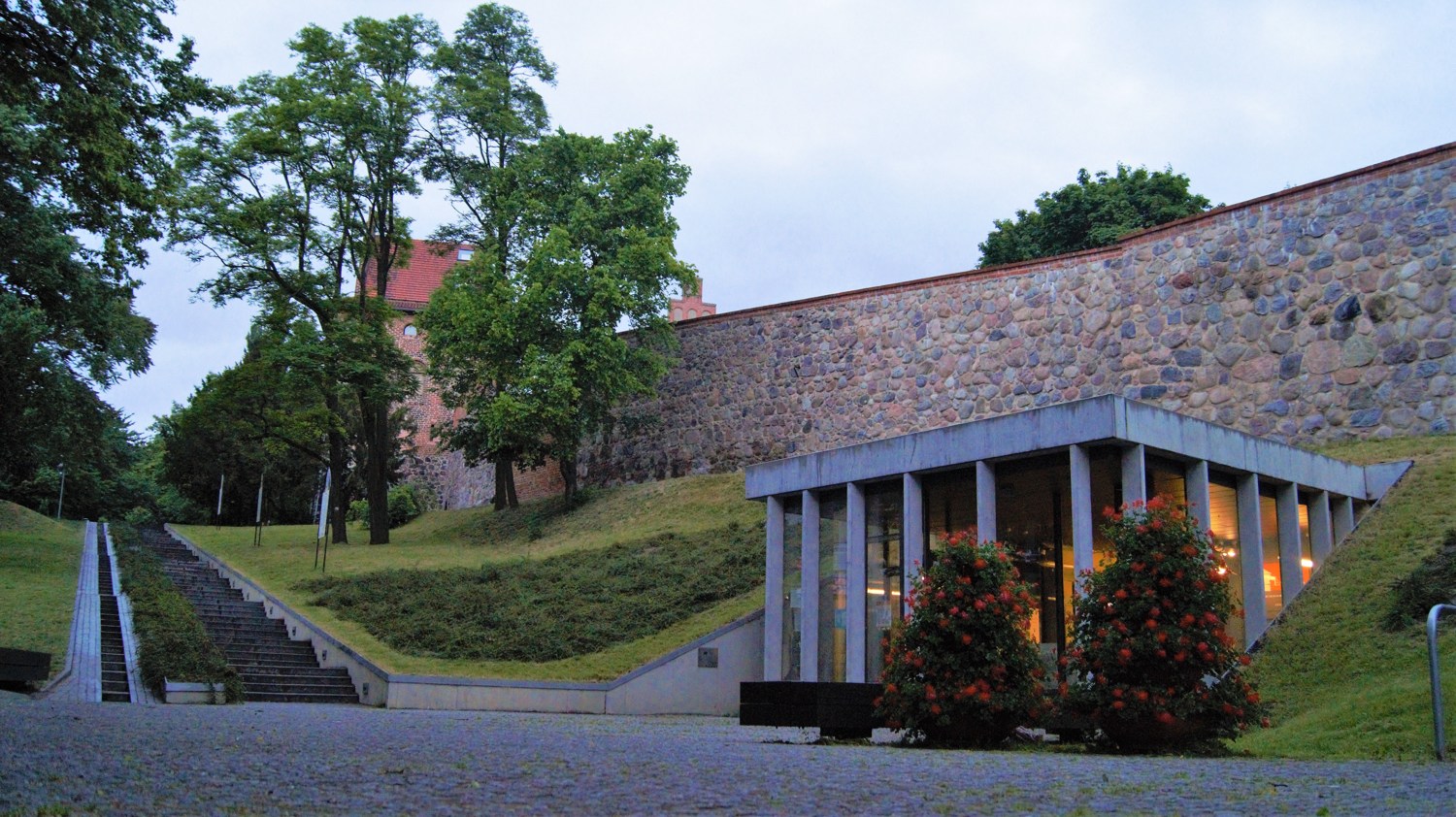
CKWS, at ul. Paderewskiego 24, combines a study-store exhibition with conservation facilities. Its large objects include recovered ship fragments, old boats from Poland and vessels from other parts of the world. The operator also identifies the yachts Dal and Opty with the achievements of Polish sailors. Seeing the scale and construction of the boats is a different experience from following the river museum's historical narrative.
The centre was designed to make conservation visible. That does not mean a particular treatment or demonstration will be taking place whenever you arrive. Think of the workshop view as an insight into how fragile recovered objects are preserved, not a booked performance included with every ticket. If watching active work is the main reason for travelling, ask about the expected activity on your chosen day.
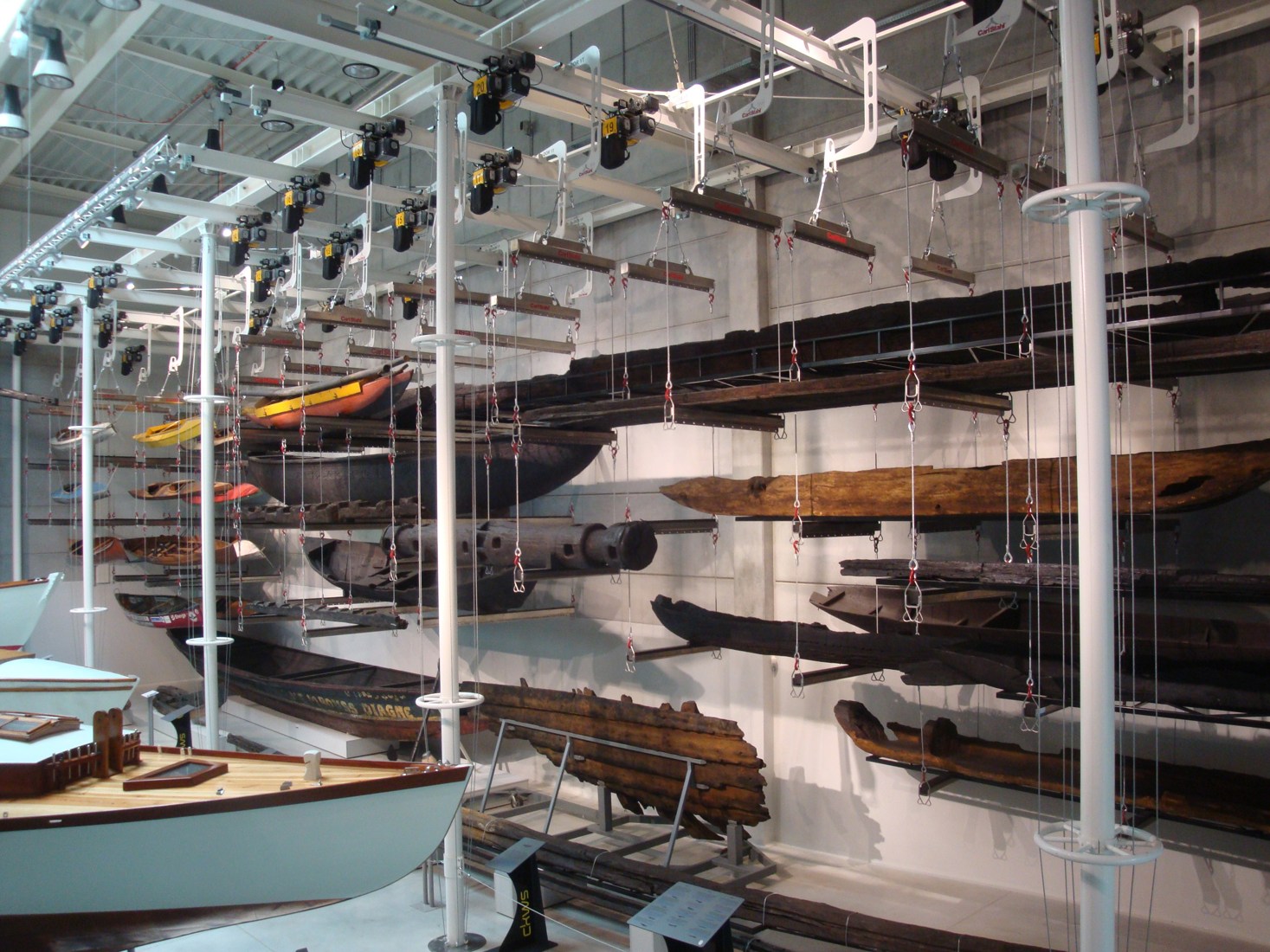
CKWS also spans three levels, with an estimated visiting time of one hour. Polish and English captions make it the stronger independent option for many international visitors. For children who enjoy shapes, materials and large objects, it may be the easier first stop. The displays are museum collections, however, not an invitation to climb into boats or touch conservation equipment.
Guides, bookings and language expectations
The listed guide service is in Polish: 60 zł for a group of up to 30 at one branch, or 90 zł for a tour covering both Tczew branches. Treat these as guide-service prices, not an all-inclusive admission quotation. Confirm entrance tickets, duration, group size and any extra service charges when making a booking.
The current Polish pages link the museum's reservation service and give the education contact, [email protected], telephone +48 58 761 75 31. They also retain a note referring specifically to December 2025. That old dated note is not a new instruction for December 2026. Ask the education team about current arrangements if the booking page does not answer your question. English captions at CKWS do not establish an English-speaking guided-tour service or an English audio guide.
Wheelchairs, arrival and the short transfer
Both branch pages say their exhibitions are accessible to wheelchair users and list lifts and accessible toilets. Muzeum Wisły specifies the wheelchair entrance from the internal courtyard, an adapted lift that also serves visitors with visual impairments, and accessible toilets on the ground floor. CKWS lists a lift for people with reduced mobility and a wheelchair-accessible toilet. Confirm any essential dimensions, equipment availability or assistance before travelling.
The river museum describes the route from the CKWS parking area through the internal courtyard as about 100 metres. This is a useful two-building visit, not a transfer across town. The operator's walking estimates from the railway and bus stations are approximately 1.7 kilometres to Muzeum Wisły and 1.8 kilometres to CKWS, around 21–22 minutes. These are planning estimates rather than a guarantee for every walking speed, weather condition or step-free route.
For buses, the branch pages point to the Pl. Piłsudskiego stop. Check the current service separately instead of assuming a route number or fare. Drivers should note that the operator lists only three ordinary car spaces at CKWS; the Vistula museum does not offer general on-site parking, apart from provision described for disabled visitors. Have a backup parking plan rather than building the outing around an available space beside the entrance.
A practical order for the visit
Start at CKWS if English captions and large boats are the priority. Start at Muzeum Wisły if you want the river-history framework before looking at construction and conservation. Allow roughly three hours including the short transfer and ticket arrangements, then add any meal or city walk separately. Neither branch's estimated exhibition time includes everything a family may need between buildings.
The operator permits amateur photography for personal use without flash or a tripod; professional photography and filming need the director's permission. Leave large belongings in the available cloakroom or deposit lockers as directed. Before departure, make one final check of opening notices, the Saturday exception, your concession documents and any booked service. Those details decide whether this becomes a relaxed two-museum outing or an expensive detour with too little time left inside.
Frequently asked questions
Are both Tczew maritime museums free on Saturday?
CKWS lists free Saturday entry. At Muzeum Wisły, the permanent exhibition is free, but a temporary exhibition has listed Saturday prices of 5/4 zł.
Which branch has English captions?
CKWS lists Polish and English captions. Muzeum Wisły lists Polish captions. An English guided tour is not established by those caption provisions.
What does the combined ticket cost?
The current combined pass for Muzeum Wisły and CKWS costs 20 zł regular or 14 zł reduced; eligibility and pass validity should be checked.