Travelling With a Pet From Poland in the EU: Passport and Rabies Rules
Short answer: Pets travelling within the EU need a microchip, a valid rabies vaccination, a passport from an authorised vet and an owner's declaration; dogs need tapeworm treatment for Finland, Ireland, Malta, Northern Ireland and Norway.
Taking a dog, cat or ferret from Poland to another EU country is a non-commercial movement with fixed health rules: a microchip, a rabies vaccination, a pet passport and a signed declaration. Some destinations add a tapeworm treatment for dogs. This guide follows the page "Podróżowanie ze zwierzęciem domowym w UE" from the Chief Veterinary Inspectorate (Główny Inspektorat Weterynarii), which cites the EU rules in force. The page carries no publication date, so treat the details as the inspectorate's current text and confirm them with a vet before you travel.
Which rules apply
The inspectorate says the detailed animal-health requirements for travelling with dogs, cats or ferrets in the EU are set in Commission Delegated Regulation 2026/131. It covers non-commercial travel, meaning no change of ownership and no sale.
The basic conditions are:
- the animal travels with its owner and under the owner's direct responsibility
- no more than 5 pets travel in one vehicle for non-commercial purposes
The limit of 5 can be exceeded only if all of these apply: the purpose is a competition, exhibition or sports event (or training for one), you can show written proof that the animals are registered for the event or with the organiser, and the animals are older than six months. If the number is above 5 or those conditions are not met, the animals must meet the conditions for commercial movement within the EU.
Microchip
The pet must be identified by an implanted microchip, according to the technical specifications the page cites. The page also notes that EU countries accept animals moved from another EU country with a clearly legible tattoo, if it was applied before 3 July 2011.
Rabies vaccination
The vaccination must be given by an official or authorised vet. The inspectorate lists these conditions:
- the animal was at least 12 weeks old on the day of the vaccination
- the vaccination date is not earlier than the date of identification or the reading of the microchip
- the validity period starts no earlier than 21 days after the primary vaccination protocol is completed, and each following vaccination was given within the validity period of the previous one
Tapeworm treatment for dogs
Dogs (not cats or ferrets) must be treated against the tapeworm Echinococcus multilocularis before entering any EU country listed in Annex XIX to Regulation 2021/620. The page names Finland, Ireland, Malta and the United Kingdom (Northern Ireland), and also Norway.
The treatment must:
- consist of an approved veterinary medicine containing the right dose of praziquantel, or of active substances with proven efficacy against adult and immature intestinal forms of the parasite
- be given by a vet no more than 120 hours and no less than 24 hours before the planned time of entry
- be certified by the vet in the relevant section of the passport
Dogs travelling directly between the listed countries (Finland, Ireland, Malta, Northern Ireland or Norway) are exempt from the treatment.
Passport and owner's declaration
The animal must travel with:
- a passport in the model set by Commission Implementing Regulation 2026/705, filled in and issued by an authorised vet
- the passport entries on the microchip or tattoo code, the rabies vaccination and, where relevant, the tapeworm treatment
- a written declaration by the owner or the authorised person that the movement is non-commercial
If someone else travels with the pet
If the owner cannot travel at the same time, an authorised person can transport the pet. The inspectorate says the owner must travel five days before or after the pet, and the written declaration attached to the passport must confirm it. If the pet's movement is not caused by the owner's movement, or the conditions for an authorised person are not met, the animals must meet the conditions that apply to bringing such animals into the EU from outside.
Puppies and kittens
Some EU countries allow movement of young animals that are under 12 weeks old and unvaccinated, or 12 to 16 weeks old and vaccinated less than 21 days ago. They then need an owner's declaration that the animals have had no contact with wild animals susceptible to rabies since birth, or must travel with their mother, whose passport shows a valid rabies vaccination before their birth. The page gives an important warning: Polish rules do not allow young dogs, cats and ferrets without valid rabies vaccination to be brought into Poland.
National rules to check
The inspectorate notes that some member states keep national rules that can ban certain breeds or dogs of types seen as dangerous, giving Rottweiler and Pit Bull Terrier as examples. It recommends checking the rules of the destination country before every trip.
Norway has an additional national rule: the page says it does not allow the import of dogs and cats that have no owner, come from shelters, are meant for adoption, come from foster homes or are treated as stray or street animals. The ban has applied continuously since 1 July 2018.
What happens if the rules are not met
If a check finds non-compliance, the competent authority may order the animal to be sent back, put it in quarantine until the conditions are met, or, if neither is possible, euthanise it. The person responsible for the animal during the trip bears all costs.
Birds
The page adds that captive birds moved without a commercial purpose, such as parrots and canaries, can be treated as pets if they travel with the owner or an authorised person, there is no sale or transfer of ownership, and the number is limited to private use.
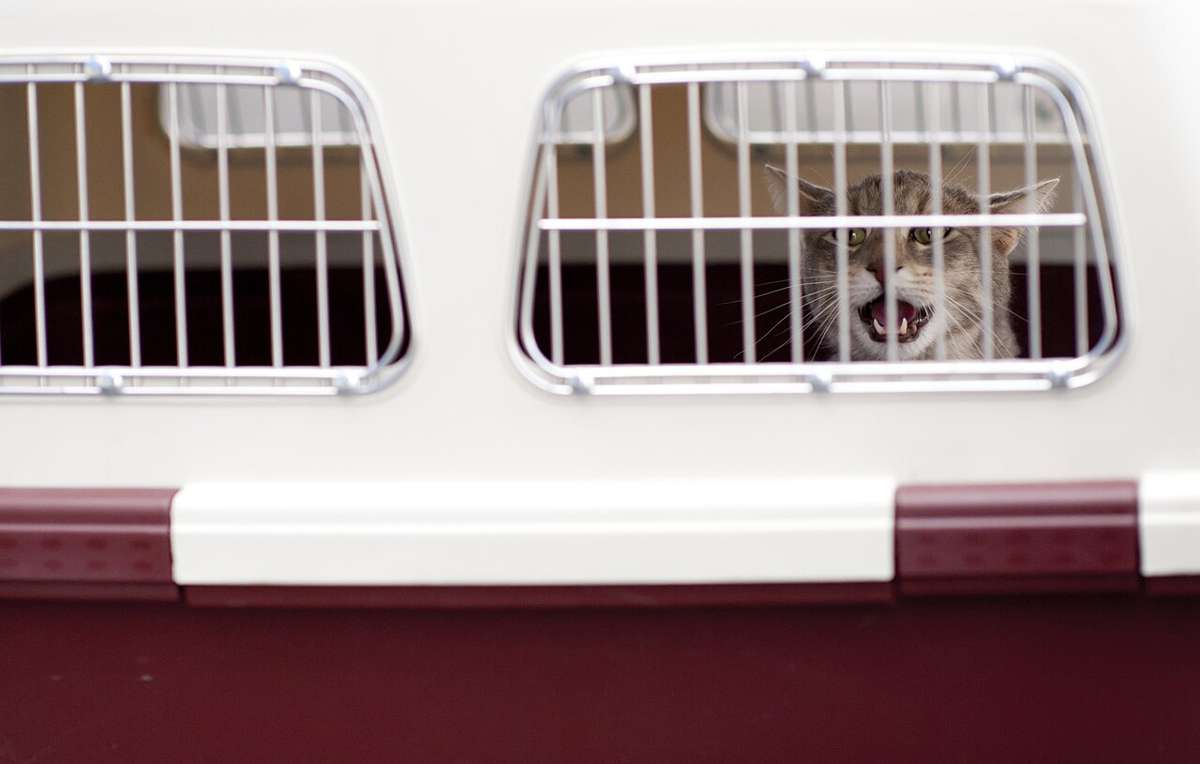
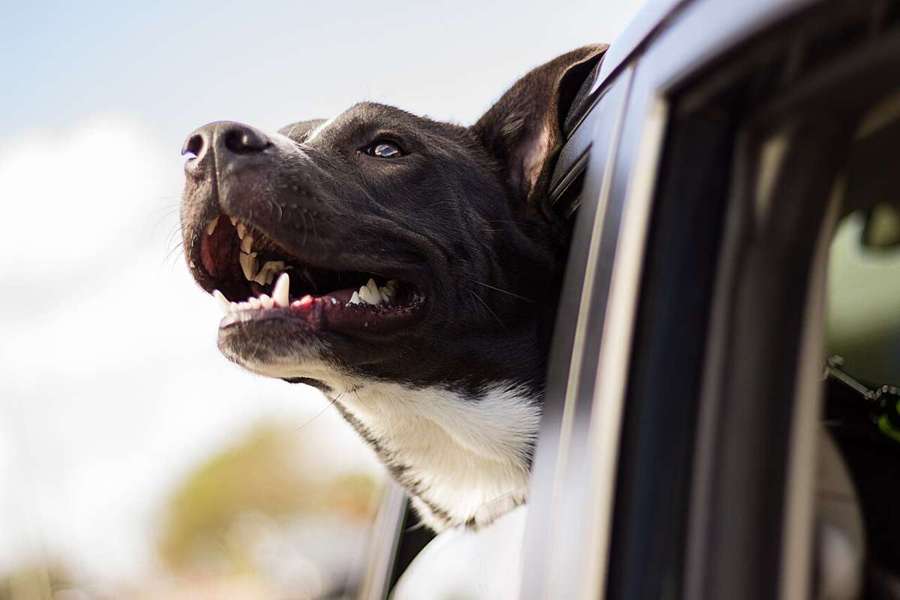
* Photos: Dog in car (Unsplash, via Wikimedia Commons, CC0); cat in a cage (Wikimedia Commons, public domain). Both are illustrative and not from Poland.
Frequently asked questions
Do I need a pet passport to travel from Poland to another EU country?
Yes. The inspectorate says the pet must travel with a passport issued by an authorised vet, plus a written declaration that the trip is non-commercial.
How old must my dog be for the rabies vaccine?
At least 12 weeks on the day of vaccination, and the validity starts no earlier than 21 days after the primary protocol is completed.
Which countries need a tapeworm treatment for dogs?
According to the page: Finland, Ireland, Malta, the United Kingdom (Northern Ireland) and Norway. The treatment must be given 24 to 120 hours before entry and recorded in the passport.
Can I send my pet with a friend?
Yes, with an authorised person, if you travel five days before or after the pet and the declaration attached to the passport confirms it.