BLIK and Bank Scams in Poland: What to Do If It Happens
Short answer: Do not return an unexpected BLIK transfer yourself, never share bank logins or codes, hang up on fake bank calls, and report losses to your bank and the police at once.
Payment scams in Poland often use BLIK, the phone-based payment system, and fake calls from "the bank". Poland's Financial Ombudsman (Rzecznik Finansowy), the consumer protection office UOKiK and the police have published warnings with specific steps. This guide summarises them. Facts are as of 15 October 2026. This is general information, not legal advice. If you have lost money, contact your bank and the police straight away.
The BLIK "wrong transfer" scam
On 19 February 2026 the Financial Ombudsman described a new scheme, mainly on online marketplaces. Criminals post a fake advert for an item. When a buyer shows interest, the "seller" suggests paying by BLIK to a phone number. That number belongs to a random person, not to the scammer. If the money lands in your account and you send it back to the "sender", you may become a link in a criminal scheme. That can mean having to give evidence to the police or the prosecutor.
What the Ombudsman advises:
- If you receive an unexpected transfer, do not return it to the sender, and above all do not send it to another account or number you are given.
- The safest option is to ask the sender to contact their own bank and report the mistaken transfer. The bank will then contact you and ask for the money back, and you pay the money back to the bank.
- Using that procedure keeps you anonymous, the money goes to a special technical account, and you do not give personal data to third parties.
- Do not be pressured. According to victims' accounts, criminals can be insistent and even make threats. Apply the principle of limited trust: the sender must go to their bank.
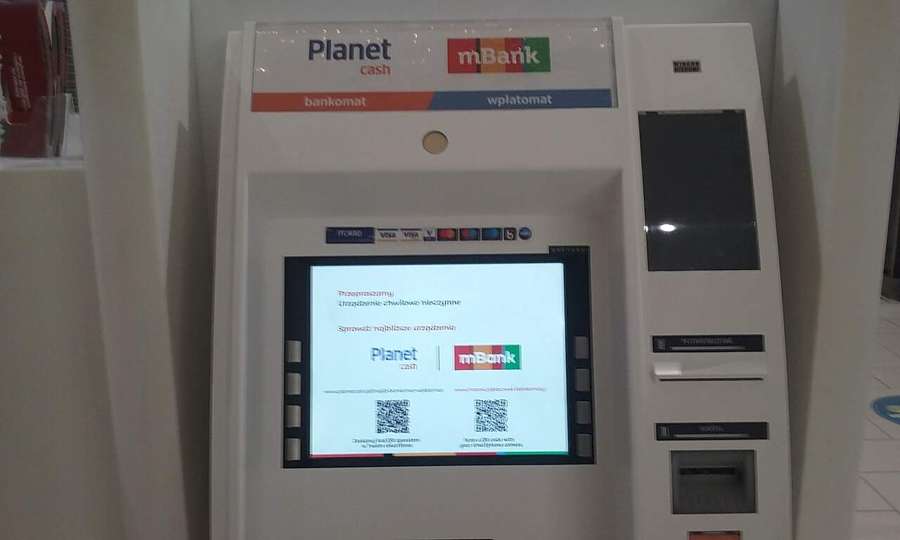
* Photos: "ATM and cash deposit machine of Planet Cash in Galeria Tomaszów" and "Smartphone in Hand", Wikimedia Commons, CC0.
The "please generate a BLIK code for me" scam
A warning from the Małopolska Police (30 January 2025) describes a different pattern. Scammers take over a social media or messenger account and write to the owner's friends and family asking for a loan by generating a BLIK code. They give reasons such as a lack of cash, an urgent bill or a failed bank transfer. The victim generates a code, sends it to the "friend" and confirms the transaction in the banking app. Unlike a bank transfer, a BLIK transaction made this way cannot be reversed, the police note, because the scammer immediately enters the code at a cash machine. One victim in the Brzesko district lost 1,400 zł.
The police advice:
- Do not act hastily on a request to generate a BLIK code.
- Call the person on a number you know and confirm the request.
- Protect your own social media accounts with two-factor login and log out when you finish.
Fake calls and texts from "the bank"
UOKiK and the Financial Ombudsman published a Q&A on unauthorised transactions (2022). It lists common methods:
- A call from a "bank employee". The scammer may fake the bank's helpline number (spoofing), says someone is trying to steal your money and asks you to install software to scan your device. In reality the software lets them see your activity and capture your login.
- Text messages that look like they are from electricity, gas or parcel firms, claiming an overdue payment and giving a link. The link leads to a fake payment page that captures your data.
- Fake buyers on online platforms who send a link to "receive funds", which leads to a fake bank or payment page.
The four basic rules from UOKiK and the Ombudsman:
1. Never give anyone your online banking login and password. A real bank employee will not ask. 2. Never click links in text messages. Check any overdue payment yourself with the supplier. 3. If a "bank employee" calls, hang up, find the helpline number yourself and check whether the bank called you. 4. Never install software from links sent to you or during a call about your account.
If it already happened
According to the same UOKiK and Ombudsman material: tell your payment service provider (your bank) as soon as possible, block your card, change your login details or block your account, report the case to the police and tell your bank that you did so. The sources say that banks have legal duties in the case of unauthorised transactions, and the Ombudsman has argued that banks should refund funds in many such cases. Whether you get your money back depends on the facts, for example whether you authorised the transaction yourself. For details see the UOKiK and Ombudsman Q&A.
One habit that helps
Use the bank's own app and the helpline number printed on your card or shown on the bank's site, not a number given to you in a call or text. This follows rule 3 above.
Frequently asked questions
I received an unexpected BLIK transfer. Should I send it back?
No. The Financial Ombudsman says not to return it yourself. Ask the sender to report the error to their bank, and return the money only through the bank's procedure.
Can a BLIK code payment be reversed?
The police say transactions made with a code you gave to a scammer cannot be reversed, as the code is used immediately at a cash machine.
A caller says they are from my bank. What do I do?
Hang up, find the official number yourself and call the bank to check.
Who do I tell if I lost money?
Your bank first, then the police. Block your card and change your login details.