Body Image and Beauty Standards in Poland: A Guide for Expats
The essentials: Appearance matters in Poland: 88% of adults call it important (CBOS, July 2024), 74% are satisfied with their looks, and 57% would change something - weight first. Expect sharper dress codes, mainstream gym culture (3.1M fitness-club members) and direct body talk you may calmly decline.
Every expat in Poland has a version of the same first-month observation: people here make an effort. The gym is full at 7 a.m., the office dress code runs sharper than in Berlin or Amsterdam, and your Polish colleague will mention, cheerfully and to your face, that you have gained weight. Beauty standards in Poland are real, fairly traditional, and enforced more by social norm than by anything written down. Understanding them - and how Poles themselves relate to those standards - makes daily life here noticeably easier. This guide uses Poland's best survey data on appearance and self-image, plus what the fitness boom says about where the culture is heading.
How Poles see their own appearance
Poland's public opinion research center CBOS asks Poles about their appearance roughly every seven years, and the 2024 edition (a representative survey of 1,076 adults, fielded 4-14 July 2024) gives the clearest available picture.
Appearance matters here: 88 percent of adults say their own looks are important to them, including 38 percent who call them very important. At the same time, self-image is broadly healthy but not improving. In 2024, 74 percent declared themselves satisfied with their figure and appearance (21 percent definitely so), while 25 percent were dissatisfied. Compared with 2017, satisfaction slipped from 77 to 74 percent and dissatisfaction rose from 20 to 25 percent. CBOS notes the trend directly: despite the wide media presence of body positivity and criticism of unrealistic beauty ideals, Poles' relationship with their own bodies has not improved over seven years - it has slightly worsened.
And the gap between acceptance and aspiration is wide: 57 percent of Poles would change something about their appearance if they could (up from 47 percent in 2017), with weight loss and a slimmer belly topping the wish list, while 41 percent would change nothing.
Data source: CBOS research communiqué 82/2024 "Co Polacy sądzą o swoim wyglądzie?" (21 August 2024), checked 22 October 2026.
Who feels the pressure most
The CBOS breakdowns show where appearance culture bites hardest:
- Women call appearance very important far more often than men (45 percent versus 32 percent), and are slightly more dissatisfied with their looks (26 percent versus 23 percent of men).
- The young care most: among 18-24 year olds, 46 percent rate appearance as very important, the highest of any age group. Yet satisfaction follows a U-curve - 30 percent of the youngest are fully satisfied with their looks, the share halves to 15-16 percent around age 50, then recovers to 22 percent among over-65s.
- Money changes the mirror. People who rate their material situation well are twice as likely to call appearance very important (42 percent) as those doing badly (21 percent) - and the struggling group is far more likely to be dissatisfied with how they look (40 percent versus 21 percent).
For an expat, the practical translation is that appearance norms are strongest exactly where you are most likely to live: in cities, among younger colleagues, and in professional settings.
Data source: CBOS 82/2024, checked 22 October 2026.
What Poles want to change - and actually change
The wish list in the 2024 CBOS survey is dominated by the midsection: losing weight and slimming the belly lead, followed by better musculature and a more athletic figure, then skin and facial appearance, hair, and height. The ranking has been stable across the 2009, 2017 and 2024 waves - the Polish body project is consistent: less belly, more muscle, better skin.
CBOS also sorts attitudes into four types, and the shift between 2017 and 2024 is the largest since measurement began. The contented - satisfied and wanting no change - fell from 47 to 38 percent. Those who are satisfied but would still tweak something rose from 28 to 34 percent. The dissatisfied who want change grew from 18 to 22 percent. Only about 3 percent are unhappy with their looks yet want nothing changed. Read together: Poles are not in crisis about their bodies, but they are in motion about them - which is exactly what the full gyms and Saturday parkruns show.
Data source: CBOS 82/2024, checked 22 October 2026.
The fitness boom
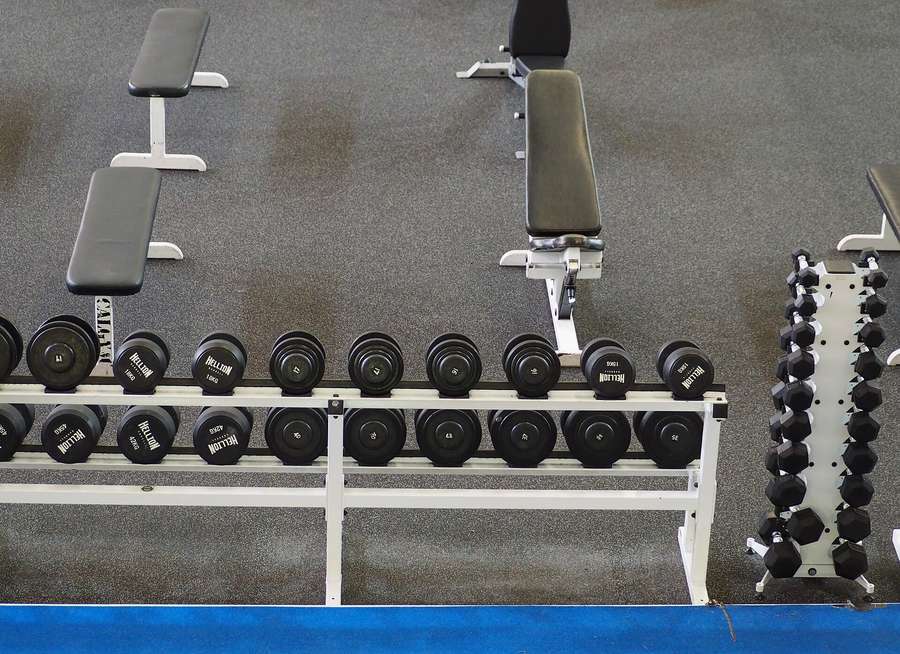
If one number explains Polish body culture in the 2020s, it is the growth of the gym. According to the Polish Fitness Association, around 3.1 million people in Poland now train in fitness clubs, in a market that industry analysts describe as fast-growing with room to expand further. The wider sports infrastructure is vast: Statistics Poland (GUS) counted 16,612 sports clubs operating in the country in 2024, up from 2022.
The visible result in any Polish city: budget gym chains on every other block, packed group classes, parkruns on Saturday mornings, and cycling paths full year-round. Fitness here is mainstream and affordable rather than boutique - a standard monthly gym pass costs a fraction of Western European prices, and employer-subsidized sports cards (Multisport and its rivals) are a standard corporate benefit.
Data source: fit.pl industry analysis citing Polish Fitness Association data (3 February 2025) and GUS "Kultura fizyczna w Polsce w 2024 r." (11 July 2025), checked 22 October 2026.
What the standards look like on the street
Survey data explains attitudes; daily life supplies the texture. A few norms expats consistently notice:
- Dress runs a notch more formal than in Western Europe. Office wear in Warsaw skews smart; turning up underdressed to a government office, a church, the opera or a nicer restaurant gets noticed. The unwritten rule is effort, not expense: clean, fitted, coordinated beats branded.
- Grooming services are ordinary maintenance. Hairdressers, barbers, nail studios, beauticians and aesthetic clinics are dense and affordable by Western standards, and regular visits are unremarkable for both women and men.
- Beauty ideals remain fairly traditional. Slim, groomed and athletic is the mainstream ideal for both sexes; the strong-jaw, gym-built male ideal and the slim, styled female ideal dominate advertising. Visible alternatives exist - tattoos and piercings are common among the young - but the conservative default still shapes first impressions, especially outside the biggest cities.
- Seasonal practicality. The much-mocked Polish ability to look elegant in a Baltic winter is real: people dress for the weather and still look composed. Invest in a proper coat.
The directness problem - and how to handle it
The single biggest body-image shock for expats is verbal, not visual. Polish directness extends to bodies: commenting on a colleague's weight gain or loss, asking about a diet, or observing that someone looks tired are ordinary social moves between people who know each other, delivered without malice and received without drama. Within families, a grandmother's *przytyłaś* (you have put on weight) is a greeting genre of its own.
If it lands on you, the useful frame is this: the comment registers care and attention in a high-context way, not judgment in the Anglo sense. You are allowed to set a boundary - *wolę nie rozmawiać o wadze* (I prefer not to talk about weight) is polite and complete - and Poles respect a clearly stated preference. What does not work is taking offense silently and reading the whole culture through one remark.
Body positivity in Poland: present, but not dominant
Body positivity (*ciałopozytywność*) is a known concept in Poland - CBOS references it by name - with visible communities on Polish Instagram and TikTok, plus-size fashion lines in the chains, and a growing discussion around eating-disorder awareness. But the survey trend shows the movement has not shifted the national baseline: self-image worsened slightly between 2017 and 2024 even as the vocabulary spread. Expect the public conversation in Poland to feel a decade behind Los Angeles or London: body positivity is a subculture, not a consensus.
If body image is a real struggle, English-language therapy is widely available in Warsaw and Kraków, and Poland's public system covers psychological help through a referral from a family doctor; eating-disorder treatment exists in specialist public centers, with queues, and faster privately.
Practical takeaways
- Dress one level sharper than your home default for offices, offices of the state, and anything cultural.
- Treat the gym as social infrastructure: it is where Poland's appearance culture is healthiest and most welcoming, and it costs little.
- Do not perform body talk you are not comfortable with, and do not be shocked when it is performed at you; a calm boundary sentence ends it.
- If you are dating, remember the earlier numbers: most Poles notice appearance and most also report liking their own - compliments on effort (style, shape, grooming) land well precisely because effort is the local currency.
*Photos: cover - KeepActive Australia, CC BY-SA 4.0, via Wikimedia Commons; interior - Chicken4War, CC BY-SA 4.0, via Wikimedia Commons.*
Frequently asked questions
Do Poles care a lot about appearance?
Yes - 88 percent of adults told CBOS in July 2024 that their own appearance matters to them, and 38 percent call it very important. At the same time 74 percent are satisfied with how they look, so the norm is effort without universal anxiety.
Are beauty standards in Poland traditional?
Mostly, yes: slim, groomed and athletic remains the mainstream ideal for both sexes, and dress codes run a notch more formal than in Western Europe. Alternatives are visible among the young, but the conservative default shapes first impressions.
Is body positivity a thing in Poland?
It exists as a visible subculture - CBOS itself references *ciałopozytywność* - but it has not moved the national numbers: self-image satisfaction slipped from 77 to 74 percent between 2017 and 2024.
How big is gym culture in Poland?
Mainstream and growing: the Polish Fitness Association reports about 3.1 million people training in fitness clubs, and GUS counted 16,612 sports clubs nationwide in 2024. Monthly passes and employer sports cards are far cheaper than in Western Europe.