Can You Collect Canadian Pension Benefits While Living in Poland?
The essentials: CPP is payable worldwide. OAS continues abroad only with 20 years of Canadian residence after age 18 - but the Canada-Poland Social Security Agreement (in force since October 2009) lets Polish creditable periods count toward that threshold. GIS and the Allowance stop after six months abroad.
Retiring to Poland - or just spending a few years here - does not mean giving up the Canadian pension you spent a career paying into. But the three big benefits behave very differently once you leave, and the rules sit in two places: Canada's Old Age Security Act and the Canada-Poland Social Security Agreement that has been in force since October 1, 2009. Here is exactly what keeps paying, what stops, and how the treaty fills the gaps, as of October 2026.
The three benefits, three different rules
Canada Pension Plan (CPP): keeps paying. Your CPP retirement pension is based on contributions, not residence, so it is payable while you live in Poland or anywhere else. The Canada-Poland agreement obliges the Canadian institution to pay benefits directly to beneficiaries abroad, in Canadian dollars or another freely convertible currency, with no deduction for administrative costs.
Old Age Security (OAS): depends on your years in Canada. OAS is residence-based, and the OAS Act is blunt about it. Under section 9, once a pensioner has been outside Canada for six consecutive months, the pension is suspended unless, at the time of leaving, you had resided in Canada for at least twenty years after turning eighteen. Cross that 20-year threshold and OAS continues indefinitely, wherever you live. Below it, payments stop after six months abroad and resume only when you return to Canada.
Guaranteed Income Supplement (GIS) and the Allowance: not portable. These are tied to Canadian residence. The agreement confirms it directly: an allowance and a guaranteed income supplement are paid to a person outside Canada only to the extent the OAS Act permits - which in practice means they stop after six months abroad. Plan your Polish budget without them.
*Data source: Old Age Security Act, R.S.C. 1985, c. O-9, s. 9 (laws-lois.justice.gc.ca) and Agreement on Social Security Between Canada and the Republic of Poland, SI/2009-87, Art. 14, accessed October 21, 2026.*
What the Canada-Poland agreement adds
The treaty, signed on April 2, 2008 and in force since October 1, 2009, exists for the person who split their working life between the two countries. Its core mechanism is totalization: if you do not qualify for a benefit on one country's record alone, the other country's creditable periods are added in - provided the periods do not overlap.
For Canadian benefits, the conversion works like this. For OAS eligibility, a creditable period under Polish legislation counts as a period of residence in Canada. For CPP, a calendar year containing at least three creditable months in Poland counts as a creditable year under the CPP. There is a floor: if your total creditable periods in one country amount to less than a year and produce no benefit right on their own, that country need not pay on them - but they still count toward the other country's eligibility check.
The agreement matters most for OAS abroad. Remember the 20-year rule that decides whether OAS survives your move? Under Article 14, OAS is paid outside Canada if your residence periods - totalized with your Polish creditable periods - reach the minimum the OAS Act requires for payment abroad. In other words, Polish work history can push you over the 20-year line. The actual amount, though, is calculated only from your real Canadian residence: if you qualify solely through totalization, Canada pays a partial pension proportional to the residence you genuinely accumulated, and the full pension requires 40 years of residence after age 18.
The treaty runs both ways. For a Polish old-age pension, a CPP creditable year counts as 12 Polish creditable months, and OAS creditable months outside CPP count month-for-month - and Poland's institutions pay beneficiaries resident in Canada or a third country in Canadian dollars or a convertible currency.
*Data source: Agreement on Social Security Between Canada and the Republic of Poland, SI/2009-87, Art. 11-15 and Payment of Benefits (laws-lois.justice.gc.ca), accessed October 21, 2026.*
Working across the border before retirement
If you are still working, the agreement decides which country's system you pay into - you never pay into both for the same work. The default: you are covered by the country where you work. A self-employed person living in one country and working in the other pays where they live. And detachments are protected: an employee sent by their employer from one country to work in the other keeps paying only into the home system, as if the work were performed at home. A detachment can last up to 60 months without needing special consent from both countries' authorities. That is what keeps a Warsaw posting from splitting your CPP record - and your employer should document the detachment before it starts, not after.
*Data source: Agreement on Social Security Between Canada and the Republic of Poland, SI/2009-87, Art. 6-7 (laws-lois.justice.gc.ca), accessed October 21, 2026.*
A worked example: the 20-year line, crossed with Polish years
Consider Marta, who lived and worked in Canada for 12 years after turning eighteen, then spent 15 years working in Poland. On Canadian rules alone, her OAS would suspend six months after she settled in Poland - 12 years of residence is short of the 20-year threshold for payment abroad. Under the agreement, her 15 Polish creditable years are totalized with her 12 Canadian years of residence: 27 years, comfortably over the line, so her OAS can be paid in Poland.
What lands in her account is a partial OAS. The OAS Act pays a full pension only at 40 years of residence after age 18, so Marta's payment reflects her 12 real Canadian years - roughly twelve-fortieths of the full pension - not the totalized 27. Totalization opens the door; it does not inflate the amount. Her CPP retirement pension, meanwhile, is computed from her actual CPP contributions and is unaffected by where she lives.
One nuance on the Polish side of the ledger: what counts as a Polish creditable period is broad. It includes contribution periods, equivalent periods and non-contribution periods used to acquire benefit rights under Polish law - so parental leaves and other breaks recognized by ZUS can still help the totalization math.
*Data source: Old Age Security Act, R.S.C. 1985, c. O-9, s. 3 and 9, and Agreement SI/2009-87, Art. 1, 11 and 14 (laws-lois.justice.gc.ca), accessed October 21, 2026.*
The practical checklist before you move
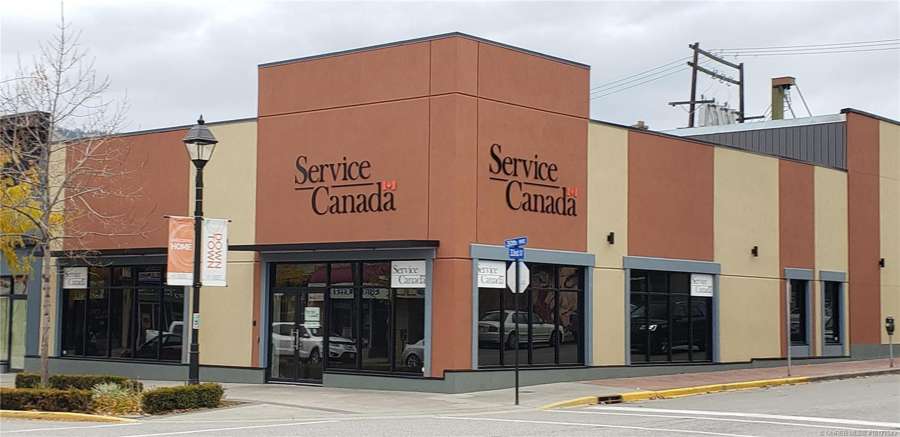
Tell Service Canada before you leave. Report your move and your Polish address so the six-month clock and any correspondence are handled correctly. OAS suspension happens automatically after six consecutive months abroad if you are under the 20-year threshold - do not let it surprise you.
Set up direct deposit that survives the move. Payments under the agreement are made directly, in Canadian dollars or a freely convertible currency. Most expats keep a Canadian bank account for CPP/OAS deposits and move money to Poland as needed; exchange rates and transfer fees are your cost to manage.
Expect proof-of-life paperwork. Pensioners living abroad are periodically asked to confirm they are alive and eligible. Answer these promptly - ignoring them is how payments get suspended even when you fully qualify.
Keep taxes separate from eligibility. Moving does not cancel your benefit rights, but Canadian non-resident withholding tax and Polish taxation of foreign pensions are their own topic, governed by the separate Canada-Poland tax treaty. Check both sides before you budget a net amount.
Use the agreement if your record is short. If you have, say, fifteen years in Canada and a decade in Poland, apply anyway and cite the agreement. The liaison bodies exchange information and assist each other in determining eligibility - that cooperation is written into the treaty.
*Data source: Agreement on Social Security Between Canada and the Republic of Poland, SI/2009-87, Art. 20 and Payment of Benefits (laws-lois.justice.gc.ca), accessed October 21, 2026.*
Frequently asked questions
Can I receive CPP while living in Poland?
Yes. CPP is contribution-based, not residence-based, so it is payable worldwide. Under the Canada-Poland agreement, Canada pays benefits directly to beneficiaries abroad in Canadian dollars or a convertible currency, without administrative deductions. Source: Agreement on Social Security Between Canada and the Republic of Poland, SI/2009-87, laws-lois.justice.gc.ca, accessed October 21, 2026.
Will my OAS continue if I move to Poland?
Only if you had at least 20 years of residence in Canada after age 18 when you left - otherwise payments suspend after six consecutive months abroad. Polish creditable periods can be totalized with your Canadian residence to reach that threshold under the 2009 agreement. Source: Old Age Security Act, s. 9, and SI/2009-87, Art. 14, laws-lois.justice.gc.ca, accessed October 21, 2026.
Can I get the Guaranteed Income Supplement in Poland?
No, not beyond the short period the OAS Act allows. The agreement states that the GIS and the Allowance are paid outside Canada only to the extent the Act permits - in practice, they stop after six months abroad. Source: SI/2009-87, Art. 14(3)(b), laws-lois.justice.gc.ca, accessed October 21, 2026.
I worked in both countries. Do my Polish years count for Canadian benefits?
Yes, through totalization: Polish creditable periods count as Canadian residence for OAS eligibility, and a calendar year with at least three Polish creditable months counts as a CPP creditable year. Periods must not overlap, and the pension amount still reflects only your real Canadian record. Source: SI/2009-87, Art. 11-14, laws-lois.justice.gc.ca, accessed October 21, 2026. * Photos: golden autumn in Warsaw's Łazienki Królewskie park by Laszczka Marta, CC BY-SA 3.0 PL; Service Canada office in Vernon, BC by Nordicanuck, CC BY-SA 4.0, both via Wikimedia Commons*