What Does Czynsz Include When Renting an Apartment in Poland?
The essentials: In Polish listings, czynsz can mean the owner's rent, the building charges, or both - utilities are usually separate. Deposits are capped at 12x rent (6x for najem okazjonalny), rent increases need written 3-month notice, and deposits return within a month of moving out.
Scroll any Polish rental site and the same word keeps appearing: czynsz. One listing shows "3,500 zł + czynsz", another "czynsz 4,200 zł with everything", a third "czynsz najmu plus opłaty". The confusion costs expats real money, because in Poland "czynsz" is not one payment - it is up to three different ones, going to three different places. This guide untangles the layers, and then covers the parts of the tenant-protection act that put legal limits around all of them, as of October 2026.
The three layers hiding behind one word
Layer one: the owner's rent (czynsz najmu). This is the money the landlord earns - the price of living in the flat. On private-market rentals this amount is purely contractual: the tenant-protection act regulates how it can be raised, but not how high it may be.
Layer two: the building charges (opłaty administracyjne, sometimes called czynsz administracyjny). In Polish apartment buildings, every unit carries monthly charges paid to the housing community (wspólnota) or cooperative (spółdzielnia) that runs the building: cleaning and power for common areas, lift maintenance, waste collection, building insurance, the repair fund (fundusz remontowy), and advance payments toward central heating and water. When a landlord says "czynsz 800 zł", they usually mean these charges, which they pass on to you. Crucially, most of them are advances (zaliczki) settled once or twice a year against actual consumption - a low advance can mean a painful balancing bill (dopłata) after the heating season, and a high one means money back.
Layer three: your own utilities (media). Electricity and gas are normally in your name or billed by the landlord from sub-meters; internet and TV are your contracts. These are almost never inside any "czynsz" figure.
So when comparing listings, always ask for the full monthly number: rent plus building charges plus typical utilities. A flat at "3,200 + 700 czynsz" and one at "4,000 all-in" may be the same price wearing different labels.
*Data source: market conventions as applied under ustawa o ochronie praw lokatorów, Dz.U. 2023 poz. 725 (consolidated, eli.gov.pl), accessed October 21, 2026.*
What the tenant-protection act actually controls
The act of 21 June 2001 on the protection of tenants' rights - the framework law for Polish rentals - treats czynsz as the payment for using the premises, alongside "other charges for the use of the premises" (inne opłaty za używanie lokalu). Both get the same legal protections.
One baseline duty sits on the landlord: under Article 6a, the owner must keep the flat's and building's installations working - water, gas and liquid fuels, heat, electricity, passenger lifts and the other fittings the building is required to have. If the lift dies or the heating installation fails, fixing it is the owner's legal problem, not a favour.
*Data source: Ustawa o ochronie praw lokatorów, Dz.U. 2023 poz. 725, art. 6a (eli.gov.pl), accessed October 21, 2026.*
Deposits: capped, valorized, and due back within a month
The deposit (kaucja) is one of the act's clearest consumer protections. It secures the owner's claims from the tenancy, and it cannot exceed twelve times the monthly rent for the flat, calculated at the rent in force when the contract was signed. In practice private landlords ask for one month's rent - the 12x figure is a ceiling, not a norm. One important exception: under an occasional-tenancy contract (najem okazjonalny, below), the cap is six times the monthly rent.
The return has teeth. The deposit comes back within one month of you vacating the flat (or buying it), minus only the owner's actual claims from the tenancy. And it is valorized: you receive the monthly rent in force on the return date multiplied by the number of months' rent originally deposited - never less than what you paid in. If rents rose during your tenancy, your deposit rises with them.
*Data source: Ustawa o ochronie praw lokatorów, Dz.U. 2023 poz. 725, art. 6 (eli.gov.pl), accessed October 21, 2026.*
Rent increases: the rules with real teeth
A landlord cannot raise your rent or other usage charges by message or whim. Article 8a sets the machinery: the increase happens by terminating the current amount in writing - and the written form is required under pain of nullity - no later than the end of a calendar month, with a three-month notice period unless your contract agreed a longer one.
There is a threshold rule worth knowing. An increase that pushes the yearly level of rent or charges above 3% of the flat's replacement value is allowed only in justified cases - and on your written request, the owner must within 14 days present the reason and the calculation in writing, again under pain of the increase being void. An increase up to the previous year's average consumer price inflation (published by the President of the Central Statistical Office in Monitor Polski) is automatically considered justified.
You are not locked in either way. Within two months of the notice, you can refuse the increase in writing - which ends the tenancy when the notice period runs out - or challenge it in court, where the burden of proving it justified sits on the owner.
*Data source: Ustawa o ochronie praw lokatorów, Dz.U. 2023 poz. 725, art. 8a (eli.gov.pl), accessed October 21, 2026.*
Reading a listing and contract like a local
Ask which czynsz they mean. Get the split in writing before signing: owner's rent, building charges, and who pays which utilities. In Polish contracts the layers appear as czynsz najmu, opłaty administracyjne or eksploatacyjne, and media.
Ask about settlement of advances. If heating and water are advances, ask how and when they are settled (rozliczenie) and what last year's balancing payment looked like. A cheap-looking monthly charge with a 1,500 zł spring dopłata is not cheap.
Check the meters. Electricity and gas on sub-meters billed by the landlord are common; insist the handover protocol (protokół zdawczo-odbiorczy) records the meter readings on day one.
Get the increase clause in writing. Since any increase must be in writing anyway, your contract file is your protection - keep every notice and every annual settlement the landlord gives you.
*Data source: Ustawa o ochronie praw lokatorów, Dz.U. 2023 poz. 725, art. 6, 8a (eli.gov.pl), accessed October 21, 2026.*
The contract type most expats actually sign: najem okazjonalny
If you rent from a private person rather than a company, your contract is very likely an occasional tenancy (najem okazjonalny). The act defines it tightly: the owner must be a natural person not running a rental business, the term is fixed and cannot exceed ten years, and the contract must be in writing under pain of nullity.
Its distinctive feature is the notarial statement. Attached to the contract is a declaration by you, made before a notary, submitting to enforcement and committing to vacate and return the flat by the deadline in the owner's demand. It sounds heavy - and it is meant to: it is the mechanism that lets private owners rent at all with manageable risk. On the other side of the balance, the rules trim the charges: besides the rent, an occasional-tenancy owner may collect only charges independent of the owner - the cost-based building and utility fees, not invented extras. The owner must also report the contract to their tax office within 14 days of the tenancy starting.
For your budget, the practical points are the same three layers as any other rental - rent, building charges, utilities - plus the six-times-rent deposit ceiling and the notary appointment at signing.
*Data source: Ustawa o ochronie praw lokatorów, Dz.U. 2023 poz. 725, art. 19a-19c (eli.gov.pl), accessed October 21, 2026.*
Frequently asked questions
Is czynsz the same as rent in Poland?
Not exactly. In listings, "czynsz" may mean the owner's rent, the monthly building charges (waste, common areas, repair fund, heating and water advances), or a bundle of both. Always ask for the breakdown and the full monthly total before comparing flats. Source: Ustawa o ochronie praw lokatorów, Dz.U. 2023 poz. 725, eli.gov.pl, accessed October 21, 2026.
How much deposit can a Polish landlord ask for?
At most twelve times the monthly rent, and it must be returned within one month after you vacate, minus only the owner's documented claims from the tenancy. The returned amount is valorized against the rent in force at return, never less than you paid. Source: Ustawa o ochronie praw lokatorów, art. 6, Dz.U. 2023 poz. 725, eli.gov.pl, accessed October 21, 2026.
Can my landlord raise the rent by text message?
No. A rent or charge increase is valid only in writing, with a three-month notice period counted from the end of a calendar month. Above a statutory threshold, you can demand a written justification and calculation within 14 days, refuse the increase, or challenge it in court. Source: Ustawa o ochronie praw lokatorów, art. 8a, Dz.U. 2023 poz. 725, eli.gov.pl, accessed October 21, 2026.
What is a dopłata and why did I get one?
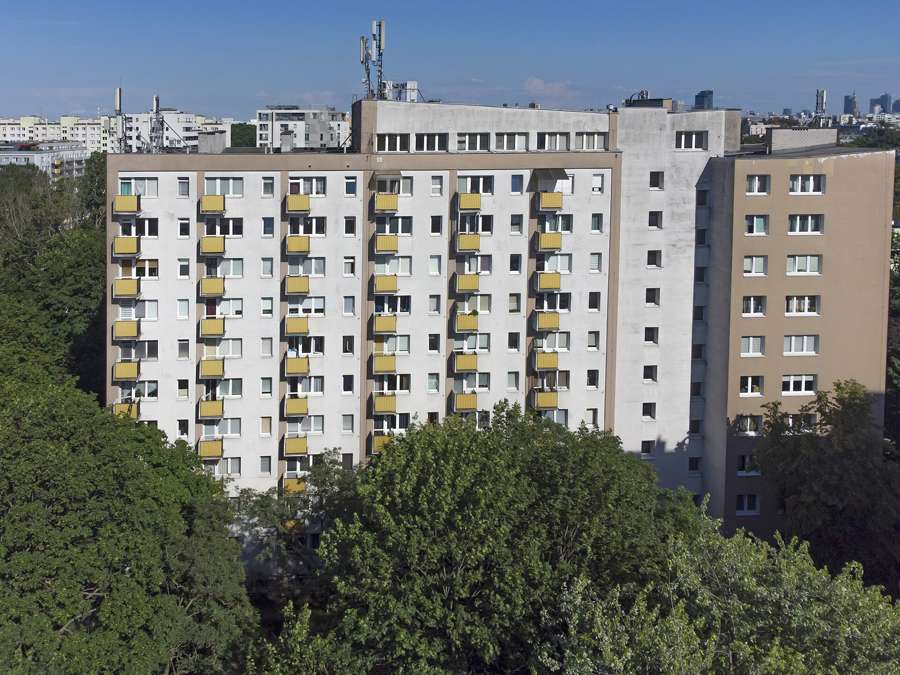
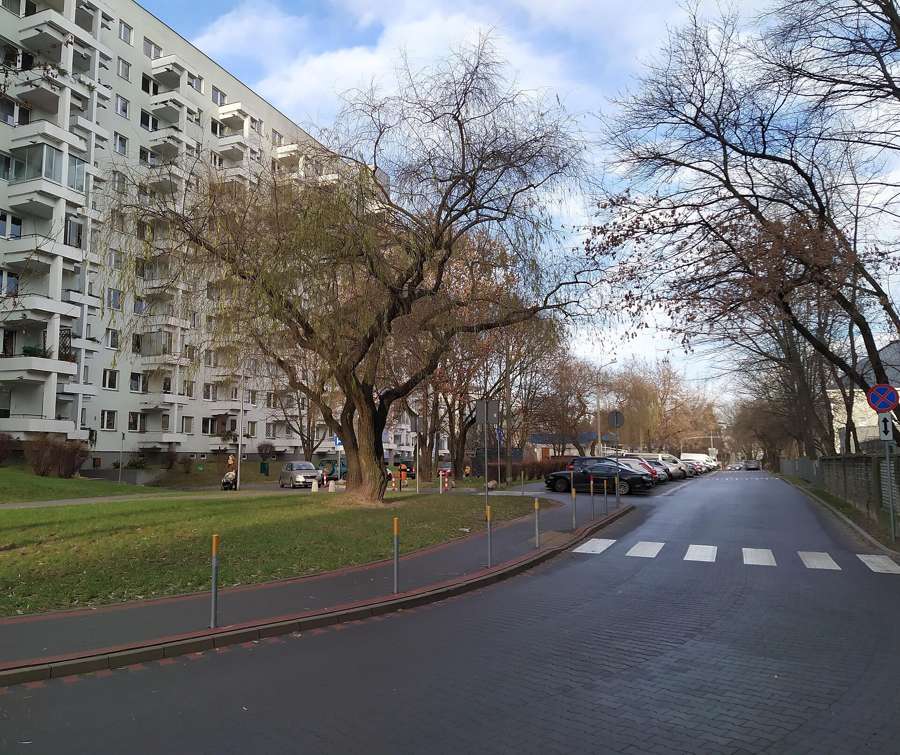
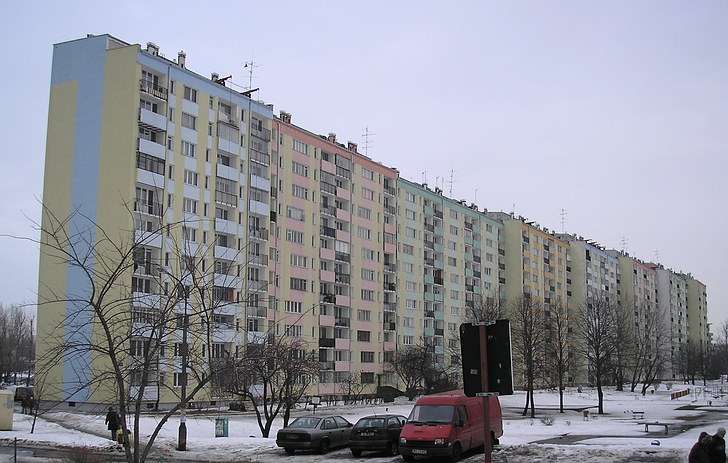
Building charges for heating and water are usually advances settled against actual consumption once or twice a year. If you used more than the advances covered, the difference arrives as a balancing payment (dopłata). Ask for the settlement document - and ask about past settlements before you sign. Source: settlement practice under the building-charge system described in ustawa o ochronie praw lokatorów, Dz.U. 2023 poz. 725, eli.gov.pl, accessed October 21, 2026. * Photos: apartment block in Warsaw's Służew district by Radosław Botev, CC BY-SA 4.0; renovated block in Warsaw-Bielany by Ulrike at Polish Wikipedia, CC BY-SA 3.0, both via Wikimedia Commons*