Can Foreigners Buy Property in Poland? EU and Non-EU Rules
The essentials: Yes. Any foreigner can buy an independent flat in Poland with no permit. EU/EEA/Swiss citizens buy houses and land freely too; other nationalities need an interior-ministry permit for land and houses with plots, granted on proof of ties with Poland. Buying without a required permit is void.
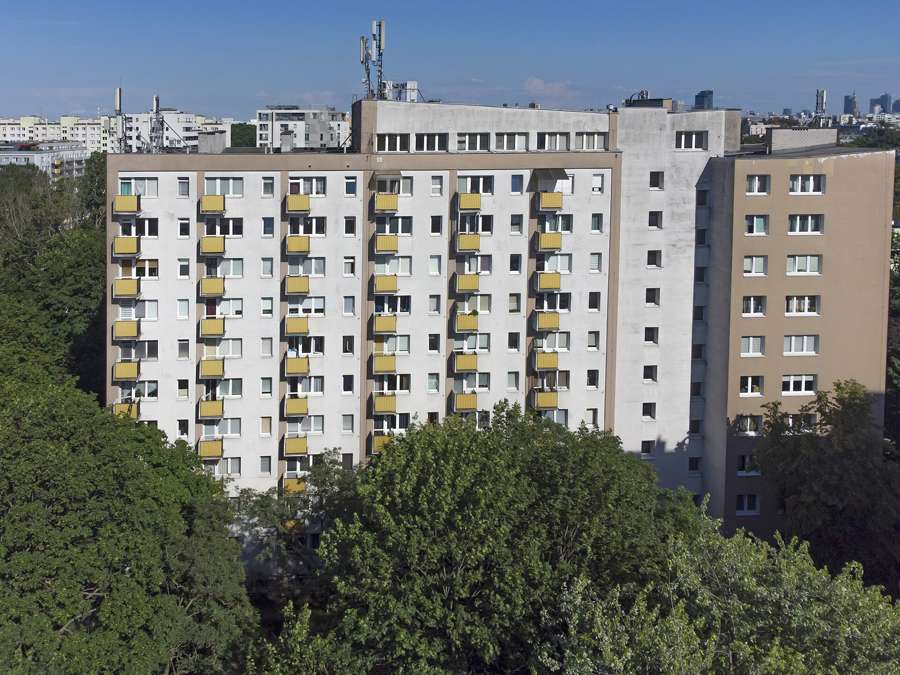
The short answer surprises most newcomers: if you want to buy an ordinary flat in Poland, you almost certainly can - no special permit, whatever your citizenship. The permits that make headlines apply to houses with land, farmland, and border zones. Poland's 1920 Act on the Acquisition of Real Estate by Foreigners, still in force in its 2017 consolidated text, draws a precise map of who needs permission for what. Here is that map, under the rules in force as of October 2026.
The starting rule: foreigners need a permit - with big exceptions
The act's default is that a foreigner acquiring real estate in Poland needs a permit, issued as an administrative decision by the interior minister. "Foreigner" here means not just non-Polish individuals: it includes foreign companies and - important for anyone buying through a company - Polish-registered companies controlled directly or indirectly by foreigners, where control means more than 50% of votes.
But the exceptions in art. 8 swallow most ordinary expat purchases whole.
*Data source: ustawa o nabywaniu nieruchomości przez cudzoziemców, Dz.U. 2017 poz. 2278, art. 1 (eli.gov.pl), accessed October 21, 2026.*
Flats: no permit for anyone
The act's first and most-used exemption: buying an independent residential unit (a flat or apartment in the legal sense) requires no permit at all - for any foreigner, EU or not, resident or not. The same goes for a garage unit bought in connection with your housing needs. This is why the Polish market is full of foreign owners: the British buyer in Kraków, the Canadian in Warsaw, the Ukrainian in Wrocław all buy flats on exactly the same legal terms as Poles, through the same notary.
*Data source: ustawa o nabywaniu nieruchomości przez cudzoziemców, art. 8 ust. 1 pkt 1 i 1a (eli.gov.pl), accessed October 21, 2026.*
EU, EEA and Swiss citizens: almost everything
Citizens and entrepreneurs of EEA states and Switzerland need no permit for Polish real estate in general. The act's original carve-outs - agricultural and forest land (restricted for 12 years from Poland's 2004 EU accession) and second homes (5 years) - were transition periods that have long expired. An Irish or Norwegian buyer today purchases a house, a plot or a holiday cottage on the same footing as a Polish buyer.
One caution lives in art. 8 ust. 3: the exemption list in art. 8 ust. 1 does not extend to property in the statutory border zone or agricultural land over 1 hectare. For EEA citizens the general art. 8 ust. 2 exemption still covers them; for others, those two categories are the perennial exception.
*Data source: ustawa o nabywaniu nieruchomości przez cudzoziemców, art. 8 ust. 2-3 (eli.gov.pl), accessed October 21, 2026.*
Non-EU citizens: where the permit still bites
For citizens of other states - including Canadians, Americans and post-Brexit Britons - the permit requirement survives for anything that is not a flat: a detached house with a plot, a building plot, farmland, forest. The permit is discretionary but not arbitrary. The interior minister grants it when the purchase threatens neither state defence, security or public order nor social-policy interests, and when the buyer demonstrates ties with Poland. The act lists what counts as ties: Polish origin, marriage to a Polish citizen, a temporary, permanent or EU long-term residence permit, or running a business in Poland. Property bought to meet personal living needs cannot exceed 0.5 ha.
Two procedural lifelines matter in practice. First, the ministry consults the defence minister (and, for farmland, the rural-development minister), which is why decisions take months rather than weeks. Second, you can apply for a promesa - a binding promise of a permit - before you commit to a purchase; it is valid for one year and, while valid, the permit can be refused only if the material facts have changed.
*Data source: ustawa o nabywaniu nieruchomości przez cudzoziemców, art. 1a, 3d (eli.gov.pl), accessed October 21, 2026.*
The residence-based exemptions
Living in Poland long enough erases the permit requirement regardless of citizenship. A foreigner who has lived in Poland for at least five years since being granted permanent residence or EU long-term residence needs no permit for anything. The spouse of a Polish citizen gets there faster: after two years of residence from a permanent-residence or long-term-EU-resident permit, they need no permit for property that will become marital community property. There is also an inheritance-flavored exemption: no permit when you were a statutory heir of the seller and the seller owned the property for at least five years.
*Data source: ustawa o nabywaniu nieruchomości przez cudzoziemców, art. 8 ust. 1 pkt 2-4 (eli.gov.pl), accessed October 21, 2026.*
The teeth: buying without a required permit is void
The act is not a formality. Without the permit where one is required, no legal transaction transferring ownership or perpetual usufruct can be performed, and no entry can be made in the land register. An acquisition made in breach of the act is simply invalid - a court declares the invalidity, also at the request of local authorities or the interior minister. This is the provision that makes "we'll sort the paperwork later" deals genuinely dangerous: there is no later.
*Data source: ustawa o nabywaniu nieruchomości przez cudzoziemców, art. 5, 6 (eli.gov.pl), accessed October 21, 2026.*
Buying through a company? Read this first
Some buyers assume a Polish limited company sidesteps the permit rules. It does the opposite: the act treats a Polish company controlled by foreigners - over 50% of votes held directly or indirectly - as a foreigner itself. Buying shares in a Polish company that owns real estate can itself require a permit under art. 3e. The corporate route adds notaries and accountants without removing the ministry.
*Data source: ustawa o nabywaniu nieruchomości przez cudzoziemców, art. 1 ust. 3, art. 3e (eli.gov.pl), accessed October 21, 2026.*
The buying process itself
Once permit questions are settled (or, for flats, confirmed absent), the purchase runs like any Polish property deal: check the seller against the public land and mortgage register, verify no third-party claims or mortgages travel with the property, then sign before a notary - a notarial deed is mandatory for transferring ownership, and the notary reports the transaction to the interior ministry within seven days. One near-term change worth knowing: from November 19, 2026, an amendment in force changes that reporting channel - notaries will file electronic copies of deeds to a new central electronic repository run by the National Notarial Council instead of paper reports. For buyers nothing about eligibility changes; the paperwork just goes digital.
*Data source: ustawa o nabywaniu nieruchomości przez cudzoziemców, art. 8a; ustawa z dnia 17 lipca 2026 r. (Dz.U. 2026 poz. 1099, in force November 19, 2026), eli.gov.pl, accessed October 21, 2026.*
What this means in practice
Buying a flat to live in or rent out: no permit for anyone; go straight to due diligence and a notary.
Buying a house with land, EU/EEA/Swiss citizen: no permit; standard purchase.
Buying a house with land, other citizenship: apply for the permit (or a promesa first), expect months, demonstrate your Polish ties - a residence permit and actual residence in Poland are your strongest cards.
Buying farmland or forest, or property in the border zone: the hardest categories, with extra ministerial objections for farmland and border-zone exclusions from the standard exemptions - get a Polish property lawyer involved before paying any deposit.
*Data sources: as cited above, eli.gov.pl, accessed October 21, 2026.*
Frequently asked questions
Can a foreigner buy an apartment in Poland without a permit?
Yes. Buying an independent residential unit (a flat) requires no permit for any foreigner, whatever their citizenship or residence status - it is the first exemption in the 1920 act. Garage units linked to housing needs are exempt too. Source: ustawa o nabywaniu nieruchomości przez cudzoziemców, Dz.U. 2017 poz. 2278, art. 8 ust. 1 pkt 1, eli.gov.pl, accessed October 21, 2026.
I'm an EU citizen. Can I buy a house with a garden in Poland?
Yes. EEA and Swiss citizens and entrepreneurs need no permit for Polish real estate in general; the original restrictions on farmland and second homes were accession transition periods that expired years ago. Source: ustawa o nabywaniu nieruchomości przez cudzoziemców, art. 8 ust. 2, eli.gov.pl, accessed October 21, 2026.
I'm Canadian. Can I buy a house in Poland?
With a permit, yes. Non-exempt foreigners need the interior minister's permit for land, houses with plots and farmland - granted when the purchase raises no security concerns and you show ties with Poland such as a residence permit. A promesa (a one-year binding promise of a permit) lets you secure the answer before committing. Flats need no permit at all. Source: ustawa o nabywaniu nieruchomości przez cudzoziemców, art. 1, 1a, 3d, eli.gov.pl, accessed October 21, 2026.
What happens if a foreigner buys property without a required permit?
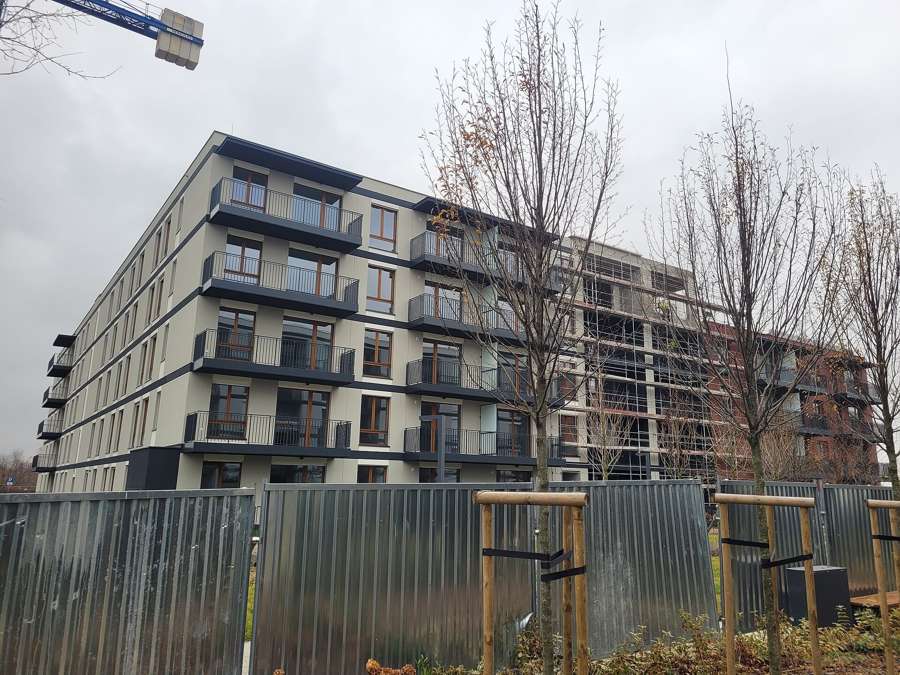
The acquisition is legally invalid - a court can declare it void, and no ownership entry can be made in the land register without the permit. There is no mechanism to regularize after the fact. Source: ustawa o nabywaniu nieruchomości przez cudzoziemców, art. 5, 6, eli.gov.pl, accessed October 21, 2026. * Photos: an apartment building in Warsaw by Emptywords, CC BY-SA 4.0; a new residential development under construction in Warsaw by Wistula, CC BY-SA 4.0, both via Wikimedia Commons*