Can You Break a Rental Contract Early in Poland? Tenant's Guide
The essentials: A fixed-term Polish lease can end early only in cases the contract itself names (Civil Code art. 673 par. 3); an indefinite residential lease ends with three months' notice at month-end (art. 688). Statutory escapes - like health-threatening defects (art. 682) - override any contract.

Job relocated, landlord unbearable, flat falling apart, life simply changed: at some point many expats need out of a Polish lease before it ends. Whether you can - and what it costs - depends almost entirely on one line in your contract: whether your tenancy is fixed-term or indefinite. Polish law treats the two completely differently, and the difference surprises most foreigners. Here is how it works under the Civil Code and the tenants' rights act in force as of October 2026.
First question: is your lease fixed-term or indefinite?
Everything flows from this. A fixed-term lease (na czas oznaczony) runs to a stated end date. An indefinite lease (na czas nieoznaczony) runs until someone terminates it. Check the contract before anything else - and note that under the Civil Code, if you keep living in the flat after a fixed term ends with the landlord's consent, the lease is treated, in case of doubt, as extended indefinitely. Many expats on their second or third year in a flat are actually on indefinite leases without realizing it.
*Data source: Kodeks cywilny, Dz.U. 2026 poz. 795, art. 674 (eli.gov.pl), accessed October 21, 2026.*
Fixed-term lease: the contract is the law
Here is the part that surprises people. Under Civil Code art. 673 § 3, a fixed-term lease can be terminated early only in the cases the contract itself provides for. If your contract lists no early-termination clause, neither you nor the landlord has a statutory right to end it early. You are, in principle, committed to the end date - and the landlord is too.
That makes the termination clause the single most important paragraph to negotiate before signing. Typical Polish contracts for expats include a one-to-three-month break clause; some include none at all. A workable clause names the notice period, the form (written), and any fee - one month's rent as a break fee is a common, reasonable pattern, while clauses demanding three or more months of remaining rent deserve pushback. If you are mid-lease with no clause, your routes are: negotiate a mutual termination (landlords often agree if you help find a replacement tenant or give generous notice), or one of the statutory exceptions below.
One nuance worth knowing before you sign anything: a contract "for one year" that also contains a notice clause behaves, for practical purposes, like an indefinite lease with protection. The fixed term binds you only to the extent the paper actually says so.
*Data source: Kodeks cywilny, Dz.U. 2026 poz. 795, art. 673 § 3 (eli.gov.pl), accessed October 21, 2026.*
Indefinite lease: three months, end of calendar month
For an indefinite residential lease with monthly rent, the Civil Code sets a clear exit: either side can terminate with three months' notice, effective at the end of a calendar month (art. 688). Notice given in mid-October therefore ends the lease on January 31, not mid-January - the clock runs to the end of the third full calendar month. Deliver notice in writing, dated, and keep proof of delivery; email alone is a weak form for something this important.
The general Civil Code rule for non-residential rentals is shorter - one month for monthly-paid rent (art. 673 § 2) - but the residential provision governs flats, so plan on three months.
*Data source: Kodeks cywilny, Dz.U. 2026 poz. 795, art. 688, art. 673 § 2 (eli.gov.pl), accessed October 21, 2026.*
The statutory escape hatches (any lease)
Whatever your contract says, several Civil Code provisions override it:
Health-threatening defects. If the flat's defects endanger the health of you or your household, you may terminate without any notice period - even if you knew about the defects when you signed (art. 682). Mold, a faulty gas heater, a collapsed ceiling: document everything, notify the landlord in writing, and keep evidence.
Death of the tenant. A spouse, children and certain others who lived with the tenant step into the lease - and they may terminate it with statutory notice even if it was fixed-term (art. 691 § 4).
Landlord's no-notice routes, for completeness. The same code lets the landlord terminate without notice if you fall at least two full payment periods behind on rent (after a written warning with an extra month to pay), or if you flagrantly or persistently breach house rules (art. 687, 685). These are the provisions to avoid tripping accidentally - a disputed, unpaid month can escalate.
*Data source: Kodeks cywilny, Dz.U. 2026 poz. 795, art. 682, 685, 687, 691 (eli.gov.pl), accessed October 21, 2026.*
Occasional tenancy (najem okazjonalny)
If your contract is an occasional tenancy - the notarized format popular with private landlords since 2010 - different rules apply. It is always fixed-term and simply expires on its end date (art. 19d of the tenants' act); there is no tenant-side early-termination mechanism in the act itself, so the contract's own break clause is again decisive. On the other side, if the landlord failed to deliver the required notarized documents, they can terminate with at least seven days' notice. Practically: with najem okazjonalny, negotiate before you sign, because after signing the paper controls.
*Data source: ustawa o ochronie praw lokatorów, Dz.U. 2023 poz. 725, art. 19a-19d (eli.gov.pl), accessed October 21, 2026.*
A note on rent during the notice period
Notice does not pause the rent. You owe rent for the whole notice period up to the end date, even if you move out earlier - the lease, not your suitcase, determines the obligation. This is exactly why the mutual-agreement route matters: a landlord who signs a termination agreement can set any shorter end date you both accept, converting a three-month statutory runway into, say, six weeks. What you cannot do unilaterally is shorten the clock by leaving early.
The mutual-agreement route, done right
Most real-world early exits are negotiated, not litigated. Polish landlords care about two things: no gap in rent, and no hassle. An offer that covers both - "I will pay through the notice period and bring you a vetted replacement tenant" - gets accepted surprisingly often. Note that subletting or handing the flat to someone else requires the landlord's consent under the Civil Code (art. 668), so the replacement-tenant offer works through the landlord, not around them. Whatever you agree, get it as a signed mutual termination agreement (porozumienie stron) with a stated end date and deposit terms. Verbal agreements about money tend to become disputes.
*Data source: Kodeks cywilny, Dz.U. 2026 poz. 795, art. 668 § 1 (eli.gov.pl), accessed October 21, 2026.*
Leaving properly: the checklist that protects your deposit
Give notice in writing, stating the legal basis (contract clause or article) and the end date, and keep proof of delivery. Registered post (list polecony) or hand-delivery against a signed copy both work; the dated postal receipt is the classic evidence.
Do a move-out protocol. A signed walk-through record of the flat's condition, meter readings and keys returned is your evidence if the deposit is later disputed.
Know the deposit clock. Under the tenants' act, the deposit must be returned within a month of you vacating and returning the flat, minus only documented unpaid rent or repair costs beyond normal wear. A landlord who goes silent past that month is late under the act, not within discretion.
Close the accounts. Transfer or close electricity, gas and internet contracts in your name, and deregister your zameldowanie if you registered - loose utility contracts follow you longer than loose leases.
*Data source: ustawa o ochronie praw lokatorów, Dz.U. 2023 poz. 725, art. 6 (eli.gov.pl), accessed October 21, 2026.*
Frequently asked questions
Can I break a one-year lease early in Poland?
Only if the contract itself provides an early-termination clause - the Civil Code allows early termination of fixed-term leases solely in cases the contract specifies. Without a clause, your realistic routes are a negotiated mutual termination or a statutory exception such as health-threatening defects. Source: Kodeks cywilny, Dz.U. 2026 poz. 795, art. 673 § 3, art. 682, eli.gov.pl, accessed October 21, 2026.
How much notice do I give on an indefinite (open-ended) lease?
Three months, effective at the end of a calendar month, for a residential lease with monthly rent. Notice given mid-month runs to the end of the third full following month. Source: Kodeks cywilny, Dz.U. 2026 poz. 795, art. 688, eli.gov.pl, accessed October 21, 2026.
The flat has serious mold and the landlord won't fix it. Can I just leave?
If defects threaten your health or your household's, the Civil Code lets you terminate without any notice period - even if you knew about the defects when signing. Document the condition and give written notice citing the defects. Source: Kodeks cywilny, Dz.U. 2026 poz. 795, art. 682, eli.gov.pl, accessed October 21, 2026.
When must my deposit be returned after I move out?
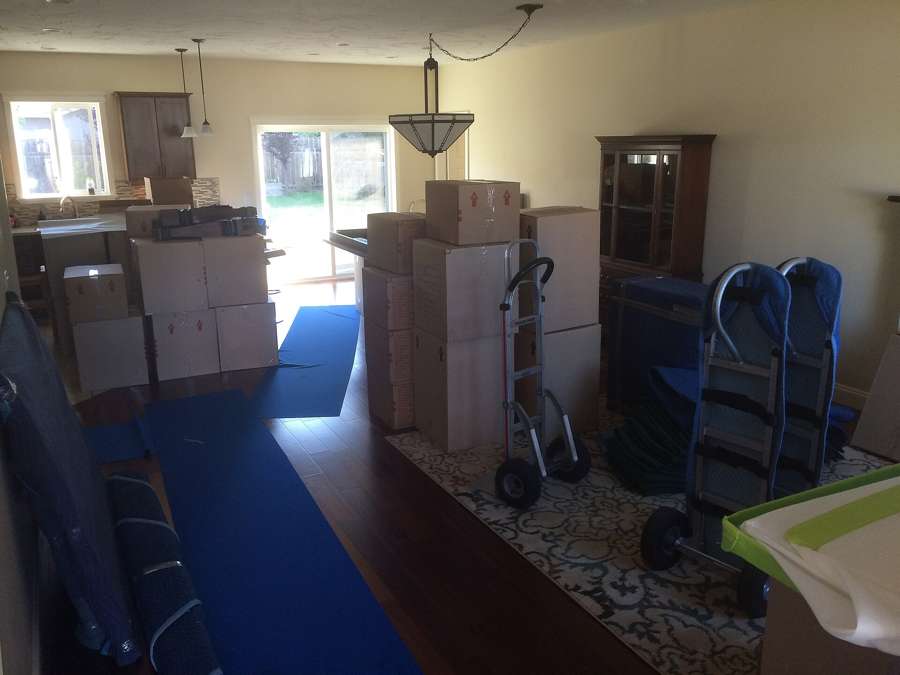
Within one month of vacating and returning the flat, minus documented unpaid rent or repair costs beyond normal wear, under the tenants' rights act. Source: ustawa o ochronie praw lokatorów, Dz.U. 2023 poz. 725, art. 6, eli.gov.pl, accessed October 21, 2026. * Photos: moving boxes in a home by MoveON moving, CC BY-SA 4.0; a packed house mid-move by Fil.Al, CC BY 2.0, both via Wikimedia Commons*