Rent Through an Agency or Directly From a Landlord in Poland?
The essentials: Both are safe if you follow the rules. Agency contracts are valid only in written or electronic form and brokers carry mandatory liability insurance, but fees (about one month's rent, negotiable) buy out the DIY route. Direct renting costs nothing extra - you do the ownership verification and negotiation yourself.
Every expat hunting a Polish flat faces the same fork: pay an agency to find and broker the deal, or scroll the owner-direct listings and handle everything yourself. Neither route is universally better - they buy you different things, and Polish law gives each a distinct shape. Here is what the law actually guarantees (and does not) on both sides, and how to choose for your situation, under the rules in force as of October 2026.
What an agency legally is - and what changed in 2014
A real-estate broker (pośrednik w obrocie nieruchomościami) is simply an entrepreneur running a brokerage business, and brokerage means paid work aimed at concluding other people's contracts - including leases. Since the 2014 deregulation, brokers no longer need a state license: the old licensing and register provisions are repealed, and anyone meeting a clean-criminal-record condition can broker. That makes the agency market broad and uneven - excellent professionals and amateurs share the same legal category - so the protections below matter more, not less.
*Data source: ustawa o gospodarce nieruchomościami, Dz.U. 2026 poz. 399, art. 179a-180a (eli.gov.pl), accessed October 21, 2026.*
The protections an agency must give you
A written contract, or it does not exist. The agency contract must be in written or electronic form under pain of invalidity (art. 180 ust. 3). This is your core shield: the contract defines what the agent owes you and what you owe them. A "fee" demanded on the strength of a handshake has no legal backbone - and a contract you never signed cannot bind you either.
Mandatory liability insurance. Brokers must carry civil-liability insurance for damage caused by their brokerage work, including the work of people acting under their supervision (art. 181 ust. 3). If an agent's error costs you money, there is an insurer behind the claim.
Legal access to the paperwork. Brokers have a statutory right to inspect the land and mortgage registers, the cadastre, planning documents and similar records (art. 181a) - so "the agent verified the ownership" is a service they are legally equipped to deliver.
The fee is negotiable - everything is in the contract. No statute fixes the commission; the market standard for rentals runs around one month's rent plus VAT, charged at signing. The contract's scope matters as much as its price: some agencies only introduce you to the landlord, others negotiate clauses, check the land register and sit with you at handover. Pay for the second kind or pay less.
*Data source: ustawa o gospodarce nieruchomościami, Dz.U. 2026 poz. 399, art. 180-181a (eli.gov.pl), accessed October 21, 2026; fee level is market practice, not a regulated figure.*
The agency traps worth knowing
The exclusivity clause. Some agency contracts are exclusive: you owe the fee even for a flat you find yourself during the contract period. For a tenant hunting a home, exclusivity rarely buys anything - read for it and strike it.
Fee-before-viewing. Legitimate brokerage earns its commission when the lease is signed. An "agency" collecting fees for access to listings or for arranging viewings is selling you what portals give free.
Dual representation. The same office often represents the landlord too. That is normal in Poland, but it means your "agent" may be negotiating on both sides - one more reason the written scope of the contract matters.
Where money goes. Rent and deposit belong to the landlord, against the signed lease - not to the agency "for safekeeping". An agent asking to hold your deposit is outside the normal pattern.
*Data source: contract-form requirement: ustawa o gospodarce nieruchomościami, art. 180 ust. 3 (eli.gov.pl); trap patterns are editorial guidance.*
What renting direct actually means
Owner-direct cuts the fee entirely - but you inherit the agent's job. That job has three parts: finding the flat, verifying it, and papering the deal. Verification is the part expats most often skip, and it is checkable: ownership is recorded in the public land and mortgage registers, and the person showing you the flat should be able to demonstrate their right to rent it. The legal terms you sign are the same either way: the tenants' act caps the deposit at twelve times the monthly rent and requires its return within a month of move-out, and an occasional-tenancy contract (najem okazjonalny) - common with private landlords - requires a written form with a certified date and a notarized tenant statement. A direct landlord offering proper paperwork is the market at its best: no fee, full legal shape. A direct landlord resisting paperwork is a red flag that costs you exactly what an agent would have caught.
*Data source: ustawa o ochronie praw lokatorów, Dz.U. 2023 poz. 725, art. 6, 19a (eli.gov.pl), accessed October 21, 2026.*
The honest comparison
Money. Direct wins on day one: no commission. Agencies argue they earn the fee through negotiation, time saved and avoiding one bad lease - the fee is real, and so is the risk it insures against.
Inventory. Portals mix both: a large share of Warsaw listings, especially in new developments, are agent-posted; the genuinely owner-direct stock concentrates in older buildings and smaller portals. Filtering "owner only" narrows your options but not to zero.
Verification. Agents have register access and insurance behind their checks; going direct, verification is your own work - or your lawyer's.
Language and process. An English-speaking agent smooths everything from the viewing to the handover protocol; direct deals with a Polish-only landlord mean leaning on translated contracts, and you should never sign what you cannot read.
Speed and negotiation. Direct deals can move fast - one decision-maker, no intermediary. But agents negotiate daily; a newcomer negotiating alone in a second language rarely wins concessions an agent would routinely get.
Aftercare. When the heating dies in January, a direct landlord answers their own phone - one link in the chain. With an agency-let flat you may deal with the landlord anyway (most Polish agencies broker the deal, then exit), so ask at signing who handles repairs. Property management (zarząd najmem) is a separate, ongoing service - do not assume brokerage includes it.
*Data sources: legal framework as cited above; market-structure observations are editorial.*
When each route wins
The viewing checklist is identical on both routes. Photograph the flat's condition and meters, read the lease before the appointment, confirm who pays which bills, and never transfer money before the contract is signed. Agency or no agency, these five habits are the whole safety net.
Choose an agency if you are searching from abroad, on a deadline, new to Poland, or want someone accountable for the paperwork - the written-contract requirement and mandatory insurance exist precisely for you. Go direct if you are already in Poland, can view in person, read at least some Polish (or have a friend who does), and are willing to verify ownership and negotiate yourself. Either way: the contract rules are identical - deposit cap, written form, move-in protocol - and both routes end at the same legal destination: a signed lease.
*Data sources: as cited above, accessed October 21, 2026.*
Frequently asked questions
Do I have to sign a contract with a rental agency in Poland?
The law works the other way around: an agency contract is valid only in written or electronic form, so anything you did not sign in that form does not bind you - and any fee arrangement worth relying on needs that form. Source: ustawa o gospodarce nieruchomościami, Dz.U. 2026 poz. 399, art. 180 ust. 3, eli.gov.pl, accessed October 21, 2026.
How much do rental agencies charge in Poland?
The commission is set by the agency contract, not by statute; market practice for rentals is around one month's rent plus VAT, payable at signing. The figure is negotiable and unregulated. Source: legal framework: ustawa o gospodarce nieruchomościami, art. 180; fee level is market practice, accessed October 21, 2026.
Are Polish real-estate agents licensed?
No - the licensing requirement was repealed in the 2014 deregulation. Brokers must meet a clean-criminal-record condition and carry mandatory liability insurance for their brokerage work. Source: ustawa o gospodarce nieruchomościami, Dz.U. 2026 poz. 399, art. 180a, 181 ust. 3, eli.gov.pl, accessed October 21, 2026.
Is it safe to rent directly from a landlord in Poland?
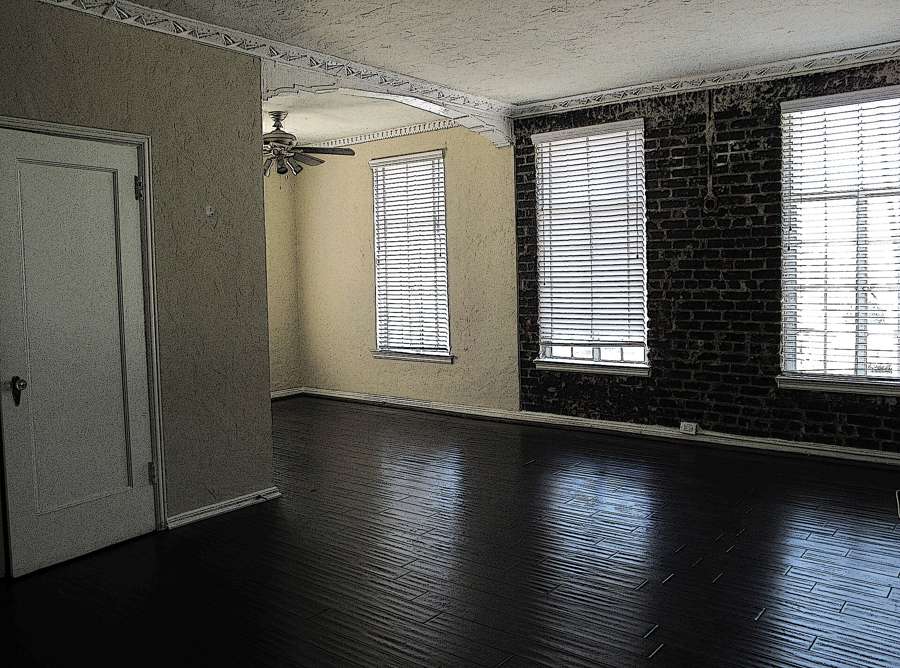
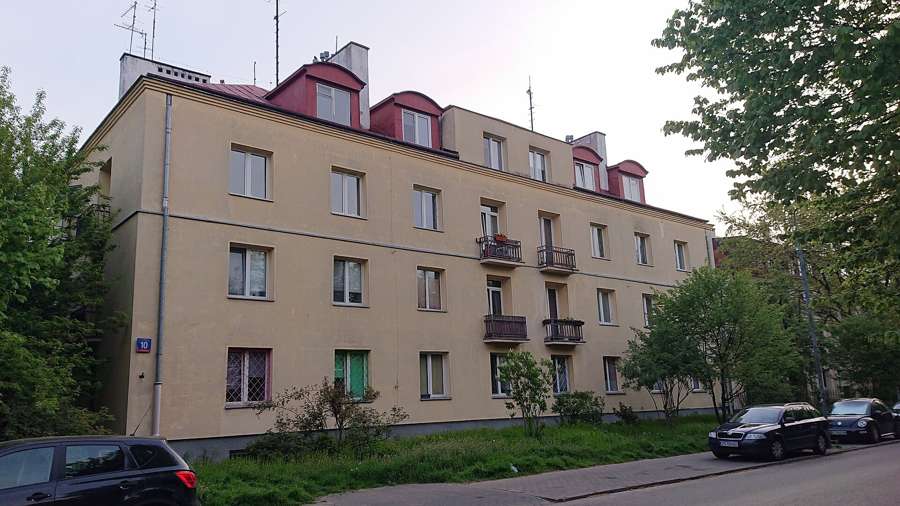
Yes, with verification: confirm the owner in the public land and mortgage register, insist on a written contract, and respect the deposit cap (twelve times monthly rent, returnable within a month of move-out). The same statutes govern the lease whether or not an agent is involved. Source: ustawa o ochronie praw lokatorów, Dz.U. 2023 poz. 725, art. 6, eli.gov.pl, accessed October 21, 2026. * Photos: an empty living room awaiting a tenant by Downtowngal, CC BY-SA 3.0; a tenement in Warsaw's Mokotów district by Maria Weronika Kmoch, CC BY-SA 4.0, both via Wikimedia Commons*