Mandatory childhood vaccines in Poland: 2026 rules for expat parents
The essentials: Yes - Poland mandates childhood vaccination by law (art. 5 and 17 of the 2008 act). The 2026 schedule covers BCG, hepatitis B, rotavirus, DTP, polio, Hib, pneumococcal and MMR, free at primary-care clinics, for every child staying over three months.
If you are raising children in Poland, vaccinations are not a preference you opt into - they are a legal obligation, written into statute and enforced by the sanitary inspectorate. This surprises many expat parents, especially those coming from countries where childhood vaccination is strongly recommended but formally voluntary. Here is what the Polish rules actually say in 2026, which vaccines your child must receive, what is free, and how the system treats foreign families.
The legal frame: vaccination is a statutory duty
Two provisions of the Act of 5 December 2008 on preventing and combating infections and infectious diseases do the heavy lifting. Article 5 obliges every person staying in Poland to undergo mandatory protective vaccinations, and makes parents or legal guardians responsible for fulfilling that duty on behalf of minors. Article 17 sets out how the obligation works in practice (consolidated text: Dz.U. 2025, item 1675).
One detail matters enormously for expats: under article 17, section 1a, people staying in Poland for less than three months are exempt from mandatory vaccinations, except post-exposure vaccinations. In practice this means a visiting family is not covered by the mandate, but a family that settles in Poland - registered, renting, working, schooling - is. Polish law does not distinguish between Polish and foreign children here. If your child lives in Poland and is under preventive paediatric care, the same schedule applies to them as to any Polish child.
Administrative courts consistently treat the duty as directly enforceable - in a ruling of 19 March 2024 the Supreme Administrative Court confirmed that failing it triggers enforcement proceedings ending in a fine for the parent. More on that in our companion article on refusal fines.
What is mandatory in 2026: the schedule in broad strokes
The details live in two documents: the Health Ministry regulation of 27 September 2023 on mandatory protective vaccinations, and the annual Programme of Protective Vaccinations (PSO) announced by the Chief Sanitary Inspector - the 2026 programme was published in the ministry's official journal on 31 October 2025 (GIS announcement, 6 November 2025). The PSO is Poland's equivalent of a national immunisation schedule, refreshed every year.
For children, the mandatory core in 2026 covers:
In the first 24 hours of life (in hospital): BCG against tuberculosis and the first hepatitis B dose. These happen in the delivery ward before discharge - you will not miss them, and they are entered into the child's new vaccination booklet, which the hospital is legally required to open.
The infant series (from about 6-8 weeks): vaccines against rotavirus, diphtheria, tetanus, pertussis (whooping cough), polio, Haemophilus influenzae type b (Hib) and pneumococcal disease, spread across the first months of life with further doses through the second year. Most clinics now use highly combined "5-in-1" or "6-in-1" vaccines (the 2026 PSO explicitly provides both variants), so one injection covers several diseases.
Toddler and school-age boosters: MMR (measles, mumps, rubella) at 13-15 months, with boosters of the infant series at 16-18 months, then school-entry boosters at age 6 (DTaP, IPV, MMR), age 14 (Tdap) and age 19 (Td).
Risk groups: children with particular clinical or epidemiological indications receive additional mandatory vaccines - for example chickenpox (varicella) vaccination is mandatory only for defined risk groups, and post-exposure rabies vaccination is mandatory for anyone bitten by a suspect animal.
The full colour-coded calendar, including exact dose timing, is published by the National Institute of Public Health (szczepienia.pzh.gov.pl, updated 30 January 2026). Your paediatrician tracks it for you - but knowing the outline helps you check that nothing was skipped, especially if part of the schedule was done abroad.
What it costs: mandatory means free
Mandatory vaccines are financed from the Health Ministry budget and cost parents nothing at the point of care. They are administered at primary-care (POZ) clinics by the paediatrician or family doctor you register with - the same doctor who holds your child's preventive care file. You can also choose a different vaccine brand than the ministry-purchased one (for example a specific combined product), but then you pay for the product yourself.
On top of the mandatory list sits a layer of state-funded recommended programmes that parents often miss:
HPV: free for all children aged 9 to 14, girls and boys, under the universal programme running since 1 September 2024. A time-limited catch-up window for young adults aged 18-26 runs from 1 October 2026 to 31 May 2027 (Health Ministry announcements).
Pertussis in pregnancy: free since 15 October 2024, one dose between weeks 27 and 36 of pregnancy, protecting the newborn in its first months.
COVID-19: remains state-funded per ministry announcements.
Other recommended vaccines - meningococcal disease, tick-borne encephalitis (KZM), hepatitis A, influenza, chickenpox outside risk groups - are recommended but not nationally funded; expect to pay for the vaccine product. One exception worth knowing: some regional governments run local free programmes - Małopolska, for example, funds free meningococcal B vaccination for young children in participating counties (regional government announcement, 30 March 2026). Ask your clinic or the regional marshal's office what is available where you live.
How it works for a foreign family, step by step
Register with a POZ clinic. Pick a clinic near your home and declare to a paediatrician or family doctor. Mandatory vaccinations happen there; you do not need to hunt for a special vaccination centre.
Bring your foreign records. Hand the doctor your child's vaccination booklet or records from your home country. The doctor maps what was done onto the Polish schedule - vaccine combinations and timing differ between countries, and the Polish doctor decides how to continue. If records are missing or untraceable, the doctor will propose how to reconstruct protection safely. Records in English are commonly workable; a translation helps for other languages.
Expect the qualifying exam. Before every vaccination a doctor performs a short qualifying examination to rule out contraindications, informs you about the vaccine and possible reactions, and issues a certificate with the date and time. If the exam suggests grounds for a long-term deferral, the doctor refers your child to a specialist consultation rather than simply skipping the dose. Polish law frames mandatory vaccination as a duty rather than a choice - but the visit still runs through this medical process, and enforcement against parents who refuse the routine childhood schedule is financial, not physical - the state fines parents and does not vaccinate children by force. (The 2008 act’s separate exceptional powers under art. 33 concern people infected with or exposed to an infectious disease in acute situations, not the childhood schedule.)
Keep the booklet. The książeczka szczepień (vaccination booklet) is the canonical record. Guard it - you will show it when changing doctors, at some municipal nursery recruitments, and whenever you move countries again.
The enforcement backdrop, in one paragraph
Polish clinics report children who miss mandatory vaccinations to the sanitary inspectorate, which summons the parents; if that fails, the regional governor can impose repeated administrative fines. Exemptions exist only for medical contraindications, decided by doctors - there is no personal-belief exemption. Schools cannot make admission depend on vaccination, and neither can public kindergartens - but municipal nurseries are a different legal world, and several cities, Warsaw included, require mandatory vaccinations there. Each of those threads deserves its own careful explanation; we cover fines and facility admission in companion articles.
The bottom line for expat parents
Poland's system is stricter in form than many Western European ones, but simple in practice: register with a clinic, show the doctor your child's records, follow the schedule. Everything mandatory is free, the doctor manages the calendar, and the state-funded extras - HPV above all - are genuinely valuable. The families who run into trouble are the ones who simply do nothing: no clinic registration, no records, no response to letters from the sanitary inspectorate. Register, bring the booklet, keep the appointments, and the mandate becomes invisible admin rather than a legal risk.
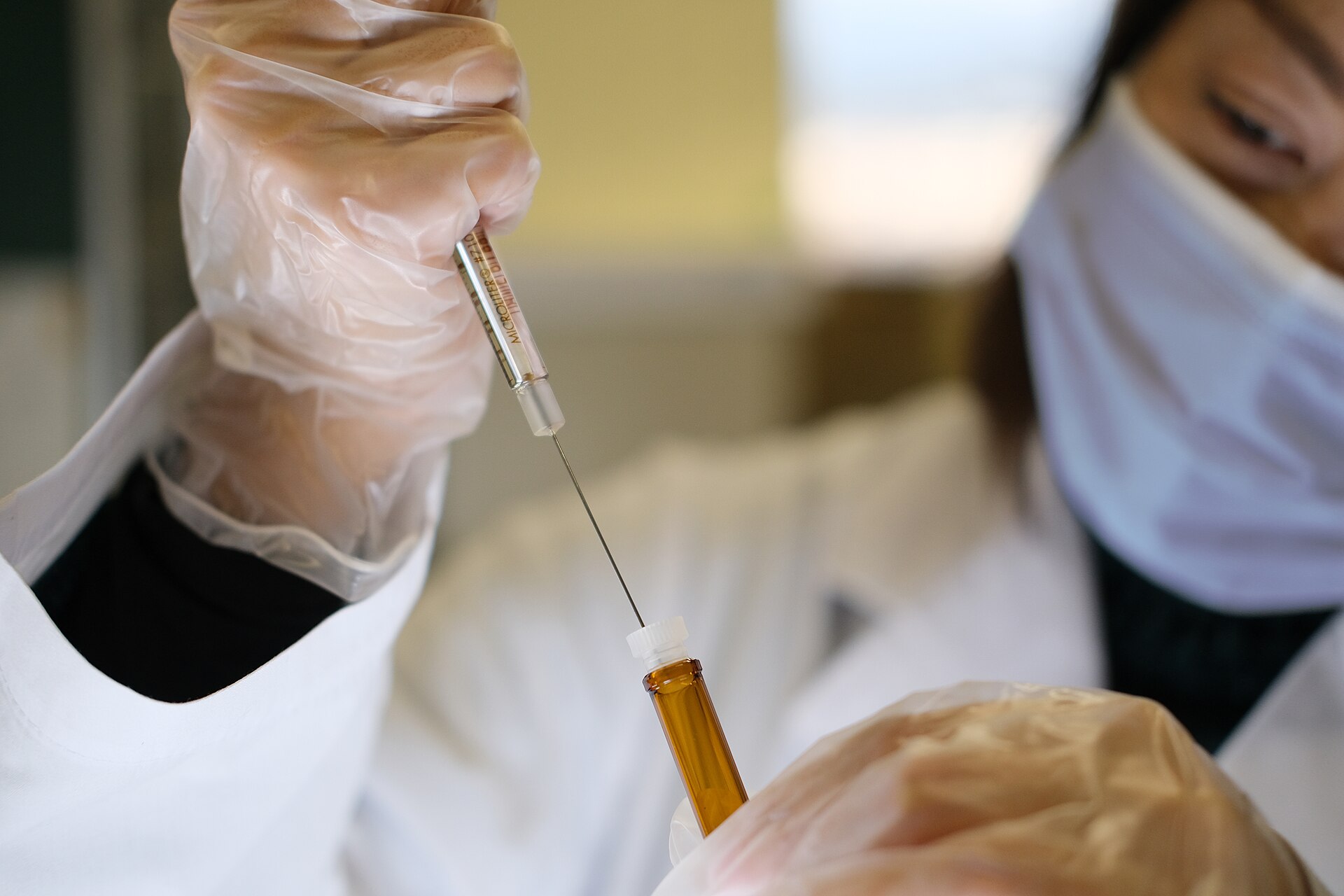
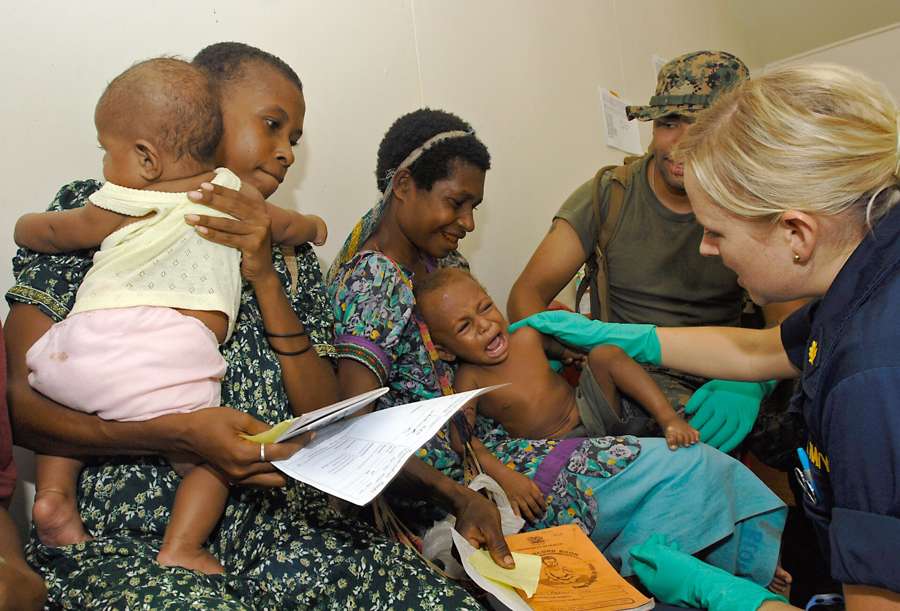
Cover: A nurse practitioner calms a child after a vaccination at a clinic - photo by U.S. Navy (Mass Communication Specialist Bryan M. Ilyankoff), public domain as a U.S. government work, via Wikimedia Commons; illustrative photo, not taken in Poland. Body: Preparing a vaccine dose - photo by Japanexperterna.se, CC BY 2.0, via Wikimedia Commons.
Frequently asked questions
Do mandatory vaccinations apply to foreign children living in Poland?
Yes. The duty covers everyone staying in Poland regardless of citizenship. Only stays shorter than three months are exempt, and even then not from post-exposure vaccinations (art. 17 ust. 1a). A child who lives in Poland follows the same schedule as Polish children.
How much do the mandatory vaccines cost?
Nothing. Mandatory vaccines are financed from the Health Ministry budget and administered free at primary-care clinics. You only pay if you voluntarily choose a different vaccine brand than the one the ministry purchased, or for recommended vaccines that are not state-funded.
Which vaccines are mandatory for children in Poland in 2026?
Tuberculosis (BCG), hepatitis B, rotavirus, diphtheria, tetanus, pertussis, polio, Haemophilus influenzae type b, pneumococcal disease, and measles-mumps-rubella - with chickenpox and some others mandatory for defined risk groups. The exact timing is in the 2026 Programme of Protective Vaccinations published 31 October 2025.
My child was partly vaccinated abroad. Do we start over?
No. Bring your records to a Polish primary-care doctor, who will map prior doses onto the Polish schedule and continue from there. Vaccine combinations differ between countries, so let the doctor reconcile the calendars rather than assuming doses do not count.
Is the HPV vaccine free in Poland?
Yes, for children aged 9 to 14 under the universal programme running since 1 September 2024 - both girls and boys. A temporary funded window for young adults aged 18-26 runs from 1 October 2026 to 31 May 2027.