Ciechanów Castle: Winter Starts, Tickets and English Audio
The essentials: Ciechanów Castle at Zamkowa 1 opens Tuesday-Sunday, 08:00-16:00 from September to May. Advertised individual starts are 09:00-15:00 on the hour. Tickets are 15/10 zł; Thursday admission is free with a desk ticket. English audio is advertised; confirm equipment and access needs.
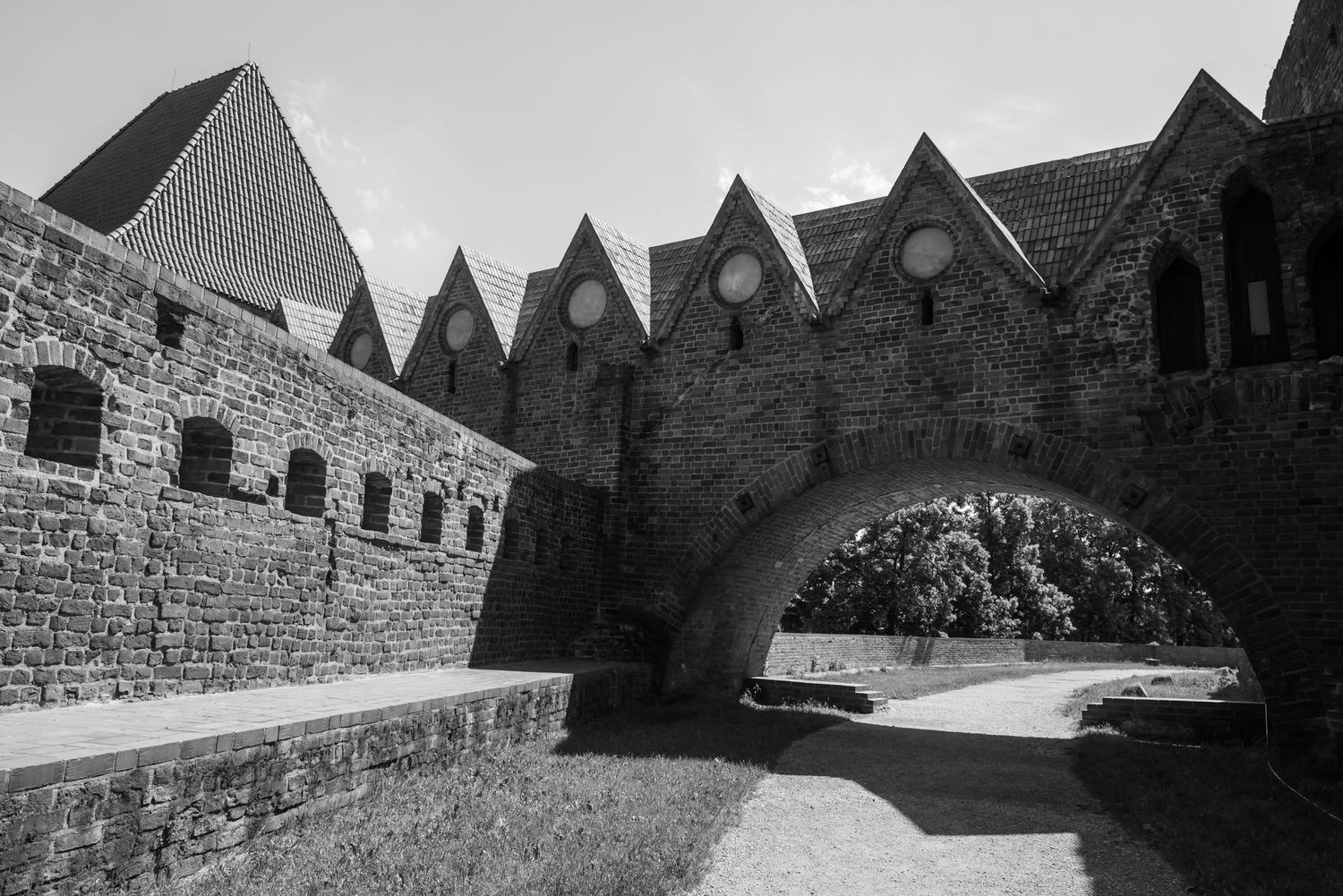
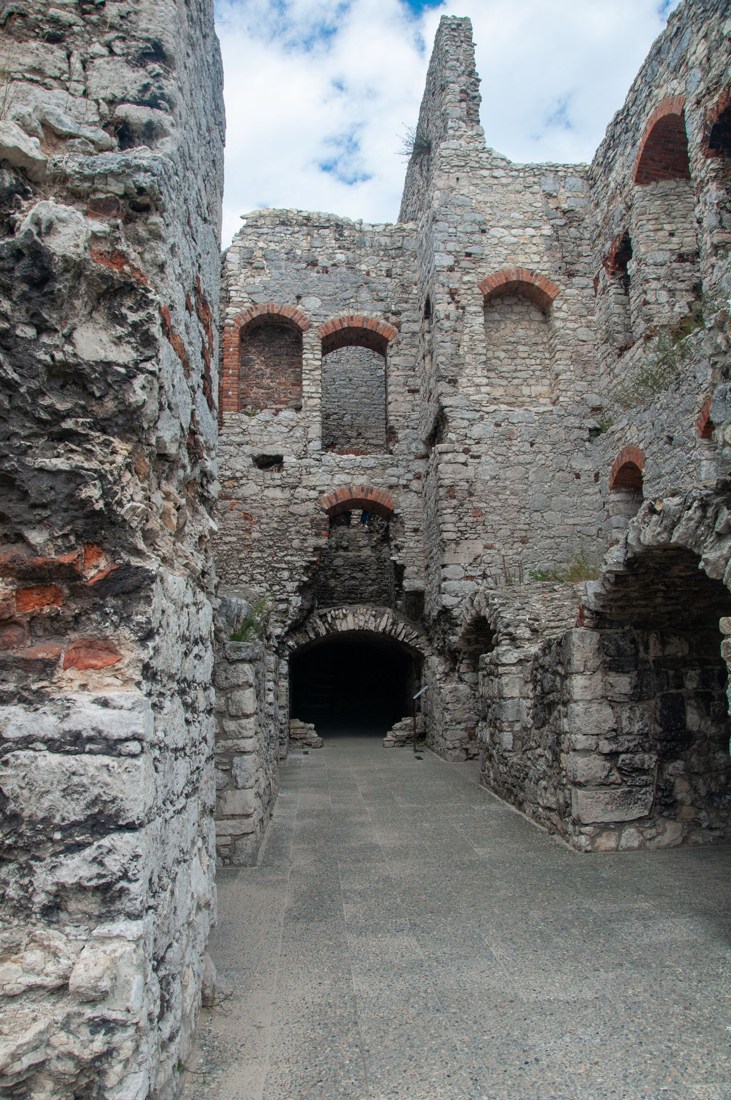
Cover: Teutonic castle ruins in Toruń, an illustrative photograph, not Ciechanów. Photo: Krzysztof Jaworski Fotografia Toruń / Pexels.
The Castle of the Masovian Dukes in Ciechanów is a useful choice for a first encounter with the region beyond Warsaw: a defensive enclosure, two towers and exhibitions about the castle and the Duchy of Mazovia. The practical detail that matters most is the difference between opening hours and visiting starts. The museum opens earlier than the first advertised individual visit, and a separate castle rules page gives a later final-entry cutoff than the museum-wide rules. Plan around the published hourly starts rather than turning up shortly before closing.
This guide uses the museum's official visitor pages, its July 2026 tariff amendment, online-ticket rules and accessibility declaration, checked on 27 November 2026. It separates the castle at ul. Zamkowa 1 from the museum's other premises. In particular, the exhibition building at Warszawska 61 is listed as closed for refurbishment until further notice. That closure is not a notice that the castle itself is closed.
Start with the castle, not the museum office
The visitor address is Zamkowa 1, 06-400 Ciechanów. The castle telephone is 23 672 40 64 and its published email is [email protected]. The institution's office address appears in page footers, but it is not the destination for this visit. Use the castle name and Zamkowa address when checking directions or arranging to meet someone.
The museum's accessibility declaration places the nearest listed bus stop at Plac Jana Pawła II and describes parking along Zamkowa and Parkowa streets, including spaces for disabled visitors, about 100 metres from the main entrance. Those are location details, not a promise of an available space or a particular bus service. Check the actual journey and return connection for your chosen day separately.
Winter opening hours do not mean continuous entry
From September through May, the published opening hours are Tuesday to Sunday, 08:00-16:00. The castle's own branch page advertises individual visiting on the hour at 09:00, 10:00, 11:00, 12:00, 13:00, 14:00 and 15:00. In June, July and August, opening hours change to 10:00-18:00, with advertised hourly starts from 11:00 through 17:00.
For a winter visit, choose one of the advertised starts and arrive with time to buy or collect the correct ticket. An 08:00 opening time does not establish that a complete individual visit starts at 08:00. Likewise, a ticket office remaining open until 16:00 does not mean someone arriving then can begin the exhibition route.
There is a real conflict between official pages. The separate castle regulations mention final entry half an hour before closing. The museum-wide regulations, effective from March 2025, give the last individual entry and ticket sale for the whole available route as one hour before closing, 15:00 in winter and 17:00 in summer. The branch's hourly-start list agrees with those earlier final starts. Use 15:00 as the latest published winter start, and confirm with the castle if your arrival depends on a later cutoff. Do not build a trip around 15:30 entry.
The museum-wide rules estimate about 1.5 hours for the castle exhibitions. That is a planning estimate, not a guarantee that arriving at the final start gives a full extra 90 minutes beyond closing. An earlier start leaves room for the route, ticket collection and any questions about audio equipment.
What the current tickets cost
The tariff page and the director's amendment dated 21 July 2026 list castle admission at 15 zł standard and 10 zł reduced. The organised-group rate is 10 zł per person. A family ticket described as two adults and three children is 50 zł. Check with the desk how your actual family composition is treated rather than assuming that every combination fits the same product.
A museum guide costs 50 zł for a group of no more than 25 people, listed separately from admission. Do not treat the organised-group admission price as an all-in guided package. If you want live guiding in English, ask about language and availability before booking; the official evidence of an English audio version is not a promise that an English-speaking human guide is available for your chosen start.
The museum also lists a two-day pass for its branches at 20 zł standard or 15 zł reduced. That may be relevant if you genuinely intend to visit another open branch, such as the Museum of Positivism in Gołotczyzna. It is not a reason to add the closed Warszawska exhibition building to your itinerary. Ask which open exhibitions the pass covers and how its two-day validity applies before paying.
Children under seven are among the listed free-entry categories. Other listed categories include holders of a Karta Polaka and certain museum or heritage memberships. Reduced admission depends on eligibility, and the online rules require proof at the visit. Bring the supporting document. Do not assume that a foreign student card or an age stated verbally will be accepted without checking the museum's requirements.
Thursday is free admission, not free everything
Thursday is the museum's free-admission day for individual visitors. You still collect a free ticket from the desk. The tariff does not turn Thursday into an unrestricted arrival window, and the hourly visiting arrangements still matter. Check a holiday Thursday separately rather than assuming that the weekly free day overrides a closure.
The museum-wide regulations explicitly say guiding remains chargeable on the free day. Workshops and other separately priced services should also be checked on their own terms. If your main goal is a short, low-cost individual visit, ask for the free admission ticket and confirm the available route before agreeing to an extra service.
What to look for inside
The branch page lists two exhibitions: Fakty i mity ciechanowskiego zamku, about the castle's facts and myths, and Księstwo Mazowieckie 1200-1526, about the Duchy of Mazovia. These give the visit a clearer purpose than simply climbing a tower for a photograph. Start with the relationship between the defensive site, the surrounding town and the formerly separate duchy.
The museum dates the beginning of construction to around 1355, under Siemowit III. Its historical account describes a rectangular enclosure, two towers and a large courtyard, with marshy ground around the Łydynia River helping to defend the approach. Later changes under Janusz I turned the stronghold into a more substantial residence. These are useful points to notice while comparing the enclosure with the exhibition narrative.
Expect a castle and museum route rather than a fully furnished palace. The official accessibility description places exhibitions at ground level and in the two towers. Ask which spaces are open that day, since the regulations reserve the right to close particular rooms or exhibitions temporarily. A general admission ticket covers the exhibitions available at the time, not an unconditional guarantee of every space shown in older photographs.
English audio is advertised, but ask about the equipment
Both the current tariff page and the accessibility declaration advertise audio-guide material with an English translation, alongside audio description and a sign-language version. That is stronger evidence than the older 2021 equipment-purchase announcement, which described a project rather than current availability. The current pages are the basis for expecting an English option.
They do not, however, establish a separate rental price, a reserved device for every visitor or the availability of every version at every start. Ask for the English version at the desk and confirm any charge before accepting it. If English interpretation is essential to the trip, phone ahead rather than relying on a device being available when you arrive.
Access needs a route-specific conversation
The accessibility declaration was reviewed on 7 August 2026. It describes a hardened mineral-surface approach with a significant slope, cobbled entrance areas and visitor entry from the Łydynia River side. It also records ten concrete steps to the ticket office in the Small House. Wide, threshold-free passages between ground-floor rooms do not remove those approach and ticket-office barriers.
An adapted public toilet is described on the Small House ground floor, next to the ticket office. That does not prove the whole route to it is step-free. For a wheelchair, a pushchair that cannot be carried, or limited stair tolerance, ask about the exact entrance, ticket collection, toilet approach and which exhibition spaces can be reached. Do not infer tower access from the presence of an adapted toilet or audio description.
Assistance and guide dogs are covered in the declaration, which asks for certification and vaccination evidence. Ordinary pet access is less clear: the castle-specific rules prohibit animals apart from a guide dog, while the wider museum rules use different wording about dogs. Confirm the castle's current rule before travelling with a pet; do not apply rules for the museum's park at another branch to this courtyard.
Bookings, holidays and a sensible final check
Organised groups are defined in the museum-wide rules as 10-25 people, with reservation at least seven days ahead by phone or email. Larger groups are split, and organised-group visits use the museum's guide. A casual family visit should not be treated as an already reserved group simply because several people are travelling together.
The 2026 online-ticket rules say tickets are emailed as PDFs after confirmed payment. They also say that an unavailable online ticket does not necessarily mean no tickets remain at a branch desk. Check before making that assumption. Ordinary changes of mind do not carry a general refund or date-exchange promise; the stated exceptions concern cancellation or inability to provide the visit on the museum's side.
Monday closure is consistent across the main visitor information. Holiday wording is not fully consistent between the castle-specific rules and the current tariff, including treatment of Easter and 15 August. The museum can also announce additional holiday-period closures. Before setting off, check the latest notices and confirm your intended start, ticket type, English audio and any access arrangement with the castle itself. That short check is more useful than treating an old last-entry line as a guaranteed admission time.
Frequently asked questions
Can I start visiting at 15:30 in winter?
Do not rely on that. A castle-specific page mentions a half-hour cutoff, but museum-wide rules and the hourly list give a final winter start of 15:00. Confirm directly if arriving late.
Is English available?
The tariff page and accessibility declaration advertise an English audio version. Ask about device availability and any charge; this does not guarantee a live English guide.
Is the whole castle step-free?
No such claim is supported. The declaration describes a steep approach, cobbles and ten steps to the ticket office, with exhibitions also in two towers. Ask about the exact route.
Sources
- Castle: hourly starts, exhibitions and history
- Museum: tariff, free Thursday and branch closure
- Director tariff amendment, 21 July 2026
- Museum-wide visiting regulations, effective March 2025
- Castle-specific rules: conflicting final entry and pet wording
- Accessibility declaration, reviewed August 2026
- Online sales rules, effective March 2026