Court Letters in Poland: Awizo, 7 Days and Deemed Service
Short answer: If you miss a Polish court letter, the post office keeps it 7 days and repeats the notice once. After that it is deemed served, says the e-Justice Portal.

A court letter you never collect can still count as delivered. In Polish civil cases, formal "service of documents" has strict rules, and missing a pick-up notice can start the clock on your deadline to respond. This guide follows the Polish page on service of documents from the European e-Justice Portal, which covers civil proceedings. The page is undated and refers to the Code of Civil Procedure and a Ministry of Justice regulation of 6 May 2020, so check details with the court if you have a live case.
Why service matters
According to the portal, whether documents were served correctly decides whether you can exercise your rights, how time limits are counted and whether a judgment is valid. Formal service applies to documents that have legal effects: summons, notices, copies of judgments and decisions, and payment orders.
Who sends the documents
The portal says nearly all documents in a Polish case are served by the court itself, not by the other party. The usual method is registered mail with acknowledgement of receipt, sent by the postal operator, currently Poczta Polska. Courts can also use their own staff, a court delivery service or a bailiff.
Documents for a private person are handed to that person. Service can happen at home, at the workplace or wherever the person is found.
If you are not at home
If you are absent, the person delivering can hand the document to an adult member of your household. If nobody is there, it can go to the property management, the caretaker or the civil parish executive officer, if they undertake to pass it on. The court may exclude or limit this, and a note is then made on the item. The portal says that the document is deemed served when it is handed to that person.
The pick-up notice (awizo)
If delivery fails, a letter sent by post is held at the post office. A notice is left on your door or in your letterbox saying where and when the document was left and that you must collect it within seven days. If you do not collect it, the notice is repeated once. The document is deemed served when the collection period expires. Reading the portal's wording, that means two seven-day windows, about 14 days in total (calculated).
The portal says a natural person can collect the item personally, through a legal representative or through a postal proxy.
Moving house and the address trap
Courts can treat a document as served even if it never reaches you, in these situations listed by the portal:
- If you moved and did not tell the court your new address, after the court told you that you must, the document is placed in the case file with the effect of service, unless the court knows your new address.
- For entities in a court register, a document sent to an address that was not updated in the register is also placed in the file with the effect of service.
If you are involved in a case, tell the court about any change of address in writing.
A first document to a defendant
The first document in a case, such as a claim, is treated differently. According to the portal, if a defendant fails to collect it after two pick-up notices, and no document has been served on them before, the court sends it to the claimant and asks the claimant to arrange service by a court bailiff. The bailiff serves it in person, or finds that the person does not live there. Finding the address costs an additional PLN 40, the portal says. If the claimant does not prove service within two months, the court may suspend the case and discontinue it three months later.
Electronic service
The court serves documents through its IT system only if you have submitted a document through that system or chosen that form. You can revoke the choice, and the portal says people living in another EU country may also choose it. You get a notice in your inbox, not the document by email. If there is no electronic receipt, service is deemed effective 14 days after the document was uploaded.
Summons by other means
For summons to a hearing only, the court may use any means it considers suitable, such as email or phone, if it considers this necessary to speed up the case. Such a summons has legal effect if there is no doubt it reached you at least one week before the hearing, or three days in urgent cases.

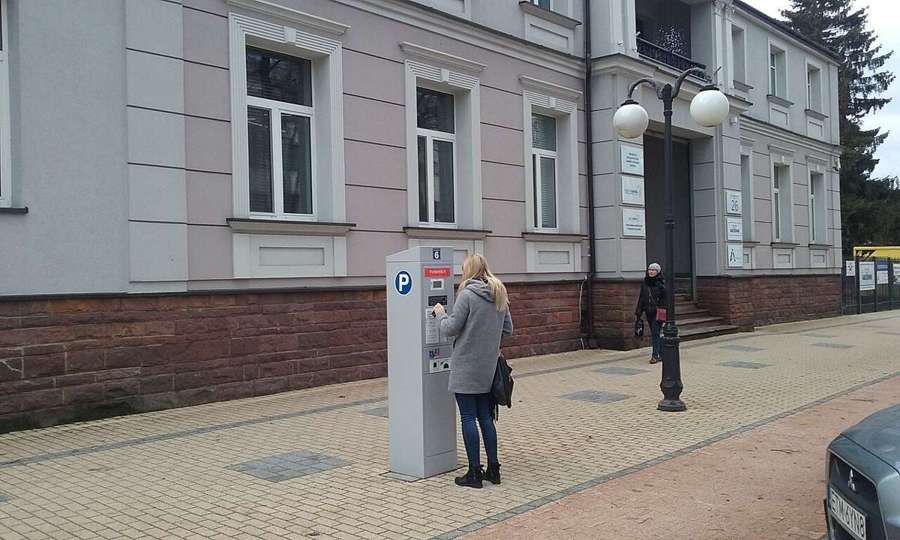
* Photos: post offices in Łódź, Wikimedia Commons, CC0.
What the source does not cover
The page describes civil cases. Criminal and administrative procedure have their own rules, and the portal page does not describe them. It also does not give a rule for a person living abroad who has no Polish address, beyond the electronic option above. If you expect a court letter and travel often, ask a trusted person to collect your mail and tell the court your correct address.
Frequently asked questions
How long do I have to collect a court letter?
Seven days from the notice, according to the portal. The notice is then repeated once, and the letter is deemed served when the collection period ends.
Can a letter count as served if I never collected it?
Yes. After the repeated notice expires, the document is deemed served. It also counts as served if you moved and did not update your address with the court after being told to.
Can someone in my household sign for a court letter?
An adult member of your household can accept it if you are away, unless the court has excluded this. The portal says service is effective when it is handed over.
Can a court send a document by email?
Not as a rule. The portal says the court uses its IT system, and only if you submitted documents that way or chose it. For hearing summons only, other means such as email or phone are allowed in some cases.