Czarnolas Kochanowski Museum: Winter Hours, Free Saturdays and Access
The essentials: September-April exhibitions open Tuesday-Friday 08:00-16:00 and Saturday-Sunday 09:00-16:00, last entry 15:30. Monday is closed. Saturday is free September-June; collect a ticket at the desk. Manor mobility access needs advance stair-climber arrangements.
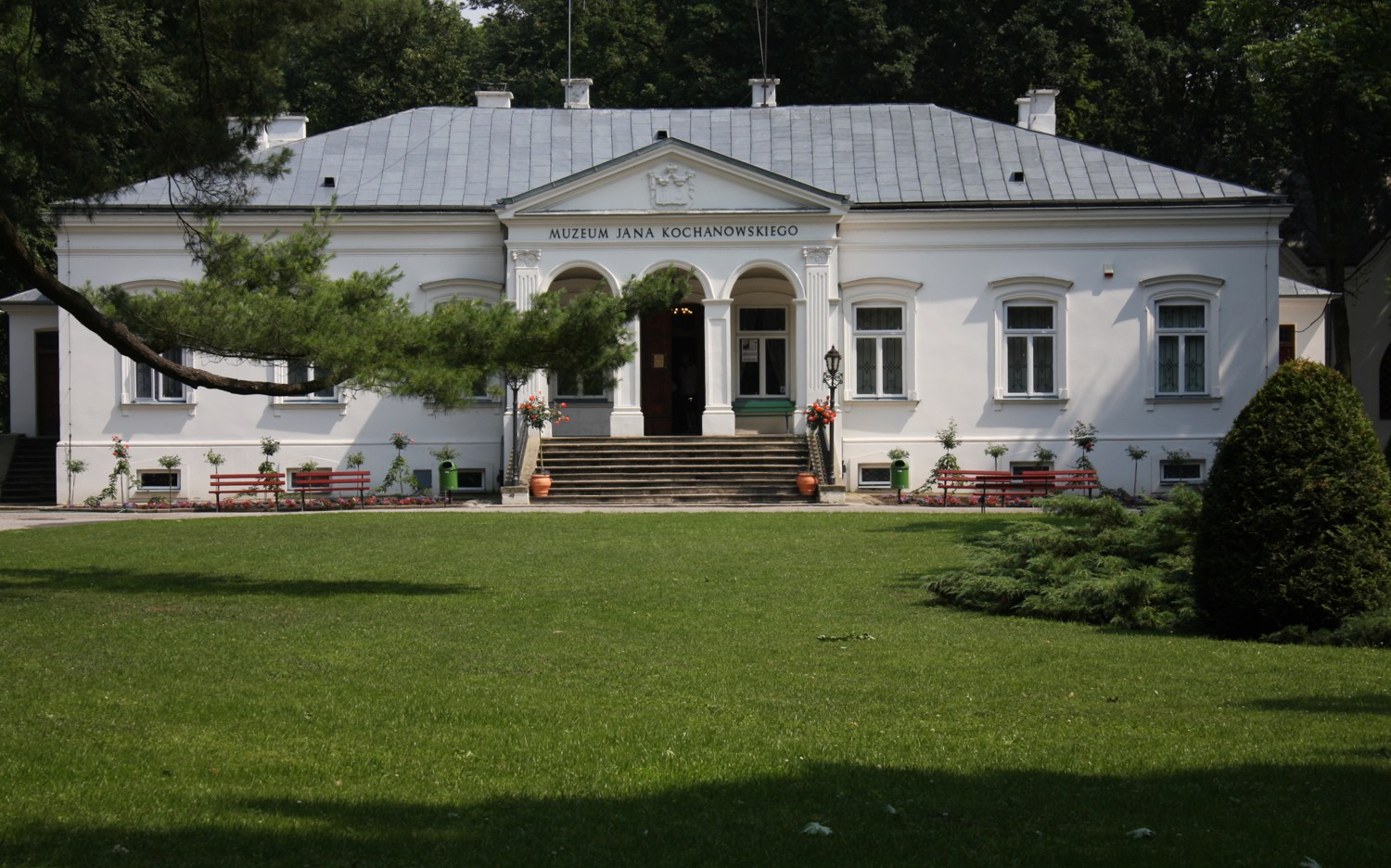
Cover: the later manor housing the Kochanowski museum in Czarnolas, photographed on 12 July 2008. This archival summer image does not show current conditions. Photo: A.Osytek / Wikimedia Commons, CC BY-SA 3.0 PL. Resized and recompressed under the same licence.
Czarnolas is a useful literary day trip if you want to understand why Jan Kochanowski matters beyond a name on a Polish school or street. The museum connects his poetry with family life, European learning and the estate where much of his work took shape. For a winter visit, the practical distinction is between the exhibition timetable and the park timetable. They are different, and neither should be replaced by a general assumption that a country museum closes all weekend.
The museum's current visitor page and May 2026 visiting rules agree: from September through April, exhibitions open Tuesday-Friday 08:00-16:00 and Saturday-Sunday 09:00-16:00. Monday is closed. Last admission is thirty minutes before closing, making 15:30 the winter cutoff. Saturday is the free exhibition day from September through June, but you still collect a free ticket at the cash desk. Check holiday closures and event notices before making a special journey.
Winter hours: Saturday is useful, Monday is not
The winter weekend opening starts an hour later than the weekday opening. This matters if you are fitting the museum between other stops: arriving at 08:00 on a Saturday does not buy an extra hour inside. Conversely, the summer weekend timetable runs later, but that 18:00 closing must not be carried into a November plan. The seasonal boundaries are explicit, with May-August treated as summer for exhibition hours.
Last admission at 15:30 is an entry deadline, not a suggested arrival time for a relaxed visit. Leave yourself enough time to collect a ticket, ask about the audio equipment and read the exhibition. An arrival near the cutoff also leaves little room for the park before its winter 16:30 closing. Start earlier if both the museum and grounds are part of your plan.
The May 2026 rules list additional closures on 1 January,6 January, Easter Sunday, Corpus Christi,1 and 11 November,25 and 26 December. They also allow exhibition closure during events such as concerts or meetings. A normal Saturday opening therefore does not guarantee admission on every holiday or event date. Use the current notices or contact the visitor team when the trip depends on one particular day.
Tickets and the free day are seasonal in different ways
The tariff introduced on 18 March 2026 gives a standard ticket without a guide at 20 PLN and a reduced ticket at 15 PLN. Standard admission with a guide is 25 PLN; reduced admission with a guide is 20 PLN. The visitor page shows the same figures. These guided prices do not mean that an individual visitor can arrive and request an immediate private tour. The museum describes guided visits as a reserved service for organised groups.
A Rodzina Plus family ticket is listed at 45 PLN for a family of at least four people. That wording matters: four unrelated adults should not treat it as an automatic group discount. Ask the desk about your family's eligibility and coverage rather than assuming that every four-person party pays 45 PLN. Likewise, bring the documents needed for any reduced rate. The tariff names particular categories and, for several of them, citizenship conditions; a foreign student card alone should not be treated as a universal entitlement.
The free exhibition day is Saturday from September through June and Tuesday during July-August. This is a separate seasonal division from the opening-hours division. In May and June, Saturday remains the free day even though summer opening hours have begun. In July and August, the free day moves to Tuesday. Obtain the zero-price ticket from the cash desk rather than bypassing the ticket process.
The visiting rules add another important detail: on the free day, both individual and group exhibition visits use an audio guide only. Do not promise a free live guided tour alongside free entry. Payment on paid days can be made by cash or card, with company bank transfers also described. A free exhibition ticket should not be read as a waiver for separately priced workshops, events or photographic sessions.
What the permanent exhibition actually offers
The permanent exhibition presents Kochanowski as a European Renaissance writer. Its themes include Mediterranean classical models, his Latin writing and Christian sources, especially his translation of the Psalms. The museum also brings his songs, epigrams and laments into the interpretation. You do not need to have studied Polish literature to find a way in, but having those broad categories in mind makes the displays easier to follow.
Interactive elements include a map of places connected with his education, travels and public life, while sound effects evoke the household setting. The exhibition also uses objects associated with the old estate, including doors and a leather-covered chair. This is a better expectation than imagining rooms preserved exactly as the poet left them. The museum combines historical objects, interpretation and later layers of remembrance.
The chair deserves careful wording. The museum dates it to the second half of the sixteenth century and links it with the Kochanowski family, while describing its connection to Jan himself as a tradition. Its later decoration and conservation history are part of the object's story. Calling it a chair traditionally associated with the poet is more accurate than claiming that its personal ownership is proved beyond doubt.
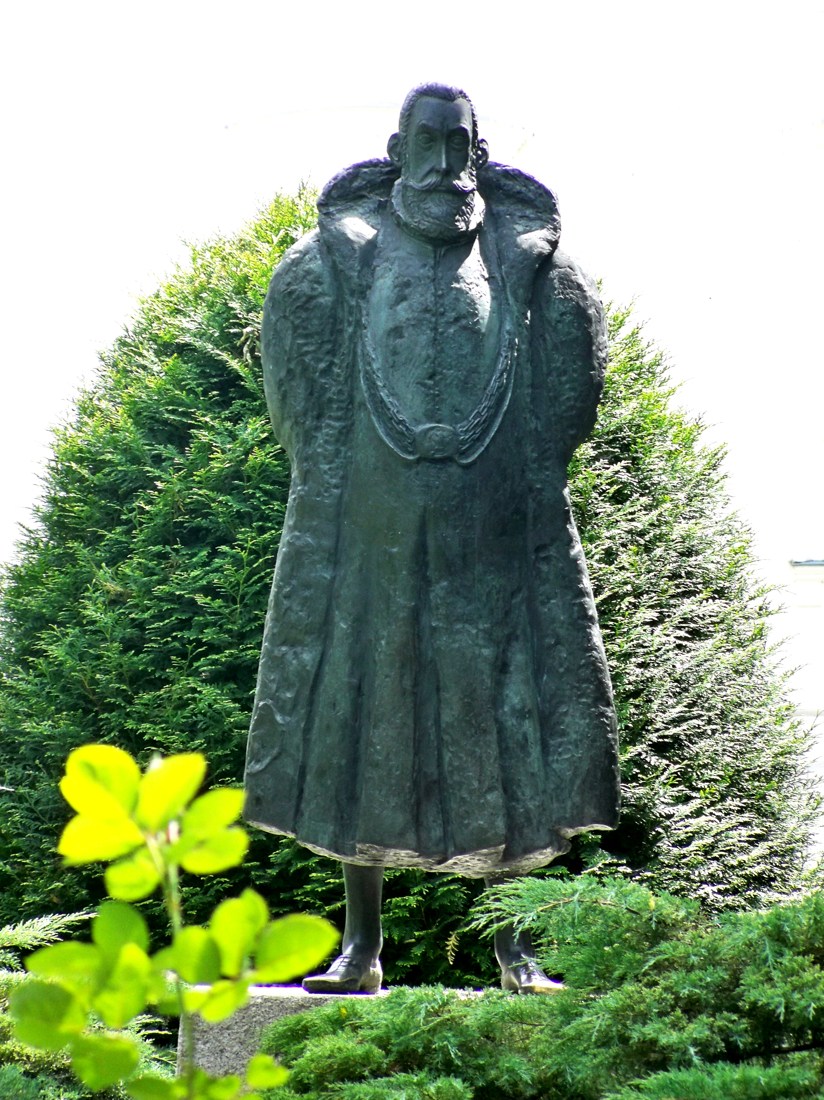
The manor is later than Kochanowski's lifetime
The place is genuinely connected with Kochanowski, but the pale manor in the cover photograph is not his intact Renaissance house. The museum's estate history records that his manor burned in 1720. A later manor was built around the turn of the nineteenth century, subsequently damaged by fire and rebuilt again. The present building belongs to that later history of the estate and its commemorative use.
That distinction makes the visit more interesting rather than less authentic. Czarnolas preserves both a connection to the writer's working landscape and evidence of how later owners chose to remember him. The chapel, collected objects, park monuments and exhibition all form different layers. Look at the building as the setting of a museum about the poet, not as a guarantee that every wall dates from his lifetime.
The estate history connects Czarnolas with major parts of his writing, including the Psalms translation and the laments. It also describes later owners preserving objects, creating memorials and developing the grounds. A useful question to carry through the visit is which element belongs to Kochanowski's period and which belongs to the later history of his reputation.
Park access is separate from exhibition access
The park is listed as open every day,07:30-16:30 from October through April and 07:30-19:00 from May through September. The park rules state that ordinary park entry is free throughout the year. Monday museum closure therefore does not automatically mean that the grounds are closed, although special closures and weather restrictions can still apply. A park walk on Monday is not a substitute for an exhibition booking that day.
The landscape garden took shape in the nineteenth century under Józef Stichy, with further development by Stefan Celichowski in 1907. The museum describes a linden avenue leading towards the place where the famous poetic lime tree once stood. Do not expect to see that original tree still alive. The memorial location and the associated legendary stone tell a story about literary memory, not a claim that every present tree stood there with the poet.
Use the paths and leave bicycles in the designated area near the cash desk rather than riding through the park. The rules allow private photography when it does not disturb visitors or damage the grounds, but commercial sessions have separate ticket requirements. Strong wind, storms and other dangerous weather can close the park. In winter, treat the published closing time as the limit and allow extra margin for short daylight and poor footing.
Mobility access needs an advance conversation
The accessibility declaration makes a building-by-building distinction. The Kordegarda ticket-office building and the manor outbuilding are described as adapted for visitors with mobility disabilities. Access to the main manor can use a stair-climbing device, but the museum asks for advance notice. That is not the same as an independently usable permanent ramp. Confirm the equipment, assistance and suitability for your particular mobility aid before travelling.
The chapel has stairs without the possibility of deploying a ramp or stair climber. It should not be included in a promise that the whole complex is step-free. Inside the main manor, the declaration describes the exhibition rooms as accessible after the entrance barrier is addressed. An accessible toilet is identified in the Kordegarda ticket-office building, and the free parking area opposite the museum entrance includes one designated accessible space.
For sensory access, the museum advertises free audio description and a video/audio guide with Polish Sign Language, plus tactile information boards around the complex. It also mentions access through the MOVI GUIDE application. Polish Sign Language is not a promise of English narration. Ask specifically about the languages and format you need. The declaration says there is no induction loop or on-site sign-language interpreter.
Make the practical questions specific
The visitor service can be reached at [email protected] or by telephone on +48 48 677 20 05, extension 10. Guided groups require advance reservation and must contain 12-50 participants. Confirm language, timing and any access assistance as part of that reservation, rather than assuming a published guided ticket price settles those details.
For an independent winter visit, a straightforward plan is to arrive well before 15:30, collect the appropriate ticket, explore the exhibition and leave a separate daylight window for the park. On a free Saturday, expect the audio-guide arrangement rather than a live tour. Before leaving home, check the chosen date for closures and confirm any equipment or language on which the visit depends. That keeps Czarnolas a manageable museum trip instead of a journey built around the wrong seasonal timetable.
Frequently asked questions
Is Saturday always the free exhibition day?
Saturday is free from September through June. The free day moves to Tuesday in July-August. Collect a free ticket at the cash desk; the May2026 rules specify audio-guide-only visits on the free day.
Is the park closed on Mondays?
The normal park timetable is daily, including Mondays: 07:30-16:30 October-April and 07:30-19:00 May-September. The exhibitions are closed Mondays. Weather and special closures can affect park access.
Is the whole complex step-free?
No. The main manor can use a stair climber with advance notice. The chapel has stairs without a deployable ramp or stair climber, while the ticket-office building and manor outbuilding are described as adapted.
Sources
- Museum: current visitor information
- Museum: May2026 visiting rules
- Museum: March2026 tariff
- Museum: park rules
- Museum: architectural and sensory accessibility
- Museum: permanent exhibition
- Museum: chair traditionally associated with Kochanowski
- Museum: park history
- Museum: estate history
- Museum: visitor service contact