Torn Złoty Banknote in Poland? How NBP Exchange Works
The essentials: Keep the original fragments and ask a bank cash counter about exchanging damaged Polish currency. The surviving area and authenticity affect the result; NBP also offers an application route. Suspected counterfeit notes are a separate matter.
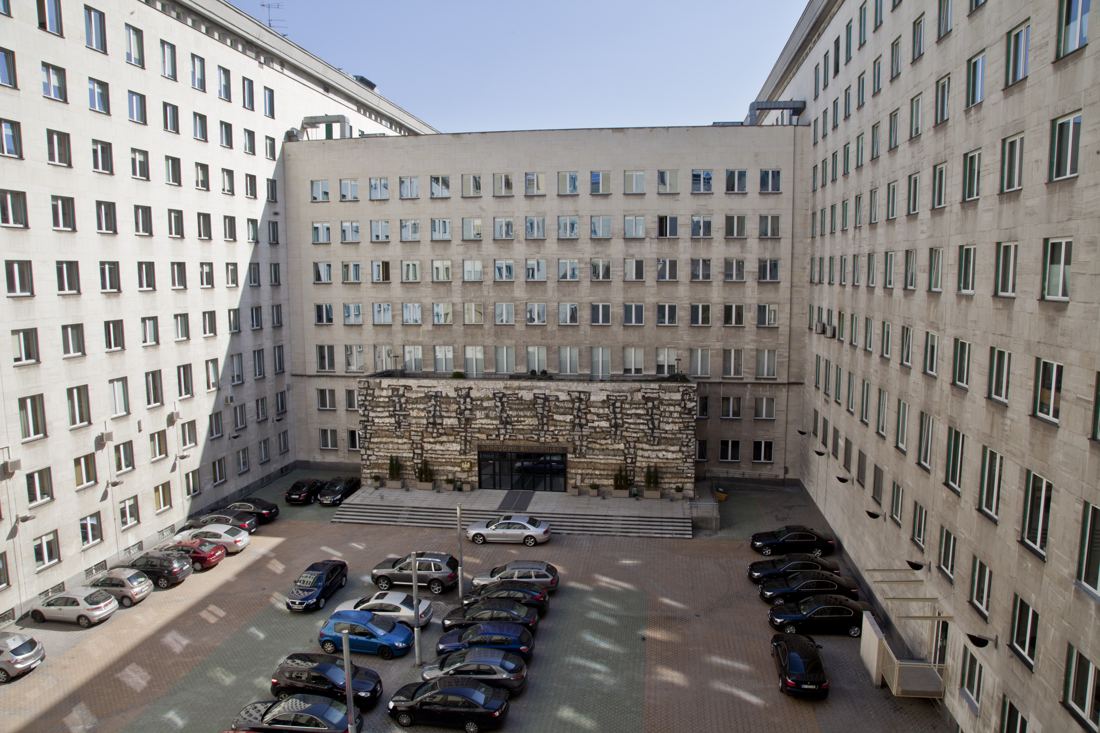
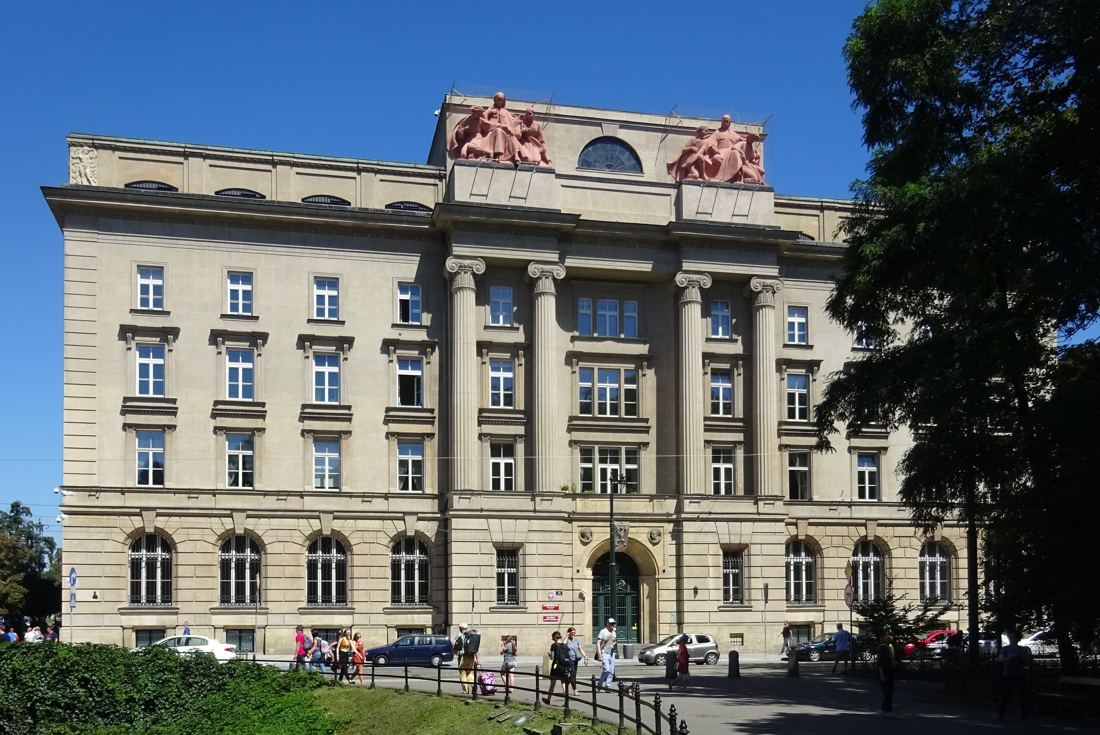
Narodowy Bank Polski headquarters in Warsaw, shown for context rather than as a walk-in service recommendation. Photo: Andrzej Barabasz (Chepry) / Wikimedia Commons, CC BY-SA 4.0. Resized and compressed; adaptation under the same licence.
A torn 50 zł note does not necessarily mean losing 50 zł. Poland has a formal system for exchanging worn or damaged złoty banknotes and coins. The result depends on authenticity, the surviving material and the applicable assessment rules. A shop refusing a damaged note and a bank refusing to replace it immediately are also different situations: the second may require an application to Narodowy Bank Polski, not the end of the process.
This guide covers ordinary Polish currency, with sources checked on 4 November 2026 in Poland. It is not a currency-exchange service, a valuation of collectible money or a guarantee that a particular fragment will be accepted. Keep the original pieces and use NBP's current instructions and application form before sending anything. Do not use damaged-currency rules to try to spend a note you suspect is counterfeit.
Start with the bank's cash counter
NBP says worn or damaged banknotes and coins it issues can be exchanged at the cash counter of any bank operating in Poland, provided their authenticity is not in doubt and their denomination can be recognised. Its examples include frayed, torn, taped, heavily soiled, stained and discoloured notes. That is much broader than a note having to look almost new.
The important practical term is kasa, meaning the cash counter. A branch offering only advice or account services is not necessarily equipped to handle cash. Before travelling, ask whether the location has a cash counter and handles wymiana uszkodzonych banknotów, the exchange of damaged banknotes. Check its current cash-service hours rather than assuming they match the branch's general opening hours.
You are asking to exchange damaged Polish currency, not to convert euros into złoty or to deposit an unexplained transfer. Keep that distinction clear if a member of staff initially directs you to an ATM or currency desk. Take the damaged money and an identity document, and ask what documentation is needed for your case. Do not rely on a blog promising that identification can never be requested.
How much of a banknote must remain?
NBP's published summary separates full-value and half-value exchange. A banknote with more than 75% of its original area surviving in one fragment can qualify for its full face value. A banknote with 45% to 75% surviving in one fragment falls into the half-value category in the summary. These are area rules, not a count of how many serial-number digits you can still read.
There is another full-value case: a banknote torn into no more than nine parts which together make up 100% of the banknote. Do not confuse that with nine pieces from different notes, or with nine fragments whose missing sections are substantial. The pieces must be assessed as the relevant banknote under the rules. Keep everything you have rather than discarding small sections you think are unimportant.
Near the lower threshold, leave the measurement to the bank or NBP. The NBP webpage uses both “more than 45%” in its general obligation sentence and “45% to 75%” in its half-value summary. A reader should not treat an estimated exactly-45% scrap as a promised payout. NBP also says fragments with less than 45% do not meet its exchange requirements.
For a simple illustration, half the face value of a 100 zł note is 50 zł. That arithmetic does not establish that your note qualifies. A photograph, a home measurement or a missing corner does not settle authenticity, whether the surviving material is one fragment, or whether other conditions apply. Avoid cutting or altering the note to fit an interpretation of the threshold.
Coins have separate rules
NBP's summary says worn or damaged coins are exchanged at full face value, including two separated elements, the core and ring, when they come from a coin of the same denomination. If only one element, the core or ring, remains, the summary provides for half the face value. This matters for two-part coins, where a loose centre is not automatically worthless.
Do not assemble parts from different denominations or claim an ordinary damaged object is a complete coin. Present the actual pieces and let the bank assess them. The NBP exchange page also links examples of coins damaged with industrial equipment and notes damaged by banknote-neutralisation systems. Those are reasons to use the specialist route and disclose what happened, rather than assuming every damaged item is a routine counter exchange.
Coin exchange should also be kept separate from changing a large jar of usable small coins into notes. Those are different operations and may have different procedures. If you have both damaged coins and a large amount of undamaged change, explain each request separately. This guide does not quote a fee schedule for bulk denomination exchange.
When the bank cannot exchange it immediately
NBP says money that does not meet the conditions for exchange in banks is accepted by banks with an application and forwarded to NBP headquarters for exchange assessment. An immediate cash-counter replacement and a forwarded application therefore have different timelines. Ask which process the employee is describing before concluding that the currency has been rejected permanently.
If an application is being made, record what you handed over, the denomination, the number of pieces and the reference or acknowledgement supplied. Keep a copy of the completed form. Ask how the result will be communicated and what to do if contact details change. NBP recommends including an email address so information about the outcome can be sent electronically.
NBP's exchange page warns that incomplete applications will not be processed. Treat the form as part of the claim, not an optional cover note. A statement such as “please replace my money” without the required personal and contact information is not a substitute. Do not invent a Polish account number or leave unclear whose account is to receive the payment.
The direct postal route has a limit
An individual can send an application with damaged or worn Polish banknotes of a total value not exceeding 2,000 zł directly to NBP headquarters by post or courier. The published route is for banknotes. Do not assume the same arrangement covers a package of coins, a company's cash collection or a higher-value bundle.
The address on NBP's exchange page is Narodowy Bank Polski, Departament Emisyjno-Skarbcowy, ul. Świętokrzyska 11/21, 00-919 Warszawa, with the annotation “DES - wymiana”. NBP says the currency should be placed in a sealed envelope attached to the application. Use the current individual application linked from that page and check the instructions again before dispatch.
For this route, the equivalent value of exchanged notes is transferred to the bank account specified in the application belonging to the individual sending them. It is not a promise of cash by return post. Check the form's account requirements if your account is abroad. The page does not establish that every foreign account or payout currency will be supported.
Before choosing a carrier, check its rules for sending cash and what its compensation actually covers. A tracking number is useful evidence of delivery but does not determine NBP's valuation or guarantee reimbursement if a shipment is lost. Keep the application copy and dispatch evidence. Do not send an irreplaceable original identity document unless an authoritative procedure specifically requires it.
Damaged is not the same as counterfeit
NBP explains that false currency is retained without a right to its equivalent value. Głogów Police likewise advise taking a suspected counterfeit banknote to a bank or the police for checking, rather than trying to pay with it or change it into smaller notes. Passing it to someone else does not turn it into an ordinary damaged-note exchange.
NBP's banknote guidance recommends checking several security features and using the basic approach of touch, look, tilt and check. Different denominations and versions have different features, so one familiar feature is not enough to declare every note genuine or false. If you remain unsure, ask a bank to check it. Do not rely on an app photograph as a definitive authentication.
A different-looking note is not automatically obsolete. NBP says all banknotes introduced into circulation from 1 January 1995 remain legal tender and circulate alongside one another. That statement does not make every old paper złoty note exchangeable under today's damaged-money rules. Pre-denomination notes, collectibles and foreign currency need their own checks.
A short preparation checklist
Keep the fragments together, note what happened and identify the denomination without altering the original. Decide whether you need a cash-counter visit or advice about an NBP application. Confirm the branch's cash service before travelling. If you use the direct route, check the 2,000 zł limit, current form, contact details, account information and carrier terms.
Finally, separate three questions: is the currency genuine, does it meet the exchange conditions, and what amount is payable? A shop assistant, a delivery receipt and an online percentage calculation cannot answer all three. The bank or NBP assessment is what matters. Keeping the original material and a clear record gives that assessment the best chance of proceeding without avoidable extra correspondence.
Frequently asked questions
Will I get the full value of a torn Polish banknote?
Not automatically. NBP gives full-value and half-value categories based on surviving area and other conditions. Keep all fragments and let the bank assess them.
What if exactly 45% of the note remains?
NBP's webpage uses both "more than 45%" and a "45% to 75%" summary. Do not treat a home estimate at the boundary as a guarantee; ask the bank or NBP.
Can I post damaged złoty to NBP?
An individual can send damaged Polish banknotes with a complete application by post or courier, up to a total value of 2,000 zł. Check NBP's current form and the carrier's cash rules first.
Can I exchange only the centre of a two-part coin?
NBP's summary provides half face value where one element, core or ring, survives. The bank must assess the actual item.
Should I try to spend a suspected fake note?
No. Take it to a bank or police for checking. Counterfeit money is not compensated as ordinary damaged currency.
Sources
- NBP: exchange of worn or damaged Polish currency; current page cites 2024 consolidated order; checked 4 November 2026
- NBP: banknotes in circulation; checked 4 November 2026
- NBP: currency issuance; checked 4 November 2026
- Głogów Police: suspected counterfeit banknotes, 2 May 2023; checked 4 November 2026
- Bankier SMART: damaged banknote exchange, 29 August 2024; checked 4 November 2026
- Rankomat: damaged banknote exchange; checked 4 November 2026