Cold Radiator in Poland? Thermostats, Bills and Fault Reports
The essentials: Check the room temperature and normal thermostat setting, then report persistent cold to your landlord and building manager. Do not dismantle valves or adjust shared heating equipment. An allocator helps divide costs; it is not a heat meter.
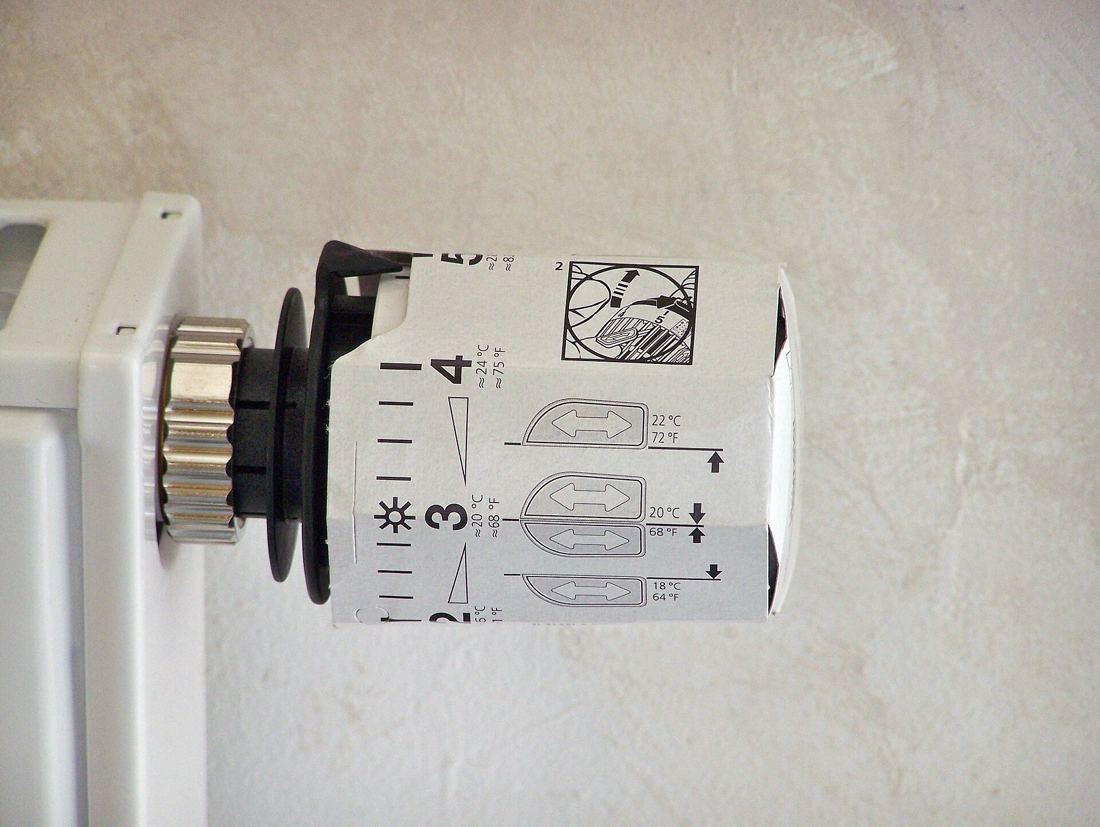
Illustrative thermostatic radiator valve with its original cardboard protection, not a specific Polish rental. Photo: T.Voekler / Wikimedia Commons, CC BY-SA 3.0. Resized and compressed; adaptation under the same licence.
A radiator that feels cool is not automatically broken. It may have stopped heating because the room has reached the temperature selected on its thermostatic valve. Equally, a cold room with every radiator open deserves a proper report, rather than weeks of being told that the heating season has not started. The useful distinction is between the room temperature, the radiator's behaviour and the building's heating arrangements.
This guide explains the Polish terms, what to record and who to contact in a rented flat with central heating. It is not a repair manual for boilers or shared pipework. Sources were checked on 3 November 2026. Your building's instructions and your tenancy agreement still matter, especially before authorising work or agreeing to pay a contractor.
Identify what heats the flat
Centralne ogrzewanie, usually shortened to C.O., means central heating. In a block, heat may come through a shared installation controlled at building level. Other flats have an individual boiler or a different arrangement. Ask the landlord what serves your home and where routine faults should be reported. A radiator alone does not identify the heat supplier or the person responsible for repairing it.
The building's administracja is its administration office. A zarządca is the manager; a spółdzielnia mieszkaniowa is a housing cooperative, while a wspólnota mieszkaniowa is the community of property owners. These names help you find the right noticeboard or contact list. They do not mean that every organisation uses the same emergency contractor, rules or response procedure.
Save the building's own heating contact and its out-of-hours fault number when you move in. Keep the landlord's contact alongside it. Do not take a technical emergency number from an unrelated cooperative's website: a service covering one estate is not a national heating helpline. If the flat has an individual boiler, ask for that appliance's instructions and authorised service arrangements separately.
The numbered knob is usually a thermostat
A głowica termostatyczna is the thermostatic head on a radiator valve. It responds to the temperature around it and adjusts the flow of hot water. Białogard's housing cooperative explains that when the room warms, the valve reduces the flow; when the room cools, it increases it. Its purpose is to maintain a selected room temperature, not to keep the metal permanently hot.
The numbers should not be read as percentages of the building's heating power. ADM Nieruchomości's technical instructions explain that setting a five-position head to four does not mean that the valve stays four-fifths open. It may close or open as conditions change. The exact temperature associated with each position depends on the model and installation, so ask for the correct instructions rather than treating an online chart as universal.
Check whether a curtain, furniture or a radiator cover traps warm air around the valve. That can make the conditions near the control different from those where you sit. The government's energy-saving guidance advises keeping radiators clear of furniture and curtains. A sensible first step is to uncover the radiator and use the normal user control, not to remove the head or force a stiff valve.
Measure the room, not only the metal
For a useful fault report, note the temperature shown by a room thermometer, the time and the room concerned. Record the valve setting and whether the problem affects one radiator, several rooms or the whole flat. A photograph of the thermometer and control can make the report clearer. Avoid presenting one reading beside a hot pipe or open window as a reliable picture of the whole room.
If the room is comfortable and the radiator cycles between warmer and cooler, that may fit normal thermostatic control. If the room remains cold despite the normal control being open, report that specific combination. A hand placed on the radiator cannot establish whether the building has supplied the required service, nor can it diagnose air, an obstruction or an installation-balancing problem.
Ask whether neighbours have the same issue, without turning their answers into a technical diagnosis. Several affected flats are useful information for the manager. One cold radiator with other rooms heating suggests a different investigation from a whole building without heat. Note any recent work, such as radiator replacement, renovation or the heating being restarted, because that timeline can help the technician.
There is no single national switch-on date
The climate ministry's published response on heating-season rules describes the season in terms of weather conditions requiring a continuous heat supply, rather than a fixed date. It also explains how weather-controlled equipment can regulate the building's supply. The building's heat customer, such as its cooperative, owners' community or authorised manager, generally sets the relevant control threshold.
That means a warmer afternoon can change how the system behaves even during the period residents think of as the heating season. It does not mean that a persistently cold flat should be ignored. Ask the manager whether the heating has been enabled, whether a fault is known and what checks are planned. Request the building's actual arrangement rather than relying on a rumour about a compulsory September date.
Do not confuse room-design temperatures, a particular cooperative's house rules and the remedies available under your tenancy. Those are different questions. If you are disputing an inadequate supply, keep written records and seek advice on the agreement and circumstances. This article does not establish an automatic right to stop paying rent or to deduct a privately commissioned repair from the next payment.
Do not adjust shared equipment to test a theory
Gurgling, uneven heating or a radiator that stays cold are observations to report. They are not enough to decide, from a distance, that bleeding the radiator will fix it. Building instructions can include specific steps for vents, isolation valves and heating cabinets, but those instructions apply to the installation they describe. Copying them into a different flat can create a leak or affect other residents.
Ask the landlord or manager who should inspect, bleed or repair this system. Do not open a shared heating cabinet, alter balancing settings, loosen fittings or dismantle a valve because a video makes the task look simple. If you have been given explicit instructions for an ordinary resident-operated control, follow those instructions within their stated limits. Leave unfamiliar components to the responsible technician.
A visible leak changes the priority. Contact the building's emergency maintenance service and landlord promptly, explaining where water is appearing and whether it is spreading. Keep away from wet electrical equipment. Ask the service what safe immediate action is appropriate for your installation. The aim is to limit harm without guessing which communal valve to turn.
The small radiator device is not necessarily a meter
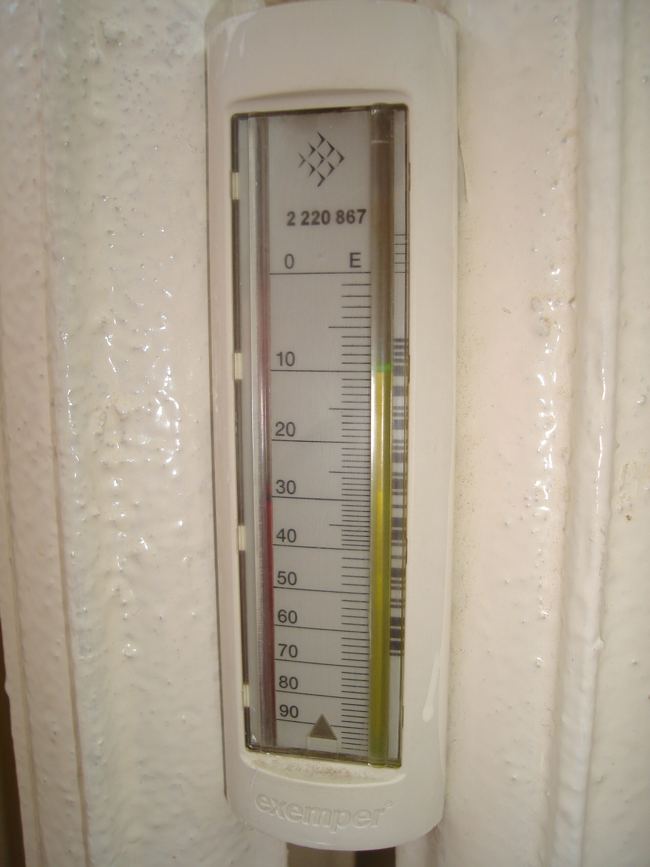
A podzielnik kosztów ogrzewania is a heat cost allocator. The Central Office of Measures, GUM, explains that allocators are not measuring instruments under Poland's metrology law: their readings help divide the building's heating cost between flats. They do not directly measure a physical quantity of heat in the way a ciepłomierz, or heat meter, does.
Heat meters can display recognised energy units such as MJ, GJ or kWh. An allocator's displayed units should not simply be multiplied by a guessed energy price. GUM describes the building-level heat meter as the basis for the supplier's settlement with the cooperative or owners' community. The internal allocation is a separate stage involving the building's chosen method and rules.
Provider ista's explanation also shows why the final bill is not just the current display on one radiator. Its system can account for radiator characteristics and the flat's position, while the building's rules address fixed and shared costs. Treat that as an explanation of the provider's system, not proof that your building uses identical factors. Ask for your own settlement rules and the meaning of each line.
Report a fault and query a bill separately
For the technical report, include the address, room, observed temperature, normal valve setting, affected radiators, when the problem started and any leak or noise. Ask for a reference number or written acknowledgement and the next inspection step. Keep photographs and replies together. Do not state that a valve or meter is defective unless a qualified inspection has established that.
For a billing query, request the settlement period, advance payments already credited, actual charges, reading dates and the building's allocation rules. If a radiator or allocator was replaced, ask how the change was recorded. A repair request does not automatically open a billing complaint, and a high bill does not prove a mechanical fault. Giving each issue its own clear description makes both easier to investigate.
Finally, agree who may order work and how payment will be handled before a non-emergency appointment. A contractor's willingness to attend does not decide whether the tenant, owner or building bears the cost. Keep the heating problem, any emergency safety action and the later responsibility discussion distinct. That leaves you with evidence and a workable next step, rather than an improvised repair and a second dispute.
Frequently asked questions
Does setting five heat the room five times faster?
Do not read the numbers as power percentages. A thermostatic head adjusts flow in response to temperature; the exact settings depend on the model.
Is a cool radiator always a fault?
No. It may have stopped heating because the selected room temperature has been reached. A room that stays cold despite normal controls being open should be reported.
Can I bleed a radiator in a rented flat?
Ask the landlord or manager who should do it and which installation-specific instructions apply. Do not copy instructions for another building or alter shared equipment.
Is the radiator allocator a heat meter?
No. GUM describes allocators as devices used with a settlement system to divide heating costs. A heat meter measures energy in recognised units.
Can I deduct a heating repair from my rent?
Do not assume that. Responsibility and remedies depend on the agreement and circumstances; obtain advice before withholding rent or making deductions.
Sources
- GUM: heat cost allocators, updated December 2025; checked 3 November 2026
- Ministry of Climate: heating season and weather controls, 3 October 2022; checked 3 November 2026
- Białogardzka SM: thermostatic heads; checked 3 November 2026
- Government ecological education: clear radiators; checked 3 November 2026
- ADM Nieruchomości: installation-specific heating instructions; checked 3 November 2026
- ista: allocator and settlement FAQ; checked 3 November 2026