Old Light Bulbs in Poland: LEDs, Fluorescent Lamps and PSZOK
The essentials: Identify the lamp and check the municipal collection route. Keep fluorescent lamps separate and intact, and do not treat LEDs or bulbs as bottles for the glass bin.
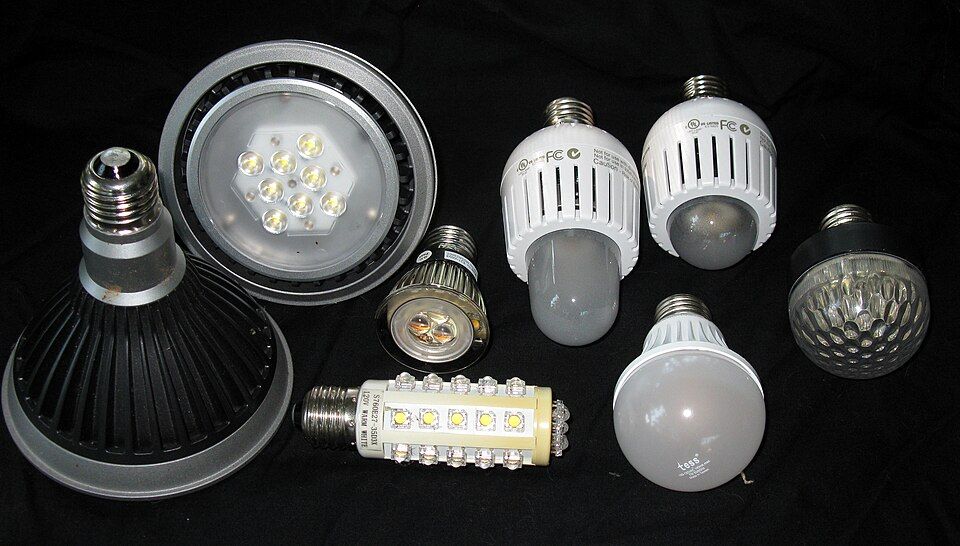
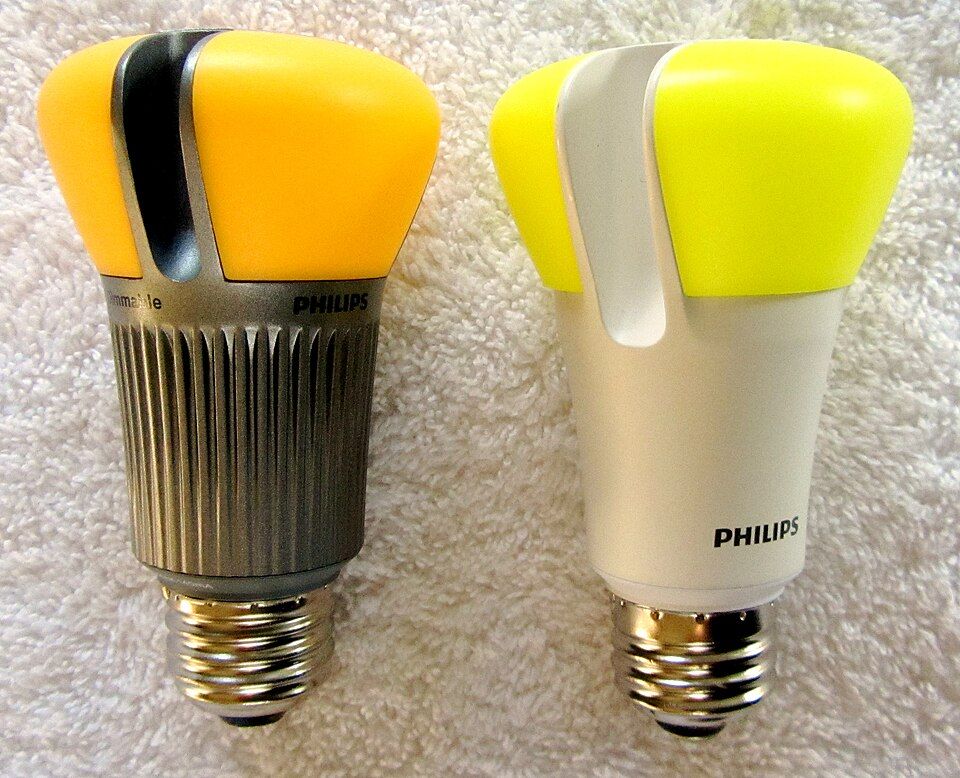
Illustrative LED products, not a collection point or endorsement. Photo: Geoffrey.landis, CC BY 3.0. Resized and compressed.
A light bulb is not a glass bottle. In Poland, deciding where to take an old lamp starts with identifying what it is: an LED light source, a fluorescent tube or compact fluorescent lamp, a traditional bulb, or an entire electrical fitting. The material visible on the outside does not settle the collection route.
For household LED and fluorescent lighting, an appropriate electrical-waste collection point or municipal PSZOK is a useful starting enquiry. Do not put a fluorescent lamp into mixed rubbish, and do not assume that every old bulb belongs in the green packaging-glass bin. For traditional bulbs and unusual fittings, check the municipality's item-specific instructions rather than applying a rule remembered from another town.
This guide was checked on 3 November 2026. It covers household handover and the questions to ask, not electrical repair or a complete mercury-spill procedure. The photographs illustrate lighting products; they are not endorsements, proof of current sale or pictures of a particular collection point.
Identify the light source before sorting
Look at the product label or packaging if it is still available. "LED" identifies a different technology from a fluorescent tube or a compact fluorescent lamp, often called a "świetlówka" or "świetlówka kompaktowa" in Polish. Shape alone can mislead: a modern light source can be made to resemble an older filament bulb.
If you cannot identify it, describe the item to the receiving point or show a photograph of its markings. Do not break the outer casing to investigate. Keep an intact item intact and ask whether the operator takes that type of lamp, including any unusual size or fitting.
An entire desk lamp, ceiling fitting or battery-powered light is not simply a loose bulb. It may have electronic components, wiring or batteries that need the complete-equipment route. Do not dismantle sealed components merely to divide them between household recycling bins. If the fitting is still attached to the building or mains wiring, safe removal is a separate job.
Why the green glass bin is not the answer
Poland's green collection stream is for the glass items accepted under local packaging rules, such as bottles and jars. A light source is a different product. Its glass can be combined with metals, electronics, coatings or other materials, so the fact that it looks transparent is not a reliable sorting test.
The Environment Ministry's segregation guidance specifically lists used fluorescent lamps among hazardous waste that must not go into mixed municipal waste. It points residents to designated collection and PSZOK routes. Bydgoszcz's municipal waste guidance likewise says fluorescent tubes and compact fluorescent lamps require separate collection and processing.
Keep packaging separate from the product where the local instructions allow it. An empty cardboard bulb box and the lamp that came inside it do not necessarily go to the same place. Nor does a metal screw base make the whole light source suitable for the yellow metal-and-plastic packaging bin.
LEDs: find the electrical-waste route
Warsaw's official Segreguj na 5 waste finder identifies "Żarówka ledowa, LED" as an item for PSZOK and MPSZOK collection. That is a city-specific verified example, not a guarantee that every mobile point across Poland accepts the same item under identical conditions.
For your municipality, search its waste finder or collection-point rules using the full term "żarówka LED". If it lists a retailer or another collection route, check that operator's current acceptance instructions. A container marked for batteries is not automatically the correct place for a loose LED bulb or an entire light fitting.
If the lamp still works but is no longer needed, reuse may be possible where another person or a programme actually wants it. Describe its condition accurately. Do not hand over damaged electrical equipment as though it had been tested or assume that a charity taking clothes also accepts used lighting.
Fluorescent tubes and compact fluorescent lamps
Bydgoszcz's official guidance explains that fluorescent tubes and compact fluorescent lamps contain mercury and need separate processing. It directs residents to designated lighting-product collection points or municipal PSZOK facilities. The important household step is to avoid breaking them while arranging the correct handover.
Tell the receiving operator whether the item is a long tube or compact lamp and whether it is intact. Ask about packing and handover requirements before travelling, especially for long tubes or several lamps. Do not assume that an unattended box designed for small bulbs can handle a long or damaged item safely.
Do not deliberately crush a lamp to save space. A small household quantity is still not a reason to conceal fluorescent waste in a rubbish bag. The appropriate collection route exists to keep the material separate for handling and treatment, rather than passing an unlabelled hazard to the ordinary waste crew.
Traditional bulbs: check the actual local entry
Online summaries often reduce lighting disposal to a simple old-versus-new rule. Current local instructions can be more specific. Warsaw's official entry for "Żarówka tradycyjna" directs residents to PSZOK and MPSZOK and also mentions electrical-waste collection points.
That is why this guide does not tell every resident of Poland to put every traditional bulb into mixed waste. Use the item entry for your own municipality and explain whether it is a traditional filament bulb, a halogen lamp or something you cannot identify. If two sources disagree, prefer a current answer from the municipal waste service for that actual item.
Keep a copy of a written clarification if you are organising a larger household clear-out. A screenshot of an old general infographic is less useful than the current item-specific rule. Do not extrapolate an answer for a traditional bulb to a fluorescent tube simply because both contain glass.
Shops and take-back conditions
The Chief Inspectorate of Environmental Protection describes a no-purchase return route for very small household electrical waste at large equipment retailers. Its conditions include more than 400 square metres devoted to electrical-and-electronic sales and no external item dimension exceeding 25 centimetres. These are conditions to check, not a promise about every supermarket or every lighting product.
For a whole fitting, long tube or uncertain category, ask the retailer which collection route applies. Do not force an item into a small opening or leave it outside a collection box. A seller may run an additional voluntary programme, but the existence and scope of that programme need current confirmation.
If you are buying replacement equipment, check the seller's take-back instructions before the delivery or shop visit. Establish whether collection must be requested in advance and whether the old item qualifies. Do not assume a delivery driver can take an unexpected sack of unrelated lamps simply because a new electrical product is being delivered.
Before visiting a PSZOK or mobile point
PSZOK is a municipal selective waste collection point. MPSZOK usually refers to a mobile collection service. The names do not create a single national timetable or acceptance list. Check your municipality's current page for the particular point, not only a map listing.
Confirm opening hours, household or resident eligibility, accepted lamp types and any quantity limits. Describe damage or contamination before arrival. If the collection is mobile, check the actual stopping place and time and whether it takes your item. A municipal vehicle may have more limited space than a fixed site.
For a business replacing office lighting, ask about the business-waste route. Household collection should not be assumed to accept commercial waste simply because an employee brings it in a private car. The source and amount of the material matter, so explain them honestly to the receiving operator.
The Warsaw 19115 service is an example of a city publishing separate fixed and mobile arrangements. Bydgoszcz publishes its own local fluorescent-lamp routes. Use those pages for those cities, and the relevant municipal service elsewhere; do not turn an address from one city into advice for all readers.
If a fluorescent lamp breaks
A broken fluorescent lamp is no longer an ordinary intact-lamp handover. Keep people away from the fragments and avoid handling them with bare hands. Do not begin an improvised cleanup or put the debris into a normal collection box without checking how the relevant authority or operator wants it handled.
Tell the municipal collection service or appropriate health-information service exactly what broke and where. Ask for current cleanup and disposal instructions suitable for that situation. Mention whether there are children, pets or anyone who may have contacted the material, and seek appropriate medical advice if exposure or injury is a concern.
This article deliberately does not offer a generic mercury-spill recipe. A broken compact lamp, a different mercury-containing object and an ordinary broken glass item are not interchangeable. Do not follow a social-media shortcut that ignores the product type, and do not assume an intact-bulb return programme accepts loose fragments.
If there is an immediate danger, injury or fire, emergency help takes priority over recycling arrangements. For a routine question about where an intact lamp belongs, the municipality or receiving operator is the more appropriate starting point than an emergency call.
Replacing lighting is a separate decision
Do not confuse an energy label with waste classification. The Environment Ministry explains the revised energy labels for light sources introduced from September 2021. A rating helps compare products under the relevant labelling system; it does not tell you which municipal bin accepts the old lamp.
When buying a replacement, check the fitting, dimensions and the product's instructions rather than assuming any bulb with a similar appearance will work. Electrical installation, dimmer compatibility and safe removal are outside this disposal guide. Use competent help when the job requires it.
For the next clear-out, keep light sources separate from packaging and identify the uncertain items before leaving home. Check the receiving point, tell it about damage and follow its handover rules. The reliable shortcut is a verified collection route, not the colour of the glass or the age of the bulb.
Frequently asked questions
Can a light bulb go in the green glass bin?
Do not treat a light source as a glass bottle or jar. Check the item-specific municipal instructions; LEDs and fluorescent lamps need appropriate separate collection routes.
Are all traditional bulbs mixed waste in Poland?
Do not assume that. Warsaw's current official traditional-bulb entry directs residents to PSZOK and MPSZOK and mentions electrical-waste points. Check your own municipality's current entry.
Why must fluorescent lamps be collected separately?
Bydgoszcz's municipal guidance says fluorescent tubes and compact fluorescent lamps contain mercury and require separate processing. Keep intact lamps intact and use an appropriate collection route.
Can I take a broken fluorescent lamp to any shop box?
Do not assume an intact-lamp box accepts broken material. Explain the breakage to the operator and obtain suitable cleanup and handover instructions before bringing fragments there.
Sources
- Environment Ministry segregation and hazardous-waste guidance; checked 3 November 2026
- Bydgoszcz municipal fluorescent-lamp guidance; checked 3 November 2026
- Warsaw traditional-bulb entry; checked 3 November 2026
- Warsaw LED-bulb entry,read in live browser; checked 3 November 2026
- GIOŚ electrical-waste retail return conditions; checked 3 November 2026
- Warsaw19115fixed/mobile collection rules; checked 3 November 2026
- Environment Ministry light-source energy labels,2021; checked 3 November 2026