Old Clothes and Textile Waste in Poland: Donation, PSZOK or Bin?
The essentials: Keep reusable clothing separate from textile waste. Use the municipal collection route, check local dirty-textile exceptions, and keep chemical contamination out of donation bags.
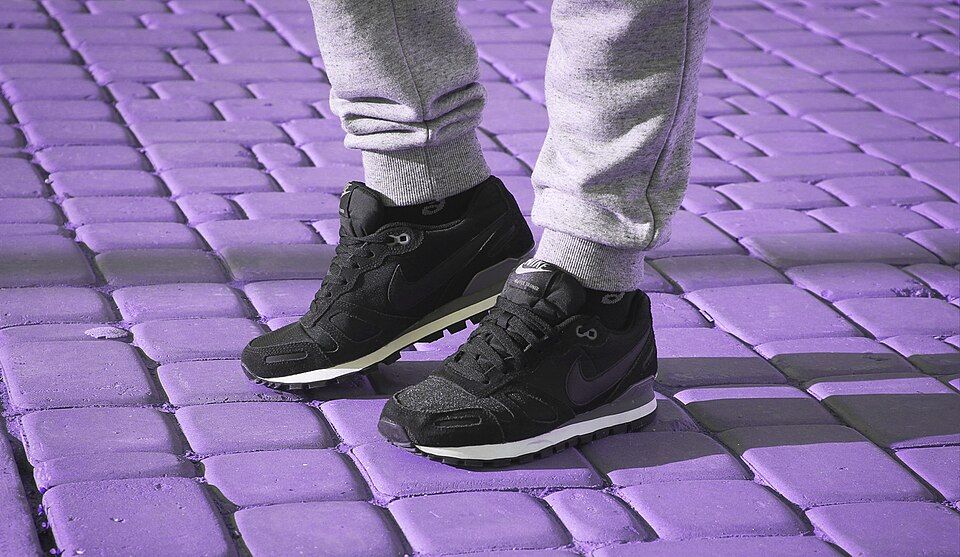
Illustrative clothing and shoes, not items assessed for donation. Photo: Hassan Bouslim, CC0 1.0. Source background artificially colourised; resized and compressed.
A bag of old clothes in Poland can contain three different things: useful clothing someone else can wear, worn-out textiles for separate collection, and a few heavily soiled cleaning materials that need a different route. Treating all three as charity donations, or all three as mixed rubbish, misses the distinction.
Since 1 January 2025, municipalities have had to provide separate collection for textile, clothing and footwear waste, at least through a PSZOK municipal collection point. That does not mean every home needs a new nationally coloured bin, or that every damaged sock requires an identical journey. Current ministry guidance includes limited exceptions and tells residents to check their municipality's rules.
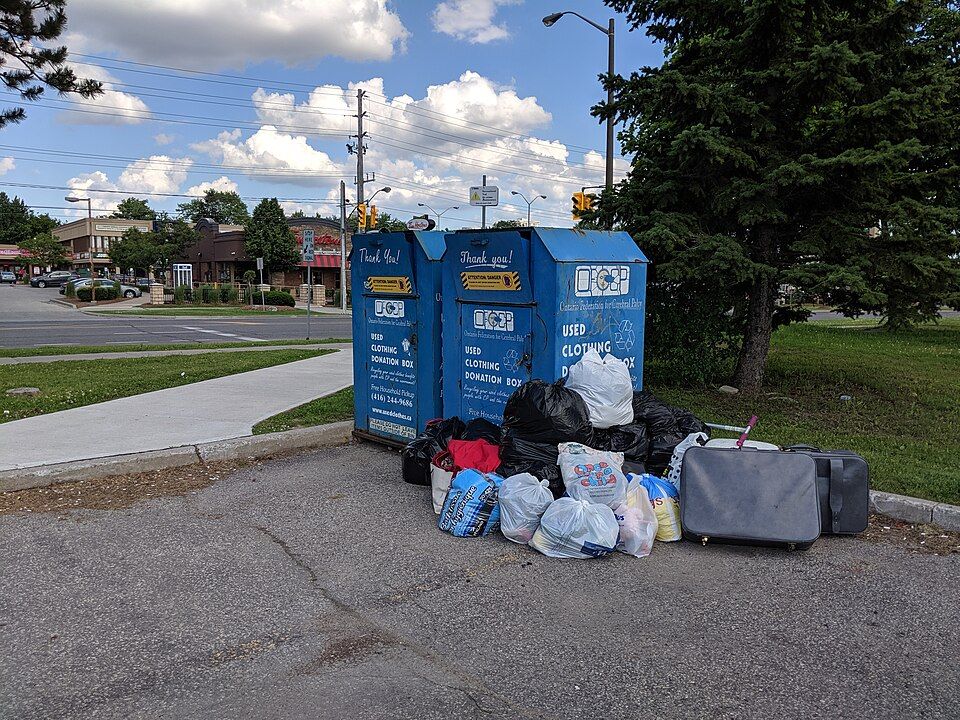
This guide was checked on 3 November 2026. It separates the national baseline from local arrangements and reuse programmes. The photographs are illustrations: the donation boxes pictured are in Toronto, not a recommended Polish drop-off point, and the clothing photograph does not show items assessed for donation.
First sort by condition and purpose
Start with what can still be worn or used. A clean coat that no longer fits, a sound pair of shoes or usable bed linen may be suitable for resale, exchange or an organisation that currently accepts those items. Check the recipient's needs rather than assuming anything made of fabric is a welcome donation.
Next separate ordinary textile waste: clothing or household textiles that are no longer suitable for their original use but belong in the municipality's textile collection system. A hole or worn patch does not automatically turn a whole bag into mixed rubbish. The environment ministry lists a wide range of materials in the textile stream.
Finally identify contamination. A greasy cleaning cloth is not the same as a curtain with a tear, and a rag soaked in paint or hazardous chemicals is not the same as either. Keep that distinction when asking a collection point for advice. Describe the actual item and what it is contaminated with, rather than just saying "old clothes."
What the separate-collection rule covers
The Ministry of Climate and Environment says the separate collection introduced in January 2025 covers textiles, clothing and footwear. Its examples include bedding, curtains, towels, tablecloths, blankets, underwear, socks, gloves, hats, scarves, bags, belts, leather accessories, backpacks, soft toys and carpets.
This is broader than a wardrobe clear-out. When moving home, do not forget worn household textiles simply because the clothes have already been sorted. At the same time, the examples are not proof that every collection vehicle or charity container accepts every item on the list. Size, condition and the operator's rules still matter.
The ministry says each municipality must provide at least a PSZOK route. Additional options, such as mobile collections, scheduled bag collections or other textile points, depend on what the municipality has organised. A suggested good practice on a national information page is not evidence that your street already has that service.
No single national textile-bin colour
The ministry's FAQ says there is no nationally prescribed colour for textile-waste containers. If your municipality offers dedicated containers, read the label and local instructions instead of relying on a colour remembered from another city or country.
The national rule also does not require every household to receive an additional bin. Separate storage at home and delivery to the proper collection route can meet the local arrangement. Ask the municipal waste service or building administrator where residents should take textile waste and whether any collection dates are available.
Do not put a bag beside an ordinary recycling bank merely because you have seen clothing collected near one elsewhere. An unlabelled location or a full container is not a safe assumption about who will collect it. Confirm the intended point and handover method before leaving anything there.
Reuse and charity are different from waste collection
Warsaw's official textile leaflet encourages repair and passing good, undamaged clothing to other people, charities or selected shops. Repair can be as simple as replacing a button, fixing a strap or shortening trousers. It is worth considering before deciding an item is waste.
For donation, check current acceptance categories, condition requirements and how the handover works. An organisation may need particular sizes or seasonal items rather than everything in a cupboard. A collection box's branding does not establish that every deposited garment will be given directly to a person in need.
Pack items according to the receiving programme's instructions. Do not mix rubbish, wet material or chemical contamination into a donation bag. If you are unsure whether an item is useful, ask the organisation. It is better to choose the correct waste route than make volunteers or a collection operator separate unsuitable material later.
For a private sale or giveaway, describe the item's condition honestly. Reuse is a practical option, not a requirement to keep something indefinitely while waiting for a buyer. Once you decide it is waste, use the appropriate municipal route rather than relabelling it as a donation to avoid sorting it.
Worn out does not always mean mixed rubbish
Some early local notices describe the separate-collection rule in absolute terms. For example, Białystok's information about the January 2025 change says damaged clothing and textile furnishings should no longer go in mixed waste. That is a useful general rule, but it should be read alongside the ministry's more detailed current FAQ.
The ministry explains that individual heavily soiled textiles, such as cleaning cloths, sponges or fabrics contaminated with organic substances or grease, may go into mixed waste so they do not contaminate separately collected material. It also says the municipality's cleanliness regulations should explain the local handling of dirty textiles.
This is not permission to dispose of a whole wardrobe in the mixed bin because some items are old. Nor should a generic headline override a more specific local sorting instruction. Ask the municipality about the particular item when the notices appear inconsistent, especially for a large quantity or unusual contamination.
Warsaw's official leaflet gives its own local example: individual damaged clothing or textiles, such as a holey sock or worn cleaning cloth, can go into mixed waste. That is a Warsaw instruction, not a reason to assume every municipality uses exactly the same exception.
Chemical contamination needs a separate answer
The ministry distinguishes ordinary heavy soiling from contamination with chemicals or hazardous substances. Chemically contaminated textiles should go to designated collection points identified by the municipality, such as PSZOK, rather than being treated as an ordinary mixed-waste exception.
Koszalin's official explanation makes the same distinction and mentions textiles contaminated with substances such as oils or paint. Tell the receiving point what is on the fabric before taking it there. Do not wash a hazardous substance away merely to make a rag appear suitable for a textile container.
Do not combine chemically contaminated material with otherwise clean textile waste or donations. Ask for the operator's handling and packaging instructions. This guide does not give a universal transport method because the substance, quantity and receiving point's arrangements can change what is appropriate.
Check the PSZOK before a journey
Use your municipality's current waste-service page, not only a map pin or an old social-media post. Check which residents or households can use the site, what evidence is required, accepted categories, quantity or size limits, and opening hours. Give the operator enough information to distinguish clothing, household textiles, carpets and contaminated material.
Ask whether clothing and other textiles should be packed separately. Warsaw's leaflet tells residents to separate clothing waste from other textile waste before handover. A local instruction like that is easy to miss if you arrive with every item tied into one large sack.
A mobile MPSZOK collection may have tighter limits than a fixed site. Warsaw's leaflet describes mobile acceptance of small quantities and a maximum packed dimension, illustrating why a mobile stop should not be assumed to handle the same load as a permanent point. Check the current schedule and limits rather than relying on the example as a nationwide rule.
For a business clear-out, ask about the business-waste route. Household collection arrangements are not automatic permission to bring stock, commercial cleaning materials or textile waste from a business. A landlord or property manager arranging a large clearance should explain the source and scale of the waste to the receiving operator.
Shops, couriers and collection apps
The ministry lists shop programmes, courier collections and parcel-locker returns among possible ways to support textile reuse or collection. Warsaw's leaflet also describes such options. These are leads to check with the actual operator, not a promise that every shop or parcel locker accepts every bag for free.
Before booking, read the current programme's accepted items, size and weight limits, packing instructions and any charge. Establish whether the programme accepts reusable clothing only or worn textiles as well. A service intended for good-quality items should not become a route for chemically contaminated rags.
Do not assume that putting an unlabelled bag in a parcel locker creates a collection. Use the programme's actual booking or label process. Keep any confirmation needed to track the handover. If you cannot establish the conditions, the municipality's listed collection route is a better next enquiry than guessing how a commercial return scheme works.
Make the next clear-out simpler
Keep useful items separate from waste as you sort, rather than opening every bag again at the receiving point. Note which items need a local answer: a carpet, wet material, cleaning rags or anything with chemical contamination. One precise question to the waste service can settle more than several general internet headlines.
For renters, ask the building administrator about organised collections and tell household members where textile waste should go. A container for reusable clothing and a municipal waste container may look similar while having different acceptance rules. Labels and current operator instructions matter more than appearance.
The sensible goal is to preserve useful clothing, keep contamination out of the clean textile stream and use the correct local route for what remains. Separate collection is the baseline; current ministry and municipal guidance explain the exceptions. Neither "all clothes are donations" nor "all damaged fabric is mixed rubbish" is a reliable shortcut.
Frequently asked questions
Do I need a new textile bin at home?
Not necessarily. The ministry says municipalities must provide at least a PSZOK collection route, while additional containers or collections depend on local arrangements. There is no single national textile-bin colour.
Can one dirty cleaning cloth go in mixed rubbish?
Current ministry guidance allows individual heavily soiled materials such as some cleaning cloths or greasy fabrics in mixed waste, subject to local rules. Chemically or hazardously contaminated textiles need a designated collection route instead.
Can I put damaged clothing in a charity container?
Check the operator's acceptance rules. Reusable donations and textile waste are different streams, and a charity container should not be assumed to accept everything a municipal collection point accepts.
Will a courier or parcel locker take textiles for free?
Only where a current programme offers that service under its conditions. Check accepted items, packing, size limits, booking steps and charges with the operator before handing anything over.
Sources
- Environment Ministry textile collection and currentFAQ; checked 3 November 2026
- Białystok separate-collection introduction; checked 3 November 2026
- Koszalin municipal clarification,16 July 2025; checked 3 November 2026
- Mniszków municipal textile notice,2 April 2026; checked 3 November 2026
- Warsaw official clothing and textile leaflet; checked 3 November 2026
- Golina municipal ministry clarification,9 October 2025; checked 3 November 2026