Used Batteries and Powerbanks in Poland: Where to Take Them
The essentials: Use dedicated battery or electrical-waste collection. Keep sealed batteries inside devices, check the receiving point, and ask for special advice about damaged items.
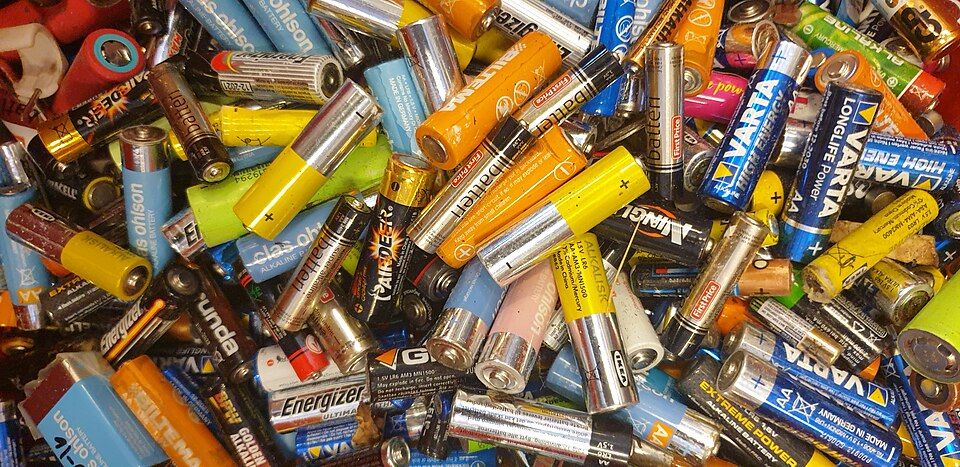
Illustrative used batteries, not safe-storage instructions. Photo: Peter Fiskerstrand, CC BY-SA 4.0. Resized and compressed.
Used batteries do not belong in Poland's mixed rubbish or the yellow bin for metal and plastic packaging. A dead powerbank, disposable vape or pair of wireless earphones can contain a battery even when there is no loose cell to remove. These items need an appropriate battery or electrical-waste collection route.
The practical question is not simply which coloured household bin to choose. It is whether you have a loose portable battery, a complete electrical device or something damaged that needs special handling advice. Choose the receiving point for that actual item, rather than assuming every battery box accepts every battery-powered product.
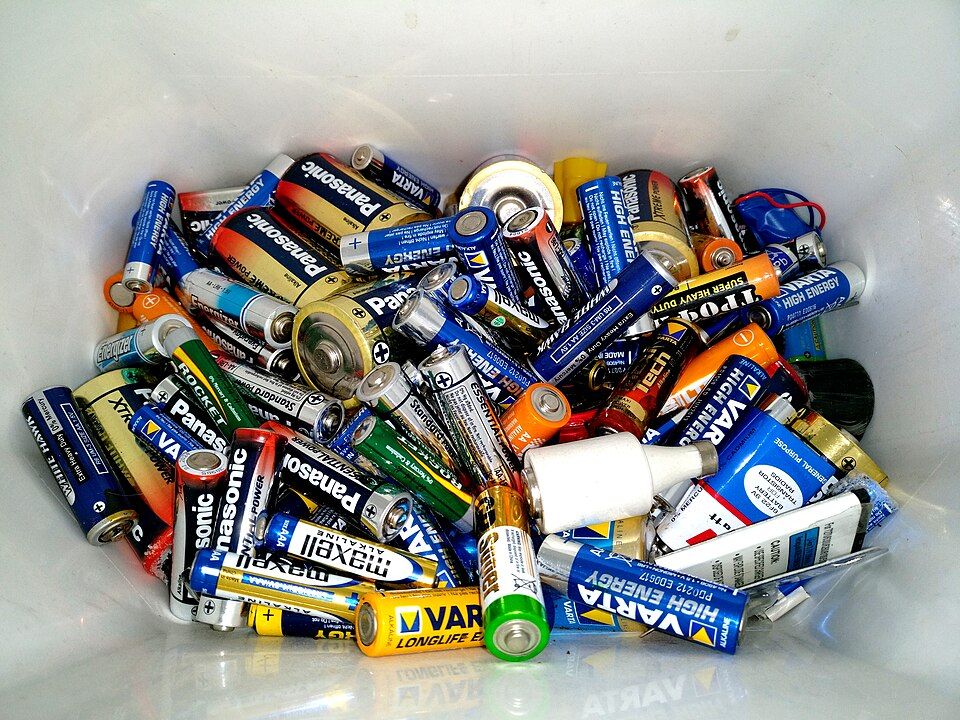
This guide was checked against official Polish sources on 2 November 2026. Collection arrangements vary by municipality and receiving point. The photographs illustrate used batteries and collection; they are not a model for safe storage, packaging or transport, and they do not identify a local drop-off point.
Start with the item, not the bin colour
A loose AA or AAA battery from a remote is different from a sealed powerbank or an electric toothbrush with an internal rechargeable cell. The Ministry of Climate and Environment says batteries are found in everyday devices including wireless headphones, smartwatches and electric toothbrushes. Some cannot easily be removed.
Its advice is direct: do not remove a permanently fitted battery yourself. Take the device to an appropriate collection point for used equipment. Do not dismantle a powerbank, open a vape or cut into a casing to make it fit a battery box. The whole device can be the item that needs collecting.
For an ordinary loose battery, look for a dedicated used-battery container or an appropriate municipal collection point. For a complete device, ask about small electrical waste, called "małe elektroodpady" or "zużyty sprzęt elektryczny i elektroniczny" in Polish. Explain what the item is if the sign is unclear.
Neither mixed rubbish nor the yellow bin
The ministry specifically says not to put batteries and electrical devices into mixed municipal waste, the yellow metal-and-plastic bin or a street litter bin. Metal in the casing does not turn a battery into packaging. Plastic around a powerbank does not make the complete device suitable for the plastics stream.
This is a practical fire risk, not only a sorting technicality. Poznań's State Fire Service reported a refuse-truck battery fire on 9 March 2026. Its account explains that batteries, especially lithium-ion cells, can ignite or explode when damaged or crushed in the waste compartment.
Do not hide a small electrical item inside a bag of packaging or leave it beside the communal bins in the hope that the collection crew will recognise it. A bag can conceal the hazard. Use a recognised collection route and follow its acceptance instructions instead.
Loose household batteries: use a dedicated route
The ministry lists PSZOK municipal collection points, special battery containers in shops, battery wholesalers and businesses that replace used batteries as possible routes. A container in a shop, school or office is useful only when it is actually provided for that waste and available to you.
Read the label before depositing anything. A box for ordinary household batteries is not an invitation to leave a whole phone, a car battery, a large e-bike pack or a damaged powerbank on top of it. If you cannot tell whether your item is accepted, ask the operator rather than guessing from the size of the opening.
For a small routine collection, plan the handover instead of allowing batteries to accumulate indefinitely at home. The ministry advises against keeping unnecessary used equipment and batteries for longer than needed. If the condition of an item worries you, obtain handling advice first rather than carrying it around while searching for a box.
Powerbanks, vapes and sealed devices
A powerbank is an electrical device containing cells, not a handful of loose household batteries. A disposable e-cigarette can also contain a battery even after the liquid is finished. A council safety notice from Kobiór explicitly identifies powerbanks, old phones and e-cigarettes as items for PSZOK or an appropriate equipment-return route.
Keep an internal battery in its device if it is not designed for easy removal. Tell the collection point what you have: "zużyty powerbank", "zużyty e-papieros" or "telefon z baterią". Ask whether the complete item is accepted and whether a separate handover is required.
Do not treat the word "disposable" as permission to put a vape into general rubbish. Likewise, a device that no longer switches on can still contain a battery. The waste decision follows what the device contains and the receiving point's rules, not whether the screen or indicator light works.
What shops must take back
The Chief Inspectorate of Environmental Protection (GIOŚ) explains a no-purchase return rule for very small household electrical waste at large equipment retailers. The electrical-and-electronic sales area must exceed 400 square metres, and none of the returned item's external dimensions may exceed 25 centimetres.
Those details matter. The threshold concerns the area devoted to selling electrical and electronic equipment, not simply the total floor space of any supermarket. A small device is not automatically eligible for no-purchase return at every shop. Ask the retailer where its electrical-waste handover point is and what conditions apply to your item.
GIOŚ also describes return when buying replacement equipment. Do not interpret a purchase-linked route as permission to bring any unrelated electrical waste to any till with any purchase. Ask the retailer which replacement-linked conditions apply. For a specific online order or home delivery, check the seller's collection instructions before the delivery day.
A voluntary collection programme may offer more than the minimum rules, but that is a fact to check with the operator. Do not make a special journey on the assumption that a familiar shop name guarantees a collection box, an open service desk or acceptance of a damaged item.
Using a PSZOK without a wasted trip
PSZOK means "Punkt Selektywnego Zbierania Odpadów Komunalnych", a selective municipal waste collection point. It is a useful route for household waste that does not belong in the normal bin system, but it is not a single national service with identical opening hours and acceptance rules.
Find your municipality's current waste page and check the particular site. Look for the accepted waste list, opening hours, resident or household eligibility, quantity limits and any documents or declaration required. Explain whether the item is a loose battery or complete equipment, and mention damage before arriving.
Warsaw's official 19115 service distinguishes fixed PSZOK points from mobile MPSZOK collections. That is a useful example of why the name alone is not enough: a mobile vehicle has a schedule and its accepted categories can differ from a permanent site. Do not carry a bag of devices to an old stopping place without checking the current instructions.
For a business, a landlord clearing commercial premises or a large quantity of equipment, ask about the appropriate business-waste route. A household collection point should not be assumed to accept waste from commercial activity simply because the person bringing it also lives locally.
Damaged, swollen, hot or leaking items
A damaged battery or device is not an ordinary drop-off errand. Do not puncture, crush, open, deliberately discharge or attempt to repair it to prepare it for recycling. Do not charge a visibly damaged device just to test whether it still works.
Contact an appropriate collection operator and describe the condition before transport. Ask specifically whether it accepts damaged lithium batteries or equipment and what safe handover arrangements it requires. A routine unattended box may not be the right destination, even if it accepts undamaged batteries of a similar size.
If there is smoke, fire or an immediate threat to people, move away from danger and call 112. Follow emergency-service instructions. Do not delay an emergency call to search for recycling rules, and do not attempt to carry a burning or smoking device through a building to reach a collection container.
This guide does not prescribe a homemade packaging or firefighting method. Battery chemistry, damage and the receiving operator's requirements matter. An online photograph of a battery collection box is not evidence that a damaged item can safely be stored or transported in the same way.
Before handing over a phone or small computer
Waste sorting and personal-data protection are separate tasks. If a device is safe to use, follow its manufacturer's instructions for backing up what you need, removing accounts and erasing personal data before handover. Do not assume the waste operator will perform that work for you.
If it is damaged, do not recharge or dismantle it simply to complete a reset. Tell the receiving operator that data may remain and ask what handling options exist. Keep any data-destruction service separate from a basic recycling promise; a container labelled for electrical waste is not a certificate of secure erasure.
Check for loose memory cards or removable accessories only where doing so is safe and consistent with the device's instructions. Keep the complete device together when an internal battery cannot be removed easily. The priority is a safe, appropriate handover rather than turning a sealed product into separate waste fractions yourself.
A simple household plan
Choose a regular collection route for ordinary batteries and a separate route for whole electrical devices. Save the municipality's current PSZOK page and check the actual opening times before leaving. Ask the building administrator about any organised collection, but do not assume the communal rubbish room has one.
Before a handover, identify the item, its condition and the receiving point's acceptance rules. If a shop return is being used, confirm whether it is a qualifying no-purchase return or linked to buying replacement equipment. For a damaged item, arrange advice first.
The useful habit is to stop treating small size as low risk. A button cell, disposable vape or compact powerbank can disappear into a bag of rubbish, but that does not make it suitable for the municipal waste stream. Giving it to the correct collection route protects the people who handle the next stage.
Frequently asked questions
Can batteries go in Poland's yellow recycling bin?
No. The environment ministry says batteries and electrical equipment must not go into mixed waste, the yellow metal-and-plastic bin or street litter bins.
Should I remove the battery from a disposable vape or powerbank?
Do not dismantle a sealed device to remove an internal battery. The ministry says permanently fitted batteries should not be removed by the user; use an appropriate collection route for the complete equipment.
Will every electronics shop accept a small device without a purchase?
No. GIOŚ describes the no-purchase rule for retailers with more than 400 square metres of electrical-and-electronic sales area, for household equipment with no external dimension exceeding 25 centimetres. Check the actual retailer's instructions.
Can I leave a swollen battery in a normal collection box?
Do not assume an ordinary unattended box is appropriate. Contact the operator, explain the damage and ask for its accepted handover procedure. Smoke, fire or an immediate threat calls for emergency help, not a recycling trip.
Sources
- Environment Ministry used batteries guidance; checked 2 November 2026
- Poznań State Fire Service refuse-truck battery fire,9 March 2026; checked 2 November 2026
- Kobiór municipal electrical-waste safety notice,5 June 2025; checked 2 November 2026
- GIOŚ electrical-waste collection and retail return rules; checked 2 November 2026
- Warsaw19115PSZOK and mobile collection rules; checked 2 November 2026
- Chełm municipal battery-fire warning; checked 2 November 2026
- Government112emergency reporting; checked 2 November 2026