Break-in at Your Polish Home: Police, Evidence and Insurance
The essentials: Stay safe, contact police, and avoid disturbing evidence. Then handle bank cards, documents, secure access, the landlord and insurance as separate tasks.
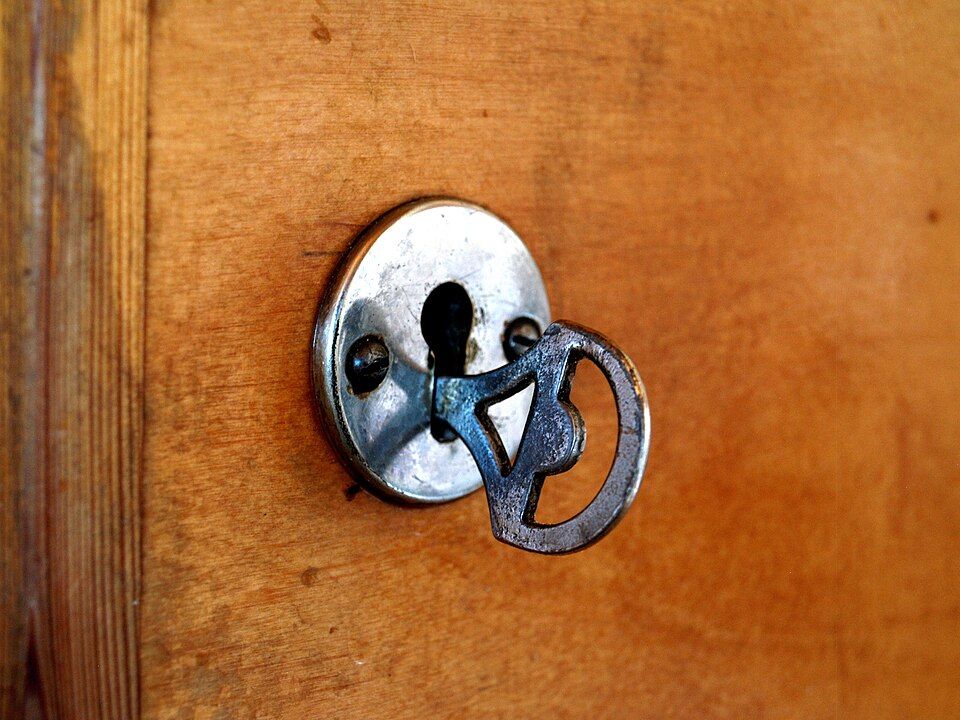
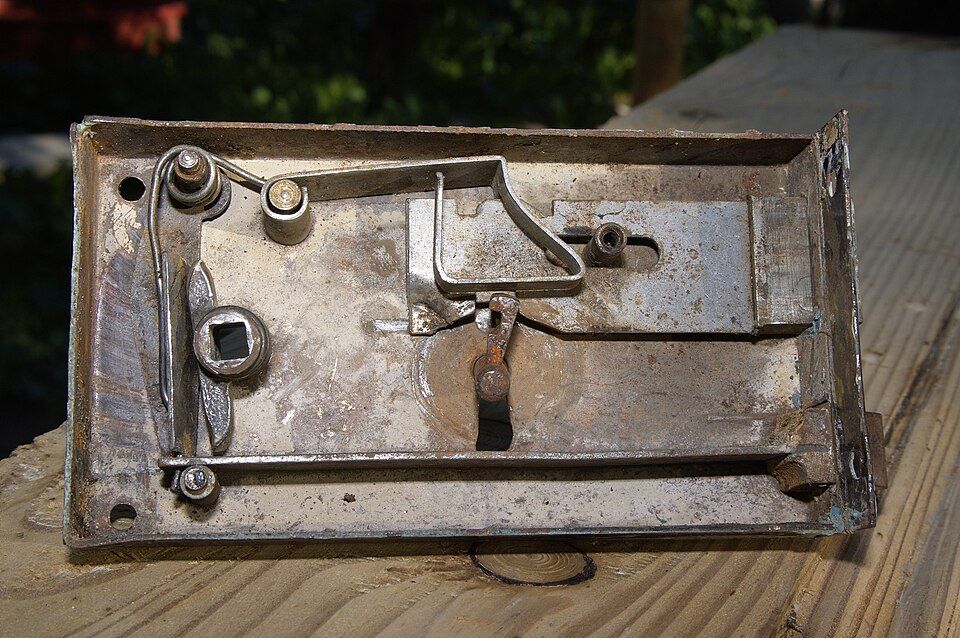
Illustrative lock photo: Santeri Viinamäki, CC BY-SA 4.0. Resized and compressed; no endorsement implied.
A broken lock and an open cupboard can turn an ordinary return home into a frightening evening. In Poland, the useful order is safety, police, evidence, then repairs and the separate tasks involving your bank, documents, landlord and insurer. You do not need a complete list of stolen belongings before asking for help.
This guide was checked against Polish official sources on 2 November 2026. It covers a suspected break-in at a home, not a dispute over property with a former partner or landlord. Those situations can need different legal advice. The photographs are illustrations of locks, not pictures of a crime or security recommendations.
If you discover the break-in now
Do not search the flat for an intruder or confront anyone. If someone may still be inside, or there is an immediate threat, move somewhere safe and call 112. Give the street, building number, flat number and town. Explain whether anyone is injured and what makes you think a break-in has happened. Follow the operator's directions rather than going back to collect documents.
Polish Police advice on discovering a burglary says to notify police and avoid touching objects or destroying traces. A damaged door, disturbed room or broken window is enough reason to stop before walking around. Keep other household members, neighbours and pets away from the affected area where possible. Do not put yourself at risk to guard it.
If you are unsure whether the home is safe, ask police before entering. Photographs are useful later, but they do not justify stepping over broken glass, touching a damaged electrical installation or approaching an intruder. Tell the operator about any separate hazard you can see from a safe position.
Preserve the scene before tidying up
The natural response is to close drawers, check every cupboard and clean up. Wait for police instructions. Handles, broken locks, windows and items left behind may be relevant to their work. Do not assume that something is unimportant because it looks like ordinary rubbish.
When police say it is appropriate, record the overall scene and the damage without rearranging things. Save original photographs rather than only edited copies. Write down when you left, when you returned and when the home was last known to be secure. Separate what you saw from what you suspect: an open door is an observation; a theory about how it was opened is not yet a finding.
If neighbours or the building have cameras, tell police promptly where the cameras are. Ask the administrator to preserve relevant recordings rather than demanding a copy of footage showing other residents. Make a note of the approximate time window and the camera location. Do not publish footage or accusations online as a substitute for giving information to investigators.
Make a clear police report
The government's crime-reporting service says you can report a crime at any police unit. If it is not the unit responsible for the place where it happened, the report is passed on. Reporting is free. An urgent call and a formal statement are different stages, so ask what further information or visit is needed after officers attend.
Prepare a short chronology and a contact number where you can be reached. Bring identification if you have it, but explain if it was stolen. Include the address, possible time window, damage you observed and information about missing belongings. Give witness details you actually know. Avoid filling gaps with guesses simply because a form asks for a description.
The official service recommends documents that identify stolen property, including serial numbers. Receipts, photographs, purchase emails and device records can help build that list. Ask how to add items discovered later and request the reference or confirmation you will need for your insurer. Keep the name of the unit and the date of each contact in one place.
If you do not speak enough Polish
Say so at the start. A useful sentence is: "Nie mówię wystarczająco po polsku. Potrzebuję tłumacza języka angielskiego." It means: "I do not speak enough Polish. I need an English interpreter." Replace English with the language you can use reliably if necessary.
The Commissioner for Human Rights published the Police commander's explanation that a victim questioned as a witness who does not speak Polish has a right to an interpreter under the criminal procedure rules. The person being questioned does not bear the interpreter's cost. That is more specific than a promise that every station has an English-speaking officer available immediately.
The same source acknowledges practical difficulties in finding interpreters, especially for less common languages. Ask the officer how interpretation will be arranged. The government tells people to read the written record carefully before signing. Ask for any error to be corrected and for anything you do not understand to be explained; do not treat an unfamiliar Polish document as a routine receipt.
Build one missing-property list
Use a simple table with the item, owner, brand or model, serial number, approximate purchase date and evidence available. Put "not yet confirmed" next to uncertain entries. Check with other household members before reporting their belongings as missing. Keep the list editable because the first assessment after a shock is rarely complete.
For a laptop or telephone, look for the serial number in purchase records or the manufacturer's account from another trusted device. For jewellery or unusual objects, existing photographs and distinctive details may help. Do not invent exact values from memory. Record what you can support and keep replacement estimates separate from original purchase prices.
Police reporting and insurance valuation have different purposes. The Financial Ombudsman's January 2026 housing-insurance guide explains that contents can have their own insured sum and that cash, valuables or belongings in cellars can have separate limits. A detailed list does not guarantee reimbursement, but it makes both conversations less confused.
Stolen cards, devices and documents need separate action
Do not assume a police report blocks a bank card. Contact the issuer through its official app or verified contact channel. The Polish Banks Association's card-blocking system, +48 828 828 828, routes callers to participating issuers. Its explanation says one call handles one bank; for another bank, call again. The service itself is free, but your telecom provider may charge for the call.
If a phone or computer was stolen, use another trusted device and the provider's official lost-device and account-security instructions. Contact your mobile operator and bank if the stolen phone could receive verification messages or access banking. Do not follow unsolicited "device found" links or give passwords to someone claiming to return it. Tell police about useful location information rather than attempting recovery yourself.
A foreign passport needs the issuing country's embassy or consulate, not an assumption that Poland's online passport-loss service covers every nationality. Ask your own authority what reporting and replacement documents it requires. Keep travel plans separate until the airline, border rules and issuing authority establish what you can use.
For a Polish residence card, the Łódź Voivodeship's official instructions state that loss must be notified to the issuing voivode within three days and the replacement application made within fourteen days of the reason for replacement arising. These are separate steps from reporting a burglary to police. Use your issuing office's instructions and forms. Do not assume a police reference replaces them or that a loss certificate is a travel document.
Tell the landlord and arrange secure access
If you rent, notify the landlord promptly and separately tell the building administrator about damage to shared entrances or common areas. Explain what police have said about access and evidence. Ask who will arrange temporary security, how replacement keys will be handled and whether the building has recordings that should be preserved.
Before replacing a damaged lock, coordinate with police about retaining it and documenting the damage. Obtain a written price and an itemised invoice from the locksmith. Record who authorised the work and keep photographs once it is safe to take them. Do not dispose of parts that investigators or an insurer may need without checking.
This is not a rule that the tenant or landlord must always pay. Responsibility for the door, contents and repairs depends on the circumstances, agreement and applicable law. Keep urgent security decisions separate from an argument about final liability. If the flat cannot be secured or occupied safely, discuss a temporary arrangement without assuming an insurer must fund it.
Contact the insurer without assuming cover
Find the actual policy and its general terms, called OWU in Polish. Check whether stolen contents, burglary damage and any emergency assistance are included, who is insured, and what reporting steps and time limits apply. The Financial Ombudsman warns that home contents and theft risks are not automatically included merely because a property is insured.
Tell the insurer what is known, what remains uncertain and what steps police have taken. Ask which evidence it needs before permanent repairs, how to submit later additions and whether assistance is available under this policy. Keep the claim number, submitted documents and written replies. Ask before assuming a hotel, locksmith or upgraded door will be reimbursed.
A landlord's building insurance is not proof that your own laptop or jewellery is covered. Likewise, a policy's headline insured sum is not necessarily the limit for every category of property. Ask for the applicable wording and calculation if the proposed payment differs from your claim. Do not promise yourself a payout on the strength of a general article.
A manageable first-day checklist
After the immediate danger is dealt with, work through the separate tasks: police contact and reference, evidence, missing-property list, bank and device protection, document replacement, secure access, landlord notification and insurance notification. Divide these between trusted household members if that helps, while keeping one shared chronology.
There is no need to solve every loss before sleeping. What matters first is that people are safe, the home is not left unsecured, urgent access risks are addressed and deadlines are not silently missed. Preserve records and ask each organisation what its next step requires rather than assuming one report has notified them all.
Frequently asked questions
Should I clean the flat before the police arrive?
No. Police advice is to avoid touching items or destroying traces. Stay safe and follow officers' instructions about entering, photographing and tidying the scene.
Can I report a burglary if I do not speak Polish?
Yes. Explain your language needs immediately. Official Police guidance published by the Commissioner for Human Rights confirms an interpreter right when a victim who does not speak Polish is questioned as a witness, without charging that person for interpretation.
Does reporting to police cancel stolen bank cards or replace my residence card?
No. Contact your bank separately. Residence-card loss notification and replacement are separate administrative steps with their own deadlines.
Will the landlord's insurance pay for my belongings?
Do not assume so. Building cover, home contents and burglary risks can be separate. Check the actual policy, insured person, limits and exclusions with the insurer.
Sources
- Polish Police burglary response,7 June 2019; checked 2 November 2026
- Government crime-reporting procedure; checked 2 November 2026
- Commissioner for Human Rights and Police interpreter explanation,2024; checked 2 November 2026
- Financial Ombudsman housing-insurance guide,28 January 2026; checked 2 November 2026
- Financial Ombudsman full housing-insurance guide,January 2026; checked 2 November 2026
- Polish Banks Association card-blocking system; checked 2 November 2026
- Łódź Voivodeship residence-card loss and replacement; checked 2 November 2026