Self-Storage in Poland: Contracts, Insurance and Access
The essentials: Inspect the unit and access route, get the complete cost and rental terms, confirm accepted items and insurance, and plan the notice and handover process before signing. Customer access hours, staff availability and contract end dates are separate checks.
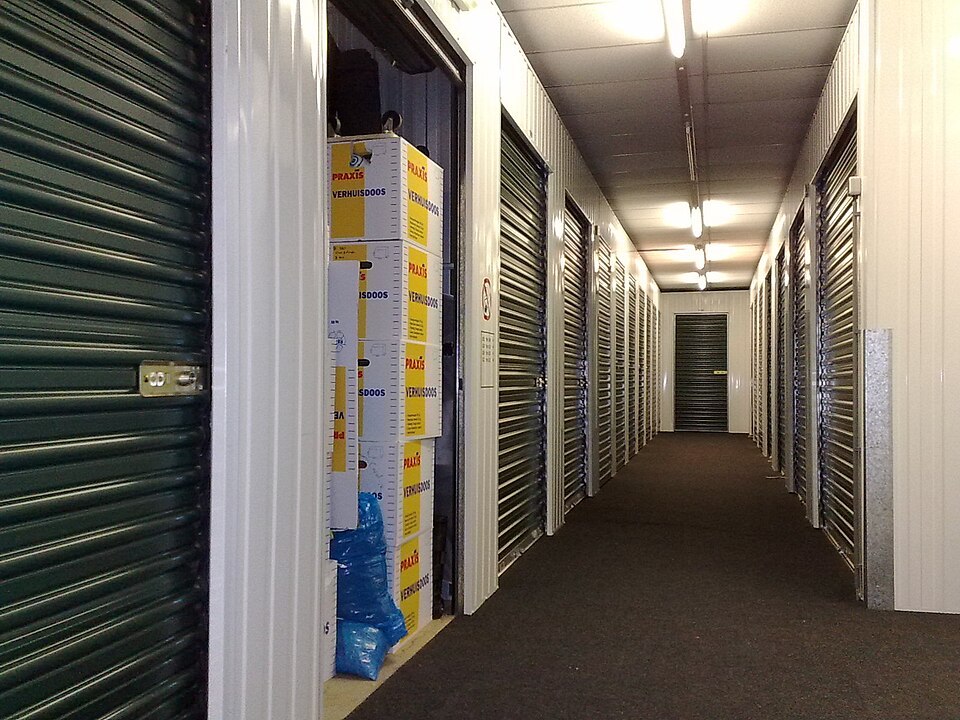
Illustrative historical self-storage corridor, December 2008, not a Polish branch or current facility guide. Hankwang / Wikimedia Commons, CC BY-SA 3.0. Resized, same licence.
Self-storage can bridge the gap between two homes, hold furniture during renovation or keep boxes out of a temporary apartment. For an expat, the main risk is treating it like a luggage locker: pay once, collect whenever you want and assume the rental ends when the room is empty. A storage contract can work differently.
Search for magazyn samoobsługowy, boks magazynowy or self-storage. This guide uses operator and official consumer pages checked on 27 October 2026. It is a checklist for choosing and ending a rental, not a price ranking or a recommendation to sign a particular agreement. Confirm the exact branch, unit and documents before committing.
Choose the storage model, not just the postcode
Check whether you are renting an indoor room, an outdoor container or another arrangement. Ask how you reach the unit from the unloading point and whether lifts, corridors, stairs or door widths limit access. A quoted floor area does not tell you whether a sofa fits through the entrance or around a corner.
Decide how often you need to retrieve things. A unit near your home may be more useful than a cheaper option that requires a vehicle for every visit. Conversely, if you are storing a whole apartment between moves, a practical unloading route may matter more than being close to a tram stop. Compare the actual journeys and handling work, not the map pin alone.
Do not assume a self-storage room is staffed warehousing, a moving service or a place where deliveries are automatically accepted. Stokado describes courier collection during administration hours, illustrating that an extra service can have a different timetable from customer access. Confirm any unloading help, delivery acceptance or transport separately, including its charge and limits.
Make an inventory before estimating size
List the items, measure the largest pieces and note what can safely be disassembled. Ask for the unit's usable dimensions, door opening and any relevant height or loading restrictions. A room's square metres are only one part of the fit. If access during storage matters, include space to reach the boxes you will need first.
Tell the operator about awkward items instead of describing everything as 'household goods'. A bicycle, wardrobe, mattress or appliance can change the practical unit choice. Ask to inspect the unit or see sufficiently clear dimensions and photographs before paying. A sizing guide is an estimate, not a guarantee that your particular furniture will fit.
Keep essential documents, medication, everyday keys and anything needed for the move itself accessible elsewhere. A passport buried behind furniture is still difficult to retrieve even at a facility advertised as open around the clock. Store with a plan for the next collection, not only for getting the final box through the door today.
Ask about conditions for your actual belongings
Operator pages may describe temperature and humidity control. Ask what conditions apply to the actual unit type and location, especially for items sensitive to damp, heat or cold. A general building description is not a measured environmental guarantee for every container or room. If an item has specific storage requirements, check those against written provider information.
Inspect the unit's condition and record existing marks or damage at handover. Photograph the empty room where permitted and keep the unit number with the contract. Ask how to report water, pests, lock faults or other problems, and what response is available outside office hours. Do not equate a clean-looking corridor with an insurance promise.
Prepare items according to their materials and the operator's packing rules. Ask about shelves, floor clearance, stacking and permitted packing materials rather than improvising a heavy tower of mixed boxes. Label boxes with contents you can identify privately and keep a simple plan. Detailed photographs and an inventory can also help if you later need to describe missing or damaged property.
Check prohibited items before loading the van
Read the actual prohibited-items list. Less Mess's safety FAQ, checked on 27 October 2026, lists restrictions including lithium-ion batteries, plants, animals, explosive or flammable materials, toxic or corrosive substances, perishable goods and uninsured items. Treat this as that operator's published policy, not an exhaustive national legal list or a rule automatically shared by competitors.
Battery restrictions are worth asking about explicitly if you have an e-bike, power tool, power bank or another item with an integrated battery. Explain the item and ask for written confirmation of what is accepted. Do not assume 'electronics allowed' overrides a more specific battery rule, and do not hide a restricted component inside an ordinary box.
For a vehicle, fuel-containing equipment or another unusual item, contact the branch before transport and follow its specific acceptance instructions. This article does not give fuel-handling or hazardous-material storage instructions. A suitable-looking empty space is not permission to use it for every purpose. Less Mess's published terms also state that its unit is not for accommodating people.
Compare the whole cost and billing period
Request a written total for the unit and rental period you actually need. Check tax, insurance, locks, access devices, deposits, administration charges and any transport or packing extras. Ask what is refundable, when it is returned and what can be deducted. A promotional starting rate does not answer what you owe after the offer ends.
Check the billing cycle rather than translating 'monthly' into an assumed calendar-month arrangement. The Less Mess terms available at the checked URL describe a cycle linked to the rental start date and payment in advance. Ask the provider to show your first period, next payment date and the cost if collection is delayed. The signed agreement may contain details that a general FAQ does not.
Find out whether the contract is fixed-term or continues until notice, how extensions work and when rates can change. Ask for the ordinary rate after a discount and any minimum commitment. This guide does not quote a national storage price: location, unit size, contract and additional charges can change the comparison substantially.
Insurance is a separate question from security
CCTV, alarms and access controls do not explain what happens financially if property is damaged or stolen. Less Mess's safety FAQ says insurance is obligatory. Stokado's main page also says stored items must be insured, through its offered policy or a policy provided by the customer. Check the actual contractual requirements rather than assuming insurance is optional or automatically included in rent.
Read the policy wording, covered events, exclusions, excess and value limits before choosing cover. Ask how value should be calculated and what evidence a claim would require. Do not assume every item is covered simply because you declared one total. Ask specifically about high-value belongings, documents, business stock and anything the operator or insurer treats differently.
If using your own policy, get confirmation that it covers this storage address, use and rental period and meets the provider's requirements. An ordinary home policy should not be presumed to extend to a commercial storage unit. Keep the accepted cover and payment evidence available, and check continuity if the rental lasts longer than planned.
Separate access hours from staff availability
Less Mess's FAQ advertises customer access around the clock using a personal code, with a padlock or app-operated electronic lock for the unit. Confirm the arrangements for your actual booking. Ask when access becomes active, whether identification or payment checks must be completed first and how vehicle access works outside reception hours.
For app-based entry, check phone compatibility, connectivity needs and the approved fallback if your phone fails. For a physical lock, ask what type is required and who supplies it. Protect access codes and keys. Less Mess's terms make customers responsible for code security and set out reporting routes for loss or compromise; read the instructions before an incident, not afterwards.
If a mover or friend needs to collect things, arrange authorization with the provider rather than casually sharing credentials. Confirm who can enter, what identification is needed and whether you must be present. Keep unit numbers and codes out of public messages. A marketing statement that only you control access is not a reason to skip the actual authorization rules.
Plan the end date when you sign
Ask how notice must be served and request a worked example using your proposed move-out date. The Less Mess terms checked here say ordinary notice takes effect at the end of the next billing period after the current period in which notice was served. That is not a universal storage rule, and 'flexible rental' should not be read as 'stop paying the day I empty the unit'.
Confirm the final collection deadline, cleaning requirements, return of keys or devices, inspection and written account closure. Less Mess's published terms include obligations to empty and clean the unit and potential charges when items remain. These are descriptions of the provider's terms, not a judgment that every charge or clause is enforceable in every consumer case.
Keep the notice, acknowledgement, final invoice and move-out evidence. If a charge or damage dispute develops, identify the business and explain the facts and requested outcome in writing. Gov.pl directs private consumers dealing with businesses to consumer advisers, local ombudsmen and Trade Inspection. Ask for advice on a disputed clause rather than assuming that emptying the room, cancelling a payment or abandoning property ends every obligation.
Frequently asked questions
What is self-storage called in Polish?
Search for magazyn samoobsługowy or boks magazynowy. Check whether the offer is an indoor room, outdoor container or another storage arrangement.
Does moving everything out end the rental?
Not necessarily. Follow the actual notice and handover conditions and obtain written closure. Billing and notice periods can continue beyond the date you remove your property.
Is insurance included in the rent?
Ask. Some providers require insurance, but the cost, accepted personal policy and coverage terms need separate checking. Security systems are not an insurance policy.
Can I store an e-bike or power bank?
Check the specific battery and item policy before bringing it. Less Mess lists lithium-ion batteries among its restrictions. Do not assume another general category overrides a specific prohibition.
Does 24-hour access mean staff are always present?
No. Confirm customer entry, vehicle access, reception hours and emergency support separately, including any app or identification requirements.
Sources
- Less Mess self-storage FAQ, checked 27 October 2026
- Less Mess safety, insurance and prohibited items, checked 27 October 2026
- Less Mess published general rental terms, version date not shown, checked 27 October 2026
- Stokado storage and insurance requirements, checked 27 October 2026
- Stokado insurance overview, checked 27 October 2026
- Gov.pl consumer help, updated 13 January 2026, checked 27 October 2026