Smell gas in Poland? 992, safe reporting and rental follow-up
The essentials: Leave and call gas emergency 992 from safety. Call 112 for fire, injury, immediate danger or suspected poisoning. Do not use switches, phones or flames in the affected area. Follow emergency-service instructions and notify the building administrator.
If you suspect a gas leak now, leave the affected place and call for help from a safe location. Poland's gas emergency number is 992. Call 112 for an emergency involving immediate danger to people, fire, injury or suspected poisoning. Do not stay inside reading this guide, investigating the smell or waiting for your landlord to reply.
Do not operate light switches or other electrical equipment in the affected area, including switching things off. Do not smoke, light a match or use a phone there. The Polish fire service explicitly says to make the call after leaving. Follow the emergency operator's instructions and do not return until the responsible services say it is safe.
This guide was checked on 27 October 2026, Poland time. It explains the reporting route and sensible preparation for foreign residents. It is not instructions for repairing a boiler, testing pipework or deciding that a building is safe. The main gas-leak guidance below concerns a suspected supply or installation leak; tell the operator if bottled gas is involved rather than assuming every system is the same.
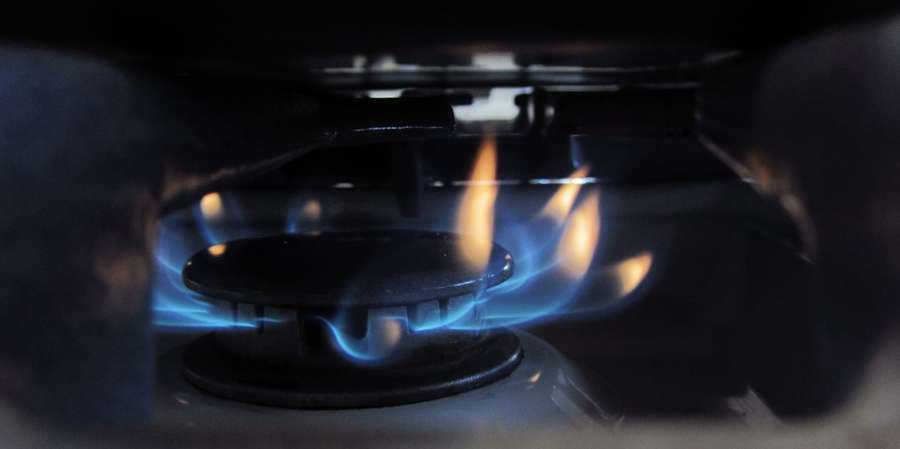
Cover photograph: gas-stove burner, Lisafern / Lisa Redfern, Wikimedia Commons, CC0 1.0. Resized. Illustrative only: never use a flame to look for a gas leak.
Know what 992 is for
The government's emergency-number information identifies 992 as pogotowie gazowe, the gas emergency service. Polska Spółka Gazownictwa, the gas distribution company, says to use it for an emergency or suspected damage to the gas network. It is not a general customer-service number for arranging a connection, discussing an agreement or asking about a routine bill.
You do not need to establish which pipe or appliance is responsible before reporting a suspected leak. Explain what you noticed and where. A smell in a communal corridor, near a meter cupboard or outside a building is still something to report, not a reason to assume another resident has already called.
If people are injured, a fire has started or there is another immediate threat requiring rescue services, call 112 from a safe place. Say that gas may be involved. Do not lose time debating which service is most convenient or searching for a landlord's preferred contractor while people remain in danger. The operator can ask the questions needed to direct the response.
Avoid sparks and leave
The Turek State Fire Service's guidance says not to switch lights or electrical devices on or off, not to use matches or lighters, not to smoke and not to use a phone in the threatened area. "Off" is not a safe exception to the warning about electrical switches. Do not start unplugging appliances as though this were an ordinary departure from home.
PSG's published checklist includes closing the valve at the meter, opening doors and windows, leaving with other occupants and calling 992. These are not instructions to remain in danger looking for an unfamiliar valve, force a mechanism or enter another affected room. If an action cannot be done safely and immediately, leave and tell the emergency operator what you were unable to do.
Do not attempt to identify a leak with a flame, dismantle an appliance or tighten a fitting. The fire service says repairs must be left to authorised people. A video showing how to fix a similar cooker cannot establish that your installation has the same fault or that approaching it is safe.
Warn other people without operating electrical equipment in the affected place. Follow the evacuation and access instructions given by the emergency services. Do not go back for photographs, a passport, a laptop or a better view of the meter. Give responders information from a safe position rather than creating another person who needs help.
What to say when you call
Start with the location and the suspected hazard. Useful words are "Czuję gaz", meaning "I can smell gas", and "Podejrzenie wycieku gazu", meaning "suspected gas leak". If you need English, say so at the start. Do not delay the call while trying to make a perfect translation or find someone who speaks Polish.
Have the town, street, building number, entrance and flat number ready if known. Explain where you noticed the smell: inside the flat, on the staircase, by a meter or outdoors. Say whether people are still inside, whether anyone is unwell and whether there is fire or visible damage. Distinguish what you personally observed from what another person told you.
The national safety guide advises calling from a safe place, speaking clearly, giving the exact address and describing what happened and whether life, health or property is threatened. Wait for the operator to confirm the report and follow their instructions. If you do not know the address, describe the location and nearby identifying features instead of abandoning the report.
A short written address saved on your phone can help before an emergency occurs. But do not stop in the affected area to unlock apps, translate a message or film the suspected leak. Make the call after getting out. Sharing a social-media post is not a substitute for an emergency report.
Do not dismiss a stronger smell as a test
PSG describes periodic przewonienie, an increase in the odorant added to the gas supply to make possible leaks easier to detect. Its guidance still tells people who smell escaping gas to notify the gas emergency service on 992. A notice about an odorisation exercise is not permission to ignore a smell in your kitchen or corridor.
The company explains that a smell can indicate a network or installation leak or a problem with gas equipment. You cannot distinguish those possibilities safely just by deciding how strong or familiar the smell seems. Report it and let the qualified services assess it.
Similarly, do not use an earlier inspection certificate, a recently serviced boiler or a neighbour's reassurance as proof that a new suspected leak is harmless. Those facts may be useful background for responders. They do not replace an assessment of the present situation.
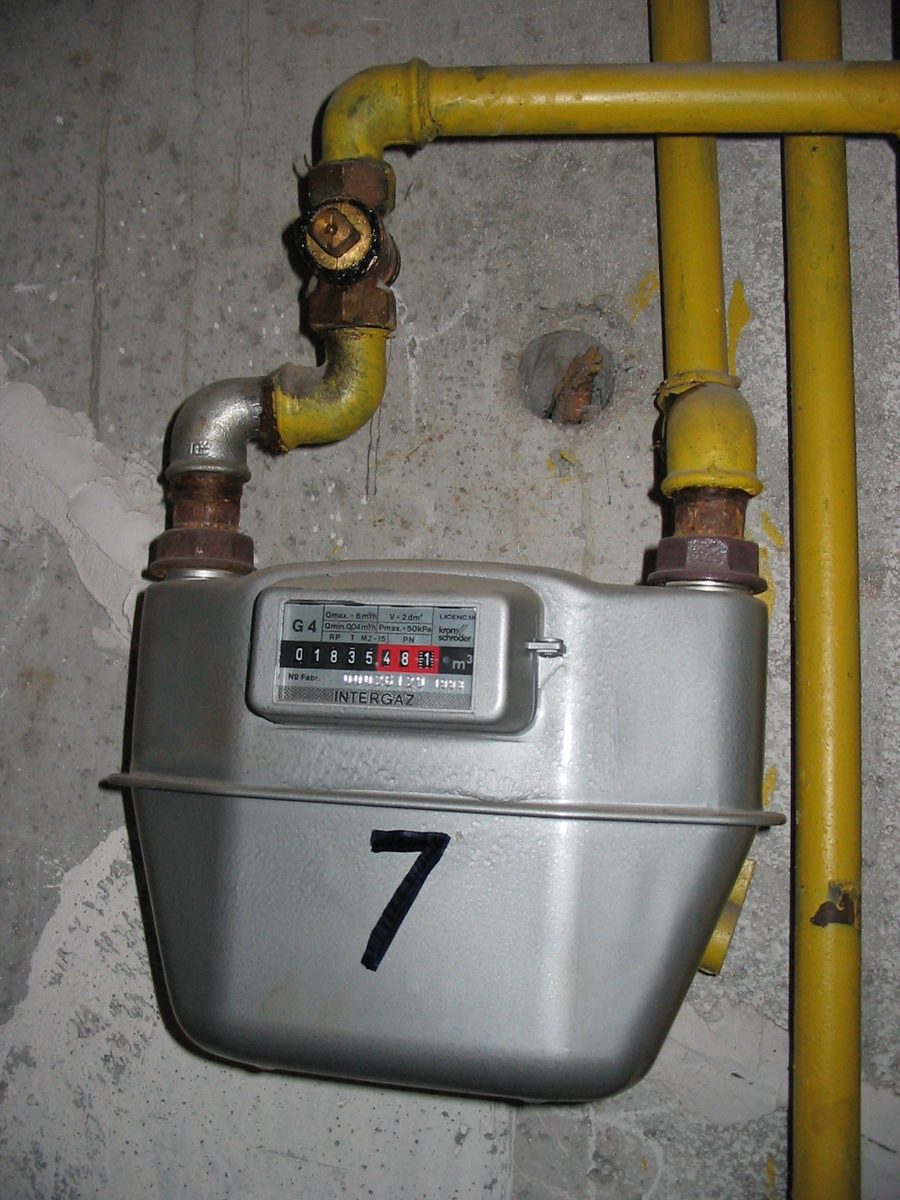
Photograph: Piotrm00, Wikimedia Commons, released by the author into the public domain. Resized. Historical illustrative installation, not a model of compliance or a valve-operation diagram.
Tell the landlord after making the emergency report
The fire service advises notifying the building administrator as well as the gas emergency service. For a rented flat, keep the landlord's and building manager's contact details available, including any out-of-hours number. They may need to arrange access, qualified work or communication with other residents after the immediate hazard has been reported.
Do not wait for their approval before calling about a suspected leak. An unanswered message or a request to "see whether it goes away" should not leave you in the threatened area. Tell the emergency operator what is happening and follow the operator's directions.
Once safe, record the time of the report and the instructions given. Ask the owner or manager who will coordinate any required inspection and what written confirmation is needed before the equipment can be used again. Do not reopen a supply or restart an appliance on your own after an emergency shut-off simply because the smell has disappeared.
PSG distinguishes work on its network from problems with installations and appliances that owners or building administrators must address. Calling 992 does not mean every internal repair will be completed by the distribution company. Any repair arrangement, access and payment responsibility need to be settled separately, without treating an unresolved cost question as a reason to delay an emergency report.
Gas smell and carbon monoxide are different warnings
Carbon monoxide, tlenek węgla or czad, is colourless and odourless. The Ministry of the Interior explains that it can arise from incomplete combustion, including gas appliances, and lists headache, dizziness, nausea, weakness and disturbances of consciousness among possible poisoning symptoms.
A room not smelling of gas therefore does not prove that there is no combustion-related danger. If you suspect poisoning or people become unwell around a fuel-burning appliance, get to fresh air and call 112. Do not re-enter a dangerous space to attempt a rescue without specialist protection; tell responders where anyone remaining inside may be.
A detector is not a reason to investigate an alarm at close range or stay until symptoms develop. Follow the device's instructions and the emergency services' directions. This article does not choose a detector, specify its position or suggest that one type automatically detects every hazard. Ask a qualified installer what protection is appropriate for the actual equipment and fuel in the property.
Prepare before the next heating season
The building-supervision authority, GUNB, says gas installations and chimney ducts, including smoke, flue and ventilation ducts, are subject to periodic checks at least once a year. It explains that the annual check takes place in each calendar year, not necessarily exactly 365 days after the previous one. Some buildings also have additional inspection requirements.
GUNB places the building-level responsibility for arranging periodic checks on the owner or manager, rather than treating an individual flat tenant as the organiser of the whole building inspection. A renter should ask who arranges access, when the last relevant check occurred and how faults identified in the report were dealt with. Do not confuse paying a gas bill with maintaining an installation.
PSG and the fire service both warn against blocking ventilation openings. Do not cover bathroom-door openings or ventilation grilles to make a room warmer, conceal them behind furniture or alter the flue arrangement yourself. Use appliances for their intended purpose and follow their instructions. Repairs, servicing and changes should be handled by people with the appropriate qualifications.
During an ordinary, safe handover, ask the owner or qualified professional to identify the supply shut-off and explain the emergency arrangements. Save the address and contact details somewhere accessible. Preparation is the right time for these questions. A suspected leak is the time to leave, call and follow professional instructions.
Frequently asked questions
What number should I call for a suspected gas leak in Poland?
Call the gas emergency service on 992 from a safe location. Call 112 for immediate danger to people, fire, injury or suspected poisoning. Explain that gas may be involved and follow the operator's instructions.
Should I phone my landlord first?
Do not delay an emergency report while waiting for permission. Leave the affected place, call for help from safety, then notify the landlord or building administrator as the fire service advises.
Can I switch the kitchen light off before leaving?
The fire service says not to switch lights or electrical equipment on or off in the threatened area. Do not use your phone there either. Make the emergency call after leaving.
Is a stronger smell safe during an odorisation exercise?
Do not assume that. PSG says the exercise helps detect possible leaks and instructs people who smell escaping gas to call 992. A test notice is not a clearance for an individual flat.
Does no gas smell mean there is no carbon monoxide risk?
No. Carbon monoxide is odourless and can arise from incomplete combustion. If poisoning is suspected, get to fresh air and call 112. Do not wait for a smell or re-enter a dangerous space.
Sources
- PSG gas safety (checked 27 October 2026)
- Turek State Fire Service gas-leak guidance (checked 27 October 2026)
- Government emergency numbers, 11 May 2019 (checked 27 October 2026)
- GUNB building technical inspections (checked 27 October 2026)
- GUNB homeowner inspection duties, 23 October 2026 (checked 27 October 2026)
- MSWiA carbon monoxide safety (checked 27 October 2026)
- National safety guide, emergency calls (checked 27 October 2026)