How to Find English-Speaking Tradespeople in Warsaw
The essentials: Post a free request on Oferteo or Fixly and ask for an English-speaking contractor; each request draws around two offers. In Warsaw a plumber costs 150 to 220 zl per hour and an electrician 130 to 200 zl, as of October 2026. Expect a three to seven day wait and a 150 to 200 zl call-out fee.
Where to look first
The fastest route to a tradesperson in Warsaw is one of the two big job-request platforms, and both work even if your Polish is limited. On Oferteo you describe the job once, in English if you like, and interested contractors send you offers; the company says each request attracts an average of around two offers, which gives you something to compare without ringing anyone. Demand is strong: in data published on 19 May 2026 covering requests placed since 1 January 2026, Oferteo counted 26,200 requests for electrical installation work, 13,065 for plumbing installations and 2,868 for handyman jobs, so the trades you need are the platform's core business. Plumbing requests did even better than average, drawing 2.43 offers each.
Fixly works the same way in reverse: you answer a few questions about the job and receive tailored offers from contractors who pay to contact you, which means using it as a client costs nothing. The platform advertises a pool of about 589,000 registered professionals, and its help pages describe the flow in plain terms, with the page on how Fixly works last updated on 16 March 2026. Both platforms let you state in the request that you want an English-speaking contractor, and in Warsaw enough tradespeople work with foreign clients that this filter gets real results.
Beyond the platforms, three channels still matter. Your landlord or building administrator (zarzadca) usually has a go-to plumber and electrician for the building, which is valuable because they already know the risers and wiring. Expat Facebook groups in Warsaw carry daily recommendations, and a name with several recent, specific endorsements is a decent lead. Finally, colleagues: renovation crews in Warsaw are often booked through word of mouth months ahead, and a personal introduction can jump a queue.
* Data source: Oferteo press office report on the electrician, plumber and handyman market, published 19 May 2026 (request data from 1 January 2026); Fixly help center, page updated 16 March 2026; Fixly homepage, checked 23 October 2026.
What tradespeople charge in Warsaw in 2026
Warsaw is the most expensive market in Poland for trade work, with rates roughly 25 to 30 percent above other regions, so calibrate your expectations to the capital, not to national averages. A market comparison published in 2026 put a Warsaw plumber at 150 to 220 zl per hour gross, rising to 250 to 290 zl per hour for complex jobs like rerouting risers, while a small repair visit typically lands at 300 to 400 zl all in. An electrician charges 130 to 200 zl per hour gross, with specialists holding SEP certification who can formally sign off an installation at the top of that range or above it.
For renovation work, the pricing unit changes by trade. A tiler quotes per square meter laid: 90 to 170 zl per m2 of labor in Warsaw, excluding tiles and adhesive, with simple floors at the low end and small-format or patterned work at the high end. A painter charges 15 to 25 zl per m2 for two coats on sound walls, plus 25 to 35 zl per m2 if the walls need filling and smoothing first and around 12 to 18 zl per m2 for priming; hourly, painters take 60 to 100 zl. One plumbing connection point, meaning the hookup for a sink, toilet or washing machine, is priced at 500 to 800 zl including materials. For bigger jobs, a renovation crew costs 1,200 to 2,000 zl per day of work without materials, and travel into central Warsaw adds 200 to 400 zl to any job because of traffic and parking.
National benchmarks help you sanity-check a quote. Oferteo's price guide, updated 17 March 2026, puts a single electrical point at 60 to 150 zl of labor and an electrician's call-out for a small repair at 150 to 200 zl regardless of scope, with hourly rates of 80 to 160 zl net and an urgent first hour with travel and diagnosis at 150 to 250 zl. Its city table shows the regional spread clearly: comparable hourly rates run 130 to 195 zl in Gdansk, 130 to 190 zl in Krakow, 125 to 185 zl in Wroclaw, 120 to 180 zl in Poznan, 100 to 150 zl in Lublin and 90 to 140 zl in smaller towns, against Warsaw's premium.
* Data source: kobieta.co.pl market comparison of Warsaw plumber, electrician and tiler rates for 2026; Oferteo price guides updated 17 March 2026.
Waiting times, call-outs and emergencies
Good tradespeople in Warsaw are rarely free tomorrow. The standard wait for a plumber in Poland currently runs from three to seven days, and the same pattern holds for electricians and tilers outside the winter lull. Emergency call-outs exist but cost real money: an urgent visit carries a surcharge of around 100 percent on the base rate, so a burst pipe at midnight is priced very differently from the same repair booked for Thursday morning. Most contractors also apply a minimum call-out fee of 150 to 200 zl in 2026, which changes the economics of small jobs: bundling several minor fixes into one visit is almost always cheaper than three separate calls.
When you compare offers on a platform, look past the headline price. Each request draws only around two offers on average, so the range you see is a sample, not the market. A quote that is dramatically lower than the others usually excludes something, most often materials, waste removal or VAT. Ask each contractor to confirm in writing what the price covers, whether it is net or gross, and how they price work that only becomes visible once the wall is open, because that conversation is far easier before the job starts than after.
* Data source: Oferteo report of 19 May 2026; kobieta.co.pl 2026 Warsaw rate comparison; Oferteo price guide updated 17 March 2026.
Quotes, contracts and avoiding misunderstandings
Polish trade vocabulary matters here, because two words carry your protection. A wycena is a quote: ask for it in writing (an email or platform message is fine) with the scope, materials and payment stages itemized. A faktura VAT is a full invoice; some smaller contractors offer a lower price without one, but skipping the invoice leaves you with no documentation if the work fails and no way to claim against your landlord or insurer. For anything beyond a single visit, a simple written contract (umowa) stating the price, deadline and a retention of the last payment until snagging is done is standard practice with professional crews, and walking away from a contractor who refuses any paperwork is usually the right call.
Materials deserve their own conversation. Renovation crews commonly add a margin of 10 to 20 percent on materials they supply, which is legitimate payment for sourcing and hauling but worth knowing before you compare a labor-only quote against a supply-and-fit one. If you buy materials yourself, confirm with the contractor exactly what to get and when it must be on site, because a crew standing around waiting for tiles you ordered is time you are paying for. Agree up front who removes rubble and packaging; disposal costs in Warsaw add up and are a classic source of end-of-job friction.
Two final checks filter out most bad experiences. First, reviews: on Oferteo and Fixly, read the recent ones rather than the average score, and treat a profile with no reviews and a very low price as a reason to verify, not a bargain. Second, staged payments: a modest deposit for materials on a multi-day job is normal, but paying most of the money up front is not, and the final tranche should always follow your own walkthrough of the finished work.
* Data source: kobieta.co.pl 2026 Warsaw rate comparison (materials margin); Oferteo price guides as of March 2026.
Working in English: practical tips
Warsaw has a large enough foreign community that an English-language request is no longer exotic, but a few habits make it work better. Write the platform request in short, simple English with photos of the problem and measurements where relevant, and say explicitly that you want to communicate in English, because contractors self-select on that. Keep the whole conversation in the platform's chat or email so agreements, prices and dates are written down and translatable, rather than settling details in a phone call. Learn a handful of words that recur in every job: robocizna (labor, as opposed to materials), punkt (a connection or outlet point), dojazd (travel or call-out) and gwarancja (warranty on the work, which you should ask about explicitly; professionals commonly guarantee their work).
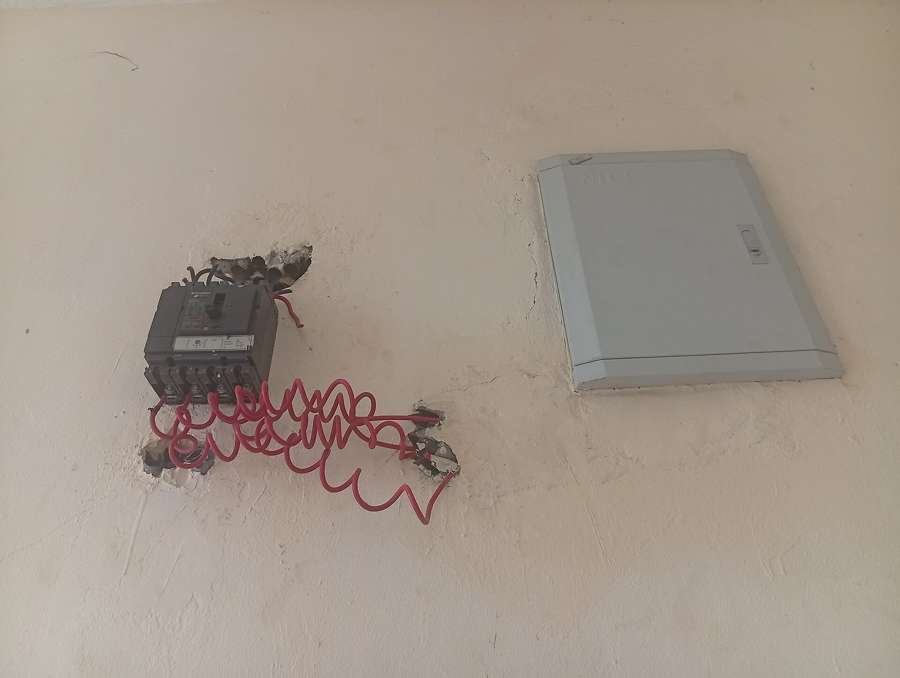
If a job affects the building's shared systems, such as risers, the main electrical feed or anything behind a fire door, check with the building administration before booking, because some work legally requires their notification or a contractor with specific authorizations. Electrical sign-off work in particular should be done by someone with SEP qualifications, and asking about certification is a normal, respected question in Poland, not an insult. When the job finishes, keep the invoice, the contractor's details and photos of the work, especially of anything that ends up hidden behind walls, because the next person to open that wall will thank you.
* Photos: Rieul Techer, CC BY-SA 4.0, via Wikimedia Commons.
Frequently asked questions
How do I find an English-speaking plumber or electrician in Warsaw?
Post a request on Oferteo or Fixly stating that you want an English-speaking contractor; requests are free for clients and typically draw around two offers, according to Oferteo's May 2026 market report. You can also ask your landlord or building administrator for their regular contractors, who already know the building's installations.
How much does a plumber cost in Warsaw in 2026?
A Warsaw plumber charges 150 to 220 zl per hour gross, rising to 250 to 290 zl per hour for complex work, and a typical small repair visit costs 300 to 400 zl, according to a 2026 market comparison for the capital. Expect a minimum call-out fee of 150 to 200 zl and a standard wait of three to seven days for a non-urgent visit.
Is it cheaper to hire a handyman directly or through a platform?
The platforms themselves are free for clients, since contractors pay for access to your request, so comparing offers there costs nothing. Direct hires through word of mouth can be as good or better, but you lose the review history and written record, so for a first job in Warsaw a platform is the safer starting point.
Should I ask for an invoice (faktura) from a tradesperson?
Yes, for anything beyond trivial work. An invoice documents the job for your landlord, insurer or a future warranty claim, and a lower cash price with no paperwork removes those protections. Reputable contractors expect the question and many quote both net and gross prices up front.