Lift Breakdown in Poland: Trapped Passengers, 112 and UDT
The essentials: Use the lift alarm and contact its service. Call 112 if immediate emergency help is needed. Report an empty broken lift to the administrator or maintainer, and do not attempt a rescue yourself.
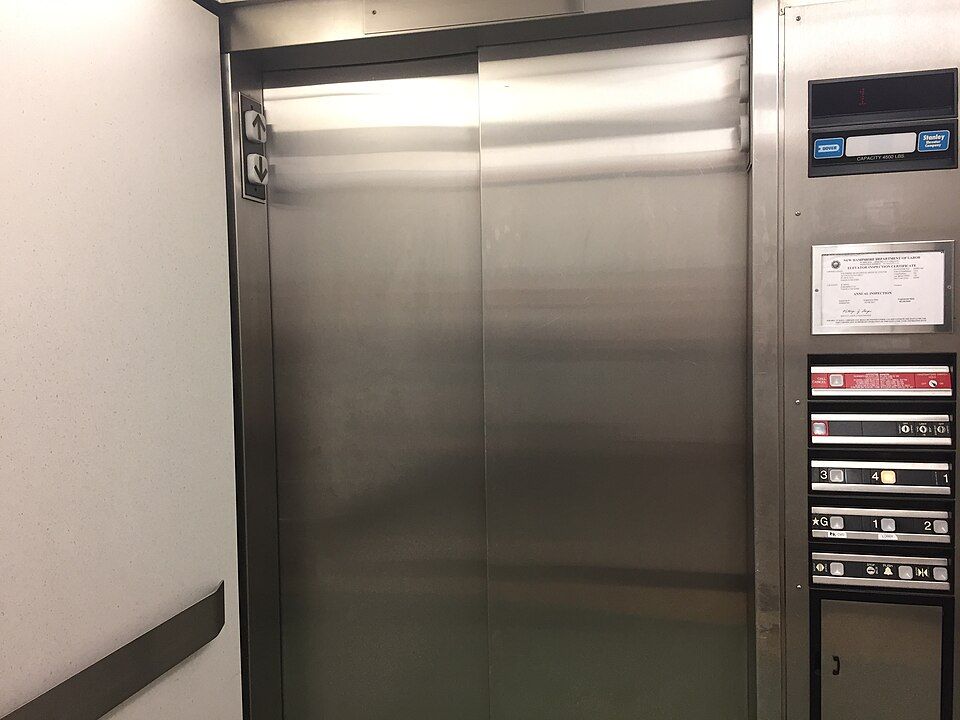
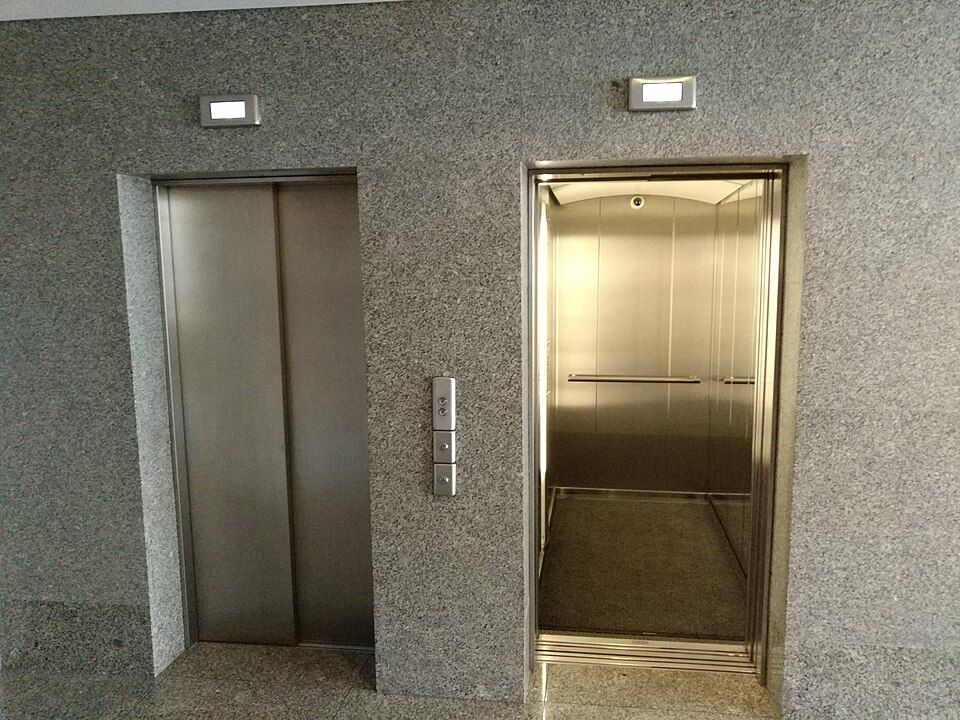
Illustrative lift doors, not an incident. Photo: Khrystinasnell, CC0 1.0. Resized and compressed.
A lift stopping between floors is not a problem to solve by pulling the doors apart. If you are trapped in a lift in Poland, use the alarm or communication system according to its instructions, contact the service identified for that lift, and make clear if anyone is unwell or in danger. If immediate emergency help is needed, call 112.
For a lift that is simply out of service with nobody inside, the first reporting route is usually the building administrator or its maintenance company, not an emergency call. The distinction matters: one situation needs an ordinary repair report, while another may involve people who cannot get out safely.
This guide was checked on 2 November 2026 against the Office of Technical Inspection (UDT), government emergency guidance and other primary sources. It is a guide to getting help and recording a fault, not a rescue manual. The lift photographs are illustrations and do not show an incident or certify an installation as safe.
If you are inside a stopped lift
Use the alarm button or intercom as the cabin instructions describe. Some systems require a sustained press rather than a quick tap. KONE's Polish guidance discusses holding an alarm button to connect to a duty operator, but the instructions on your actual lift take priority over a universal timing rule.
Tell the person answering that passengers are trapped, not merely that a lift is broken. Give the address, entrance or stairwell, and lift number if displayed. Say how many people are inside, whether there is a child, and whether anyone is injured, feeling faint or having difficulty breathing. Do not guess the cabin's exact position if you cannot see it reliably.
Do not force doors, jump, climb through an opening or try to release the lift yourself. A partly open door does not establish that the cabin is level with a safe landing. Follow the responding service's instructions and wait for people authorised to release passengers. Friends outside should not attempt to operate machinery or electrical controls either.
If the alarm does not connect, use your phone if you can. The maintenance or emergency-lift number is often posted in the cabin or nearby. If you cannot obtain help, or there is an immediate threat to health or safety, contact 112 and describe the circumstances. Do not let a search for the perfect building contact delay an urgent emergency report.
What to say on the phone
Start with the location. In a large block, the street address alone may lead someone to the wrong entrance. Add the town, building number, stairwell or entrance letter and any visible device identifier. Say whether you are calling from inside the cabin or from outside after hearing passengers.
A short Polish phrase is: "Utknęliśmy w windzie. Adres to..." This means "We are trapped in the lift. The address is..." If someone is unwell, say: "Jedna osoba źle się czuje" or "One person feels unwell." Describe the symptoms plainly rather than trying to diagnose them.
For a routine fault with nobody inside, "Winda nie działa. Nikogo nie ma w środku" means "The lift is not working. Nobody is inside." Use that final sentence only when you know it is true. If you have not established whether anyone is trapped, say that you do not know.
Government 112 guidance says to give the location and facts, answer the operator's questions, and not end the call until told to do so. Keep the phone available for a return call. If the situation changes after a report, call again with the new information rather than assuming the original description still fits.
When 112 is the right route
The government's emergency-number guidance reserves 112 for situations needing immediate action by police, fire or emergency medical services. A stopped lift with people in distress is not equivalent to an empty lift awaiting a spare part. Explain what is happening and let the operator assess the response.
Report smoke, injury, breathing difficulties or other immediate hazards explicitly. Do not minimise a passenger's symptoms because someone has already called the maintenance company. Conversely, an empty out-of-order lift is not by itself a reason to request emergency services instead of notifying the administrator.
A Warsaw municipal-guard report from August 2025 describes four older people trapped in a public lift whose breathing difficulties led to escalation while technical help was being arranged. It is an example of why a person's changing condition matters, not a model for residents to copy rescue techniques or a promised service response time.
If a bystander is also calling, tell them a report has been made so that they can avoid unnecessary duplicate calls. Give genuinely new information when needed. The government specifically asks witnesses to coordinate rather than all reporting the same event independently.
If you hear people trapped inside
Speak calmly from a safe position and ask whether they have contacted the lift service. Help pass on the address and entrance details if they do not know them. If there is an immediate threat or someone becomes unwell, explain that when calling 112.
Do not pull the landing doors apart, reach into the shaft or encourage someone to step across a gap. Do not cut power or reset controls in an attempt to help. Knowing how an ordinary domestic switch works does not qualify someone to operate lift equipment or carry out a release.
If useful and safe, arrange for a neighbour to meet the responding service at the correct entrance. Keep access clear. Ask passengers what they have told the operator so that later reports do not accidentally contradict one another. Leave the decisions about release to the responding professionals.
Report an empty broken lift to the building
UDT's inspection FAQ gives a clear first route for faults in residential buildings: report them to the organisation operating the device, usually the housing community or building manager. The maintenance company can also be contacted; its details are usually displayed in or near the cabin, for example on an information board.
Give a precise description: doors not closing, the lift not responding at a particular floor, an unusual noise, or a sudden stop you experienced. Do not label the technical cause unless it has been established. Mention when the problem happened and whether it has repeated. A photograph of an error display from a safe public position can help, but do not enter a restricted area to obtain one.
Ask for acknowledgement, the service reference and the next update. If the building has several lifts, name the affected one. A general message that "the lift is broken" can leave residents and the service talking about different devices. Keep a copy of the report rather than relying only on a corridor conversation.
What UDT does and does not replace
UDT is the technical-inspection authority, not the building's on-demand lift repair desk. Its FAQ distinguishes ordinary faults, which should go to the operator or maintainer, from dangerous damage or accidents connected with operation, which require prompt notification to the nearest UDT branch.
The same FAQ says a green UDT sticker indicates that the device is under technical supervision; the sticker alone does not automatically authorise operation. The legal basis for use is a positive administrative decision permitting operation. A resident should therefore not treat a sticker as a reason to ignore a newly reported hazard.
UDT's passenger-lift guidance describes operator responsibilities including proper maintenance, a maintenance log and required examinations. These are responsibilities to ask the administrator about, not tasks for a tenant to perform. Ask whether the fault has been assessed, whether the lift remains out of service and who will confirm when passengers may use it again.
Do not remove an out-of-service notice or test a lift that has been taken out of use. If the answer from the building is unclear, request it in writing. A recorded explanation is more useful than an argument over whether the lift "seems fine now."
If stairs are not a usable alternative
An outage can make a home effectively inaccessible for a wheelchair user, someone with limited mobility or a person recovering from an operation. Tell the administrator what access you actually need and when, rather than describing the outage only as an inconvenience. Ask about an accessible alternative route and the expected next update, without assuming there is a second usable lift.
Do not improvise carrying a person or wheelchair on stairs. Make a safe plan with the person affected and appropriate help. If there is an immediate medical emergency, explain the access problem to the emergency operator so responders understand the building layout.
For non-urgent appointments, deliveries or a planned move, contact the relevant organisation early and discuss alternatives. Keep any written repair updates and records of the practical disruption. This guide does not promise compensation, alternative accommodation or a particular repair deadline: those depend on the circumstances, contract and applicable rules.
A fire is a different situation
Government fire guidance says not to use a lift during a fire. Follow the building's evacuation instructions and responding services' directions. Do not assume that a lift is safe simply because it is moving or because the fire is on another floor.
If you cannot use the stairs, make that clear when requesting emergency help. Give your exact location and mobility needs. Do not enter smoke or attempt an improvised evacuation based on an ordinary lift-outage plan. An accessible route used on a normal day is not automatically an appropriate fire route.
For routine prevention, read the cabin notices before something goes wrong. Note the address and service contact, respect the stated capacity, and do not interfere with closing doors. Keep the administrator's contact somewhere accessible outside the lift as well. These small preparations reduce confusion, but they do not replace maintenance or professional assessment.
Frequently asked questions
Should I force the doors open if the lift stops?
No. Do not attempt a self-release or encourage passengers to cross a gap. Use the alarm or communication system and wait for the responding service's instructions.
Is there one national lift-maintenance number?
Use the contact displayed for the actual lift or supplied by the building administrator. Call 112 when immediate emergency help is needed, not as a substitute for reporting an empty lift's routine fault.
Does a green UDT sticker mean the lift is definitely safe to use?
UDT says the sticker indicates technical supervision, not automatic permission to operate. A new fault or out-of-service notice still needs to be taken seriously.
Can I use the lift to leave during a fire?
Government fire guidance says not to use lifts during a fire. Follow evacuation instructions and tell emergency services if you cannot use stairs or need help.
Sources
- UDT inspection FAQ; checked 2 November 2026
- UDT passenger-lift operation and supervision; checked 2 November 2026
- UDT safe lift maintenance and repair brochure; checked 2 November 2026
- UDT safe operation guide; checked 2 November 2026
- Government112reporting guidance; checked 2 November 2026
- Government fire-safety guide; checked 2 November 2026
- Warsaw municipal guard incident report,August2025; checked 2 November 2026
- KONE Poland alarm and safe-use advice; checked 2 November 2026