Radon Testing in a Polish Home: What 300 Bq/m³ Means
The essentials: Poland uses 300 Bq/m³ as the annual-average radon reference level. Arrange a laboratory-backed long measurement, follow its placement instructions and get advice on a high result. A brief electronic reading is not an annual safety certificate.
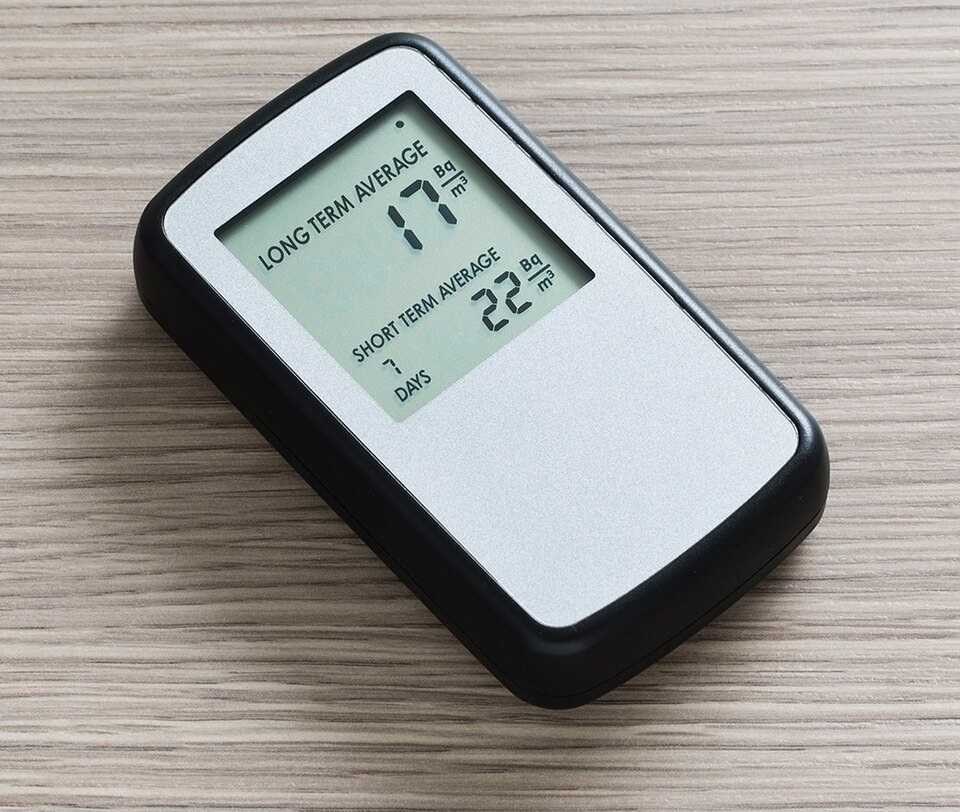
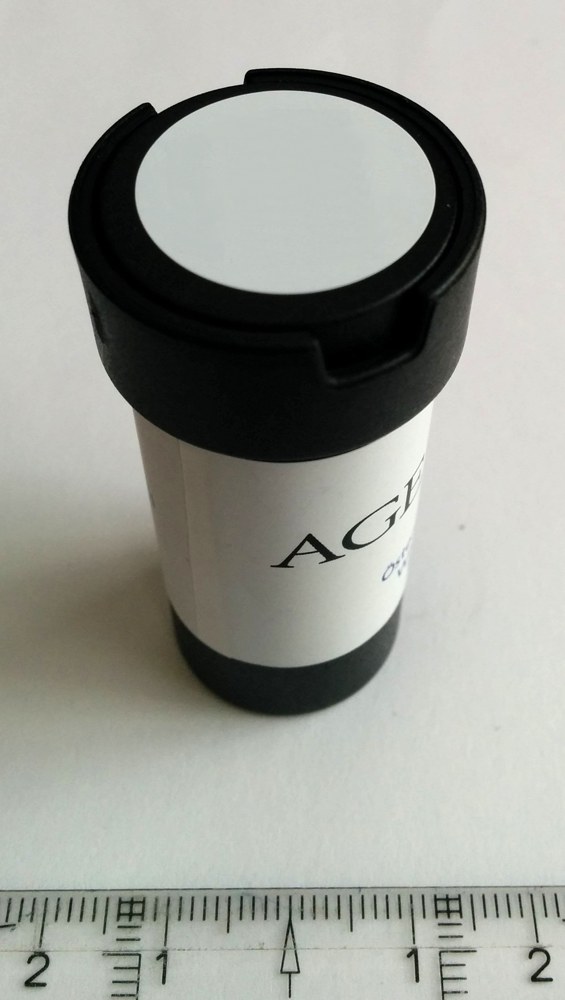
Illustrative electronic radon monitor, not a test result from a Polish home. Photo: CKristiansen / Wikimedia Commons, CC BY-SA 4.0. Resized and compressed; photo adaptation under the same licence.
A flat can look dry, clean and recently renovated without telling you anything about radon. This naturally occurring radioactive gas has no smell, colour or taste. It can enter a building from the ground and accumulate indoors. For someone renting or buying in Poland, the useful response is a properly planned measurement, not an expensive gadget bought in a panic.
Poland's reference level is 300 becquerels per cubic metre, written 300 Bq/m³, for the annual average. That final qualification matters. A number seen during a weekend visit and a laboratory report covering months do not answer the same question. This guide explains how to start, what to ask and how to keep residential advice separate from workplace rules. Sources were checked on 3 November 2026.
Why radon is different from a gas leak
WHO identifies radon as a major cause of lung cancer. Its radioactive decay products can be inhaled and damage cells in the airways. The concern is exposure over time; the gas does not give you a reliable smell or visible warning. Smoking increases the lung-cancer risk associated with radon, so reducing tobacco exposure and reducing radon are both worthwhile.
Do not confuse a radon measurement with checks for carbon monoxide, a fuel-gas leak or particulate pollution. A device must explicitly measure radon to answer this question. Equally, this guide is not a replacement for an urgent response to a sounding CO alarm or a suspected gas leak. Those are different hazards with different immediate procedures.
Which homes deserve attention?
The National Atomic Energy Agency, PAA, explains that radon can be present in any building. Entry routes include foundation cracks, gaps around pipes and other openings. WHO says levels are usually higher in basements, cellars and living spaces touching the ground, but substantial concentrations can also occur above the ground floor.
Make a ground-floor bedroom, basement office or converted cellar part of the discussion when arranging a test. An unused cellar and a room occupied for hours each day have different exposure patterns. Describe how the rooms are actually used rather than simply sending the laboratory the building's floor count.
Local geology helps identify areas needing attention, but it cannot certify one apartment. WHO notes that adjacent buildings can have very different concentrations. A neighbour's low result, a newly installed window system or a reassuring neighbourhood map is therefore not a substitute for measuring the home in question.
What 300 Bq/m³ does and does not tell you
A becquerel describes radioactive activity. For indoor air, Bq/m³ expresses activity per cubic metre. Polish official guidance uses 300 Bq/m³ as the reference for the annual-average concentration in rooms intended for people. It is not a claim that every lower concentration is risk-free, or that any single reading above it proves the annual average is too high.
WHO recommends a national annual reference of 100 Bq/m³ where achievable and says a national reference should not exceed 300 Bq/m³. That health recommendation does not replace Poland's national reference with a different Polish legal limit. Keep the two descriptions separate when comparing advice in English.
For a result near the reference, ask about measurement uncertainty, the exposure period and whether seasonal interpretation is needed. For a clearly high result, contact the laboratory promptly about confirmation and next steps. Do not discard it because the windows were shut, but do not turn a brief display reading into a definitive annual assessment yourself.
Start with a laboratory, not a shopping cart
The official Poznaj Radon FAQ recommends ordering passive detectors from an accredited laboratory and refers to ISO 17025 accreditation. GIS describes track detectors in diffusion chambers for annual-average indoor assessment: expose the detector for a defined period, then have it read, usually in a specialist laboratory.
Ask whether the laboratory's current accreditation covers the specific radon measurement you need. GIS points readers to the Polish Centre for Accreditation for accredited laboratories. A general accreditation logo is less useful than confirmation of the relevant measurement scope, method and reporting service.
- Explain whether this is an ordinary home check, a property purchase or follow-up after mitigation.
- Describe the floors, occupied rooms, ventilation and any planned renovation.
- Ask how many detectors are needed and where each belongs.
- Confirm the exposure dates, return packaging, analysis, report language and total price.
No universal retail price is quoted here: detector numbers, laboratory analysis and service scope differ. Get a written quotation that includes the analysis and return arrangements, rather than comparing the price of an unanalysed plastic detector with a completed measurement service.
How long should you measure?
WHO prefers measurements lasting at least three months when estimating the annual mean because radon varies hour to hour, day to day and seasonally. Polish publications describe a range of methods and exposure periods, including shorter tests for particular purposes. A shorter test can be useful without becoming equivalent to a year-long assessment.
Ask the laboratory to distinguish a screening result from an estimate suitable for comparison with the annual reference. If a property transaction has a deadline, explain that before ordering. Do not quietly shorten a three-month protocol to a week because the seller wants an answer sooner.
Follow the supplied instructions for placement and ordinary building use. PAA's detailed guide describes passive detectors placed away from windows, heat sources and ventilation, then returned sealed for analysis. Record the detector identifier, room and start and finish dates. Keep it in the agreed place instead of moving it between rooms to look for a lower number.
An electronic monitor can show changes and help investigate ventilation or mitigation. Its usefulness depends on the instrument and protocol. A photograph of its screen without dates, location and measurement duration is weak evidence for a landlord, buyer or contractor.
Keep a record you can use later
Suppose a screen briefly shows a value above 300 Bq/m³. The useful questions are how long the device has been collecting data, which average it displays and whether the instrument is suitable for the decision. Write down those details and ask the laboratory what measurement should follow. The number alone cannot establish the yearly average.
For a completed test, save the original PDF rather than only a screenshot of the result. Keep the detector locations and dates with it. If you later change the windows or turn the basement into a regular workspace, that record helps a specialist judge whether the old measurement is still relevant.
If you rent: make the request specific
Ask the owner or building manager whether a radon report already exists for your flat or the relevant occupied rooms. Request the actual report, not just a verbal statement that the building was checked. Look for the address, rooms, dates, method, laboratory and result. A report from a different floor may be background information rather than an answer about your bedroom.
If no useful report exists, propose a laboratory-backed test and agree in writing who orders it, who pays and who receives the results. This is practical coordination advice, not a claim that the tenant automatically pays or that every landlord has the same testing duty.
A helpful enquiry in Polish is: Czy dla tego mieszkania lub budynku wykonano pomiar stężenia radonu? Proszę o raport z datami pomiaru i informacją o badanych pomieszczeniach. It asks whether a measurement was made and requests the report with dates and rooms. It does not accuse anyone of breaking the law.
If the result is high, fix the route in
Send the complete report to the owner or manager and ask the laboratory what follow-up it supports. A building specialist can investigate entry paths and suitable measures. WHO lists options including under-floor ventilation, a radon sump system, sealing floors and walls, preventing air transfer from a basement and improving ventilation.
Opening windows may reduce concentrations, but it is not proof of a durable solution. Nor should a tenant drill foundations, alter shared ventilation or install extraction equipment without the appropriate agreement and professional design. The best measure depends on the building, the source and the way air moves through it.
Arrange a follow-up measurement to check whether the work actually reduced radon. Keep the original report, the description of the work and the later result together. Paying for equipment without verifying its effect leaves the main question unanswered.
Repeat testing and workplace rules
The Poznaj Radon FAQ recommends regular repeat measurements, including every ten years, after renovation and after measures to reduce radon. Other technical guidance uses risk-based intervals. Treat these as guidance to discuss with the laboratory, not a universal permission to ignore changes until a calendar reminder.
A changed ventilation system, major refurbishment or newly occupied basement is a reason to ask whether the previous result still represents current conditions. If mitigation has been installed, agree how its performance will be checked rather than relying indefinitely on the installation date.
Workplaces are a separate legal question. PAA describes measurement duties for specified workplaces, including underground settings and certain ground-floor or basement workplaces in designated areas. Do not convert those categories into a statement that every residential landlord must test annually. Equally, an employer should not treat a home-oriented checklist as a complete workplace compliance plan.
For practical help interpreting the situation, start with the measurement laboratory and the relevant sanitary inspectorate. In June 2026, PSSE Jelenia Góra highlighted newer multi-institution guidance covering workplaces and residential buildings. Use current specialist advice for the particular building, and keep the annual-average meaning of the reference level visible throughout the discussion.
Frequently asked questions
Does a normal carbon-monoxide alarm measure radon?
No. Arrange a radon-specific measurement. Do not assume an alarm or general air-quality display covers radon unless its specification explicitly says so.
Is 300 Bq/m³ an immediate evacuation threshold?
It is Poland's annual-average reference level, not an instant evacuation trigger. A high reading needs follow-up with the laboratory and building owner or manager, rather than being ignored or treated as an annual result without checking the method.
Can an upstairs flat have radon?
Yes. WHO says concentrations are usually higher near the ground, but elevated levels can also occur above the ground floor. A map or neighbour's result does not establish your own level.
How long should a home test take?
WHO prefers at least three months to estimate an annual mean. Polish guidance also describes different test methods and durations. Ask the laboratory which protocol and interpretation fit your property and purpose.
Must every landlord retest every year?
The sources reviewed do not establish that blanket claim for every residential tenancy. Specific workplace duties must not be presented as a universal home-testing timetable. Get advice on the particular building and situation.
Sources
- PAA: European Radon Day, 7 November 2020; checked 3 November 2026
- GIS: measurement methods, updated 29 July 2024; checked 3 November 2026
- Poznaj Radon: questions and answers, undated; checked 3 November 2026
- GIS: annual-average measurements, updated 7 May 2025; checked 3 November 2026
- WHO: Radon and health, 25 January 2023; checked 3 November 2026
- PSSE Jelenia Góra: new measurement guidance, 16 June 2026; checked 3 November 2026
- PAA: Radon w budynkach, copyright 2025, PDF hosted January 2026; checked 3 November 2026