Ventilation in a Polish Flat: Grilles, Air Inlets and Checks
The essentials: Keep ventilation grilles and designed air inlets clear. Ask which ventilation system your flat uses before changing windows, fans or extractors. The building owner or manager arranges the required periodic checks; a paper test is not a safety certificate.
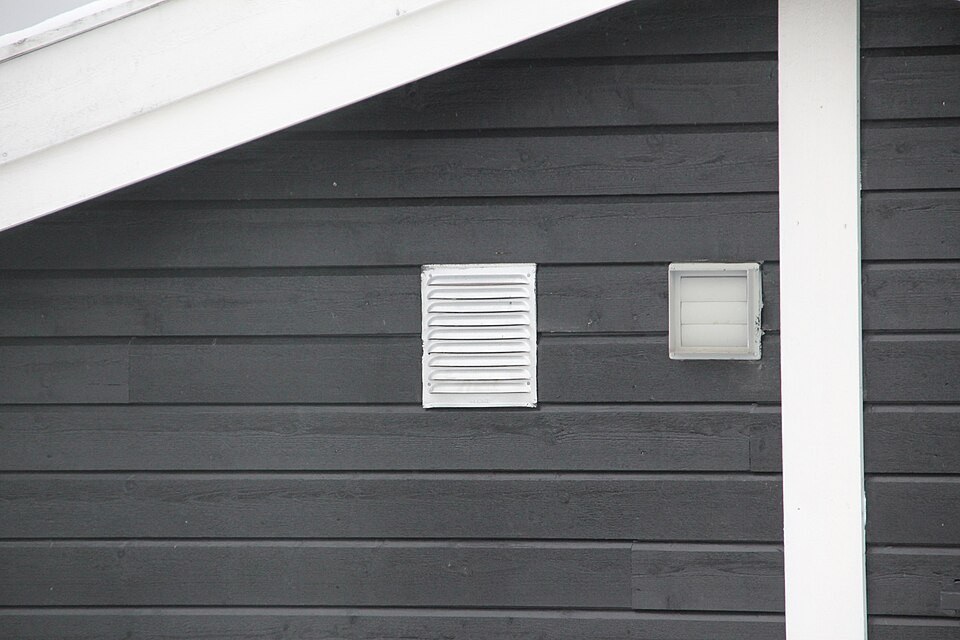
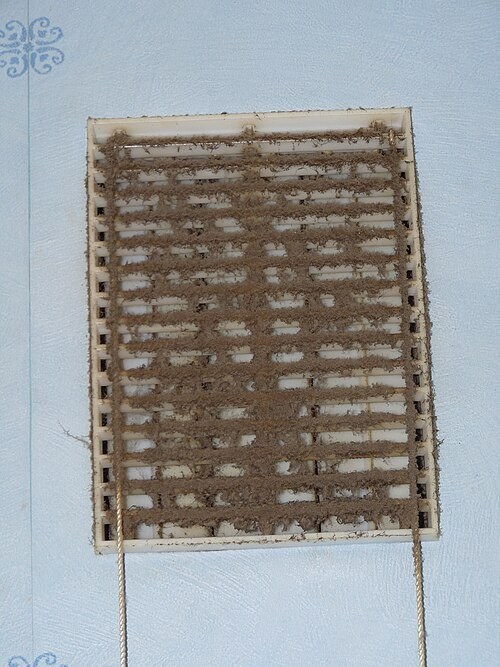
Illustrative exterior ventilation outlets, not a Polish inspection record. Photo: Øyvind Holmstad / Wikimedia Commons, CC BY-SA 3.0. Resized and compressed; photo adaptation under the same licence.
You move into a Polish flat, the new windows shut tightly, and someone tells you not to close the small fitting above the glass. In the bathroom, there is a wall grille and perhaps another opening at the bottom of the door. These are not necessarily untidy details left over from a renovation. They may be parts of the route that brings fresh air through the home.
Understanding that route helps you ask better questions when the flat feels stuffy, windows collect water or a grille blows air into the room. It does not let you diagnose a shared chimney or gas appliance yourself. This guide explains the useful Polish terms, the checks to request and the alterations to avoid. Sources were checked on 3 November 2026.
First identify the system, not just the grille
Wentylacja grawitacyjna means gravity or natural ventilation. Warm indoor air leaves through vertical ducts, with replacement air entering through designed inlets or other openings. Its performance depends on conditions including the temperature difference and the availability of replacement air. A flat can have a clear exhaust grille but still lack a suitable supply.
Wentylacja mechaniczna uses fans to move air. Some systems extract air mechanically; others provide both supply and extraction. A newer apartment with a designed supply-and-extract system should not be treated as though it necessarily needs the same window changes as an older gravity-ventilated flat. Ask the manager which arrangement the building actually has.
Polska Wentylacja, the Polish ventilation association, describes three linked tasks: bringing outdoor air in, letting it pass through the rooms and removing used air. Think of the whole route rather than looking for one accessory to buy. A portable fan circulating air around a bedroom does not establish that any of those tasks is being completed.
What is a nawiewnik?
A nawiewnik is an air inlet, often fitted high in a window frame or an exterior wall. Different models regulate airflow manually or in response to conditions such as pressure or humidity. It is not simply a decorative strip. Ask for the instructions for the model fitted in your home, particularly if you cannot tell which setting it is in.
Do not cover it with tape, push material into it or conceal it behind a new built-in unit to make the room feel warmer. If it seems excessively cold or noisy, report the problem and ask whether the device, its setting and the system are suitable. The association notes that acoustic performance and airflow both matter when selecting an inlet.
Opening a window can help air a room, but occasional airing is not proof of a reliable continuous ventilation arrangement. The association explains why window microventilation also depends on residents remembering to use it. Do not assume that opening a window for a few minutes each morning fixes a problem that needs professional assessment.
Why a window replacement can change the flat
Older windows may have allowed air to enter through gaps. A new, tightly sealed window can reduce that unplanned supply. The Government Centre for Security, RCB, specifically advises checking ventilation after replacing windows because newer units can be very airtight. A renovation that looks like a comfort upgrade can therefore change how the existing ducts work.
Before replacing windows, ask the contractor and building manager how replacement air will be provided for this particular system. Do not accept a generic promise that every flat needs exactly the same number of inlets. Their type, capacity and placement need to fit the rooms, exhaust requirements and building design.
If the windows have already been replaced, record when the work happened and when the symptoms began. That timeline is useful to the person checking the system. Do not cut the seals or drill the frame yourself as a substitute for an agreed solution, especially in a rental where the owner needs to be involved.
Keep the route through the home clear
Air also needs a route between rooms. Bathroom or toilet door grilles and designed gaps can form part of it. A door replacement, thick rug or improvised draught strip can interfere with that route. The Podwawelska housing cooperative warns residents against blocking both wall exhaust grilles and the air openings at the bottom of bathroom doors.
Keep furniture, boxes and renovation coverings away from ventilation openings. If a kitchen fitter proposes hiding a grille inside a cupboard or a contractor wants to close an opening behind a suspended ceiling, pause and ask the manager how inspection access and airflow will be maintained. A neat finish should not make a required part of the system inaccessible.
Surface dust can be an ordinary maintenance issue, but do not reach into shared ducts, dismantle unfamiliar equipment or alter a fire-related component. Ask which cleaning tasks residents should perform and which belong to the building contractor. A photograph of visible dirt is useful evidence, not a diagnosis of the entire shaft.
Do not solve it by adding a fan first
A powered bathroom fan or kitchen extractor is not automatically compatible with an existing shaft. The cooperative's resident guidance warns that mechanical extraction can disturb draft, including in homes with certain combustion appliances or shared ducts. This is a reason to check the installation, not a claim that every fan in every Polish apartment is unlawful.
Before fitting or reconnecting an extractor, ask whether the connection is permitted and what type of appliance and duct are present. Describe any gas water heater, fireplace or other combustion equipment. Let a qualified person assess the interaction between air supply, extraction and flue performance.
A recirculating cooker hood and a hood discharging into a duct are different arrangements. Do not choose a connection based only on the hole being the right size. Equally, an air purifier or dehumidifier may address a particular indoor problem without fixing the ventilation route. Avoid treating a new appliance as a substitute for finding the cause.
Who arranges the annual inspection?
GUNB, Poland's building-supervision authority, explains that gas installations and chimney ducts, including ventilation ducts, must undergo periodic checks at least once a year. It describes this as a check in each calendar year, not a requirement that exactly 365 days separate visits. The building-level responsibility belongs to the owner or manager of the building.
For a renter in a block, the practical first step is to ask the landlord which cooperative, community or administrator manages the inspection. Watch for the announced visit and coordinate access. If you miss it, ask how to arrange the follow-up rather than assuming that someone checking a neighbouring flat covers yours.
Ask for the findings relevant to your flat and whether recommendations remain outstanding. GUNB lists checks such as duct patency, measured draft, the condition of ventilation devices and completion of earlier recommendations. A professional visit and a written defect followed by no repair are not the same as a resolved problem.
What to report, and how to word it
For a non-emergency concern, send a dated message rather than only mentioning it in a hallway. Identify the room, the opening involved, what you observed and when it occurs. Say whether windows, doors, fans or appliances were in use. Add photographs of accessible fittings and describe any recent renovation or window replacement.
A useful request is: "Please arrange a check of the ventilation in the bathroom and kitchen, confirm the intended outdoor-air supply and tell me whether any recommendations from the last duct inspection are outstanding." In Polish, the main terms are kontrola wentylacji, nawiewniki, kratka wentylacyjna and protokół kontroli przewodów kominowych.
Keep replies, appointment dates and the inspection findings together. If the proposed fix involves drilling, changing windows or connecting a powered device, get the owner's and manager's involvement before work starts. Who pays for a particular repair is a separate tenancy question; the general building inspection duty does not settle every cost dispute.
A paper check is not a safety certificate
RCB describes holding a piece of paper at the grille as a simple observation of draft. Do not use a flame, lighter or burning material for a home experiment. Even when paper is drawn towards the opening, that only describes conditions at that moment. It does not measure the whole installation, establish safe combustion or prove carbon monoxide is absent.
If air appears to flow the wrong way, smells travel through a duct or the problem changes when an extractor runs, report those observations. Do not repeatedly recreate a potentially unsafe combination to obtain a better video. A qualified check is more useful than an online argument about what one tissue movement means.
When this becomes an emergency
Carbon monoxide is colourless and odourless. Official guidance lists warning symptoms including headache, dizziness, weakness and nausea, and stresses the danger from faulty combustion or ventilation. If a CO alarm sounds or poisoning is suspected, get everyone into fresh air and call 112. Do not stay inside to complete a grille test or retrieve paperwork.
Ventilation, appliance servicing and suitable alarms are complementary protections. One does not cancel the need for the others. For related issues, read our guides to smoke and carbon-monoxide alarms, mould in a rented flat and rental repair responsibilities. Keep the immediate safety response separate from later questions about a landlord's bill.
Frequently asked questions
Can I cover the bathroom grille to stop a draught?
No. Do not block a designed ventilation opening. Report the draught or reversed airflow to the owner or manager and ask for a qualified check.
Does opening a window replace the annual inspection?
No. Window airing and professional inspection answer different questions. Building guidance requires at least annual checks of ventilation ducts.
Is an air purifier a ventilation system?
Not by itself. A recirculating purifier does not supply replacement outdoor air or establish that a ventilation duct is working.
Who arranges the chimney sweep in a block of flats?
GUNB places the building-level periodic inspection duty on the building owner or manager. A tenant should coordinate access and ask their landlord who manages the building.
Does a grille pulling a piece of paper prove the home is safe?
No. It is only a simple observation under the conditions at that moment. It cannot replace professional assessment or establish the absence of carbon monoxide.
Sources
- GUNB: periodic building inspections; checked 3 November 2026
- MSWiA: carbon monoxide poisoning; checked 3 November 2026
- RCB: preventing carbon monoxide poisoning; checked 3 November 2026
- Polska Wentylacja: air inlets and replacement air; checked 3 November 2026
- PSSE Słupsk: ventilation explainer; checked 3 November 2026
- SM Podwawelska: ventilation and chimney guidance for residents; checked 3 November 2026