English-Speaking Dentists in Warsaw: Finding One and What It Costs
The essentials: Shortlist English-speaking clinics via expat referrals, then verify each dentist in the Central Register (nil.org.pl). NFZ-insured patients get free checkups, X-rays, fillings and extractions; children get more. Private clinics set their own prices - compare written itemized plans. NFZ waits: terminyleczenia.nfz.gov.pl
The quick answer
Warsaw has no shortage of English-speaking dentists - private clinics in the centre and the expat-heavy districts actively market to international patients, and many younger dentists trained partly in English. The reliable path: shortlist by language through expat referrals and clinic websites, then verify every dentist in the Central Register of Doctors and Dentists (CRL), the public register run by the Polish medical self-government, before booking. As for cost, Poland runs two parallel systems - free treatment under the public NFZ for a defined list of services, and a private market where clinics set their own prices - so "what treatment costs" depends first on which lane you choose.
*Data source: Naczelna Izba Lekarska, Central Register of Doctors and Dentists (nil.org.pl) - checked 21 October 2026.*
Lane one: what the NFZ covers for free
If you are insured in Poland (through work, a family member, or voluntary NFZ insurance), dental care under guaranteed benefits is free at any clinic holding an NFZ contract - and you may choose any such clinic in the country. If you arrive with tooth pain, you should receive help the same day.
The Ministry of Health's list for adults includes:
1. A dental examination with oral-hygiene instruction (once a year) and control examinations (three times a year) 2. Intraoral X-rays and a described panoramic image 3. Caries treatment (fillings), with anaesthesia 4. Tooth extractions and surgical treatment 5. Root-canal treatment - but for adults, only front teeth (all teeth for children and for women during pregnancy and postpartum) 6. Scaling from half a dental arch and treatment of oral-mucosa changes 7. Partial removable dentures (when 5-8 or more teeth are missing) and full dentures - once every 5 years; free denture repair every 2 years
The gaps define the private market: for adults, molar root canals, implants, crowns, whitening and orthodontics sit outside the guaranteed basket.
*Data source: Ministerstwo Zdrowia, "Leczenie stomatologiczne" (gov.pl; legal basis Dz.U. 2021 poz. 2148) - checked 21 October 2026.*
Lane one, for children: broader and worth using
The NFZ list is noticeably more generous for under-18s:
- Fissure sealing of the sixth teeth (once, up to age 8) and fluoride varnishing of all permanent teeth
- Caries treatment of both milk and permanent teeth
- Root-canal treatment of all teeth (adults get front teeth only)
- Orthodontic treatment up to age 12
- Light-cured composite fillings for incisors and canines
- Treatment of periodontal disease
For a family settling in, this means routine children's dentistry - checkups, sealants, fillings - is genuinely free at NFZ-contracted clinics, including many private-looking practices that hold public contracts alongside their paid services.
*Data source: Ministerstwo Zdrowia, "Leczenie stomatologiczne" (gov.pl) - checked 21 October 2026.*
The catch: queues, and how to check them
NFZ dentistry's weak point is waiting time, which varies by clinic and month. The NFZ publishes a live waiting-time search at terminyleczenia.nfz.gov.pl - select "PORADNIA STOMATOLOGICZNA" and Warszawa to see the next available appointment dates clinic by clinic. Two practical habits: check the queue tool before assuming you must go private, and ask clinics directly about cancellations, which move faster than the published dates.
*Data source: NFZ, waiting-times search (terminyleczenia.nfz.gov.pl) - checked 21 October 2026.*
Insurance basics for newcomers
Who actually gets the free lane: anyone insured with the NFZ - employees (contributions come out of salary), their registered family members, students under their university arrangements, and anyone who signs up for voluntary insurance. If you have just arrived and your employment has not started, that gap is real: you are a private patient until the insurance is active. EU/EEA visitors can use the EHIC card for necessary treatment, and everyone else should treat travel insurance with dental cover as a bridge. The first-week paperwork from our moving checklist - registration, PESEL, employment - is what switches the free lane on.
Lane two: private treatment and what it costs
Private dentistry in Warsaw sets its own prices - there is no official tariff - so the honest answer to "what does treatment cost" is: it depends on the clinic, the materials and the tooth, and you should compare written numbers rather than rules of thumb. The mechanics that keep you safe:
1. Ask for a written treatment plan (plan leczenia) with itemized prices before any work beyond a checkup. Every reputable clinic produces one; it is the document you compare across clinics. 2. Check what a quoted price includes - anaesthesia, X-rays, temporary crowns and follow-up visits can be line items or bundled. 3. Get a second opinion on expensive plans. For a large quote (implants, full rehabilitation), a second plan from another clinic is normal practice and often changes the price or the proposed work. 4. Ask about the warranty - private clinics commonly warrant fillings, crowns and prosthetic work for a defined period; get it in the plan.
As a sanity anchor: the NFZ list above is your free baseline. Anything on it you should never pay for unless you are buying speed, a specific material, or a specific doctor.
Finding the English-speaking part
There is no official register filtered by language, so the search runs on three tracks:
1. Expat referrals - Warsaw's international-community groups keep current threads on English-speaking dentists; this is how most newcomers actually choose. 2. Clinic websites - private clinics serving international patients say so explicitly and usually list their dentists' languages; clinics around Śródmieście, Mokotow, Wilanow and the business districts are the densest hunting ground. 3. Verification - whatever you find, confirm the dentist exists in the Central Register of Doctors and Dentists (nil.org.pl), where every practising dentist has an entry with their PWZ licence number. No register entry, no appointment.
For children, ask specifically whether the dentist works with young patients - "adaptation visits", where a child just meets the chair and the mirror, are standard practice in child-friendly clinics and make the first real appointment dramatically easier. One more filter worth applying early: ask how the clinic handles a parent who wants to stay in the room. Good pediatric setups welcome it; an office that pushes parents out of a five-year-old's first visit is telling you something.
And a note on language honesty: "English-speaking" on a website can mean the dentist studied abroad, or it can mean the receptionist answers emails in English. If full-English communication matters to you - and for consent forms and treatment plans it should - confirm on the phone that the dentist, not just the front desk, works in English.
When it is urgent
Tooth problems refuse to respect appointment calendars, so know the tiers before you need them. Within office hours, an NFZ-contracted clinic owes you same-day help for pain. Evenings, nights and weekends are covered by duty dental services (dyżurna opieka stomatologiczna) - hospital-linked emergency dental points operate in Warsaw, and the NFZ's regional branch publishes the current list. Private clinics add their own emergency slots for registered patients, which is one quiet argument for registering with a clinic before anything hurts. For a child in pain, skip the hierarchy: call the nearest duty point first and ask where to come now.
*Data source: NFZ Warszawa, dental treatment information page (nfz-warszawa.pl) - checked 21 October 2026.*
Practical tips
1. Verify the PWZ number in the Central Register before the first visit. 2. Check the NFZ queue tool even if you expect to go private - some guaranteed services have short waits. 3. Request the written treatment plan in English if you need it; clinics serving expats do this routinely. 4. Keep your treatment records and X-rays when changing clinics - they are yours, and they save repeat diagnostics. 5. Use the free children's benefits - sealants and varnishing cost nothing under NFZ and prevent the expensive problems. 6. For emergencies: dental pain qualifies for same-day help under NFZ; after-hours private emergency dental (pogotowie stomatologiczne) exists in Warsaw for nights and weekends.
If you are planning bigger work
Warsaw is a serious dental-treatment city - large multi-speciality clinics, in-house labs, and dentists with international training - which matters when your plan grows beyond a filling. For implants, crowns or full rehabilitation, the working method is: examination plus imaging at one clinic, a written plan, then a second examination elsewhere with the first plan in hand. Prices, timelines and even the proposed treatment can differ materially between clinics, and the second opinion costs a fraction of the work. Check also how the clinic handles complications and who covers corrective work - the warranty terms belong in the written plan, next to the price.
Frequently asked questions
Are there English-speaking dentists in Warsaw?
Yes - many private clinics in central and expat-heavy districts explicitly serve international patients in English. There is no official language register, so find candidates through expat referrals and clinic websites, then verify the dentist's PWZ licence in the Central Register of Doctors and Dentists (nil.org.pl).
What dental treatment is free on the NFZ?
The guaranteed list covers annual and control checkups, X-rays, fillings with anaesthesia, extractions, front-tooth root canals for adults (all teeth for children and pregnant women), and dentures on a 5-year cycle. Children get broader cover including sealants, varnishing and orthodontics to age 12 (gov.pl, Dz.U. 2021 poz. 2148).
How much does a private dentist cost in Warsaw?
Clinics set their own prices - there is no official tariff. Ask for a written, itemized treatment plan and compare it across two clinics; check what the price includes and what warranty applies.
How do I check NFZ dental waiting times in Warsaw?
Use the NFZ's official search at terminyleczenia.nfz.gov.pl: choose "PORADNIA STOMATOLOGICZNA" and Warszawa to see the next free dates per clinic.
Can a child see a dentist for free in Poland?
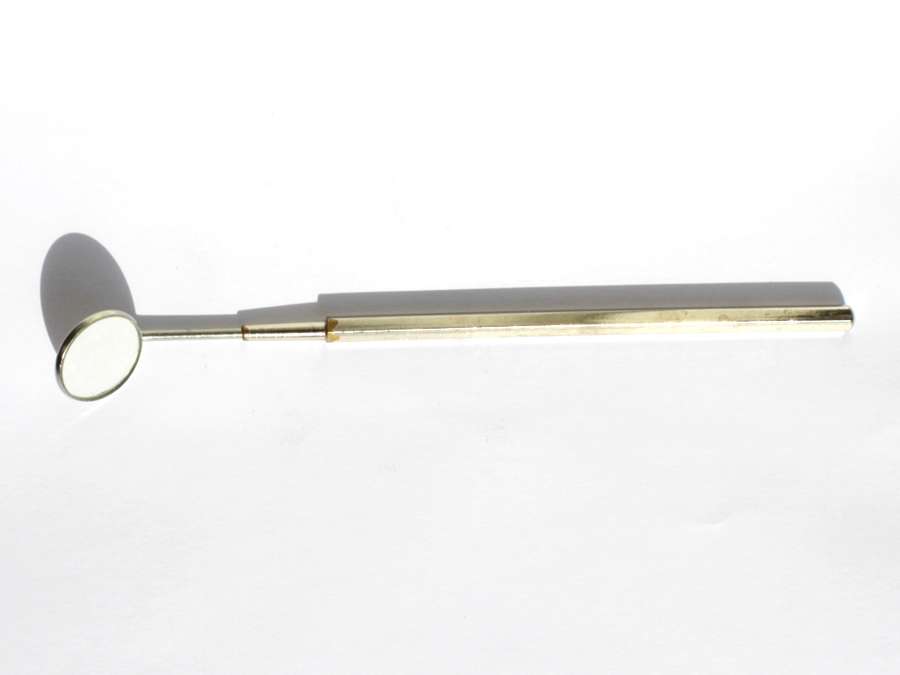
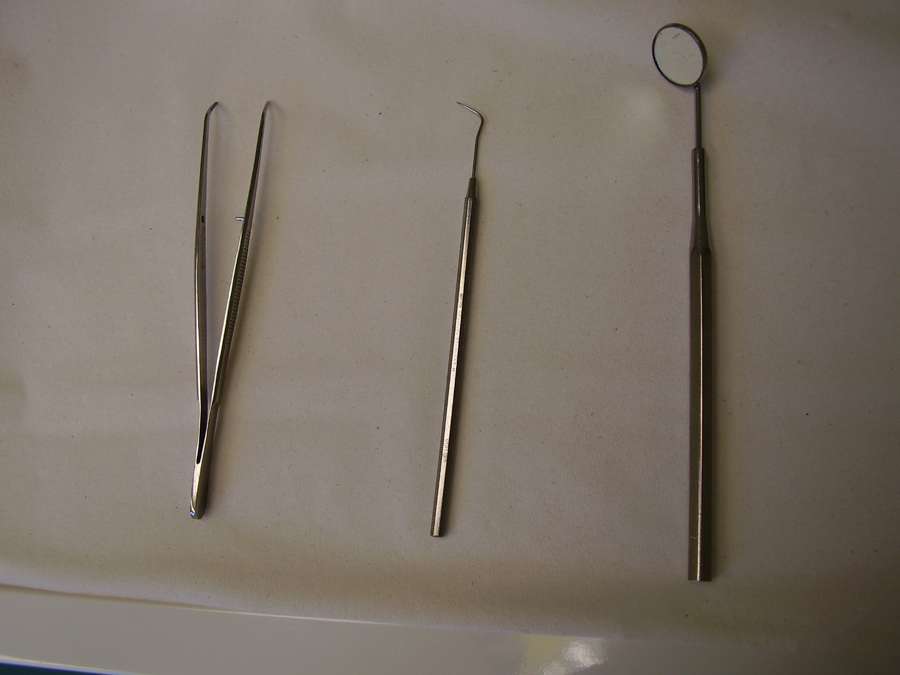
Yes, if insured. Under-18s get the full guaranteed list plus child-specific benefits: fissure sealing, varnishing, root canals on all teeth, and orthodontics up to age 12. * Photos: "Dental Mirror 01" (CC BY-SA 3.0) and "Spiegel, Sonde, Pinzette" (public domain), via Wikimedia Commons.