NFZ vs Private Health Insurance in Poland: Which Is Better for Expats?
The essentials: For most working expats the answer is both: your salary funds the NFZ, which covers hospitals and emergencies, while private subscriptions from about 99-260 zł a month buy fast outpatient visits and English-language booking. Keep the NFZ as your cover of record.

If you work in Poland, you are almost certainly paying into the public health system already - so when colleagues mention their Luxmed or Medicover package, the natural question is whether you should pay twice. The honest answer, as of October 2026: the two systems do different jobs, and most settled expat families end up using both. Here is what each one actually buys you, with current prices from the providers themselves.
What the NFZ gives you for the contribution you already pay
The Narodowy Fundusz Zdrowia is Poland's public health insurance fund. If you are employed on a Polish contract, your employer registers you and the health contribution is deducted from your salary automatically - you do not choose it and you cannot opt out. In return, the NFZ funds the full clinical pathway: primary care, specialist referrals, hospital treatment, surgery, emergency care, maternity care, the national vaccination programme for children, and reimbursement tiers on prescription medicines.
The depth is real: an NFZ hospital admission costs you nothing at the point of care, and that is the scenario that financially matters most. The weaknesses are equally real: waiting lists for non-urgent specialists and planned procedures, short appointment slots, and little tolerance for English at the reception desk. Our tracker of NFZ specialist waiting times shows what queues look like in practice, and if you are between jobs or newly arrived without a contribution title, the NFZ offers a voluntary insurance route covered in our guide to health insurance for foreigners.
*Data source: Act on healthcare benefits financed from public funds, consolidated text Dz.U. 2025 poz. 1461 (eli.gov.pl), checked October 21, 2026.*
What private medical packages actually sell
Private packages - abonamenty medyczne - are subscriptions to networks of private clinics: LUX MED, Medicover, Enel-Med, PZU Zdrowie and smaller players. What they sell is speed and comfort for outpatient medicine: next-day primary care, short waits for common specialists, blood tests on the spot, English-speaking staff as a bookable filter, and apps that handle scheduling.
Current entry prices give the shape of the market. LUX MED's individual subscriptions for adults and children start from 99 zł per month across seven variants; senior packages for ages 70-80 start from 119 zł per month; and if your employer package just ended, a continuation offer starts from 129 zł per month, provided you apply within 30 days of the company plan ending and are under 70. One contract can cover up to five people, which is how families typically buy it. Packages come in two pricing styles: full cover with everything included, or a cheaper monthly fee with a co-pay per visit - the second only makes sense if you rarely see a doctor.
Medicover's individual packages follow the same ladder: a basic tier with ten specialisations and small co-pays starts from 105 zł per month; a mid tier with 22 popular specialisations from 220 zł; and a Medium+ tier with 35 specialisations and two home visits a year from 260 zł per month. Paying annually takes 10% off each.
*Data source: luxmed.pl subscription shop and medicover.pl individual packages page, checked October 21, 2026.*
The catch buried in private packages: hospitals
The standard private package is outpatient care. Routine hospital treatment - a planned operation, an overnight stay - is usually NOT included in the entry and mid tiers; both big providers sell hospital treatment as a separate, more expensive category. In a genuine emergency, the ambulance takes you to a public hospital anyway, and the NFZ pays. This is the single most misunderstood point among expats: a 100-260 zł monthly subscription does not replace the public system's hospital floor. Your NFZ contribution remains the cover for the big-ticket events, which is precisely why the sensible setup for most working families is hybrid - NFZ as the entitlement of record, a private package as the speed layer on top.
Also read the cancellation terms before signing: at LUX MED, an individual contract runs a year, and stopping it requires notice by email or letter 30 days before the anniversary date; mid-year cancellation simply ends the contract at year's end.
*Data source: luxmed.pl and medicover.pl offer pages and FAQs, checked October 21, 2026.*
Reading the scope table before you sign
Package marketing compresses everything into a starting price, but the tiers differ in what is inside. Entry packages cover primary care and a short specialist list; dental care, physiotherapy, allergy testing and imaging beyond the basics typically appear only in higher variants. LUX MED describes its ladder exactly this way: core care with internists and pediatricians at the base, with dentistry, physiotherapy and allergy tests arriving in the upper subscriptions. Medicover splits hospital treatment for children and adults into its own category entirely. Three questions cut through any comparison: how many specialisations are included without co-pay, is hospital treatment inside or outside the package, and what does the contract say about pre-existing conditions. The answers vary by variant, not by brand - so compare the specific tier's table, not the logo.
*Data source: luxmed.pl package descriptions and medicover.pl package comparison, checked October 21, 2026.*
The language factor, honestly priced
For many expats the decisive argument is not speed but communication. NFZ care is delivered in Polish; some doctors speak English, but there is no booking filter for it, and the phone-reception layer rarely does. Private networks let you filter for English-speaking doctors in the app, and international desks exist precisely for this market. Our guide to finding an English-speaking doctor in Warsaw shows the free routes too - they exist - but they take patience. If your Polish is basic and you see doctors a few times a year, that booking filter alone can justify the entry-tier price.
*Data source: editorial practice; provider app functionality per luxmed.pl and medicover.pl, October 2026.*
Who should pick which setup
Employed, healthy, Polish-learning: start with the NFZ alone and add private only if waits frustrate you. Employed with a corporate package: use it fully - dental cleanings, physiotherapy, screenings - while remembering the NFZ sits underneath for anything serious. Parents of small children: a family package earns its keep in pediatric speed alone; one contract covering up to five people softens the cost, and our guide to public healthcare for foreign children shows the free NFZ pathway the package complements rather than replaces. Self-employed on a lump-sum tax: your NFZ contribution is a fixed monthly amount, so a lean private package plus the NFZ is still usually cheaper than paying per visit. Between jobs: keep the NFZ alive through voluntary insurance first - that is the coverage that protects you from five-figure hospital bills - and add private subscriptions only once the public floor is secure.
*Data source: framework per the healthcare benefits act and provider terms as cited above, October 2026.*
The bottom line
This is not either-or. The NFZ is the foundation - hospital care, emergencies, maternity, catastrophic cover - funded by a contribution you already pay. Private packages are a convenience layer for outpatient speed, comfort and English, priced from roughly 99 to 260 zł a month depending on depth. Buy the foundation first, then decide how much the speed layer is worth to your household.
*Data source: as cited above, checked October 21, 2026.*
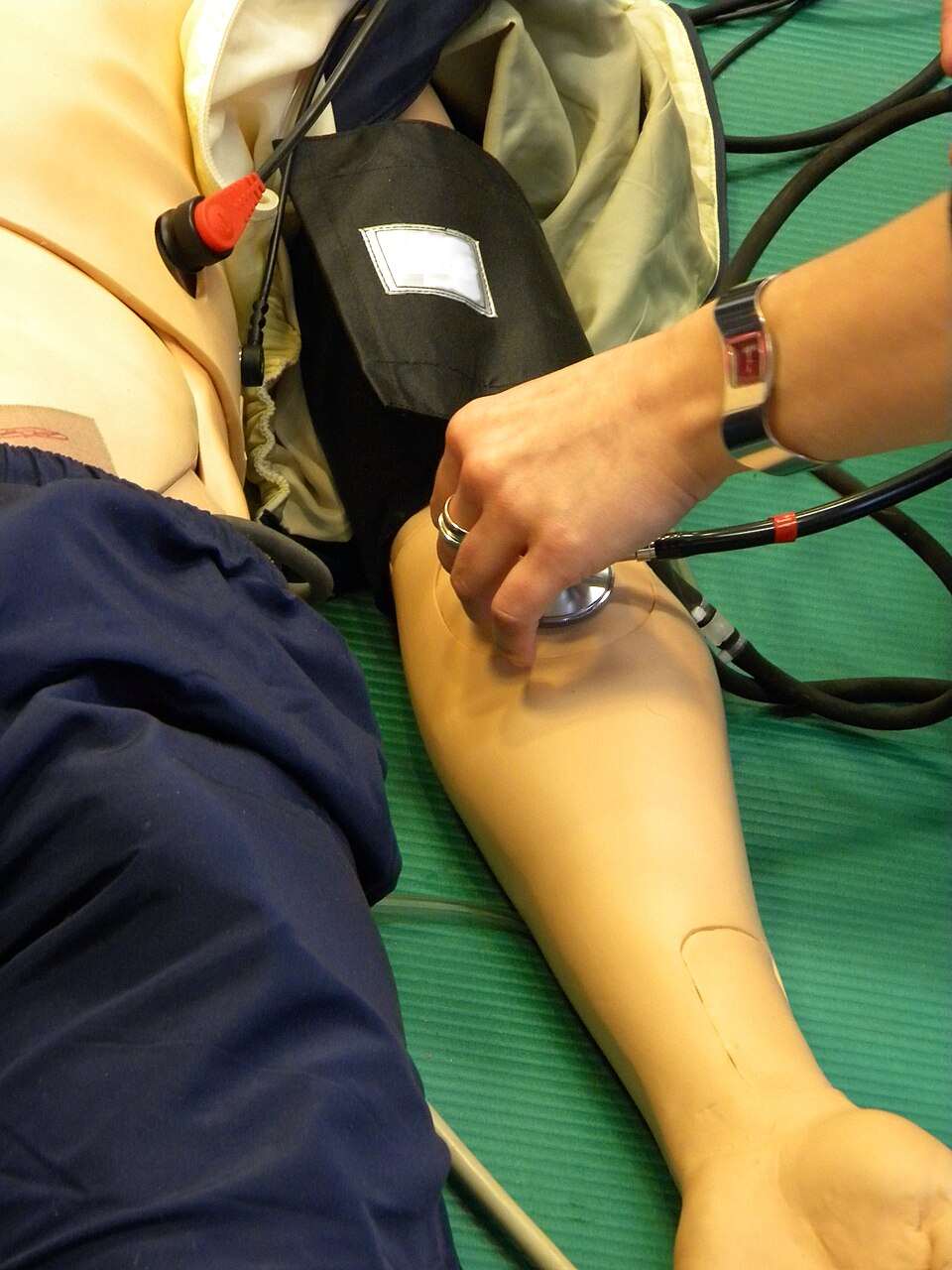
*Photos: doctor preparing a consultation by Shixart1985, CC BY 2.0; blood pressure measurement by Pöllö, CC BY-SA 3.0, both via Wikimedia Commons.*
Frequently asked questions
Do I still need the NFZ if I have a private medical package?
Yes. Standard private packages cover outpatient care - clinics, tests, specialists - but routine hospital treatment is usually excluded or sold as a separate tier. Emergencies and hospital care run through the NFZ, which your salary contribution already funds. Source: luxmed.pl and medicover.pl package pages, checked October 21, 2026.
How much does private health insurance cost in Poland in 2026?
Individual subscriptions start from about 99-105 zł per month for basic outpatient cover, with mid and upper tiers around 220-260 zł per month; annual payment typically saves 10%. Family cover works by adding members to one contract. Source: luxmed.pl and medicover.pl, checked October 21, 2026.
Can I use the NFZ as a foreigner working in Poland?
Yes - employment on a Polish contract triggers registration by your employer, and NFZ-funded care is available regardless of nationality once you are insured. Family members join through family registration. Source: healthcare benefits act, Dz.U. 2025 poz. 1461; our children-and-NFZ guide, October 2026.
Do private clinics in Poland have English-speaking doctors?
Yes - the large networks let you filter bookings by language in their apps, which is one of the main practical advantages over the public system, where care is delivered in Polish. Source: provider app functionality per luxmed.pl and medicover.pl, October 2026.