Warsaw vs Kraków for Expat Families: A Data-Driven Comparison (2026)
The essentials: Warsaw pays about 15% higher average salaries (GUS 2024) but rents run 40% higher (NBP Q1 2026); Kraków is cheaper, more compact and near the Tatras, but its voivodeship still exceeded PM limits in 2025 (GIOŚ). Two-career families lean Warsaw; one-income outdoor families lean Kraków.
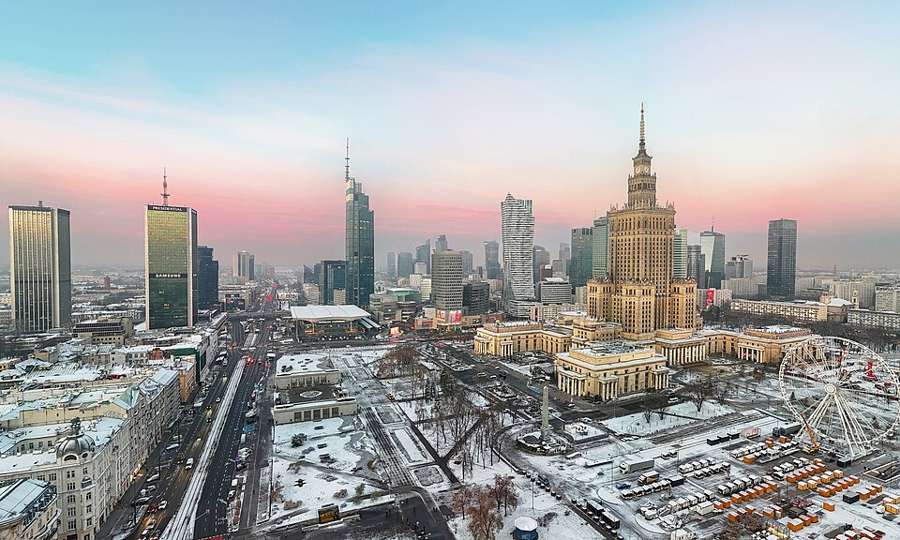
Warsaw or Kraków is the first real fork in the road for many families moving to Poland. Both are safe, both have international schools and big expat communities, and both work. But they are different sizes, different job markets and different daily rhythms - and the numbers behind those differences are more measurable than most comparisons admit. Here is the data-driven version for families, with official figures as of October 2026.
Scale: a capital versus a city that still feels like a town
Warsaw had 1.87 million residents at the end of 2025, Kraków 816,614 - less than half. That gap drives almost everything else in this comparison. Warsaw is a metro-scale labour market where foreigners disappear into the crowd; Kraków is compact enough that the centre, schools and parks sit within a few tram stops of each other. Families who want anonymity, choice and career depth lean Warsaw; families who want a city their children can navigate independently by age twelve lean Kraków.
*Data source: GUS publication Ludność. Stan i struktura w 2025 r. (population as of December 31, 2025, stat.gov.pl, published April 29, 2026), checked October 21, 2026.*
Money: Warsaw pays 15% more, then takes it back in rent
The official wage figures put the average gross monthly salary in Mazowieckie (Warsaw's voivodeship) at 9,489 zł against 8,249 zł in Małopolskie (Kraków's) - a 15% Warsaw premium, using the latest full-year figures published by the statistics office in November 2025.
Housing eats most of it. The central bank's rental database shows the average lease signed in Q1 2026 at 85.1 zł per square metre per month in Warsaw against 61.0 zł in Kraków - Warsaw rents running about 40% higher. On a 60 m² family flat, that is roughly 5,100 zł a month versus 3,700 zł, a gap of about 1,400 zł monthly, before the (similar) utility bills. A two-income professional couple usually still comes out ahead in Warsaw; a family on one salary often lives noticeably better in Kraków.
*Data source: GUS voivodeship wage announcement of November 19, 2025 (2024 figures); NBP BaRN rental statistics Q1 2026 via rynekprs.pl compilation, checked October 21, 2026.*
Jobs: different ladders for the working parent
Warsaw's market is corporate Poland in one postcode: banks, consultancies, tech headquarters, shared-service centres, government and NGOs - the deepest pool of English-first jobs in the country, and the easiest city in which both halves of a couple find work. Kraków is a strong second with a distinctive mix: a large tech and business-services sector, a famous academic scene, and more seasonal tourism work. For career flexibility - the ability to change jobs without changing cities - Warsaw is simply safer. For dual-career families this is often the deciding factor.
*Data source: editorial assessment grounded in the GUS wage data above, October 2026.*
Air quality: the chapter Kraków has been rewriting
Kraków's historic weakness is winter smog, and the 2025 verified data keeps the nuance alive. The national inspectorate's assessment found the daily PM10 limit exceeded in eight voivodeships - Małopolskie (Kraków's) among them, Mazowieckie (Warsaw's) not - and the annual PM2.5 limit breached in five, again including Małopolskie and not Mazowieckie. The trend in Kraków has been improving for years as coal heating is phased out, but a family with an asthmatic child should treat this as real data, not folklore: winters in Kraków still bring days when the air-quality app matters.
*Data source: GIOŚ national air-quality assessment for 2025 (powietrze.gios.gov.pl), checked October 21, 2026.*
Schools and childcare: both work, differently
Both cities run free public kindergartens on the same national rules, both have catchment primary schools obliged to accept foreign children with preparatory classes for those learning Polish, and both have a deep bench of international schools - with Warsaw's bench simply longer, as befits a capital full of embassies and multinationals. The practical difference is competition: getting a mid-year kindergarten place or a spot in a sought-after international school is tighter in Warsaw's fastest-growing districts, while Kraków's smaller scale makes the whole search shorter. Our kindergarten guide and the family guide to Warsaw cover the mechanics; the rules themselves are national and identical.
*Data source: national education framework per our linked guides; City of Warsaw education portal, October 2026.*
Weekends: the Vistula versus the Tatras
Lifestyle is where the comparison stops being a spreadsheet. Kraków offers the Wawel-and-Planty historic core, Zakopane and the Tatra mountains close enough for day hikes and ski weekends, and a café density that makes the city feel built for strolling. Warsaw counters with scale: the wild Vistula banks inside the city, 79-plus parks, every museum, concert and flight connection in the country, and a restaurant scene that renews monthly. Families who recharge outdoors in a serious way pick Kraków; families who want maximum variety and connectivity pick Warsaw. Our day-trip guides for both cities map what weekends actually look like from each.
*Data source: editorial; GIOŚ and city data as cited above, October 2026.*
The international texture
Both cities are university towns at scale, which is part of why English works in both. At the end of 2025 Warsaw's universities taught 260,656 students and Kraków's 136,306 - Kraków punches far above its population weight, and Poland overall hosted 101,587 international students. The visible result: established expat meetups, international churches and parents' networks in both cities, with Kraków's compressed into a walkable centre and Warsaw's spread across districts. Warsaw's Chopin Airport is the country's main hub for long-haul family trips home; Kraków's airport is strong on European routes, which suits families whose relatives are a short flight away.
*Data source: GUS higher-education data, end of 2025, via rynekprs.pl compilation, checked October 21, 2026.*
Everyday costs beyond rent
Outside housing, the daily cost gap narrows sharply: groceries, public transport and childcare meals cost roughly the same in both cities, and both run free public kindergartens and the 800+ child benefit on identical national rules. Where Warsaw gets pricier is discretionary life - restaurants, children's activities, international-school fees - because bigger-market pricing applies. Budget-conscious families notice the difference mostly in how far the fun money goes, not in the bills.
*Data source: editorial assessment; national benefit and kindergarten rules per our linked guides, October 2026.*
Getting around and getting between them
Daily logistics differ in kind: Warsaw runs Poland's only metro, with buses and trams filling the gaps across a sprawling map, while Kraków's tram-and-bus network covers a much smaller footprint - most family errands there stay within a twenty-minute ride. Between the cities, fast trains run the Warsaw-Kraków route throughout the day in roughly two and a half hours, which makes a "live in one, work partly in the other" arrangement genuinely possible and keeps both sets of grandparents reachable. Neither city requires a family car for daily life; in central Warsaw, one is mostly a parking problem.
*Data source: editorial assessment of national rail and city transport networks, October 2026.*
The verdict by family profile
One strong income, young kids, outdoor life: Kraków - the rent gap funds a lot of mountain weekends, and the compact scale suits small children. Two careers, teenagers, frequent travel: Warsaw - the job-market depth and airport win, and the air is cleaner in winter. Undecided: rent for six months in the city your job is in before committing to either - both are easy to leave well, and the train between them runs all day.
*Data source: synthesis of the official figures cited above, October 2026.*
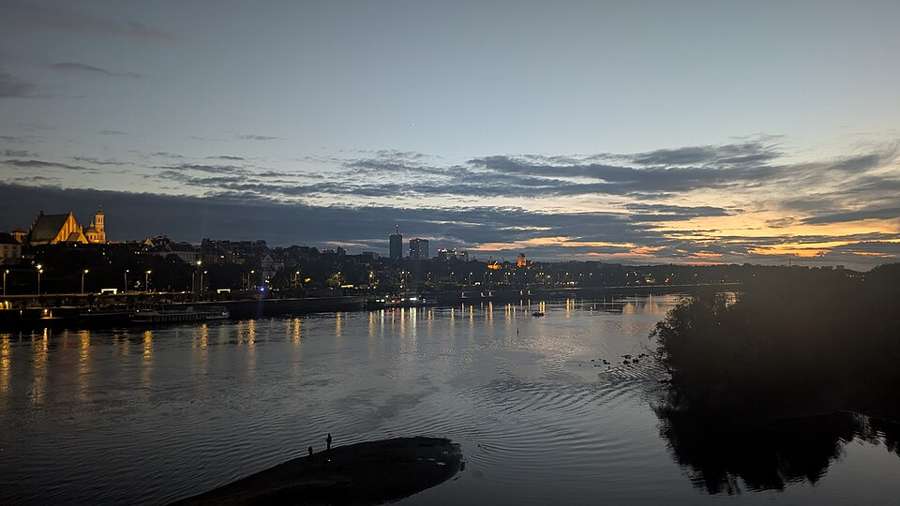
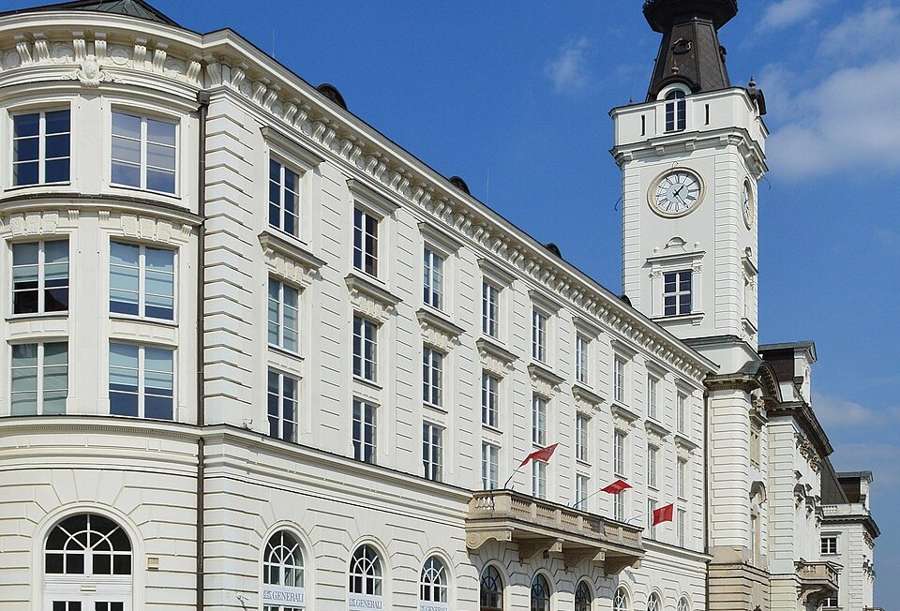
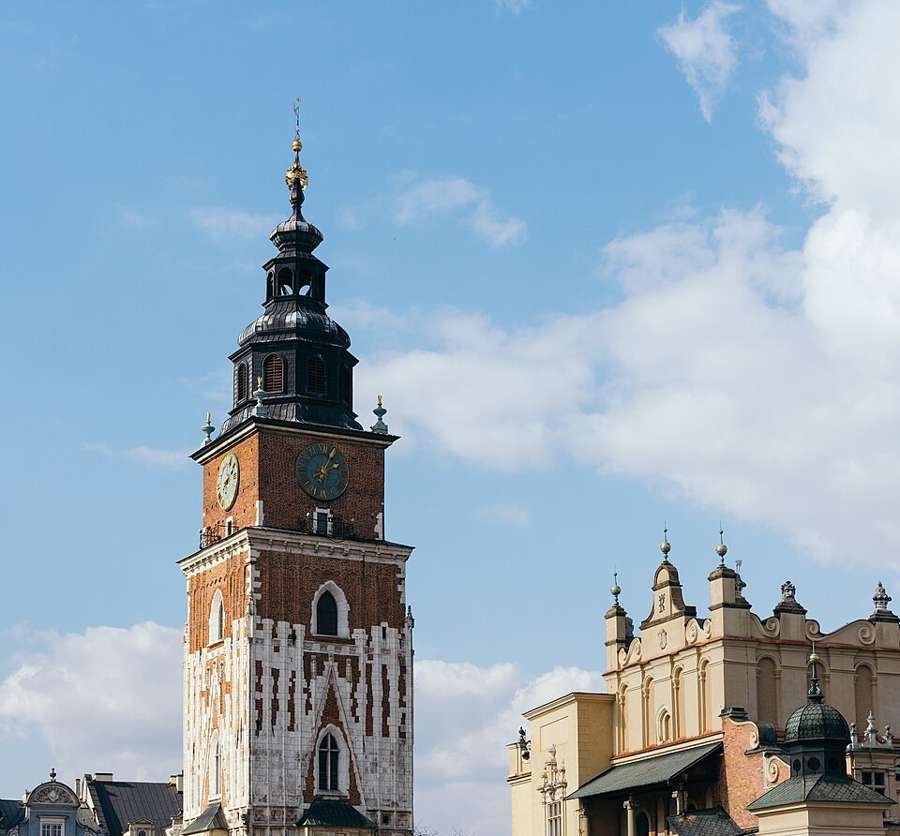
*Photos: Warsaw skyline in winter by Quintin Soloviev, CC BY 4.0; Kraków Town Hall Tower by Lloyd Tudor, CC BY-SA 4.0, both via Wikimedia Commons.*
Frequently asked questions
Is Warsaw or Kraków cheaper for a family?
Kraków, mainly through housing: average signed rents in Q1 2026 were 61.0 zł/m² in Kraków versus 85.1 zł/m² in Warsaw - roughly a 1,400 zł monthly gap on a 60 m² flat. Salaries run about 15% higher in Warsaw's voivodeship, which offsets part of it. Source: NBP BaRN Q1 2026; GUS wage announcement November 2025.
Which city has better air quality, Warsaw or Kraków?
Warsaw, in winter especially: the official 2025 assessment found PM limits exceeded in Kraków's voivodeship but not in Warsaw's, though Kraków's air has been improving for years. Source: GIOŚ 2025 air-quality assessment, checked October 21, 2026.
Can foreign children attend public school in both cities?
Yes - the same national rules apply: catchment schools must accept foreign children, and preparatory classes with extra Polish lessons support those who need them. Warsaw simply has more international-school alternatives. Source: national education framework; City of Warsaw education portal, October 2026.
How far is Kraków from the mountains?
The Tatra foothills are close enough for day trips and ski weekends - one of Kraków's main family advantages over Warsaw, whose outdoor life centres on the Vistula and city forests instead. Source: editorial; see our day-trip guides, October 2026.