Is Poland Safe for Foreigners? Crime Stats and Common Scams
The essentials: Yes - Poland is one of Europe's safer countries: recorded crime fell again in 2025 and violent crime against foreigners is rare. The real risks are pickpocketing in tourist areas, impersonation scams, unofficial taxis and bar overcharging - all avoidable with basic habits.
Poland has a reputation problem in both directions: some newcomers arrive expecting danger that statistics do not support, others assume nothing can go wrong anywhere. The truth, as of late 2026, is dull in the best way: Poland is one of Europe's safer countries for everyday life, violent crime against foreigners is rare, and the risks that actually touch expats are petty theft, a handful of well-documented scams, and some legal gotchas that surprise people from more relaxed jurisdictions. Here is the evidence first, then the playbook.
What the official numbers say
The Polish police's national review, published in January 2026, recorded 439,287 crimes in 2025, slightly down on the year before, in a country of roughly 37 million people. The five street-crime categories that shape daily safety - theft, burglary, robbery, car theft and assault - fell by another 7,624 cases to 149,089, while the detection rate in those categories rose four points to 55.2%. Homicides numbered 505 for the whole country in 2025, roughly 1.4 per 100,000 people, a fraction of the rates in most large countries newcomers compare Poland with.
The honest caveats sit in the same data. Theft is the dominant crime type by far, and it concentrates exactly where foreigners concentrate: crowded areas, tourist spots, main rail stations and trains, including overnight sleepers. The UK government's travel advice notes that most visitors experience no difficulties and serious crime against foreigners is rare, while recording that some attacks have been racially motivated - uncommon, but not zero, and worth knowing rather than discovering.
*Data source: Polish National Police 2025 crime review (policja.pl, published January 16, 2026); GOV.UK Poland travel advice, checked October 21, 2026.*
The scam growing fastest: the fake official
The single most important fraud trend for expats is what Polish police call oszustwa na legendę - impersonation scams. The police counted 5,226 such cases in 2025, up sharply from 3,825 in 2024, with victims losing 158.7 million złoty. The classic version is the fake grandchild call, but the police report that perpetrators now routinely pose as police officers, prosecutors, CBŚP agents and other authority figures - sometimes spoofing real institutions' phone numbers.
The defence is one hard rule: no genuine Polish official, police officer or bank employee will ever ask you to transfer money, hand over cash to a courier, share card codes, or install an app "for security". Any caller who does is a criminal, full stop. Hang up, call the institution back on its published number, and report the attempt. This matters doubly for expats, whose ear is less tuned to what a real Polish office sounds like - and triply for parents back home, who are the classic targets of the family-emergency variant.
*Data source: Polish National Police 2025 crime review (policja.pl, January 16, 2026).*
Taxis, bars and the night-out playbook
Two legacy risks remain well documented in official travel advice. Unofficial taxis: cars with a taxi crest but no company name and phone number on the door are not licensed, and unofficial drivers routinely overcharge - in the worst recorded cases, passengers have been assaulted. Use the apps (Uber, Bolt, FreeNow) or marked corporation taxis with the rate card in the window. In bars and clubs: drink spiking followed by robbery happens, and end-of-night card overcharging is a known pattern in some nightlife venues, so watch your drink, check every bill line by line, and pay by card only after seeing the terminal amount. None of this is reason to skip Warsaw's nightlife - it is the same hygiene any big European city asks for.
*Data source: GOV.UK Poland travel advice, checked October 21, 2026.*
The legal surprises that cost foreigners real money
Poland enforces several rules that visitors from North America or the UK routinely break on autopilot. Drinking alcohol in public places is illegal: police can fine you, and if you are drunk in public you can be taken to a sobering-up clinic, held until sober and charged for the stay. Carry ID at all times - a printed copy of your passport's photo page is acceptable. Jaywalking is finable and enforced. If you walk or cycle outside built-up areas after dark, a reflective item is mandatory, with a 100 zł fine and potential liability if you are in an accident without one. Validate every public transport ticket the moment you board or enter the metro area - inspectors are frequent and unmoved by the foreigner explanation. And drugs, including cannabis, carry severe penalties; airports screen transiting baggage too.
*Data source: GOV.UK Poland travel advice, checked October 21, 2026.*
Demonstrations, football and specific groups
Public demonstrations are common in Polish cities, mostly peaceful and well-policed; the standard advice is to give large crowds space, not because they usually turn violent but because there is no upside to finding out. Football derby days bring a specific subculture - the police prevented 133 planned hooligan confrontations in 2025 and recorded only 16 actual ones, so the risk to bystanders is low but visible around stadiums on match days. For LGBT+ residents: same-sex relationships are legal, the big cities have established scenes, and smaller towns can be less tolerant - the travel advice puts it in those exact terms.
*Data source: Polish National Police 2025 review; GOV.UK travel advice, checked October 21, 2026.*
What about the war next door?
New arrivals ask this more than any other safety question, so here is the official position: some Russian military strikes in Ukraine have hit within 20 km of the Polish border, and in 2022 an explosion in Przewodów near the border killed two Polish nationals. Access to the land borders with Ukraine and Belarus is restricted. Day-to-day life in Warsaw, Kraków or Wrocław is unaffected - there are no wartime measures in Polish cities - but the context explains the occasional air-raid siren test and the military convoys on eastern motorways. For anything changing fast, follow official channels rather than social media.
*Data source: GOV.UK Poland travel advice, checked October 21, 2026.*
Housing and marketplace scams: the expat-specific one
The fraud most likely to target you personally is not on the street at all - it is the too-good apartment listing. The pattern: a below-market flat on a classifieds platform, a "landlord" who is abroad, a request for a deposit before any viewing, sometimes with a fake rental contract and stolen interior photos. The rules that defeat it: never pay anything before physically viewing the flat and verifying the person showing it can actually rent it out, and treat any landlord who cannot meet in person as a scam until proven otherwise. Our guide to renting through an agency in Poland covers when professional help is worth its fee, and the kaucja guide explains the deposit rules that apply once you do sign.
*Data source: editorial practice; see our linked rental guides, October 2026.*
Habits that cover 95% of it
Keep valuables out of sight in crowds and on trains. Photograph your documents and keep the copies separate. Use app taxis at night. Check bills before paying. Be sceptical of urgency - every scam above runs on it. Save 112, the European emergency number, and know that Poland's 997 reaches the police directly; our medical emergency guide covers the health side of the numbers, including the English-language options. Do these and Poland becomes what the statistics say it is: a country where your worst likely encounter with crime is a pickpocket you noticed in time.
*Data source: as cited above, October 2026.*
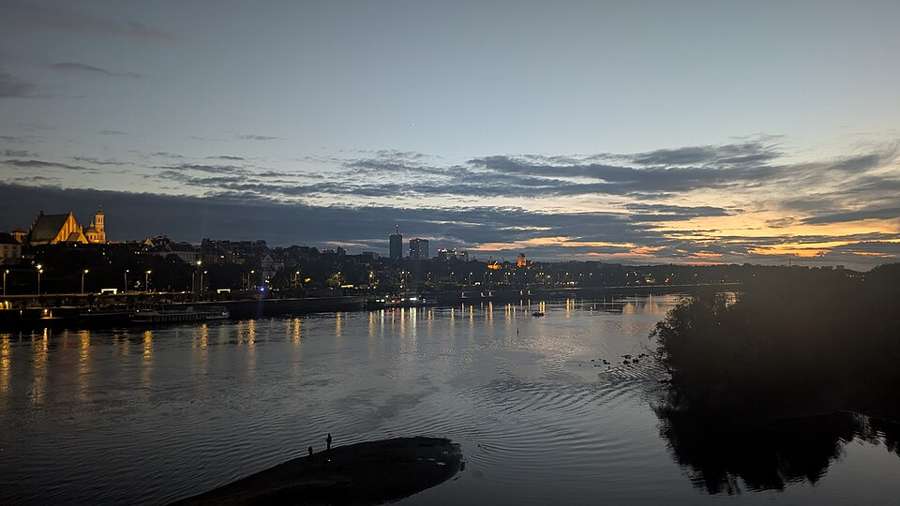
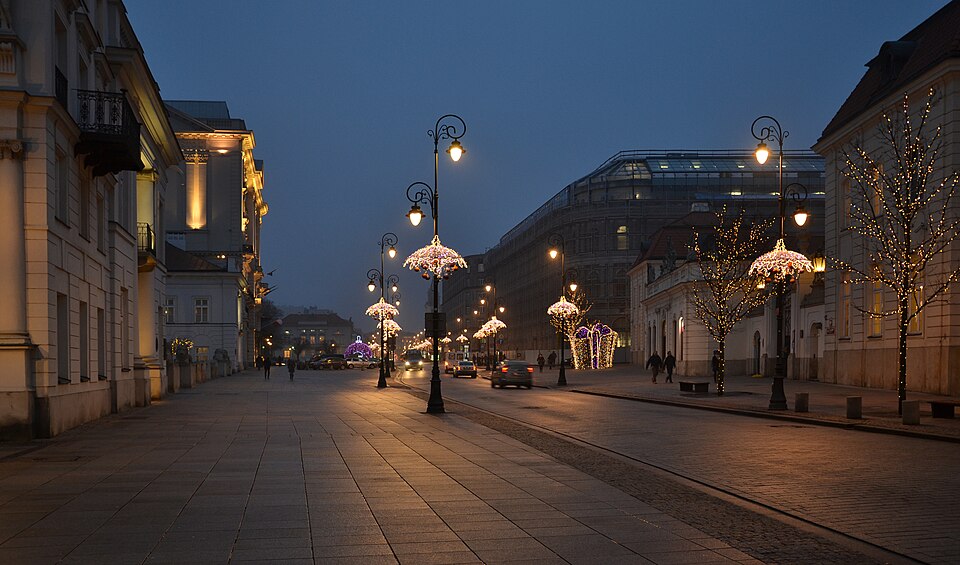
*Photos: Warsaw Old Town skyline at sunset by Oleslawlama, CC BY-SA 4.0; Krakowskie Przedmieście on a January evening by Pudelek, CC BY-SA 4.0, both via Wikimedia Commons.*
Frequently asked questions
Is Poland safe for foreigners in 2026?
Yes by European standards: 439,287 recorded crimes in a 37-million country in 2025, street-crime categories falling, and 505 homicides nationwide. Serious crime against foreigners is rare, though petty theft targets tourist areas and stations. Source: Polish National Police 2025 review; GOV.UK travel advice, October 2026.
What is the most common scam targeting people in Poland?
Impersonation fraud - callers posing as family members, police, prosecutors or banks demanding urgent money transfers. There were 5,226 such cases in 2025 with 158.7 million złoty lost. No genuine official ever asks for transfers or codes. Source: Polish National Police 2025 review, January 16, 2026.
Can I drink alcohol in public in Poland?
No - drinking in public places is illegal. Police can fine you, and if you are drunk in public you can be held at a sobering-up clinic overnight at your own expense. Source: GOV.UK Poland travel advice, October 2026.
Do I need to carry ID in Poland?
Yes - always carry identification; a printed copy of your passport's photo page is acceptable. Source: GOV.UK Poland travel advice, October 2026.