Gdańsk Weekend Guide: Solidarity, Amber and the Baltic
The essentials: Take a morning Pendolino from Warsaw (2h46). Day one: Royal Route, Mariacka, St Mary's Basilica (free) and the WWII Museum (33 zł, free Tuesdays, closed Mondays). Day two: Solidarity Centre (40 zł) and Westerplatte. Add Oliwa and Sopot by SKM train with a third day.
Gdańsk rewards a weekend like few Polish cities. Within a few compact streets you get a Hanseatic port skyline rebuilt brick by brick after 1945, the basilica that anchors one of Europe's most atmospheric market streets, the peninsula where World War II began, and the shipyard where the strikes of August 1980 set off the chain of events that ended communism in Poland. Add the Baltic beaches of Sopot one suburban train stop away and you have a trip that works for history lovers, amber hunters and families alike. The city's layered identity is the attraction: a Polish royal port for centuries, then the Free City of Danzig between the wars, then the wreck of 1945 and the reconstruction, then the cradle of Solidarity. Every era left a walkable trace. Here is how to plan it, with current 2026 prices and hours.
Getting there and getting around
From Warsaw, PKP Intercity runs Express InterCity Premium (Pendolino) trains that cover the Warsaw-Gdańsk route in 2 hours 46 minutes; ordinary InterCity trains take about 3 hours 19 minutes. Both arrive at Gdańsk Główny, the historic main station a fifteen-minute walk from the Long Market. Book early - the operator's advance and promo fares can cut the standard price by more than half.
Data source: PKP Intercity Warsaw-Gdańsk route page, checked 22 October 2026.
Flying instead? Gdańsk Lech Wałęsa Airport sits about 12 kilometres northwest of the centre. Polregio trains from the airport station - reached by a covered footbridge from the terminal - run toward Gdańsk Wrzeszcz, where you change at platform 3 for a Fast Urban Railway train to Gdańsk Główny or Gdańsk Śródmieście. City bus line 210 also links the airport with Wrzeszcz station in about 25 to 35 minutes. A single ZTM ticket costs 4.80 zł regular and 2.40 zł reduced, from machines, mobile apps or the Fala system inside buses and trams.
Data source: Gdańsk Lech Wałęsa Airport bus and train access pages, checked 22 October 2026.
Once in the city, you can cover nearly everything on foot. The Main Town, the shipyard and the Museum of the Second World War sit within a twenty-minute walk of each other; trams and the SKM urban train handle Oliwa and Sopot when your legs give out.
The Main Town: Długi Targ, Mariacka and the river
Start at the Golden Gate and walk the Royal Route down Długa and Długi Targ, the Long Market, a parade of gabled merchants' houses rebuilt with extraordinary care after wartime destruction. The Neptune fountain in front of the Artus Court is the city's emblem, and the Main Town Hall tower gives the classic panorama when open. Turn down Mariacka, the most photographed lane in Gdańsk, where amber jewellers line the ground floors of narrow townhouses with ornate porches and gargoyle gutters.
At the foot of Mariacka stands St Mary's Basilica, one of the largest brick churches in the world. Entry is free. Visiting hours are weekdays 8:30 to 17:30 (extended to 18:30 from 1 July to 31 August), and on Sundays and church holidays 11:00 to 12:00 and 13:00 to 17:30; sightseeing pauses during Mass and other liturgies, so aim for a weekday morning if you want an unhurried look at the vaults and the famous astronomical clock.
Data source: St Mary's Basilica visitor information page, checked 22 October 2026.
Amber deserves its own note. Gdańsk has worked the "gold of the Baltic" since medieval times, and the craft is concentrated around Mariacka and the Amber Museum in the old Prison Tower on Długa. The honest rule for buyers: look for a certificate of authenticity, be suspicious of prices that seem too good, and remember that real Baltic amber is warm to the touch and remarkably light.
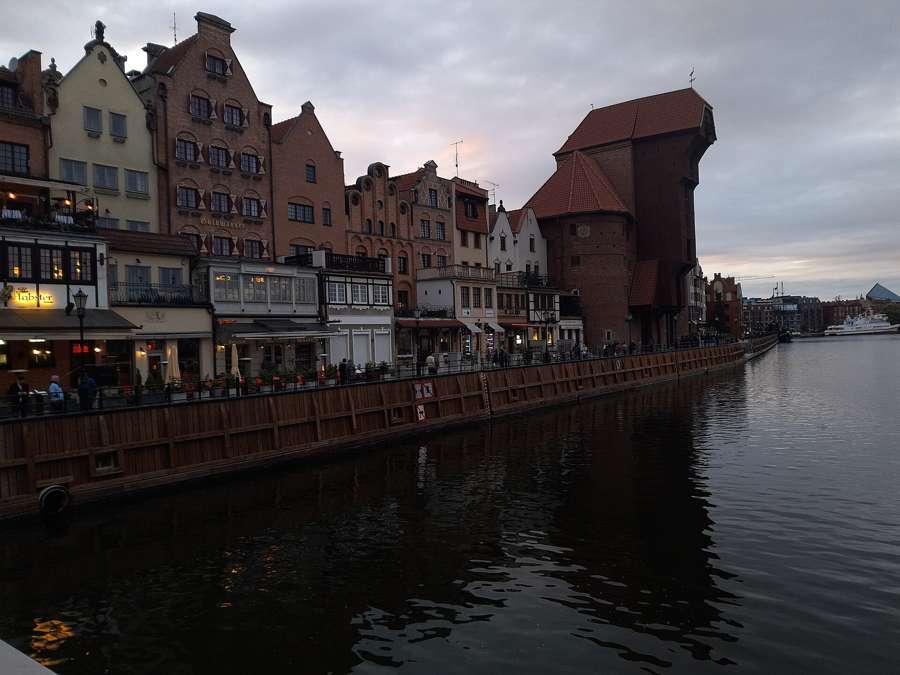
Finish the loop on the Motława embankment at the Żuraw, the medieval wooden port crane that once loaded ships and set masts. Come back after dark: the waterfront facades and the crane lit over the river are the single best evening view in the city.
The Museum of the Second World War
Two centuries of one riverbank tell one story; this museum tells the other. Housed in a striking tilted tower near the shipyard, it is the city's essential museum and one of the best in Poland - plan three to four hours for the main exhibition alone.
Practical points for 2026: the museum is closed on Mondays. Ticket offices run Tuesday to Sunday, 9:30 to 17:00. The main exhibition costs 33 zł normal and 23 zł reduced, with a family ticket at 72 zł for up to five people (one or two adults with children up to 19). An audio guide in 14 languages costs 12 zł and is strongly recommended. Admission is free on Tuesdays, when hours are 10:00 to 16:00 and tickets are collected at the ticket office - but a 2,500-visitor Tuesday limit applies, so arrive early. Tickets bought in the last 30 minutes before closing drop to 17 zł normal and 12 zł reduced.
Data source: Museum of the Second World War tickets and prices page, checked 22 October 2026.
Westerplatte and the shipyard
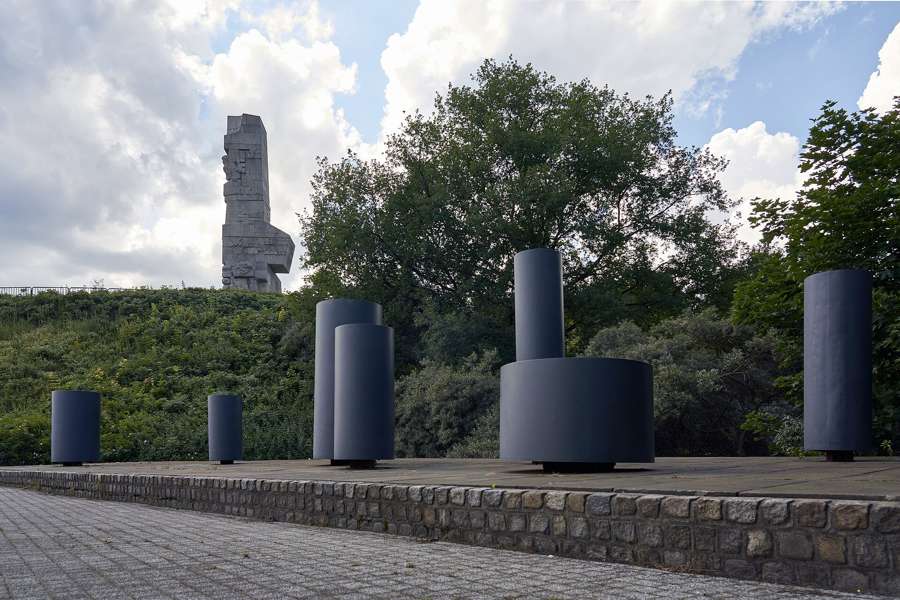
At 4:48 a.m. on 1 September 1939, the German battleship Schleswig-Holstein opened fire on the Polish Military Transit Depot at Westerplatte - the first shots of World War II. The small garrison held out for seven days, and the peninsula is now an open-air memorial: the ruined guardhouses, the cemetery of the defenders and the towering monument above the harbour entrance. The grounds are open year-round; the Guardhouse No. 1 exhibition, a branch of the Museum of Gdańsk, has in recent seasons opened daily through the summer, so check its page for current off-season access before you go. Buses from the centre serve Westerplatte, and in season a water tram crosses the harbour.
Data source: Museum of Gdańsk, Guardhouse No. 1 at Westerplatte pages, checked 22 October 2026.
Back near the main station, the European Solidarity Centre stands in rusted ship-plate cladding by the famous Gate No. 2 of the Lenin Shipyard and the Monument to the Fallen Shipyard Workers. The permanent exhibition walks you through the August 1980 strikes, the birth of the Solidarity movement and the fall of communism, with the audio guide included in every ticket. In 2026 an adult ticket costs 40 zł, reduced 35 zł, and family tickets run 100 zł (2+1) or 115 zł (2+2 or 2+3) for parents with children up to 19; a separate shipyard exhibition costs 15 zł or 10 zł reduced. The ticket desk is open Monday to Friday 10:00 to 18:00 and weekends 10:00 to 19:00. Budget at least two hours, and leave time for the observation deck and the shipyard grounds themselves.
Data source: European Solidarity Centre plan-your-visit page and official ticket price list, checked 22 October 2026.
If you have a third day: Oliwa and Sopot
The SKM urban train runs up the coast every few minutes. Get off at Oliwa for the cathedral with its celebrated 18th-century organ - recitals fill the nave with moving carved angels - and the abbey park next door. Two stops further, Sopot is the Tri-City's resort face: Europe's longest wooden pier, the crooked house on Monte Cassino street and a beach that stays walkable in every season. In stormy off-season weather the pier and the promenade are at their most dramatic, and the crowds are gone. The SKM ride from Gdańsk Główny to Sopot takes about twenty minutes, and standard ZTM tickets cover it - check the zone you need at the machine before boarding.
A workable two-day plan
Day one: arrive by a morning Pendolino, walk the Royal Route and Mariacka, visit St Mary's Basilica before lunch, spend the afternoon in the Museum of the Second World War, and end on the Motława embankment at dusk. Day two: morning at the European Solidarity Centre and the shipyard, midday bus to Westerplatte, evening train back to Warsaw - or one more night to add Oliwa and Sopot the next morning. Autumn and winter visitors should note the upside: the Tuesday free entry at the WWII Museum, quieter amber workshops on Mariacka, and hotel rates well below the summer peak.
Frequently asked questions
Is Gdańsk worth visiting in autumn or winter?
Absolutely. The museums carry the trip, the Baltic storms give the waterfront its most atmospheric light, prices drop, and only a few seasonal extras - harbour cruises, some exhibitions - pause until spring.
Is Gdańsk worth visiting for just a weekend?
Yes. The Main Town, WWII Museum, Solidarity Centre and Westerplatte fit comfortably into two full days because everything sits close together. Add a third day only if you want Oliwa and Sopot.
Train or plane from Warsaw to Gdańsk?
The train. PKP Intercity's Pendolino covers Warsaw-Gdańsk in 2 hours 46 minutes city-centre to city-centre; by the time you add airport transfers and check-in, flying is slower door to door.
What is free in Gdańsk?
Plenty: the Royal Route and Mariacka streets, St Mary's Basilica, the Motława waterfront, the Westerplatte memorial grounds, and on Tuesdays the entire Museum of the Second World War (free tickets collected at the office, 10:00-16:00, 2,500-visitor limit). * Photos: the Motława embankment and Żuraw crane at dusk by Gerda Arendt, CC0, and the Westerplatte monument by Virtual-Pano, CC BY-SA 4.0, both via Wikimedia Commons.