Jasna Góra Day Trip: Visiting the Black Madonna of Częstochowa
The essentials: Jasna Góra opens 5:00-21:30 daily; entry is free. The Black Madonna icon is unveiled at 6:00, then 13:30 on weekdays and 14:00 on weekends. Museums run 9:00-17:00 until 31 October, then 9:00-16:00 from 1 November. Trains from Warsaw and Kraków serve Częstochowa all day.
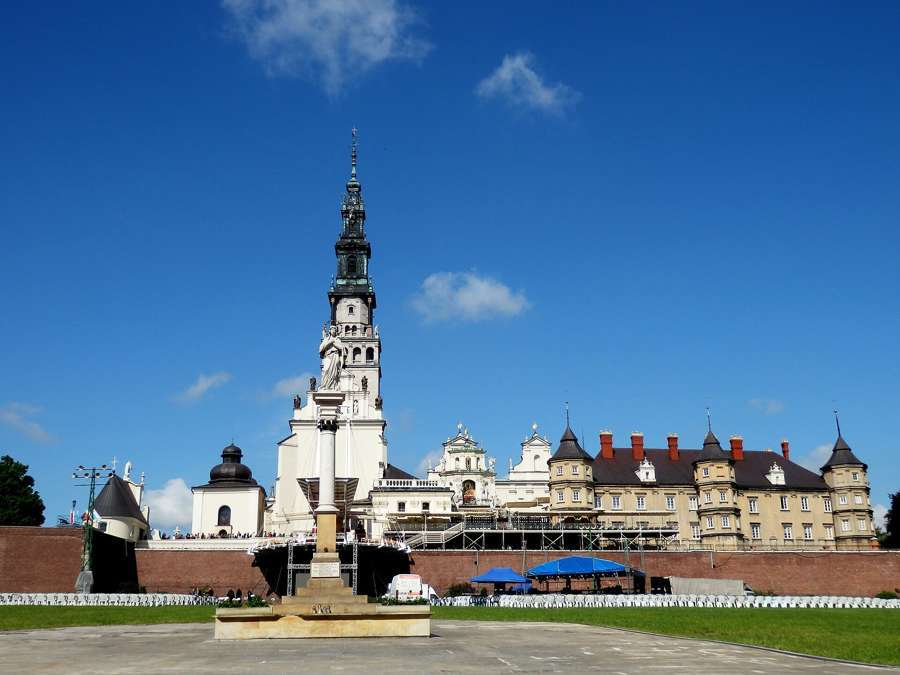
Jasna Góra is the one place in Poland where a queue forms before dawn in every season. The Pauline monastery on the hill above Częstochowa holds the Black Madonna, the country's most revered icon, and whether you arrive as a pilgrim or simply as a traveller curious about what moves this country, the experience is unlike any museum visit. The fortress-like complex is also a chapter of national history in stone: this is where a small garrison resisted the Swedish army in 1655, and where Poland's kings came to give thanks. The complex itself rewards a slow approach: baroque bastions and gates ring the hilltop, and you enter through vaulted passageways into a courtyard where the 106-metre tower rises above the basilica, the chapel and the monastery buildings. Here is how to visit it well on a day trip.
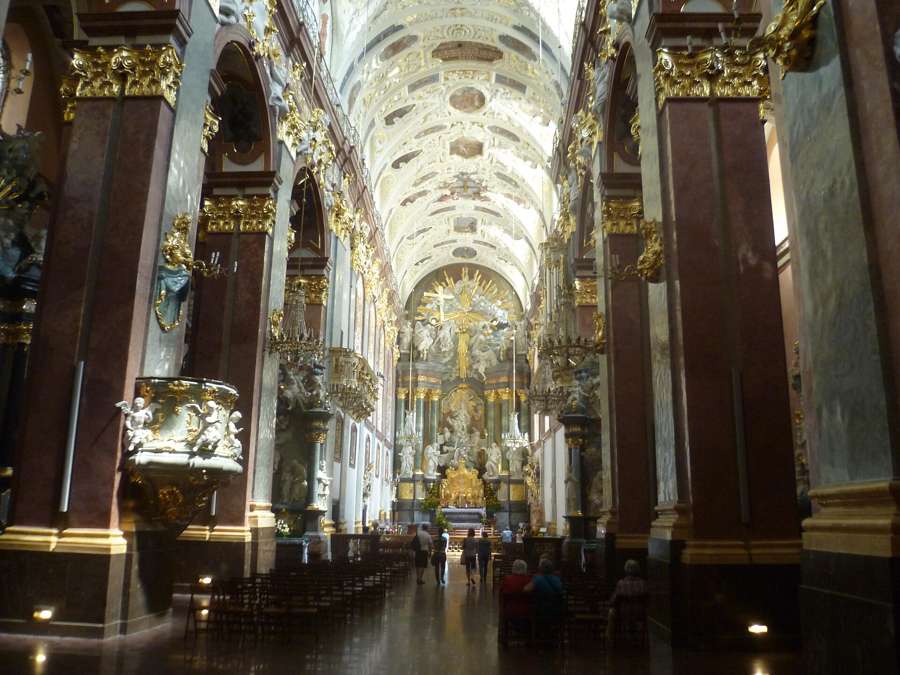
The shrine and the icon
The monastery opens daily at 5:00 in the morning and closes at 21:30. The day's rhythm is set by the icon itself: the Miraculous Image in Our Lady's Chapel is unveiled at 6:00 every morning, veiled at noon (13:00 on Saturdays, Sundays and feasts), and unveiled again at 13:30 on weekdays and 14:00 on weekends and feasts. The day closes with the Jasna Góra Appeal at 21:00, sung by the whole congregation. Entry to the shrine, the chapel and the basilica is free.
Data source: Jasna Góra official information for pilgrims, checked 22 October 2026.
The icon measures 121.8 by 81.3 centimetres and is painted in the Byzantine Hodegetria style - the Mother pointing to the Child as the way. Two long slashes across the Madonna's cheek are real scars: according to the monastery's tradition they were cut by a Hussite raider during the 1430 robbery of the shrine, and every restoration since has deliberately left them visible. In the chapel, note the wall of crutches, rosaries and votive hearts left by pilgrims - and look for the silver and gold dresses that cover the icon on feast days. The chapel visit has its own choreography: pilgrims circle the altar on their knees while others file past in a slow line, and at the unveiling a trumpet signal silences the room. Give it time. Ten minutes of standing still in that small, dark, candle-lit room teaches you more about Poland than a shelf of history books.
The museums
Jasna Góra's museums run on seasonal hours: from 1 March to 31 October they open 9:00 to 17:00, and from 1 November to the end of February 9:00 to 16:00 - so a visit after the end of October 2026 means starting earlier in the day. The Treasury holds six centuries of votive offerings, from royal jewels to Lech Wałęsa's Nobel Peace Prize medal, left here by the Solidarity leader. The Arsenal displays weapons and banners, the 600th Anniversary Museum tells the monastery's story, and the Knights' Hall upstairs preserves the paintings and standards of the Polish knighthood. Climb the tower - one of the tallest monastery towers in Poland - for the view over Częstochowa and, on a clear day, the Kraków-Częstochowa Upland.
Data source: Jasna Góra official information for pilgrims, checked 22 October 2026.
Six centuries in one hill
The monastery was founded in 1382 by Prince Ladislaus of Opole, who brought the Pauline Fathers from Hungary and entrusted them with the icon. After the 1430 Hussite attack and the rebuilding, the defining moment came in November and December 1655, when the monastery's defenders withstood a weeks-long siege by the Swedish army of Charles X Gustav - a shock that helped rally the country against the invasion remembered as the Deluge. The following year King John Casimir made his vows in Lwów, proclaiming Mary Queen of Poland, and Jasna Góra became what it remains: a place where national and religious identity are fused. John Paul II returned here at every turning point of his life, and his motto "Totus Tuus" is woven through the site's modern memory.
Guided visits
For depth, the Jasna Góra Information Centre by the monastery (ul. Kordeckiego 2) arranges licensed guides for individuals and groups, including in foreign languages; a new booking system for guide reservations was introduced with the centre's 2026 offer, so book ahead online rather than hoping for a walk-in slot in high season. The centre also answers practical questions and can arrange confessions in several languages by appointment.
Data source: Jasna Góra Information Centre offer and price-list page, checked 22 October 2026.
Getting there and the walk up
Częstochowa sits on the main rail corridors linking Warsaw with Katowice and Kraków with Silesia, so direct trains from both Warsaw and Kraków run throughout the day - check current times and advance fares on the PKP Intercity and Koleje Śląskie sites. Aim for Częstochowa's main station, or Częstochowa Osobowa if your train stops there. From the station area the shrine is a straight, mostly flat walk of about half an hour up Aleje Najświętszej Maryi Panny, the broad tree-lined pilgrimage avenue built to lead the eye to the monastery tower. City buses and taxis cover the same route in minutes.
The walking pilgrimages are worth understanding before you go. Every summer, columns of pilgrims set out on foot from Warsaw, Kraków and dozens of smaller towns - some walking nine days or more - to reach Jasna Góra for the Assumption. The tradition survived partition, war and communism, and when you pass a singing column on a country road in August you are watching one of Europe's last mass pilgrimages. Off-season, the shrine belongs to individual visitors again, and a Tuesday in November feels a world away from August's crowds.
How to visit well
Remember that Jasna Góra is a working monastery and Poland's busiest shrine, not an attraction with religious decor. Shoulders and knees covered, voices low, phones away in the Chapel of the Miraculous Image, where photography is restricted and the faithful are praying at all hours. Non-Catholic visitors are entirely welcome to enter, watch the unveiling, and join the flow of people circling the chapel - simply leave the communion line to the faithful. The quietest time to visit is a weekday morning outside the pilgrimage season; the two great peaks to avoid, or to seek out deliberately, are the walking-pilgrimage arrivals around the Assumption on 15 August and the feast of Our Lady of Częstochowa on 26 August.
Częstochowa beyond the walls
The city below the monastery deserves an hour of your day. The avenue between the station and the shrine is Częstochowa's living room, lined with cafés, ice-cream parlours and the occasional pilgrimage-supplies shop selling everything from rosaries to folding stools. The city's museums and its small old market square sit a few streets away, and in the evening the avenue fills with strolling families. Częstochowa is not a polished tourist town - that is part of its honesty - but it feeds and waters a day-tripper well, and prices stay resolutely local rather than pilgrim-inflated.
A day plan that works
Take an early train, walk up the avenue as the city wakes, and be in the chapel for the late-morning quiet before the noon veiling. Museums after lunch - Treasury first, then the Arsenal and the tower if the sky is clear. Coffee back on the avenue, and an early-evening train home. If you stay for one thing, make it the 21:00 Appeal: when the lights lower and the basilica organ answers the singing, you understand why people walk here for weeks.
Frequently asked questions
Can I visit Jasna Góra with children?
Yes. Children are welcome everywhere in the shrine, the museums are compact enough for short attention spans, and the tower climb is the family favourite. Keep voices down in the chapel and time the visit around naps rather than Mass times.
Is entry to Jasna Góra free?
Yes. The shrine, the Chapel of the Miraculous Image and the basilica are free to enter. The monastery's museums keep seasonal hours: 9:00-17:00 from March to October and 9:00-16:00 from November to February.
When can I see the Black Madonna icon unveiled?
Daily at 6:00, then again at 13:30 on weekdays and 14:00 on Saturdays, Sundays and feasts. The icon is veiled at 12:00 on weekdays and 13:00 on weekends and feasts. Times can shift on days with very high pilgrim numbers.
Is Jasna Góra worth visiting if you are not religious?
Yes - as a historical and cultural sight. The 1655 siege shaped Polish identity, the Treasury is a museum of national memory, and the baroque basilica and tower view reward any visitor. Just follow shrine etiquette: modest dress and quiet in the chapel. * Photos: the Jasna Góra monastery by Ebielmaj, CC BY-SA 3.0, and the basilica interior by Radosław and Sylwia Botev, CC BY 3.0, both via Wikimedia Commons.