Hel Off-Season: Seals, Empty Beaches and the End of Poland
The essentials: Hel is a year-round destination: the seal fokarium opens daily all year (30/25 zł, feedings 11:00 and 14:00), the beaches empty out after October, and Polregio trains run from Gdynia in about 90 minutes. The summer ferries stop, but the museum, harbour and lighthouse stay.
Every summer, the narrow sand spit of the Hel Peninsula fills with holiday crowds queueing for fish, ferries and beach space. Then October arrives, the last water trams tie up, and the place returns to what it was for centuries: a quiet fishing community at the end of a 34-kilometre spit, facing the open Baltic on one side and the sheltered Puck Bay on the other. Off-season Hel is arguably the better Hel - and one thing never closes: the seal sanctuary at the very tip of Poland. Here is how to plan an autumn or winter visit, with current prices and hours.
Why go when the season ends
The peninsula's charm off-season is subtraction: no traffic jam on the single access road, no wait for a table, and beaches so empty you can walk from the harbour to the tip meeting only dog walkers and cormorants. The town of Hel itself keeps its everyday rhythm - the fishing port works, the smoked-fish stalls by the harbour sell to locals, and the red lighthouse still marks the skyline. Autumn storms roll in across the Baltic and draw a small crowd of dedicated kitesurfers and wave watchers to the outer beaches, while the forested middle of the spit turns quiet enough for long bike rides. If your picture of Hel comes from a packed July weekend, the October-to-April version will surprise you. The town is not a purpose-built resort but one of the oldest fishing settlements on the Polish coast, with Kashubian roots that still show in the harbour, the low fishermen's cottages along Wiejska street and the menus built around herring in every form. That everyday working character is exactly what the summer crowds obscure, and exactly what returns in October.
Data source: seasonal ferry notices from zegluga.pl and trojmiasto.pl, checked 22 October 2026.
The fokarium: seals every day of the year
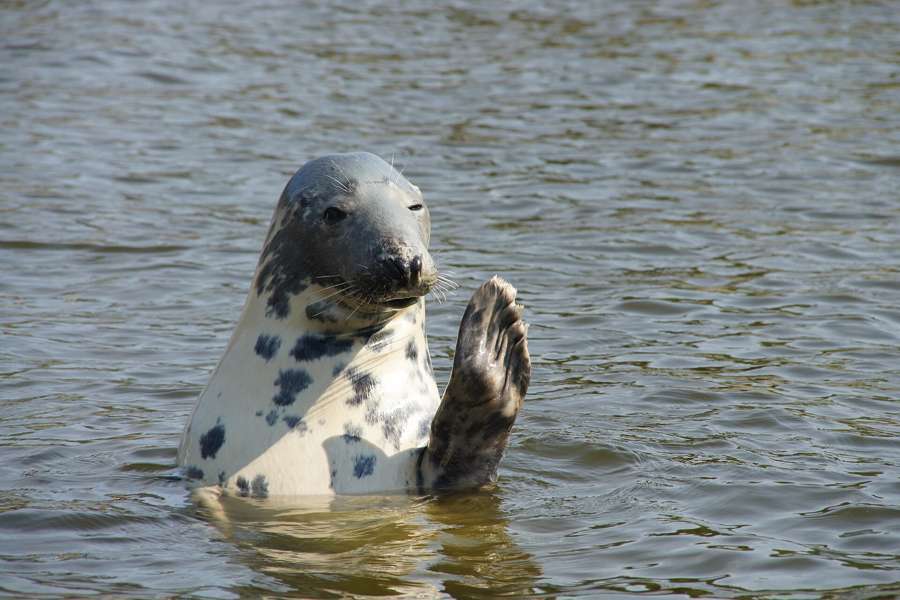
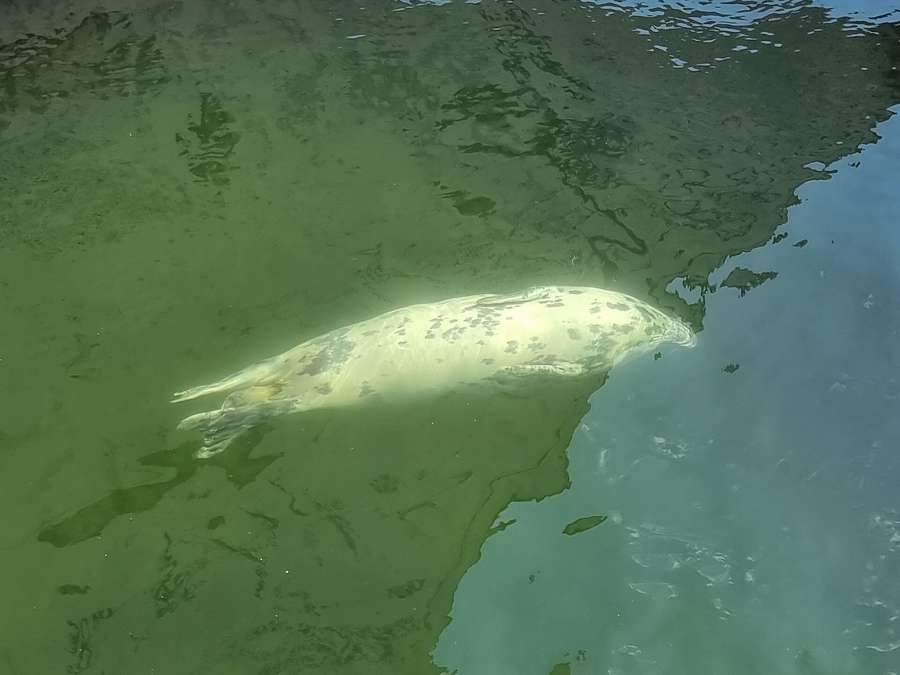
Hel's star attraction is the fokarium of the Marine Station of the University of Gdańsk, named after Professor Krzysztof Skóra - a working research station on the harbour that keeps a herd of grey seals and runs conservation work for the species in the Polish Baltic. Unlike almost everything else on the peninsula, it opens every single day of the year, weekends and holidays included. Published hours run 10:00-16:00 from October to April, 10:00-17:00 in May, June and September, and 10:00-18:00 in July and August. The highlight is the public seal feeding with a short educational talk: from September to June it runs at 11:00 and 14:00, and in peak summer four times a day. Tickets cost 30 zł normal and 25 zł reduced, sold at two ticket machines before the entrance (cash and card) or online at biletyfokarium.pl, where the live page shows the day's actual closing time. There are no reservations - entry is first come, first served, the ticket is valid for 30 minutes from purchase, and sales stop 20 minutes before closing. The station itself gently suggests visiting outside the summer holidays, and off-season you will have the poolside mostly to yourself. Beyond the tanks, the visit supports real conservation: the Marine Station is a University of Gdańsk research unit whose work centres on the Baltic grey seal, and the feeding talks explain the effort to rebuild the species' presence along the Polish coast. Off-season visits have one more advantage - a daily limit on visitors inside the fokarium applies, and in October you will not come close to it, while on a summer Saturday the queue is the price of entry.
Data source: fokarium.ug.edu.pl visiting page and biletyfokarium.pl live hours, checked 22 October 2026.
A museum inside a gun position
Hel's second anchor is the Museum of Coastal Defence (Muzeum Obrony Wybrzeża), part of the Helski Kompleks Muzealny - a museum installed in and around the massive concrete "Bruno" (B-2) firing position of the wartime German Schleswig-Holstein battery, in the forest by the road into town. It tells the story of the peninsula's defence, from the dramatic fighting of September 1939 to the Cold War naval years. For 2026 the museum lists a combined ticket at 25 zł normal and 20 zł reduced, with cheaper passes for the open-air skansen grounds alone (7 zł/5 zł). One detail matters for off-season planning: the museum currently opens 10:00-16:00, but only until 25 October 2026; after that it closes for winter and opens only for pre-arranged groups by phone (+48 697 888 583). If you want the museum, go before the end of October or plan around a group booking.
Data source: helmuzeum.pl opening-hours and ticket pages, checked 22 October 2026.
Getting there without the ferries
In summer, catamarans link Hel with Gdańsk, Sopot and Gdynia, but the 2026 sailing season has ended - Żegluga Gdańska wound down its routes in early October, and the Tri-City water trams announce the 2026 season as closed. Off-season, the train is the elegant answer: Polregio regional services run from Gdynia Główna to Hel in about an hour and a half, with around a dozen trains a day in the timetable valid from 25 October to 12 December 2026, calling at Reda, Puck and Władysławowo along the spit. The ride itself is part of the trip, hugging the bay shore for the last stretch. Drivers take the single road (DW 216) along the peninsula - roughly an hour and a half from Gdańsk without the summer jams - and should remember there is no alternative route: one road in, the same road out. From Warsaw, the practical route is a fast PKP Intercity train to Gdynia Główna, then the Polregio service to Hel across the bay - with the change, the whole trip runs around five hours, so allow a full day or, better, an overnight in Hel town or Władysławowo. Off-season timetables are lighter than summer ones, so check connections on rozklad-pkp.pl before setting out, especially for the return.
Data source: Polregio timetable Gdynia Główna-Hel valid 25 October-12 December 2026, zegluga.pl seasonal notices, checked 22 October 2026.
Planning the off-season day
A good off-season itinerary is simple: morning train along the spit, the 11:00 seal feeding at the fokarium, a long beach walk toward the tip, smoked fish near the harbour, and the 14:00 feeding or the museum before the late-afternoon train back. Dress for real Baltic wind - the tip of the peninsula is several degrees colder than Gdańsk in a northerly, and waterproof layers beat umbrellas. Book accommodation ahead only if you come on a holiday weekend; off-season, guesthouses and small hotels in Hel town usually have space, and many restaurants keep weekend hours even when weekdays go quiet. And keep an eye on the water from any beach: wild grey seals haul out along the peninsula, and off-season you might spot one without the fokarium walls at all. A few small practical notes close the plan: the museum's last entry is half an hour before closing, the fokarium's ticket machines take both cash and card, and parking in Hel town is far less fraught than in summer - though the spit road can still slow down on stormy weekends when waves wash sand across it. If the weather turns truly bad, the harbour cafés and a plate of fried flounder rescue any afternoon.
Data source: fokarium.ug.edu.pl and helmuzeum.pl visitor pages, checked 22 October 2026.
Frequently asked questions
Is the Hel fokarium open in winter?
Yes - the fokarium opens every day of the year, including weekends and holidays. From October to April the hours are 10:00-16:00, with public seal feedings and a short educational talk at 11:00 and 14:00. Tickets cost 30 zł normal and 25 zł reduced.
How do I get to Hel off-season without a car?
Take a Polregio regional train from Gdynia Główna - the journey to Hel takes about an hour and a half, with around a dozen trains a day in the current timetable. The summer ferries from Gdańsk, Sopot and Gdynia do not run off-season; the 2026 sailing season has ended.
Is the Museum of Coastal Defence open in autumn?
It opens 10:00-16:00 but only until 25 October 2026; after that it closes for winter and admits only pre-arranged groups by phone. A combined ticket costs 25 zł normal and 20 zł reduced.
Can you see wild seals on the Hel Peninsula?
Yes - wild grey seals live in the area and are sometimes seen from the peninsula's beaches, especially in the quieter months. The guaranteed sighting is at the fokarium, the University of Gdańsk marine station, open daily all year.
How long do I need in Hel off-season?
A full day covers it: the 11:00 seal feeding, a beach walk to the tip, lunch near the harbour and the museum or the 14:00 feeding before a late-afternoon train. Staying overnight adds a storm-watching morning and the empty beach at sunrise.
Is Hel worth visiting outside summer?
Yes, if you trade swimming for space: empty beaches, dune and forest walks, the working fishing harbour, the lighthouse and the year-round fokarium make Hel a full day trip from the Tri-City in any season. Autumn storms even draw kitesurfers and wave watchers. * Photos: A Baltic grey seal by Mateusz Włodarczyk, CC BY-SA 4.0, and a seal at the Hel fokarium by Zala, CC BY-SA 4.0, both via Wikimedia Commons.