Jarocin Museums: Rock Granary, Palace and the Same-Day Ticket
The essentials: Palace, Park 3: Tue-Fri 08:00-16:00. Rock museum, Poznańska 2: Tue-Fri 09:00-16:00. Both weekends 12:00-16:00, Monday closed. Combined ticket 20/15 zł, qualifying family 50 zł, valid on purchase day. Saturday free permanent exhibition applies to Spichlerz, not automatically SOWA or palace.
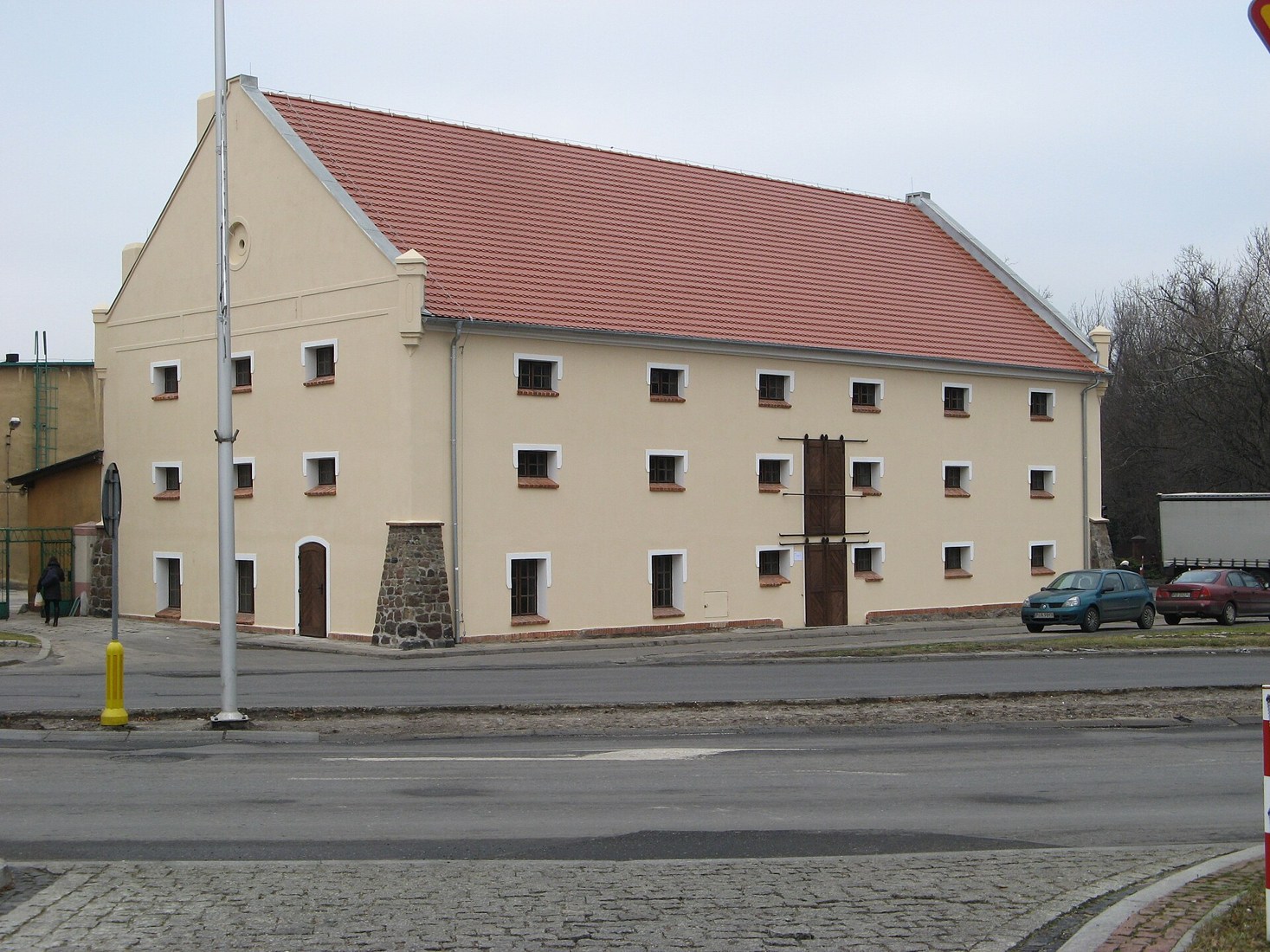
Cover: granary building now housing Spichlerz Polskiego Rocka, photographed 20 April 2012, before the museum opened. Archive exterior, not a current entrance survey. Photo: Muzeum w Jarocinie / Wikimedia Commons, CC BY-SA 4.0. Resized and recompressed under the same licence.
Jarocin offers a useful two-part museum visit: local history and hands-on science in the Radoliński Palace, then the story of Polish rock in a converted granary. The practical link is a same-day combined ticket, listed by Spichlerz Polskiego Rocka at 20 zł standard, 15 zł reduced or 50 zł for a qualifying family. It covers the rock museum, the Regional Museum exhibition and SOWA in the palace. It is not a weekend pass or admission to a live festival.
The two sites share a museum organisation but not every price, opening hour or group rule. Saturday's free permanent exhibition is specifically advertised by the rock museum. The palace starts an hour earlier on weekdays. Families with very young children also need to distinguish supervision rules from free-admission ages. This guide separates the details so that a low-cost outing does not become a string of small misunderstandings.
Two addresses, two weekday starting times
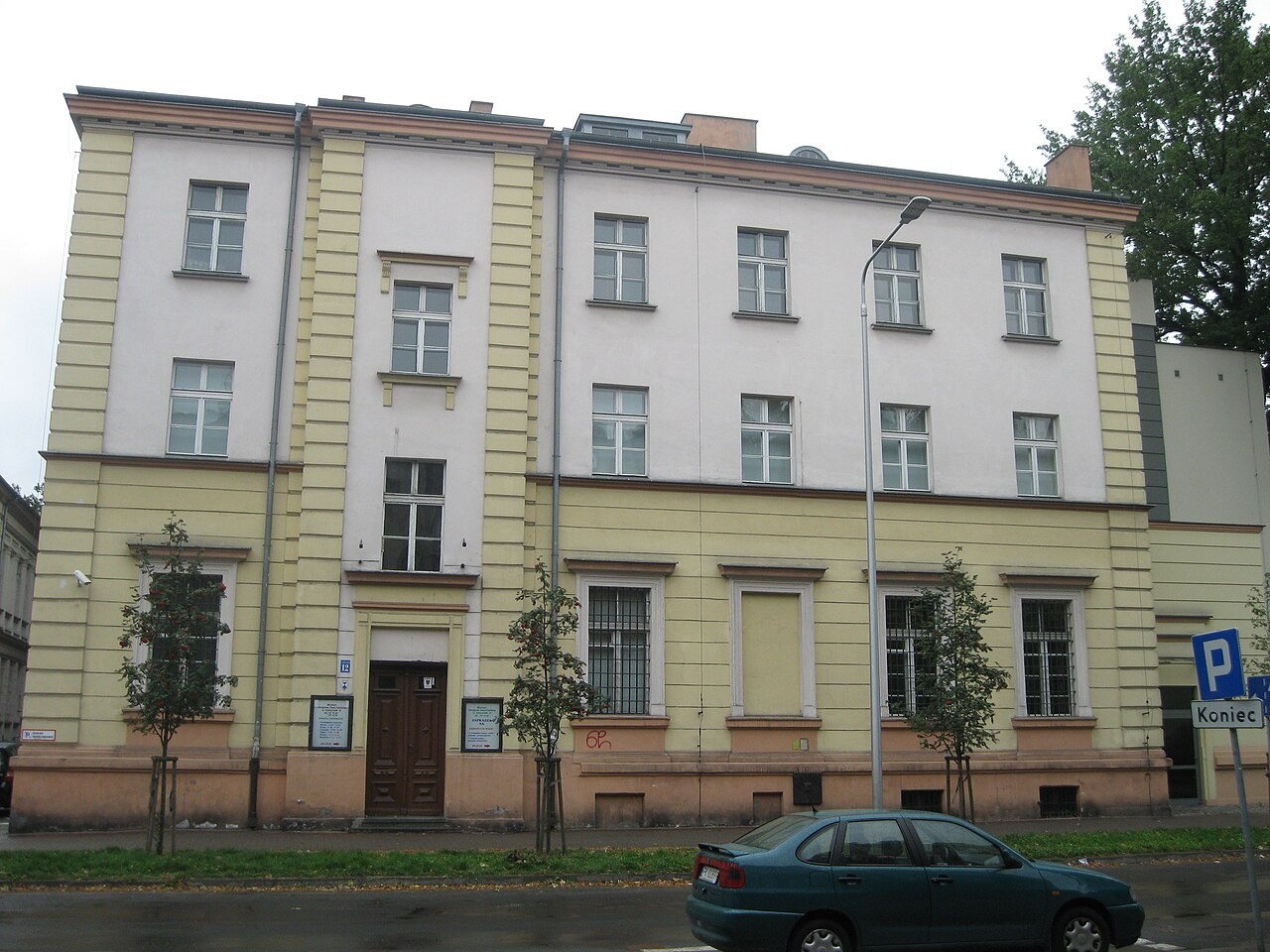
The Regional Museum visitor page places the palace museum at ul. Park 3, Jarocin. Its published hours are Tuesday-Friday 08:00-16:00 and Saturday-Sunday 12:00-16:00. Monday is not included among its visiting days. The palace is therefore the earlier weekday option if you want to use both museums' opening windows.
Spichlerz Polskiego Rocka is at ul. Poznańska 2, on Skwer Wielkopolskich Rytmów Młodych. It opens Tuesday-Friday 09:00-16:00 and Saturday-Sunday 12:00-16:00, with Monday closed. Its rules set last admission half an hour before closing, meaning 15:30 in the ordinary timetable. Do not use that as a sensible start for both buildings.
Park 3 also appears as the rock museum's correspondence address. It is not the entrance address for its rock exhibition. For enquiries about Spichlerz, use 516 121 859 or [email protected]. The palace lists 62 747 34 49 and [email protected]; its ticket page gives 739 059 895 for group reservations and exhibition information.
Individual tickets and the combined option
Each museum's published standard ticket is 15 zł, with reduced admission at 10 zł and a 35 zł family ticket. The rock museum's detailed tariff defines its family category as three to five people, including at least one adult and one person under 18. Its combined family ticket uses that same definition and costs 50 zł.
The combined ticket is valid on the day it is bought for Spichlerz, the Regional Museum exhibition and SOWA in the Radoliński Palace. Standard and reduced combined tickets are 20 zł and 15 zł per person. If both museums are the plan, ask for the combined product before buying separate tickets. Confirm any timed or capacity arrangements for SOWA rather than treating a ticket as a promise that every activity is available at any moment.
The resident-card reductions are not interchangeable. The palace advertises a 10% reduction for the Jarocińska Karta Mieszkańca. Spichlerz advertises 20%, excluding group tickets. Neither statement proves that its discount stacks with the combined ticket, another concession or a family product. Ask which single applicable tariff the cashier will use.
Saturday and young children: read the exact scope
Spichlerz explicitly names Saturday as the day without admission charges for its permanent exhibition. That does not establish that SOWA, workshops, a guide or every palace exhibition is also free. If you are visiting both sites on Saturday, compare the actual tickets required that day instead of assuming the combined ticket must always be the best purchase.
The rock museum lists free entry for children under three. It also says children under seven must remain with an adult, which is a supervision requirement, not an extension of the free-entry threshold to age seven. The palace ticket page similarly says under-sevens enter only with a carer, but that line does not state a separate under-seven exemption. Check the child's admission category rather than importing the rock museum's age rule into the palace.
Spichlerz's reduced categories include schoolchildren, students, teachers, doctoral students, over-65s, disabled visitors and their carers. Bring appropriate evidence if you intend to use a concession. The Karta Dużej Rodziny ticket is separately listed at 10 zł at both sites; owning that card is different from buying the ordinary family ticket.
The palace tells a wider story than a grand house
The permanent historical exhibition, Z przeszłości Ziemi Jarocińskiej, follows the town and surrounding area's history from 1793 to 1989. Its five ground-floor rooms use archival photographs, documents, military objects, personal possessions, and material linked with trade and crafts. The narrative begins with the partitions, not with a claim that Jarocin itself began in 1793.
The museum describes material on independence activity, the First World War and the Greater Poland uprising of 1918-1919, followed by inter-war social and economic life. Occupation-era street signs and individual stories from the Second World War sit alongside the broader history. Later everyday life is explored through objects donated by residents and films made in the 1970s by the local amateur film club JAR.
For a newcomer, this is a way to place the rock museum in a longer local setting. The palace rooms connect family wealth, diplomacy, civic life, war and ordinary households, while the granary concentrates on music and the festival. They are complementary visits rather than two versions of the same display.
What survives of the Radoliński residence?
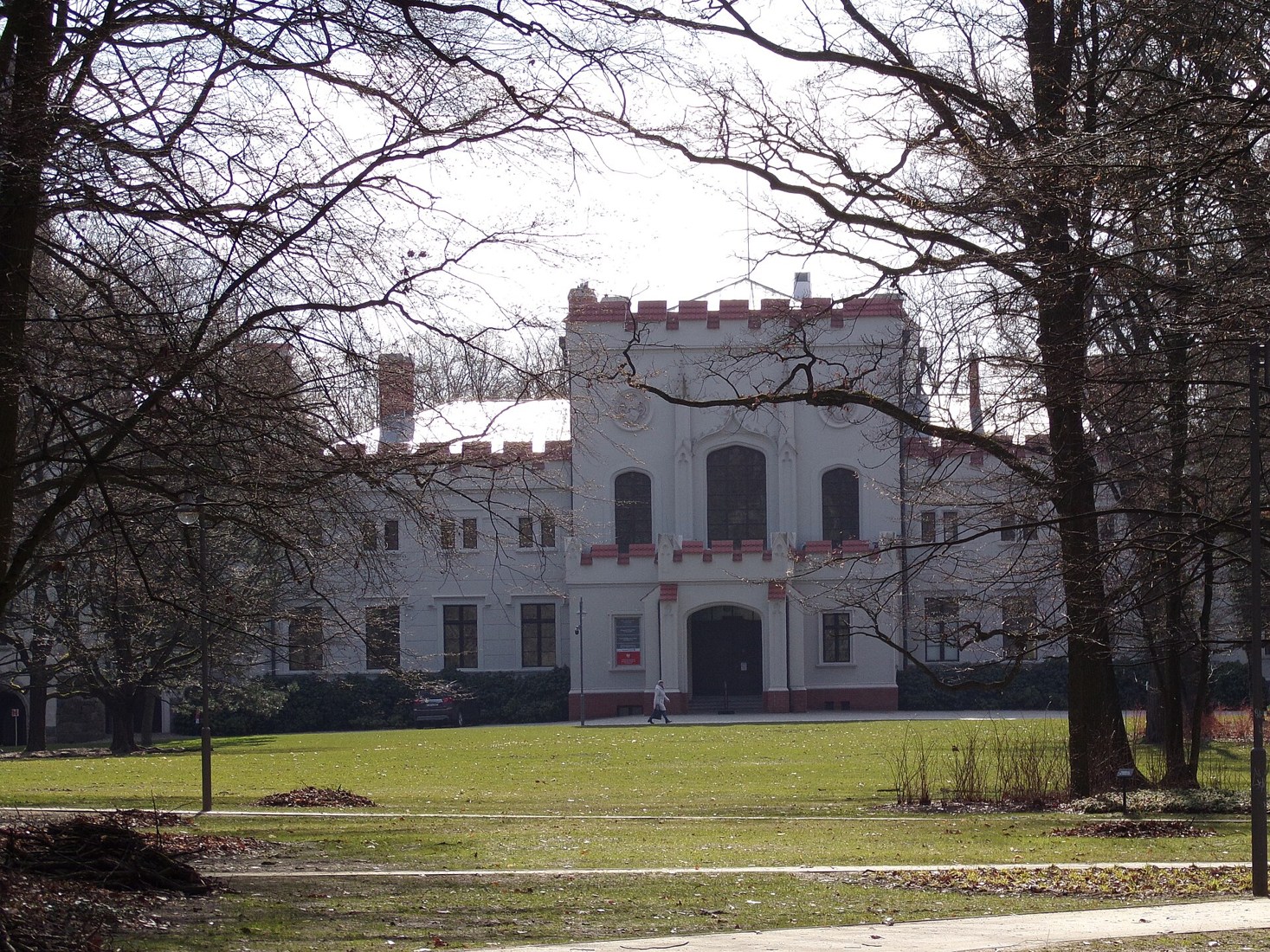
The museum's palace history attributes the design to Friedrich August Stüler and dates the start of construction to 1848, under Władysław Radoliński. The building changed repeatedly, including a major south-eastern extension in 1911 associated with Hugo von Radolin's return from diplomatic service.
A serious fire in 1917 damaged much of the residence, sparing that extension. The museum is clear that the interiors never fully recovered their earlier decorative richness. Do not expect every room to be an untouched nineteenth-century domestic interior. Surviving details include fireplaces, woodwork and objects from the former furnishings, explained within museum exhibitions.
The building later served educational and library functions. Renovation in 2020-2021 preceded new museum exhibitions opening in 2022. That layered history is part of the visit: the palace is a working cultural building, not simply a preserved aristocratic home. Some spaces serve other institutions, so museum admission is not permission to explore every door or corridor.
SOWA is for experimenting, not just reading labels
The palace's SOWA page describes two spaces: an exhibition with 18 science exhibits and a workshop area called Majsternia. Examples include rotating mirrors, hanging balls, a disappearing cat and a walking spring. The idea is to explore phenomena through interaction rather than follow a conventional display of untouchable objects.
In Majsternia, visitors choose materials and work through construction or logic challenges. This can offer a different pace for a family after the historical rooms. It should not be sold as a supervised childcare service, an English-language lesson or a guarantee that every station suits every age. Ask about the day's arrangements if the science element is your main reason for travelling.
Spichlerz: listen to the history of Polish rock
The museum's own exhibition description places the rock collection on two upper floors of a historic grain store, divided into 14 thematic zones. Sound and moving images are central. Photographs, concert recordings, press coverage and specially prepared documentary films explain the changing festival and its social and political setting.
Posters, tickets, passes, shirts and musicians' donated objects add the physical traces of a festival culture. The museum's history of Wielkopolskie Rytmy Młodych starts the local festival tradition in 1970 with Jacek Chudzik and the Olimp circle. That is a useful starting point for visitors who know Jarocin mainly through its punk-era reputation.
This is not a silent gallery. The museum itself stresses the presence of music throughout, and a 2023 visitor account gives additional background on the themed rooms. Treat that older account as an impression of the experience, not as a current ticket or transport timetable. If overlapping audio or loud spaces are difficult, ask staff about a quieter visiting time before arrival.
Groups, guides and access arrangements
Spichlerz's guiding page lists a maximum 60-minute tour at 40 zł per group of up to 25, plus admission. A date and time must be agreed by phone. The museum reserves the right to take a non-refundable 40 zł advance against cancellation. No regular English departure or English-language guarantee is established there.
The palace lists group admission above ten people at 10/7 zł per person, guiding at 40 zł for a group of up to 30, and separate lesson, workshop and walking-tour prices. Do not transfer its 30-person guide limit to Spichlerz's 25-person guided product. A shared admission ticket does not merge separately booked services.
The March 2025 access declaration says Spichlerz has a ground-level ground floor, staff-operated stair platforms, an adapted ground-floor toilet and no induction loop. It identifies accessible parking on Kasztanowa, approximately 200 metres away. Confirm platform operation if essential. Pushchairs are listed among items left in the cloakroom, so ask about carrying a small child upstairs; do not equate wheelchair provision with unrestricted pushchair use.
Finally, do not plan a meal around old descriptions of the ground-floor music club. A November 2026 notice seeks a new operator. Exhibition opening hours are not proof of restaurant service or a live concert. Settle your tickets and any essential access or language need, then enjoy the two museums for the different parts of Jarocin they explain.
Frequently asked questions
What does the combined ticket cover?
The rock museum tariff lists Spichlerz, the Regional Museum exhibition and SOWA in the palace, on the purchase day, at 20/15 zł or 50 zł for a qualifying family.
Is everything free on Saturday?
No blanket free offer is established. Spichlerz names its permanent exhibition; do not extend that to SOWA, palace admission or a guide.
Is the rock museum accessible?
Its declaration describes ground-level entry, staff-operated stair platforms and an adapted ground-floor toilet. Confirm operation before relying on the platforms.