Konin Gosławice Museum: Tickets, English Audio and Winter Access
The essentials: Gosławice opens Tue–Fri 10:00–18:00, Sat–Sun 12:00–18:00; Mon/holidays closed. Tickets 30/20 zł, family 60 zł; Tuesday free entry, check special exhibitions. English audio listed. Castle has no lift. Ethnographic season May–September; Mrówki separate, April–September.
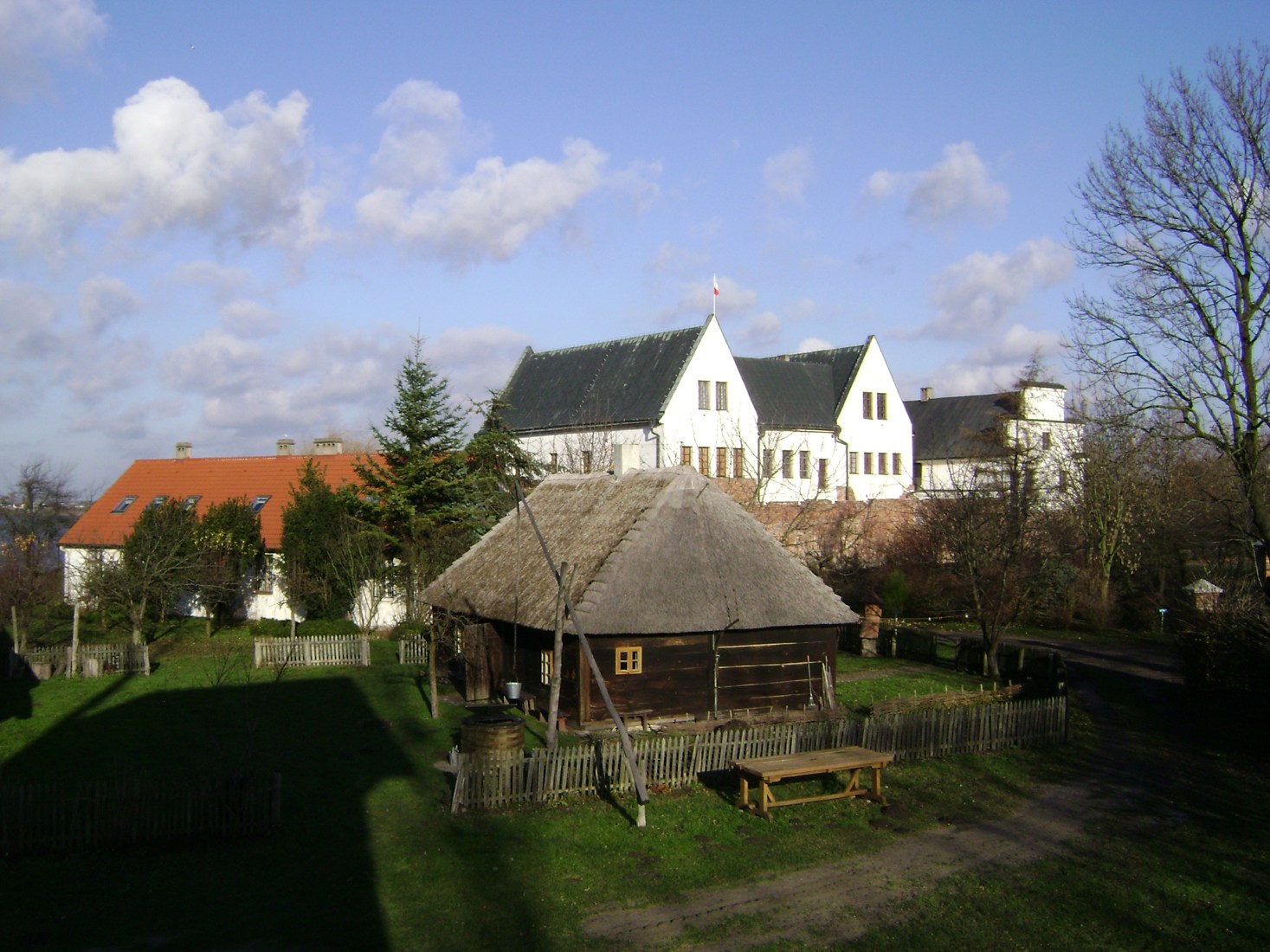
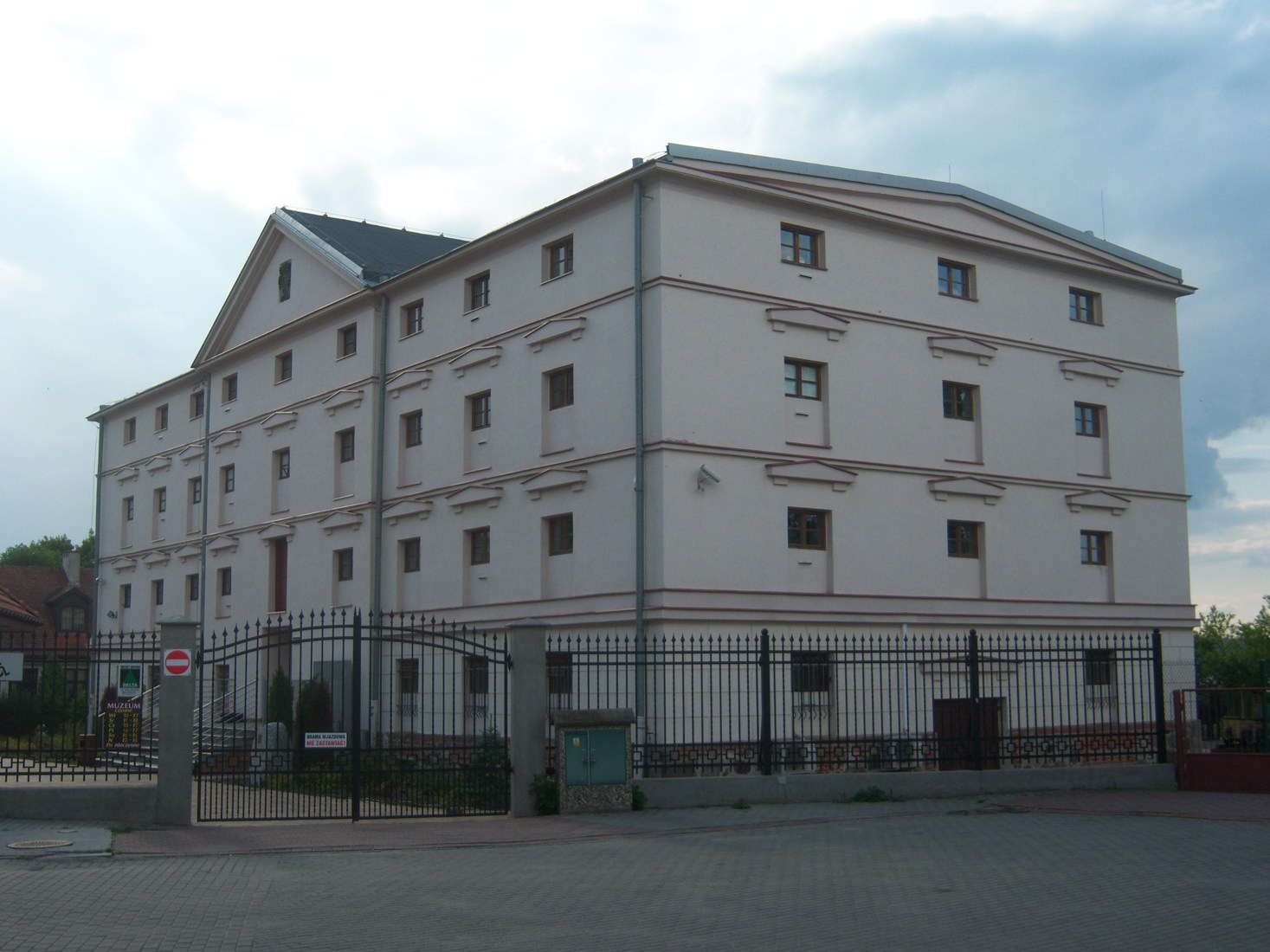
Cover: Gosławice castle behind the ethnographic cottage, photographed 26 November 2009. Historic view, not evidence of current seasonal opening. Photo: Mr.jedi-FPW / Wikimedia Commons, CC BY-SA 3.0. Resized and recompressed.
Start with the museum complex, not just the castle
Gosławice is a useful choice for a museum day in Konin because it brings several different collections together: a Gothic castle, a granary museum, a manor-house display, mining heritage and outdoor areas. It is not a single castle interior that you finish in half an hour. The Regional Museum in Konin describes roughly three hours for its Gosławice zones, with a separate seasonal archaeological site at Mrówki about 40 kilometres away.
For international residents, the strongest reasons to choose it are that range and the published English audio provision. The main planning challenge is that the buildings do not have equal access, and seasonal outdoor attractions should not be confused with the year-round offer. A November visit can work well, but it should focus on the open Gosławice buildings rather than assuming every cottage and distant branch is available.
Current hours and where to enter
The current official visit-planning page lists Gosławice's castle, granary, manor, mining open-air area and garden as year-round. Opening is Tuesday to Friday from 10:00 to 18:00 and Saturday to Sunday from 12:00 to 18:00. Mondays and holidays are closed. Weekend opening starts two hours later than weekday opening, a small detail that can make an early arrival frustrating.
Tickets are sold until 17:30. That is a sales cutoff, not a recommendation to begin a three-hour visit then. Aim to arrive with enough time for the collections you actually want to see, and allow extra time if you need a ramp, lift assistance or a slower route between buildings. Check special notices before travelling rather than relying on the weekly timetable alone.
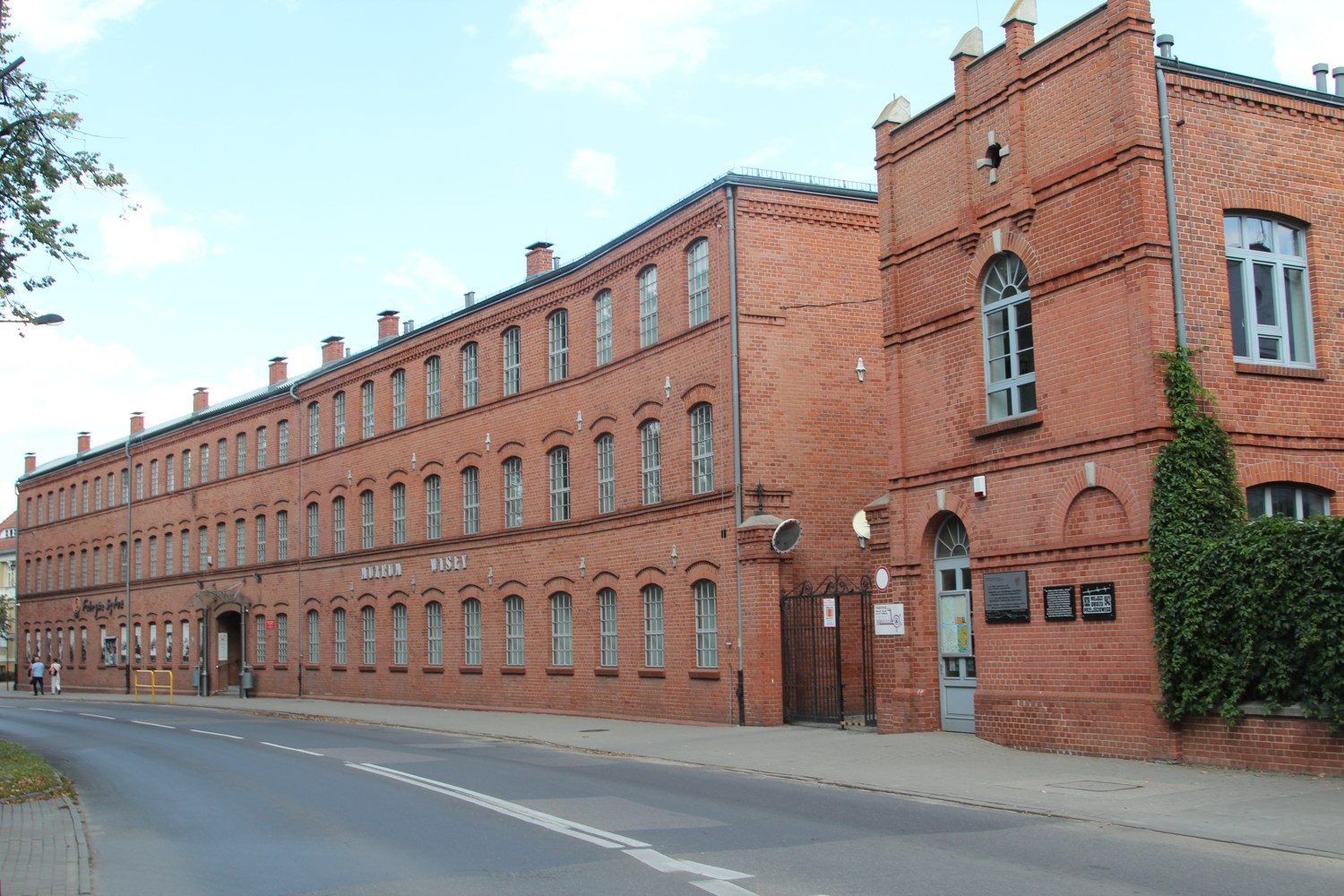
The museum's address is ul. Muzealna 6, Konin-Gosławice, but the visitor entrance is from ul. Gotycka, near the church. The granary, Spichlerz, is the starting building with the ticket office and museum shop. Set your destination using the entrance information, not just the administrative street address. If a driver is dropping off someone with reduced mobility, settle the usable approach with museum staff first.
What the 30 zł ticket covers
The current planning page gives regular admission as 30 zł and reduced admission as 20 zł. It says the Gosławice ticket covers the castle, granary, manor, mining open-air area and ethnographic open-air museum when that seasonal part is open. The garden has free entry. The separate archaeological site at Mrówki is not included.
The same page warns that some temporary exhibitions have separate tickets, with prices shown on the exhibition's own page. Do not turn the multi-building ticket into a promise that every temporary exhibition or special event is included. Before paying, ask which displays are open that day and whether anything you specifically came for has an additional charge.
A family ticket is listed at 60 zł, for two adults with up to three children or one adult with up to four children. That is a defined family composition, not a small-group pass for several adults. Visitors with a qualifying Karta Dużej Rodziny have a listed 15 zł rate; the Wielkopolska family-card rate is 1 zł. These are separate schemes, and merely being a family or living in the region does not establish entitlement to either card price.
Tuesday free entry and concession checks
Tuesday is the published free-admission day. The museum's organisation notice describes free visiting of permanent and temporary exhibitions, while the current planning page retains the warning that some temporary exhibitions are separately ticketed. The useful planning rule is therefore to use Tuesday for the regular museum offer and check any separately advertised exhibition or booked activity on its own terms. Free museum entry does not make workshops or guide services free.
The planning page lists reduced categories including school pupils, students, disabled visitors with carers and people over 65, and lists free admission for young children. Bring proof of the category you intend to use. If your entitlement depends on a document issued outside Poland, ask whether that document is accepted rather than treating the short category summary as a complete legal rule. The exact age boundary for a child's free admission is also worth confirming when buying, rather than translating a short Polish age phrase into an unsupported birthday rule.
For a mixed household, compare the family ticket against individual tickets only after eligibility is clear. A free-entry child, a cardholder and an adult paying the normal price do not necessarily make the family ticket the cheapest option. The aim is to buy the correct admission for the people present, not automatically choose the ticket with the word family in its name.
The granary: start with the forest elephant
The granary is more than a ticket office. Its official description places natural-history displays here, including the forest elephant and Pleistocene animals, alongside mining and salt from Kłodawa. There is also space for temporary exhibitions. For families, it is a useful first stop because it provides a clear subject to focus on before moving into the castle's more varied historical collections.
The museum identifies its forest-elephant skeleton with the discovery at Jóźwin in 1984. Treat it as a route into the area's changing environment and geology, rather than expecting the whole visit to be a dinosaur museum. A child interested in large animals and an adult interested in the region's mining past can both find a starting theme in the same building.
The granary also has the strongest published step-free provision of the main buildings, but that comes with practical details. There are six entrance steps and an external platform lift, followed by heavy outward-opening doors and then automatic doors. Staff assistance may matter even where the exhibition floors themselves are accessible. Arrange it before arrival if an independent entrance is essential.
The castle and the wider Gosławice route
The fifteenth-century Gothic castle contains collections covering Polish art, Konin's history, archaeology, Judaica, jewellery and the history of lighting. This is a broader museum collection in a historic building, not simply furnished rooms recreating one moment in a castle's life. Pick two or three subjects that interest you rather than expecting every room to follow a single medieval story.
The manor adds another building to the visit, while the mining area brings some of the region's industrial story outdoors. The museum's site map helps separate these stops. A route that combines the granary, selected castle displays and one additional area can be more rewarding than racing through every building because the ticket includes them.
Outside walking is still part of the visit even when the main buildings operate year-round. Bring suitable footwear for uneven surfaces and wet weather, and do not assume that the route is entirely under cover. If your group includes someone who tires easily, ask about the shortest useful circuit and available places to pause. The museum lists a quiet room in the granary, which may help families plan breaks.
English audio, guide prices and an unresolved listing
The museum's accessibility declaration says permanent exhibitions in the granary, castle and manor can be visited with audio provision in Polish and English, as well as audio description and Polish Sign Language provision. This makes Gosławice a more promising independent visit for English speakers than a museum that lists Polish labels alone. Confirm that a suitable device and the route you want are available when you arrive.
The main planning tariff lists an audio guide at 10 zł and a guide for a group of up to 25 people at 110 zł. Older third-party summaries quote lower amounts, so they should not set your budget. There is also an unresolved price note on the museum's own audio-guide product listing. Use the main planning page as the published budget reference, but confirm the audio charge at the desk or before purchase.
English audio does not establish an English-speaking live guide, nor guarantee English interpretation for every temporary exhibition. If you want a guided visit in English, ask for the language, duration, group limit, entrance-ticket treatment and total price to be confirmed. Do not pay for a standard guide service assuming the language can be changed on arrival.
Access differs sharply between buildings
The current access page is more useful than a single accessible-or-not label. In the granary, an internal lift serves floors I–III, and the museum describes wheelchair access to exhibitions and the education room. The ground-floor toilet is only partly adapted, with staff help available at the door. There is no cloakroom. Five induction loops are listed for permanent displays, but not at the ticket desk or in the education room.
The castle approach has cobbles and the building has no lift. The declaration describes a threshold-free ground floor and an adapted ground-floor toilet, but stairs lead to upper levels, with some steep stairs and low passages elsewhere in the building. Reaching the entrance does not mean being able to visit every room. Ask which collections are reachable on the route you can use.
The manor has a 16-centimetre entrance threshold, a ramp available on request and no lift. Outdoor areas introduce stones, thresholds or uneven ground of their own. Two parking spaces for disabled visitors are listed near the main entrance, but availability cannot be guaranteed. For help planning a route or preparing the manor ramp, contact [email protected] or +48 63 242 75 99 before travelling.
Seasonal areas: do not plan a November Mrówki visit
The ethnographic open-air museum contains five traditional wooden structures: a cottage, a barn, two post mills and a forge. The current planning table gives its normal season as May to September. A general opening-hours footer on an individual page is not enough to promise that the cottage interiors operate throughout winter. A separately advertised seasonal event may have its own arrangements, but it should be checked as that event.
Mrówki is a different site, roughly 40 kilometres from Konin, with an archaeological mound settlement and viewing tower on a peninsula of Lake Kownackie. Its own page states a season from 1 April to 30 September and separate 15 zł regular or 10 zł reduced admission. It is not a nearby extra included in a November Gosławice ticket. Save it for an in-season visit and check the wooded, uneven approach if mobility matters.
Build a visit that fits your group
Allow around three hours for a first Gosławice visit, then adjust the route to your interests and access needs. Start at the granary ticket office, confirm what is included and collect any audio device. Families can prioritise natural history before selected castle rooms; history-focused adults can spend longer in the castle; visitors needing a step-free route should settle the usable buildings before buying a full outing into the day.
Before leaving home, check the museum's current notices, weekend opening time, seasonal areas and any extra exhibition charge. Check transport separately for your chosen day, even though the museum lists bus connections and free parking. Gosławice offers enough variety for a substantial museum trip, provided you plan around its real buildings and seasons rather than treating every photograph of the complex as a promise of year-round access.
Frequently asked questions
Is the museum free on Tuesday?
Tuesday is the published free-admission day. Check separately ticketed temporary exhibitions, workshops and booked guide services.
Is English audio available?
The access declaration lists English audio for permanent displays in the granary, castle and manor. Confirm device availability and the charge before buying.
Can wheelchair users visit the whole castle?
No full-access promise is supported. The castle has cobbles and no lift; the ground floor differs from upper rooms. The granary has external and internal lifts.