Mokotów vs Wilanów: Which Warsaw District Should You Choose?
The essentials: Mokotów is dense, central and metro-connected with average asking rents of 4,136 zł; Wilanów is young, family-built and the most expensive district at 5,271 zł. Mokotów suits professionals wanting a rail commute; Wilanów suits families wanting new housing and space.
Mokotów vs Wilanów: the essentials
Mokotów and Wilanów are the two districts expat families in Warsaw ask about most often, and they could hardly be more different. Mokotów is an established, dense, central-south district with metro stations and pre-war streets; Wilanów is Warsaw's youngest district, a fast-growing patchwork of new estates around a royal palace, with the highest rents in the city. This comparison uses official 2024 district statistics from the Warsaw office of Statistics Poland (GUS), a live October 2026 rental index, and current public-transport information to show what daily life in each actually looks like.
Two districts in numbers
The official 2024 district data from Statistics Poland's Warsaw office paints the contrast clearly:
- Mokotów: 224,900 residents, one of Warsaw's largest districts, at a density of 6,351 people per km². Its profile is mature: 7.96 live births per 1,000 residents against 10.11 deaths - a natural increase of -2.15 per 1,000. Net migration is slightly positive at +1.99 per 1,000. In plain terms: an established district whose population is roughly stable, aging gently, refreshed by people moving in.
- Wilanów: 53,200 residents at a density of just 1,447 people per km² - about a quarter of Mokotów's. Its profile is strikingly young: 8.57 live births against only 3.08 deaths per 1,000, giving a natural increase of +5.49 per 1,000, one of the highest in the city. Net migration adds another +2.44 per 1,000. Wilanów is growing on both fronts: babies born there and families moving there.
The demographic split matters practically. A district with Wilanów's profile keeps adding playgrounds, nurseries and family services because its population demands them. A district with Mokotów's profile offers mature infrastructure that has been in place for decades.
The dependency numbers tell the same story another way: in Mokotów there are 68 people of non-working age (children and retirees) per 100 working-age residents, driven largely by older residents; in Wilanów the ratio is 65 per 100, driven largely by children. Both districts are livable for families - but Wilanów's growth is child-led, while Mokotów's stability is adult-led.
*Data source: Statistics Poland, Warsaw office - "Major Data Regarding Districts of the Capital City of Warsaw in 2024" (warszawa.stat.gov.pl), checked 21 October 2026.*
Housing and what it costs
Wilanów is the most expensive district in Warsaw to rent in. According to the October 2026 Znajdz Najem rental index (a snapshot of 47,314 listing offers recorded on 20 October 2026):
- Wilanów: average asking rent 5,271 zł/month across 1,059 offers - the highest district average in Warsaw.
- Mokotów: average asking rent 4,136 zł/month across 6,716 offers - well above the city average but far below Wilanów, with over six times more listings to choose from.
- For context: the Warsaw-wide average asking rent is 3,571 zł (median 3,200 zł, about 84 zł/m²). Citywide averages by size: studios 2,635 zł, two-room flats 3,503 zł, three-room flats 4,513 zł, four-room flats 5,488 zł.
Two honest caveats. First, these are asking prices from listings, not signed contracts - final rents often land a little lower. Second, the districts are built differently: Wilanów's stock is dominated by new-build apartments with parking, lifts and modern fittings, which is exactly why its averages sit so high. Mokotów ranges from pre-war tenements in Stary Mokotów to 1970s blocks and newer developments, so its average hides a much wider spread.
*Data source: Indeks Najmu Znajdz Najem, Warsaw report for October 2026 (znajdznajem.pl/warszawa/raport), sample state recorded 20 October 2026, checked 21 October 2026.*
Getting around
This is where the two districts differ most for a working expat.
Mokotów has the metro. Line M1 runs down Aleja Niepodległości, the district's spine, with stations at Racławicka, Wierzbno and Wilanowska serving Mokotów directly (the current WTP metro page lists these stations on the M1 corridor). Metro Wilanowska is also a major bus and tram interchange. From these stations, the city centre is a handful of stops away, and trams and buses fill in the rest of the district.
Wilanów has no metro - but it finally has a tram. On 28 October 2024 the first passenger tram reached Miasteczko Wilanów, on a 6.5 km route along Belwederska, Sobieskiego and Aleja Rzeczypospolitej with 12 new stops. Warsaw's public transport operator ZTM described it as the longest new tram section opened in the city since the 1950s, and the mayor said the ride to the centre is about twice as fast as by bus. The project received 518.27 million zł in EU co-funding, and a branch to Stegny was planned to follow. Buses still carry much of Wilanów's traffic, and rush-hour car commutes out of the district remain slow - Wilanów's roads were built for a smaller population than the one it now has.
The practical rule: if your office is near an M1 station, Mokotów gives you a predictable rail commute door to door. From Wilanów, budget on the tram or a longer bus or car ride.
*Data sources: ZTM press release "Tramwajem do Wilanowa", 29 October 2024 (ztm.waw.pl); Warszawski Transport Publiczny metro information page, updated 13 November 2025 (wtp.waw.pl) - checked 21 October 2026.*
Green space and weekends
Both districts score well here, in different styles.
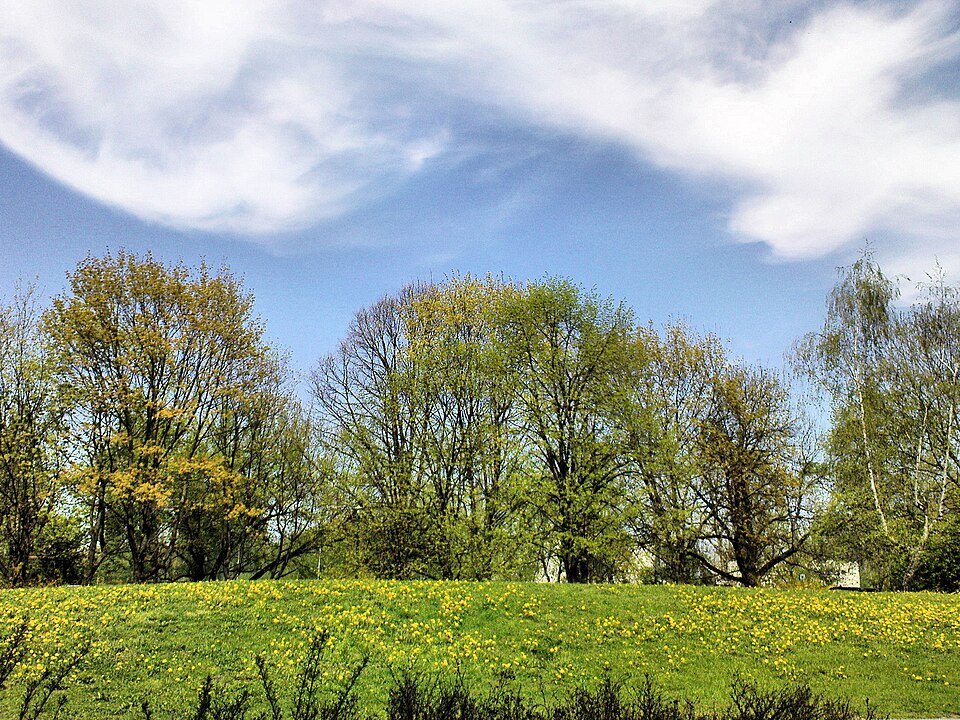
Mokotów's green heart is Pole Mokotowskie, the big open park on the Mokotów-Ochota border - meadows, paths and ponds a short ride from the centre - plus smaller landscaped parks like Morskie Oko in Stary Mokotów. Weekend life here looks like jogging loops, dog walkers and café terraces.
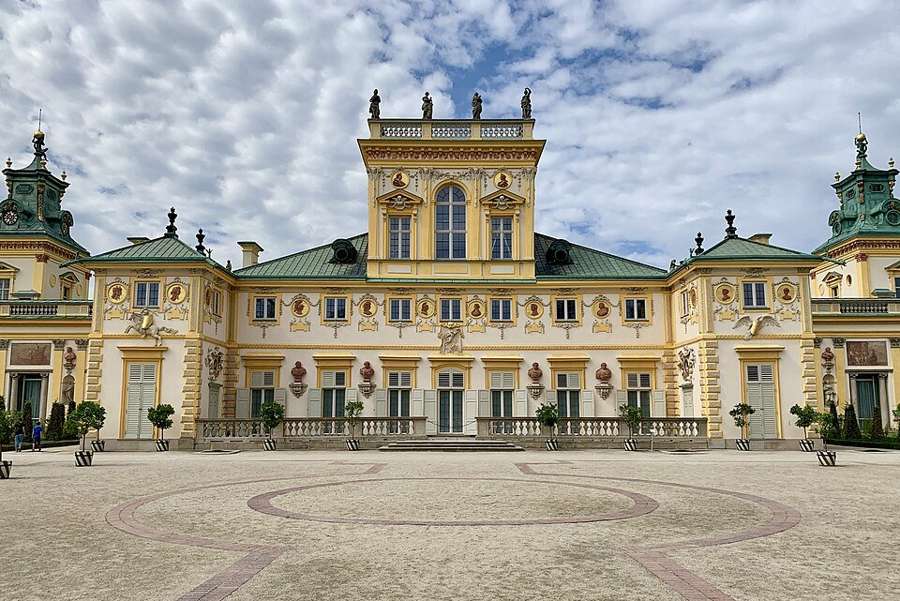
Wilanów's landmark is the Wilanów Palace, the former summer residence of King Jan III, now a museum with formal gardens and a year-round events programme - the palace museum's current calendar lists family workshops, historical demonstrations and art classes most weeks. Beyond the palace, Wilanów offers Powsin's botanical gardens and recreational areas at the district's southern edge, and newer estates come with their own playgrounds and landscaped courtyards.
*Data source: Museum of King Jan III's Palace at Wilanów, official site (wilanow-palac.pl), checked 21 October 2026.*
Family life and schools
Wilanów's demographics - the highest birth surplus in Warsaw and a young population - translate directly into family infrastructure: new playgrounds, nurseries and schools opening with each new estate. Mokotów answers with depth instead of novelty: long-established public schools, sports clubs, libraries and every service a family needs within walking distance.
For international education, Mokotów hosts The British School Warsaw, whose main campus (primary and secondary, including IB) sits at ul. Limanowskiego 15 in Sadyba, with an Early Years centre at ul. Dąbrowskiego 84 - both in Mokotów, per the school's own site. Wilanów families typically look at schools in neighbouring districts or towards Konstancin-Jeziorna just south of the city border.
*Data source: The British School Warsaw, contact and campus pages (nordangliaeducation.com/tbsw-warsaw), checked 21 October 2026.*
So which one?
Choose Mokotów if you want a shorter, rail-based commute, more rental choice (six times as many listings), lower rents than Wilanów, established streets and an urban feel with cafés and older parks. It suits professionals, couples and families who value location over newness.
Choose Wilanów if you want a new flat with modern fittings, a district literally built around young families, the palace gardens as your weekend default, and you can either afford Warsaw's highest district rents or buy. It suits families with children and anyone whose work is remote, in the south, or flexible about commute time.
Many expats do both in sequence: Mokotów first to learn the city, Wilanów later when children arrive and space starts to matter more than the commute.
Before you sign: a quick checklist
1. Test the commute at rush hour, not on Sunday - especially from Wilanów, where road traffic out of the district is the main daily complaint, and the tram is the reliable alternative. 2. Check what the rent includes. New-build Wilanów listings often add administrative fees and parking on top of the advertised rent; older Mokotów flats may include them. 3. Ask about the heating and standard in Mokotów's older blocks - pre-war tenements vary widely in insulation and renovation state. 4. Count the playgrounds and nurseries around the exact address in Wilanów - coverage is excellent in new estates but thinner near the palace's older streets. 5. Compare listings against the index averages above, so you know whether an offer is genuinely expensive or just Wilanów-normal.
Frequently asked questions
Is Wilanów or Mokotów cheaper to rent in?
Mokotów. The October 2026 Znajdz Najem index shows average asking rents of 4,136 zł/month in Mokotów versus 5,271 zł/month in Wilanów - the highest of any Warsaw district. Mokotów also offers far more choice, with about six times as many listings.
Does Wilanów have a metro station?
No. Wilanów is not on the metro network. Its rail connection is the tram line to Miasteczko Wilanów, opened on 28 October 2024 - a 6.5 km route with 12 stops that links the district to the centre. Mokotów, by contrast, has M1 metro stations at Racławicka, Wierzbno and Wilanowska.
Which district is better for expat families?
Wilanów is younger and purpose-built for families - it recorded Warsaw's standout natural increase of +5.49 per 1,000 residents in 2024 - while Mokotów offers established schools (including The British School Warsaw in Sadyba), parks and a shorter commute. Families prioritising space and new housing tend to pick Wilanów; those prioritising location and transport pick Mokotów. * Photos: "Garden facade of the Wilanów Palace" by Chris Olszewski (CC BY-SA 4.0) and "Pole Mokotowskie - park" by Jolanta Dyr (CC BY-SA 3.0), via Wikimedia Commons.
Sources
- Statistics Poland Warsaw office: Major Data Regarding Districts of the Capital City of Warsaw in 2024
- Indeks Najmu Znajdz Najem: Warsaw rental report, October 2026
- ZTM: Tramwajem do Wilanowa (29 Oct 2024)
- WTP metro information page (updated 13 Nov 2025)
- Museum of King Jan III's Palace at Wilanów
- The British School Warsaw