Olsztynek Open-Air Museum: Winter Tickets, Branches and Access
The essentials: The Leśna 23 park lists daily 10:00–15:00 opening in November–March. The 2026 tickets are PLN 30 standard, PLN 19 reduced and PLN 80 for two adults and two children under 16. Town branches are seasonal; check dated closures and interior access.
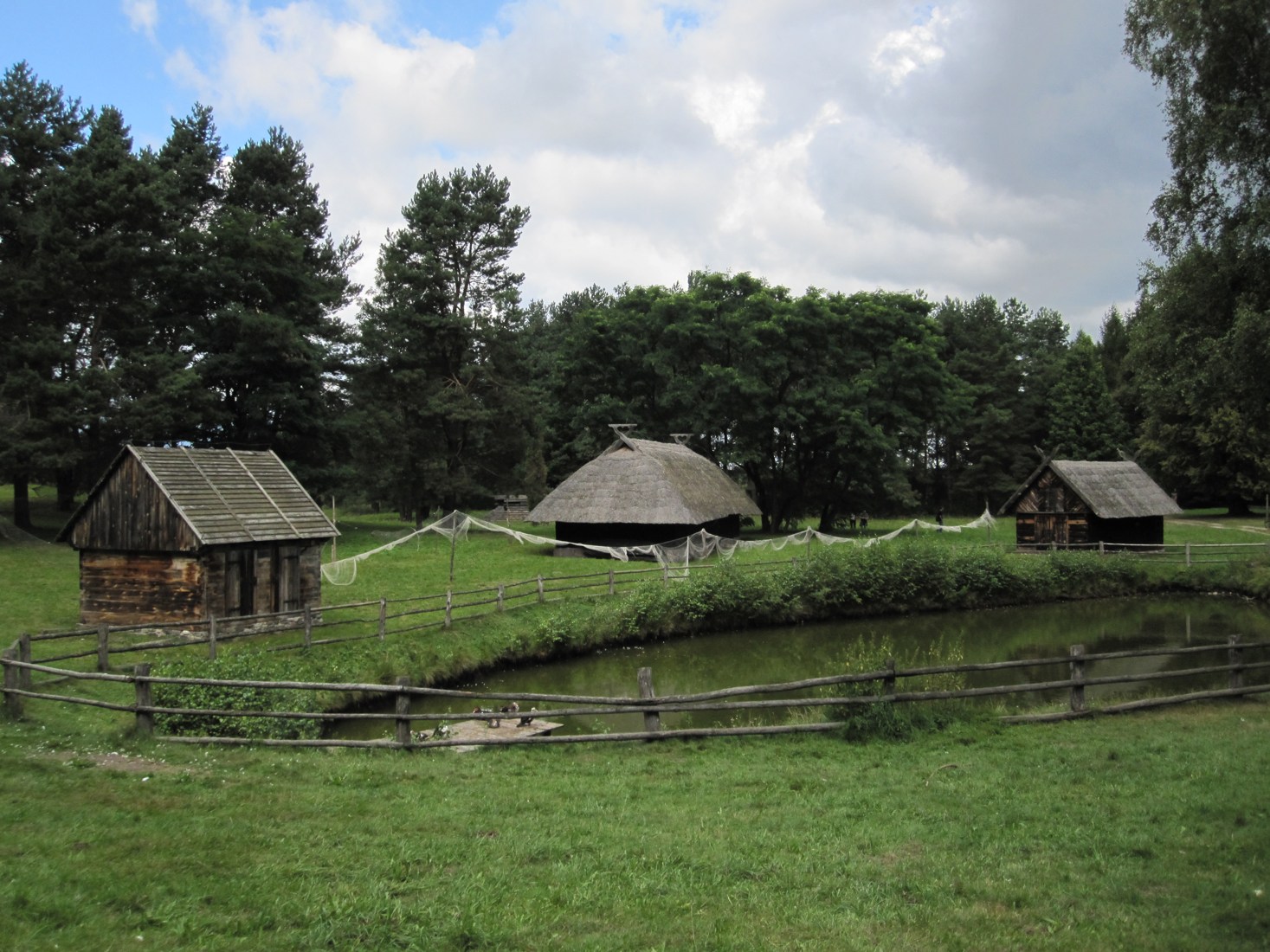
Cover: farm from Little Lithuania at Olsztynek, photographed 27 August 2012. An archival view, not present-day winter conditions. Photo: Piotr Marynowski / Wikimedia Commons, CC BY-SA 3.0. Resized and recompressed under the same licence.
Start with the winter park, not the summer town branches
Olsztynek's Museum of Folk Architecture is a useful choice when you want to understand the rural landscape of Warmia and Masuria rather than spend another afternoon in a city gallery. Its main site is the Park Etnograficzny at ul. Leśna 23. The museum describes a 77-hectare property with 80 examples of large and small rural architecture, including homes, religious buildings, farm buildings and industrial structures. That is the collection's scale, not a promise that every building is open on the day you arrive.
For a late-autumn or winter visit, keep this park separate from the museum's town-centre Exhibition Hall and Mrongowiusz House at ul. Zamkowa 1. The dedicated opening-hours page lists those branches from June to September, Tuesday to Sunday. Their separate and combined tickets are also explicitly seasonal. A November park visit should therefore stand on its own, without an assumed second indoor stop in town.
This guide was checked on 28 November 2026. The main practical sources are the museum's own seasonal timetable, 2026 price list, visitor regulations and collection pages. Older photographs illustrate the collection, not today's ground conditions or guaranteed access to a particular interior.
Use the seasonal timetable rather than the footer
The dedicated Polish and English opening-hours pages list the park as open daily from 10:00 to 15:00 in November through March. Their other seasons differ: April to June and September run 09:00–17:00, July and August 10:00–18:00, and October 08:30–16:30. Do not carry the longer summer day into a winter itinerary.
There is an important website inconsistency. General footers display 09:00–17:00, and the English footer also refers to Tuesday–Sunday. The detailed seasonal tables on both language versions instead give the daily winter schedule above. Use those dedicated tables for planning, then check for a dated closure or holiday notice before travelling. If your visit depends on a particular building or a late arrival, confirm that detail directly rather than treating a generic footer as an exception.
The regulations say the main gate closes according to the published opening hours. They do not provide a separate guaranteed last-entry allowance in the material checked. Arriving just before 15:00 is therefore a poor way to see a large outdoor collection. A morning arrival gives you room to shorten the walk without being forced to race back from the far end of the grounds.
What the 2026 tickets cost
The official 2026 price list gives park admission as PLN 30 standard and PLN 19 reduced. The PLN 80 family ticket is defined as two adults and two children under 16. Children under seven enter free. Check the precise family composition before choosing that product; a family label does not automatically cover extra adults or older teenagers.
The museum also lists PLN 18 admission for the nationwide Large Family Card and specified regional or municipal senior cards. Reduced and free admission require the appropriate document. The detailed eligibility text includes conditions for some categories, so foreign residents should not assume that any student or senior card will be accepted. Bring the actual document and check the museum's rules if eligibility is uncertain.
For the June–September town branches, the listed standard/reduced/family prices are PLN 13/9/37. The seasonal combined ticket for the park and town branches is PLN 36/23/97. Those figures explain the different products you may encounter on the site; they are not a recommendation to buy a combined ticket for a winter trip when the town branches are outside their stated season.
These are explicitly 2026 prices. A trip after the end of the year needs a fresh check rather than an assumption that the same tariff will continue into 2027.
Winter ticket buying and the invoice trap
From April through October, the museum lists ticket offices, a ticket machine and online sales. From November through March, the dedicated timetable instead lists the machine, museum guards and online sales. A closed conventional ticket window in winter does not by itself mean the park is closed.
The price page warns that the ticket machine cannot issue a receipt with a NIP tax number or a VAT invoice. Visitors needing an invoice are directed to online purchase, seasonal ticket offices or the museum shop, and outside the season to the museum office during its specified 08:30–15:15 window. That office window is not the park's visiting timetable. For an employer-reimbursed visit, settle the invoice route before using the machine.
Use the online ticket link reached from the museum's own website, and check the visit date and product before paying. This guide does not confirm availability for a future date or the terms of an individual purchase. Keep your admission evidence ready for the entrance rather than relying on a weak mobile connection at the last moment.
Free entry is a dated calendar, not a weekly promise
At the time of checking, the official pages listed four free-admission dates for November 2026: 3, 11, 20 and 25 November. All four were already past on the publication date. The list does not establish that the next Tuesday, Wednesday or Sunday is free, and it does not establish December's dates.
If free entry determines when you travel, wait for or check the relevant month's published calendar. Do not build a return trip around a recurring weekday inferred from a handful of dates. The independent Tripto guide broadly supports the winter hours and ticket figures, but parts of its prose still mention October free days. For a dated admission benefit, the current operator list is the better reference.
Free admission also does not remove parking charges. The museum states that explicitly alongside the free-day list. A free museum day and a free car trip are different things.
Parking is a separate cost
The official parking table lists PLN 10 for a passenger car, PLN 20 for a bus or camper, PLN 25 for a coach and PLN 8 for a motorcycle. It describes the parking as unguarded, with payment at the ticket offices or to parking staff. Vehicle categories matter, so do not use the passenger-car figure for every vehicle.
The table also lists PLN 100 for leaving a vehicle overnight, defining that period as 21:00–07:00. This is not a recommendation to use the museum as an overnight stop or a confirmation of camper facilities. If you need to leave a vehicle beyond an ordinary daytime visit, ask about the actual arrangement first.
For navigation, use the park's Leśna 23 address rather than the Zamkowa 1 town branches. This guide does not supply a bus timetable, live journey time or a winter walking route from the railway station. Check those separately against your starting point and travel day.
Choose a theme instead of trying to see every building
The museum's collection pages describe buildings and objects associated with Warmia, Masuria, Powiśle and Little Lithuania. A rewarding first visit is to compare how buildings were used and furnished, rather than treating the park as a row of interchangeable picturesque cottages. The operator explains that regional differences reflect settlement, religion, economic life, neighbouring communities and geography.
Its permanent-exhibition page offers several practical themes. Rural industry includes mills, a forge and an oil press. Agricultural displays include grain-processing machinery and cultivation tools. Other subjects include rural transport, pottery, painted furniture, weaving, shoemaking, beekeeping and village firefighting. Pick one or two that interest your group and ask which relevant spaces are accessible that day.
The page describes 33 permanent displays, but that is a collection description rather than a same-day opening checklist. The visitor regulations explicitly allow temporary restrictions for conservation, construction or other circumstances. Treat individual interiors as something to confirm, especially if a particular mill, workshop or church is your main reason for coming.
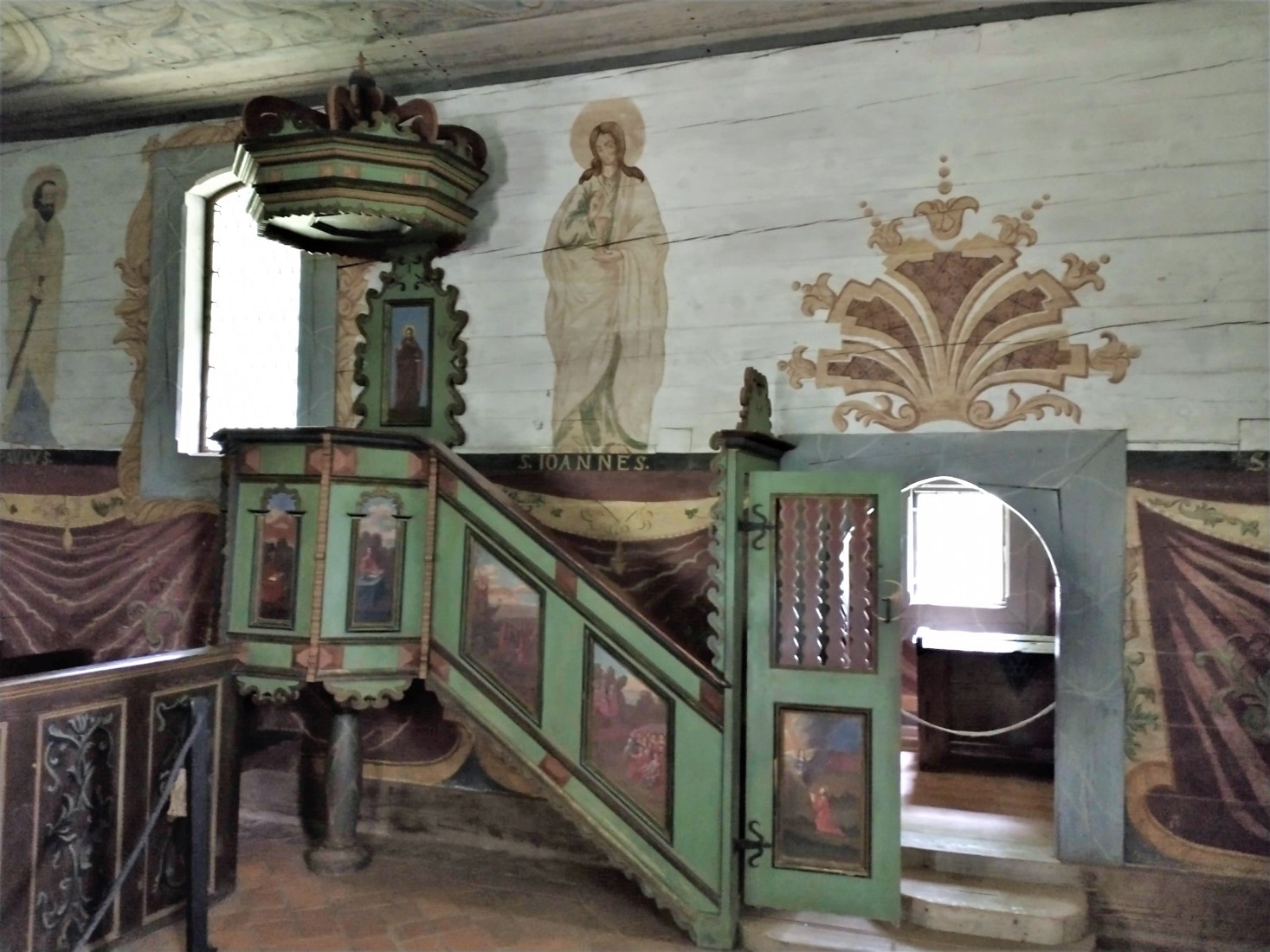
Access needs, pushchairs and dogs
This is not a uniformly step-free collection. The museum's regulations warn about low and narrow entrances, high thresholds, uneven stairs and uneven ground. They say ramps for selected buildings can be used after notifying the museum guards. That is limited assistance at selected places, not a claim that every interior is wheelchair-accessible.
If you use a wheelchair or walking aid, ask about a workable route, the buildings you want, toilets and conditions on the day. Winter ice, snow or mud can change what is practical, and the pages checked do not amount to a live surface survey. Plan a shorter route if necessary and avoid making one unverified interior essential to the whole outing.
Pushchairs are not permitted inside the buildings under the visitor rules. Families should plan how to manage the outdoor walk and any interior visits without taking the pushchair through a narrow historic doorway. The same rules permit dogs on leads in the grounds but prohibit taking animals into buildings; they expressly exempt guide dogs from those provisions. Keep dogs away from museum livestock and clean up after them.
English information and a sensible winter visit
The museum provides an English opening-hours page, which is useful for planning, but that is not evidence that every label or tour is available in English. The 2026 price list specifically names a Polish-language guide service, PLN 300 for a group of up to 42 people including accompanying adults. It does not establish an English guided tour or English audio guide. If interpretation in English matters, ask before travelling rather than buying on an assumption.
The regulations prohibit touching or feeding the museum animals, entering pastures and entering cultivated plots or gardens except for the stated herb-garden exception. They also prohibit eating and drinking inside the historic buildings. Food outlets are described as tenant-operated; their mention does not confirm winter opening, so do not make an unverified restaurant stop your only meal plan.
For a first winter visit, arrive in the morning, choose a modest architecture-and-craft route, and leave room to adjust to weather and open interiors. The strongest reason to come is the chance to read the region through its buildings and everyday objects. The weakest plan is one built on summer branch hours, an expired free day and a promise that every historic threshold will be easy to cross.
Frequently asked questions
Is there a free weekday?
The museum publishes dated free-entry lists. The four November 2026 dates were already past on 28 November; they do not establish a recurring free weekday or December dates.
Are the town branches open in winter?
The dedicated timetable and ticket list give June–September for the Exhibition Hall and Mrongowiusz House. Plan a winter visit around the Leśna 23 park.
Is the whole museum step-free?
No uniform step-free route is established. The regulations warn of thresholds, narrow doors, uneven ground and stairs, with ramps for selected buildings after notifying guards.