Opinogóra Museum: Winter Tickets, Park, Crypts and Access
The essentials: Opinogóra museum exhibitions publish Tuesday-Sunday 08:00-16:00 winter hours, final individual entry 15:00. The park is free, 07:00-20:00 in November-March. One-building admission is 8/6 zł, complex admission 20/15 zł. Confirm open interiors after restricted reopening; guiding and crypts are separate.
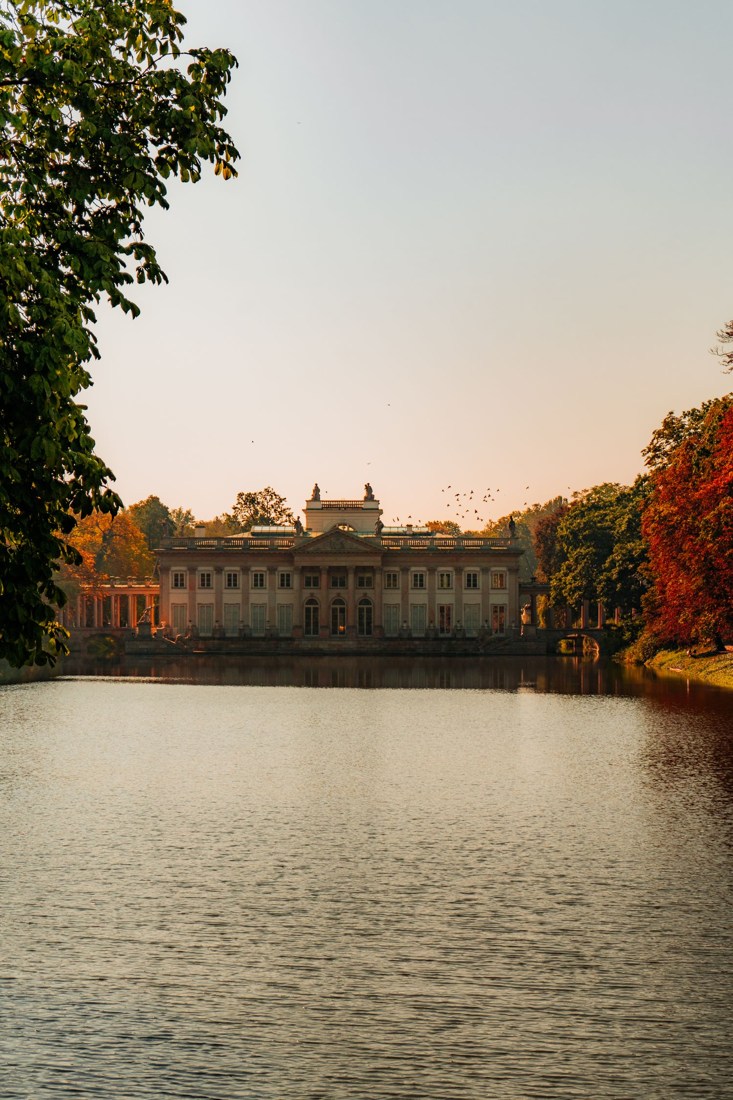
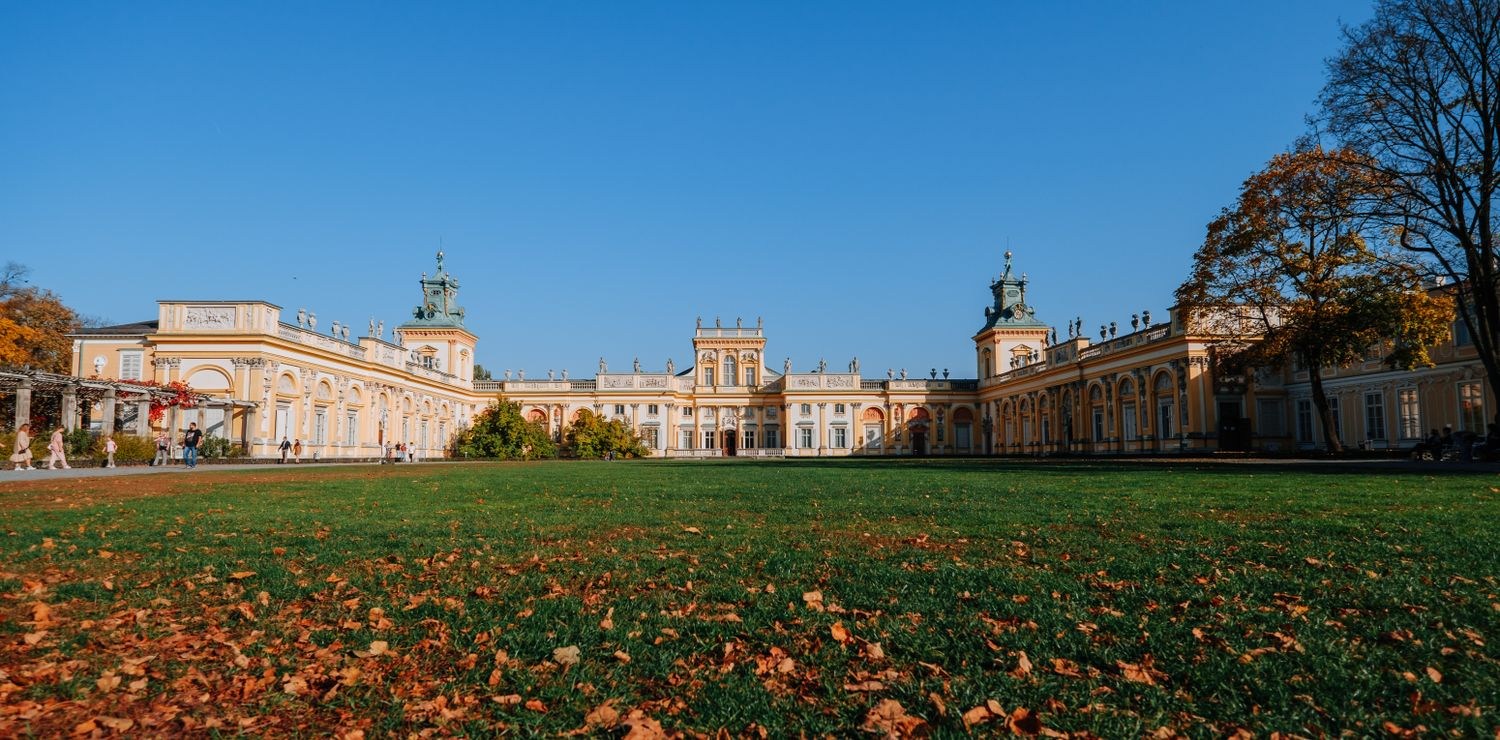
Cover: Palace on the Isle in Warsaw’s Łazienki Park, an illustrative estate photograph, not Opinogóra. Photo: Marta Zwierzchoniewska / Pexels.
The Museum of Romanticism in Opinogóra is an estate visit rather than a single-room museum: park paths, several exhibition buildings and a separate church-crypt visit all have different practical rules. For an English-speaking visitor, the first decision is not which photograph to take. It is whether you want a park walk, one exhibition, a broader museum visit or a guided visit that includes the crypts.
There is also an important current limitation. The museum announced a restricted reopening from 29 September 2026, naming the Dwór and Powozownia exhibitions, with the Oranżeria added from 10 October. Its later winter visitor page publishes hours for 25 October 2026 to 31 March 2027, but does not clearly cancel every earlier restriction or list every building as reopened. Before travelling specifically for the Neo-Gothic Palace or the Oficyna, ask which interiors are actually available. A building appearing in the permanent collection catalogue is not proof that its doors are open that day.
Find the estate and decide what kind of visit you want
The museum address is ul. Zygmunta Krasińskiego 9, 06-406 Opinogóra Górna. The published contact is 23 671 70 25 and [email protected]. Use that contact for current building access, guiding language and mobility arrangements. Do not assume that a general ticket listing settles those questions.
The estate's own description places its buildings within an English-style historic park of more than 22 hectares, with ponds and a mixture of residential, representative and former working buildings. That makes a park-first visit quite different from trying to see several interiors before closing. Decide how much walking you want, then choose the ticket that matches the open buildings you actually intend to enter.
The accessibility declaration describes Ciechanów as the nearest railway station and mentions bus 11 from Ciechanów on weekdays. Treat that as a journey-planning lead, not a current departure timetable or evidence of a weekend connection. Check the outward and return journey for your exact date. Parking and a bus stop are described about 100 metres from the main entrance, with another car park by the church.
Use the winter page, not September's reopening hours
The dedicated visitor page gives Tuesday-Sunday, 08:00-16:00 for exhibition visits during its stated period, 25 October 2026 to 31 March 2027. It lists individual guided starts at 08:00, 10:00, 12:00 and 14:00. These are museum-guided starts, not evidence that an English-speaking guide is available at every one.
The English section of that page and the winter visiting regulations put the final entry for an individual visit without guiding at 15:00, one hour before closing. The regulations estimate around 1.5 hours for the available museum interiors, excluding the crypts. Choose an earlier start if you want time to ask questions, collect tickets and move between buildings. A 15:00 cutoff is not a promise of a full 90-minute visit after that time.
The September reopening notice still contains summer hours of 10:00-18:00. For a late-November visit, use the later, date-specific winter hours rather than those September hours. The same reasoning does not establish that every restricted building has reopened: the later page updates the timetable but leaves temporary closures possible. Keep hours and building availability as separate checks.
The park has a different timetable and no admission fee
The museum's park page publishes 07:00-20:00 from 1 November 2026 through 31 March 2027. The visiting regulations state that park admission is free. This does not turn the museum interiors into free-access spaces or mean that exhibitions stay open until 20:00. You can plan a park walk and still find the exhibition day ending at 16:00.
Follow the barriers and marked available area. The restricted-reopening notice explicitly asks visitors to stay within the secured accessible terrain. A large park on a map is not a promise that every path is open after damage or works. For a winter walk, choose the available route and daylight conditions that suit your group rather than treating the gate-closing time as a recommendation to walk unfamiliar paths after dark.
Compare one-building admission with the whole-estate ticket
The museum's tariff, stated as effective from 7 May 2025 until further notice, lists 20 zł standard or 15 zł reduced for the museum complex. One-building admission is 8 zł standard or 6 zł reduced. The current winter visitor page also gives those one-building prices. Check the ticket's exact scope at purchase, especially while building availability remains qualified.
Guiding is a separate tariff item: 15 zł per person for all objects or 6 zł per person for one object. The crypt guide item is 3 zł per person. These are not interchangeable products. Ask for the total for your intended admission, guide and crypt combination before paying, rather than assuming that the complex ticket includes a guide or the church crypts.
There is an official inconsistency around the Oranżeria. The visiting regulations describe it as a free object, while the tariff lists standard and reduced one-building admission for it. The newer winter page gives a generic one-building price without resolving that specific conflict. Do not count on free Oranżeria entry solely from the older rules. Ask the ticket desk which current charge applies to the exhibition you want to see.
The complex ticket may make sense if several of your preferred interiors are open. It may be less useful for a short visit to one exhibition followed by a free park walk. Choose based on the actual route, not the number of buildings in a general estate description. Separate temporary exhibitions or cultural events can carry their own ticket conditions.
Tuesday admission is free, but guided extras remain paid
Tuesday is the free-admission day for museum exhibitions, with a free ticket collected at the desk. The tariff and visiting rules explicitly keep guiding and crypt visiting chargeable. Free admission is therefore not an all-inclusive guided day, and it does not override a temporary closure or a religious service in the church.
The official online-ticket homepage says certain products remain available only at the museum desk for individual visitors. These include Tuesday guiding fees, crypt guiding and Karta Dużej Rodziny ticket products. Not seeing one of those options online is not proof that the service is cancelled. Check the desk-only list before deciding that the booking system has no suitable ticket.
The crypts require their own timing
The crypts of the Church of the Assumption of the Blessed Virgin Mary are available only with a museum guide. The winter visitor page gives Tuesday-Friday at 09:30, 11:30 and 13:30, and Saturday-Sunday at 13:30 and 15:15. These times are separate from the main exhibition guided starts.
There is no crypt visiting during Mass or other church services. Confirm the session before relying on it, particularly if it is the main purpose of your trip. Do not assume that arriving for a 14:00 museum tour automatically includes a later crypt visit, or that a session listed online cannot be displaced by church use.
The museum's overall 1.5-hour exhibition estimate excludes the crypts, so leave additional time if you want both. Ask where the crypt group meets and where its desk-only fee is collected. It is better to settle that before beginning an interior route than to discover midway through that your preferred crypt start has passed.
What the different building names mean
The estate's exhibition catalogue associates the Neo-Gothic Palace with Zygmunt Krasiński and the Oficyna with the Krasiński family and a Napoleonic cavalry collection. The Dwór catalogue includes Polish painting and an exhibition about the roads to independence. These descriptions help you choose what interests you, but they are not a current all-buildings-open notice.
The restricted-reopening announcement specifically named the Dwór, Powozownia and, from October, Oranżeria. Those are the useful starting points for a conversation about today's route. If the palace is the reason you want to come, ask about that building by name. Do not substitute another exhibition silently in your own plan and expect the same experience.
English text on the visitor-information page helps with planning, but it does not establish an English audio guide, English labels throughout or live English guiding. Ask what interpretation is available for the selected open buildings. An independent visit may work well for architecture and grounds, while a literature-focused visit depends much more on the language support you need.
Ask about the route, not simply whether the museum is accessible
The accessibility declaration was reviewed on 12 March 2026, before the restricted reopening. It describes split-granite and hardened gravel paths, different widths and gradients, and benches at many points. Those details are useful, but they do not verify the present condition of every path or barrier after later disruption.
The declaration describes four steps at the Dwór with a staff-operated stair platform, and ground-level entry at the Powozownia with a sloping granite approach. It gives a longer route to the Oranżeria that includes sloping granite and gravel, with a lift and an adapted toilet inside. Ground-level entry at a building is not the same as a level journey from the car park.
For a wheelchair, heavy pushchair or limited walking tolerance, tell the museum which buildings you want and ask about the current entrance, ticket collection, platform availability, path closures and reachable toilet. The declaration describes works on palace access rather than a finished, working lift, so do not assume those works are complete. Assistance dogs are covered in the declaration with certification and vaccination documentation.
A practical first-visit plan
Start by confirming which interiors are open. Then choose either one exhibition and a park walk, or an earlier guided start with time for additional buildings. Add the crypts only after checking their separate session, fee and church availability. Keep the park's later gate hours separate from the exhibition closing time.
Organised groups of 10-45 require advance reservation under the published rules, at least seven days before visiting; larger groups are divided. A small independent visit is not a confirmed group booking. Before travelling, check current notices and contact the museum if the palace, English interpretation or a particular access arrangement determines whether the trip works for you. That is the most useful way to handle an estate whose seasonal timetable is clear but whose full reopening scope is not.
Frequently asked questions
Are all museum buildings open again?
The September2026restricted reopening named Dwór, Powozownia and later Oranżeria. A later winter timetable does not clearly confirm every other interior reopened. Ask about the palace or Oficyna specifically.
Is the park included in a paid ticket?
Park entry is free under the published rules. Its winter07:00-20:00hours are separate from08:00-16:00exhibition hours.
Are crypts free on Tuesday?
No. The free admission rule excludes guiding and crypt visiting. Crypts require a museum guide and cannot be visited during church services.
Sources
- Date-specific winter visitor information
- Tariff, effective May 2025 until further notice
- Official ticket system: desk-only products
- Visiting rules: park, free Tuesday and crypts
- Restricted reopening notice, September 2026
- Accessibility declaration, reviewed March 2026
- Estate and park description
- Exhibition catalogue, not proof of current opening
- Date-specific park hours